


Türkiye Faces a ‘Very Risky Week’ for Wildfires as Flames Also Scorch Parts of Southeast Europe 

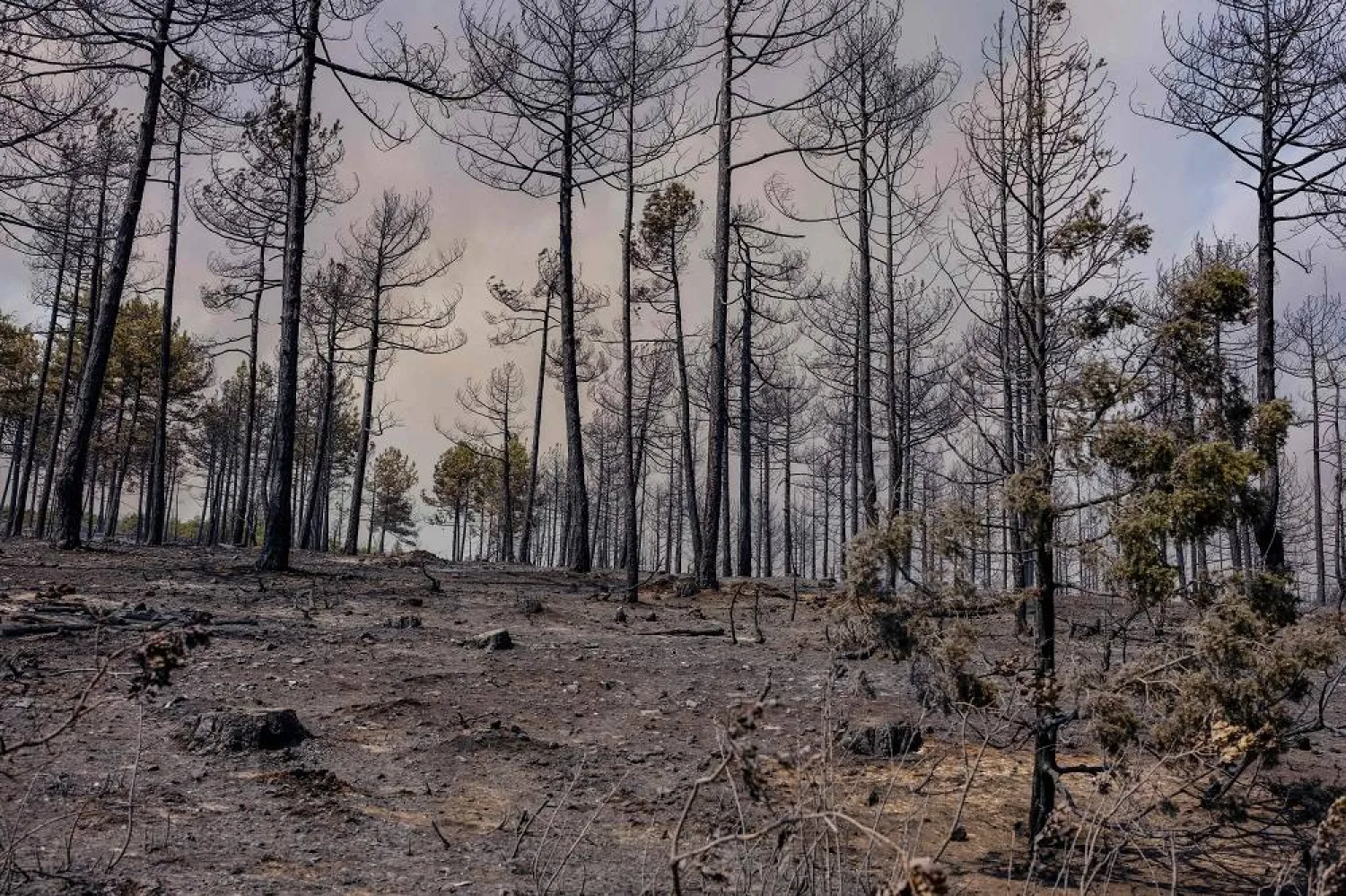
A general view of the burning forest during wildfires in the Harmancik district of Bursa, early on July 28, 2025. (AFP)
TT

Türkiye Faces a ‘Very Risky Week’ for Wildfires as Flames Also Scorch Parts of Southeast Europe 

A general view of the burning forest during wildfires in the Harmancik district of Bursa, early on July 28, 2025. (AFP)

Türkiye faced a "very risky week" for wildfires, an official said Monday, as blazes across parts of southeast Europe and the Balkans damaged homes and led to a huge firefighting operation that included evacuations. Nearly 100 people face prosecution over the fires in Türkiye.

Blazes erupted near Bursa, Türkiye’s fourth-largest city, over the weekend.

A wildfire to the northeast of Bursa had been largely extinguished, but one to the south of the city continued, although its intensity had been "significantly reduced," Forestry Minister Ibrahim Yumakli told reporters in Ankara.

He also said that a fire that has been burning for six days in Karabuk, in northwest Türkiye, had also "been reduced in intensity," and a blaze in Karamanmaras in the south had largely been brought under control.

A wildfire also erupted Monday in forests outside the western port city of Izmir, where 11 aircraft were helping ground-based fire units and residents battle the blaze.

"We are in a very risky week," Yumakli said of the wildfires.

Blaze in Greece

In Greece, firefighters raced to tackle a wildfire that broke out Monday near a university campus close to the center of Athens.

Water-dropping planes and helicopters buzzed over the city center as they headed to the wildfire near the National Technical University of Athens, located in foothills ringing the Greek capital.

In all, 11 planes and eight helicopters were reinforcing 110 firefighters on the ground, the fire department said. Police announced road closures in the area, including to the only highway that circles the city.

A waning fire on the island of Kythera, which lies south of the Peloponnese, was reinvigorated by strong winds. Over the weekend, the blaze burned through around 10% of the small island’s land mass, triggering the evacuation of several villages.

Bulgaria assisted by Turkish firefighters

A Turkish firefighting team of 22 personnel and five vehicles crossed the northern border Monday to assist Bulgarian crews fight a large fire near the village of Lesovo, which was evacuated.

The blaze was one of hundreds across Bulgaria, the most severe of which was near the southwestern village of Strumyani. The Interior Ministry described the fire as "extremely large" and "widespread," leading to 200 firefighters being withdrawn because of the effects of high winds on the fire.

Several villages have been extensively damaged, with dozens of homes burned to the ground. By Monday, 269 fires had been extinguished in the previous 24 hours, the government said.

Other European Union countries have responded to Bulgaria’s requests for help, sending firefighting helicopters and planes.

In several instances, the cause of fires have been determined to be carelessness by people, such as open fires and discarded cigarettes.

Senior Interior Ministry official Miroslav Rashkov said that two people had been arrested for deliberately starting fires and would be prosecuted.

Volunteer firefighters killed Türkiye has been fighting severe wildfires since late June.

In Bursa, three volunteer firefighters were killed after their water tanker overturned, local news agency IHA reported. One died at the scene and the two others were pulled from the tanker and hospitalized but died late Sunday.

The volunteer crew from the province of Bolu was on its way to the village of Aglasan, northeast of Bursa, to combat a blaze when the vehicle fell into a ditch beside a rough forest track, the agency reported.

Separately, officials said earlier Sunday a firefighter died of a heart attack while battling a blaze. The fatalities brought the total deaths over the past month to 17, including 10 rescue volunteers and forestry workers killed Wednesday in a fire in the western city of Eskisehir.

The huge blazes around Bursa forced more than 3,500 people to flee their homes. While firefighting teams have contained the damage to a limited number of homes across affected areas in Türkiye, vast tracts of forest have been turned to ash.

Unseasonably high temperatures, dry conditions and strong winds have been fueling the wildfires. Türkiye and other parts of the eastern Mediterranean are experiencing record-breaking heat waves. The government had earlier declared disaster areas in two western provinces, Izmir and Bilecik.

Türkiye battled at least 44 separate fires Sunday, Yumakli said.

Turkish President Recep Tayyip Erdogan said Monday that 99 suspects faced prosecution in relation to the wildfires.

Albania fires

In Albania, firefighters battled at least six separate wildfires Monday, the defense ministry said. Two weeks of blazes have ravaged thousands of hectares, or acres, of forest in the Balkan country.

The areas most at risk were in the northeast, where inaccessible mountain plateaus had water-dropping aircraft carrying out the bulk of the firefighting.

In the country’s southern region, overnight winds ignited blazes in the municipalities of Delvine and Konispol and in the Himare district on the Adriatic coast, which suffered wildfires last week.

Authorities said that at least a dozen people were arrested over the weekend over the wildfires.



Australian Firefighters Warn of ‘High-Risk’ Bushfire Season

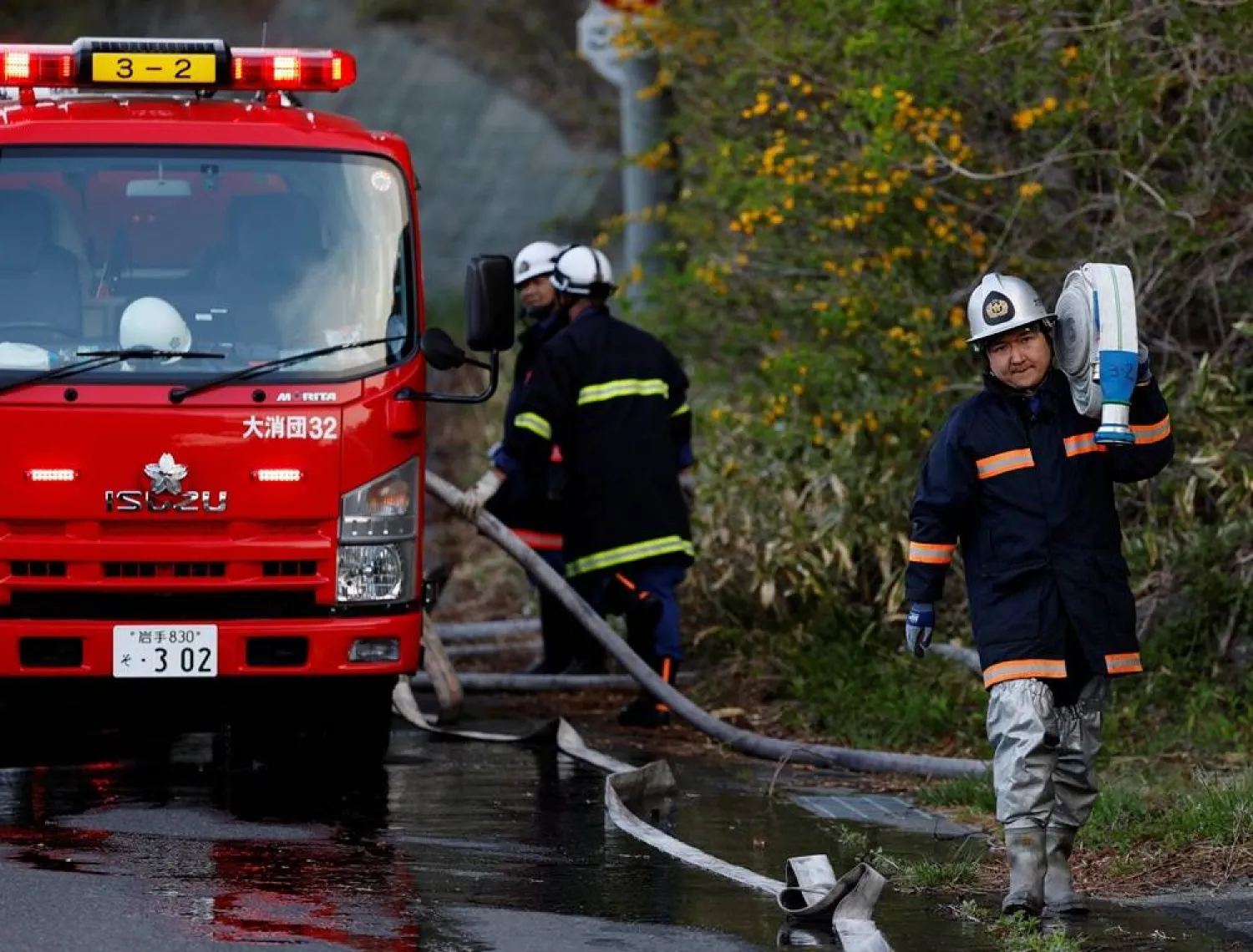
Country Fire Authority (CFA) crew fill up tankers in the bushfire affected town of Ruffy, Victoria, Australia, 12 January 2026. (EPA)
TT

Australian Firefighters Warn of ‘High-Risk’ Bushfire Season

Country Fire Authority (CFA) crew fill up tankers in the bushfire affected town of Ruffy, Victoria, Australia, 12 January 2026. (EPA)

Australian firefighters warned people on Monday to prepare for more bushfires in a "high-risk" summer, after blazes killed one person and incinerated more than 350 buildings in the southeast.

Weather conditions have eased since strong winds and temperatures topping 40C fed dozens of wildfires in southeastern Australia's Victoria, which declared a state of disaster on Saturday.

But officials said 12 major fires were still burning across the state.

Country Fire Authority chief officer Jason Heffernan said another "heating event" was expected towards the end of January, though its intensity was uncertain.

"We are early in the high-risk weather season," Heffernan told a news conference.

"There's been a lot of fire in the landscape. Much work will be done between now and then to contain these fires," he said.

"Whilst we join with community in the rebuilding and the relief and recovery of the fires that have been, we need to turn our minds to the fires that could be as the season continues."

More than 350 structures -- including over 65 homes -- have been lost so far in the state, officials said, with the number likely to rise as fire damage is assessed.

One person died in a fire near the town of Longwood, about two hours' drive north of state capital Melbourne, police say.

Emergency Management Commissioner Tim Wiebusch said weather conditions had become more favorable for firefighters.

"But that doesn't mean that the risk is over," he said.

"Whilst the conditions are easing in some parts of the state, even the slightest of winds are still causing those fires to move around."

High temperatures and dry winds combined last week to form some of the most dangerous bushfire conditions since the "Black Summer" blazes.

The Black Summer bushfires raged across Australia's eastern seaboard from late 2019 to early 2020, razing millions of hectares, destroying thousands of homes and blanketing cities in noxious smoke.

Australia's climate has warmed by an average of 1.51C since 1910, researchers have found, fueling increasingly frequent extreme weather patterns over both land and sea.


Some Supplements Can Make Your Medication Less Effective

Some vitamin and mineral supplements can interfere with absorption of medications (Oklahoma State University) 
TT

Some Supplements Can Make Your Medication Less Effective

Some vitamin and mineral supplements can interfere with absorption of medications (Oklahoma State University) 

Health experts warned that some supplements can interact with certain medications and reduce their effectiveness, according to Eating Well website.

While these supplements are usually sold over-the-counter, taking them without asking a health care provider can have dangerous impact on your health.

Naturopathic doctor Jacob Wolf said that for instance, some vitamin and mineral supplements can interfere with absorption of medications.

Other supplements can bind with medications, preventing the drug from being utilized in the body, or they may be metabolized by the same or similar pathways as medications, explains Wolf. That can have a dangerous impact on your health.

Top offenders include calcium, magnesium, iron, fiber, activated charcoal and vitamins C and K.

Minerals like calcium, magnesium and iron can bind with medications, especially levothyroxine, a drug used to treat hypothyroidism, said Wolf.

“This can impact how levothyroxine is utilized in the body, adversely affecting treatment,” he explained.

These minerals can also interact with antibiotics in the tetracycline and fluoroquinolone class, said pharmacist Amanda Corbett.

Taking these mineral supplements at the same time as antibiotics may reduce the bioavailability of the antibiotic, creating risks like bacterial resistance or ineffective treatment.

And while scientists affirm fiber is an important nutrient for digestive regularity, healthy cholesterol levels and blood sugar management, supplementing isn’t always a great idea, as large doses can impact the absorption of certain medications.

Fiber-rich foods are a cornerstone of blood sugar management, even for those taking blood sugar–lowering medications, like metformin.

Fiber may also impair the effectiveness of other drugs, including digoxin (which treats certain heart conditions) and levothyroxine for hypothyroidism, Wolf said.

Therefore, if you do choose to take a fiber supplement, Wolf recommended speaking with your health care provider about spacing out your fiber and medication doses.

As for activated charcoal, it is a form of carbon that is used in the emergency room to treat the ingestion of toxic drugs and poisons.

“Activated charcoal acts like a sponge and can bind to many medications. It is best to completely avoid activated charcoal if on any life-critical medication,” said Wolf.

For Vitamin C, it is an important antioxidant that protects cells from free radical damage and supports proper immune system function.

However, if you are undergoing chemotherapy treatment for cancer, experts strongly caution against taking vitamin C supplements.

“Vitamin C can lead to certain chemotherapies being less effective or ineffective in treating cancer,” said Corbett.

Vitamin E, another antioxidant, can also interfere with chemotherapy’s effectiveness.

If taking Vitamin K, which is a fat-soluble vitamin that helps blood clot and shores up bone health, you should know that it can reduce the effectiveness of a blood-thinning medication called warfarin (Coumadin).

That, in turn, can make blood more likely to clot, which can lead to a heart attack or stroke.

If you are taking warfarin, you don’t necessarily need to avoid vitamin K, but it is critical to keep the amount you consume—from both foods and supplements—consistent to avoid clotting problems.

Experts advise that to take supplements safely, consult with your health care provider.

Many supplements can interact with medications, and so it’s critical to connect with your prescribing health care provider to make sure that the supplements you’re taking play nice with your medications.

Also, look for those that have been independently tested in a laboratory, recommended Corbett.

Experts say you should also know how much to take. Supplement dosages are listed on the label, but they aren’t standardized.

That means they can vary from product to product, and may far exceed safe levels.


Rejuvenated Human Eggs… Scientists Revolutionize IVF Success

Egg quality is the primary cause of IVF failure and miscarriage in older women (Reuters) 
TT

Rejuvenated Human Eggs… Scientists Revolutionize IVF Success

Egg quality is the primary cause of IVF failure and miscarriage in older women (Reuters) 

German scientists claim to have “rejuvenated” human eggs for the first time in an advance that they predict could revolutionize IVF success rates for older women.

The groundbreaking research suggests that an age-related defect that causes genetic errors in embryos could be reversed by supplementing eggs with a crucial protein, according to The Guardian.

When eggs donated by fertility patients were given microinjections of the protein, they were almost half as likely to show the defect compared with untreated eggs.

If confirmed in more extensive trials, the approach has the potential to improve egg quality, which is the primary cause of IVF failure and miscarriage in older women.

The decline in egg quality is the main reason IVF success rates drop steeply with female age and is why the risk of chromosome disorders such as Down’s syndrome increases with maternal age.

“Overall we can nearly halve the number of eggs with [abnormal] chromosomes. That’s a very prominent improvement,” said Prof Melina Schuh, a director at the Max Planck Institute for Multidisciplinary Sciences in Göttingen and a co-founder of Ovo Labs, which is aiming to commercialize the technique.

“Most women in their early 40s do have eggs, but nearly all of the eggs have incorrect chromosome numbers,” added Schuh, whose lab has been investigating egg biology for the past two decades. “This was the motivation for wanting to address this problem.”

The latest approach targets a vulnerability in eggs linked to a process called meiosis, in which sex cells (eggs or sperm) jettison half their genetic material so they can join together to make an embryo.

In eggs, this requires 23 pairs of X-shaped chromosomes to align along a single axis in the cell. On fertilization, the cell divides causing the chromosome pairs to be – ideally – neatly snapped down their centers to create a cell with precisely 23 single chromosomes from the mother, the rest being delivered by the sperm.

However, in older eggs the chromosome pairs tend to loosen at their midpoint, becoming slightly unstuck or detaching entirely before fertilization.

In this scenario, the X-shaped structures fail to line up properly and move around chaotically in the cell, so when the cell divides they are not snapped symmetrically.

This results in an embryo with too many or too few chromosomes.

Schuh and colleagues previously found that a protein, Shugoshin 1, which appears to act as a glue for the chromosome pairs, declines with age. In the latest experiments in mouse and human eggs, they found that microinjections of Shugoshin 1 appeared to reverse the problem of chromosome pairs separating prematurely.

Using eggs donated by patients at the Bourn Hall fertility clinic in Cambridge, they found that the number showing the defect decreased from 53% in control eggs to 29% in treated eggs. When they looked only at eggs from women over 35 years of age, a similar trend was seen (65% compared with 44%), although this result was not statistically significant, which the scientists said was probably due to them only having treated nine eggs in this age range.

Dr Agata Zielinska, a co-founder and co-CEO of Ovo Labs, said: “Currently, when it comes to female factor infertility, the only solution that’s available to most patients is trying IVF multiple times so that, cumulatively, your likelihood of success increases. What we envision is that many more women would be able to conceive within a single IVF cycle.”

The findings will be presented at the British Fertility Conference in Edinburgh on Friday and have been published as a preprint paper on the Biorxiv website.