Spain’s Watchdog Expands Probe into Apple Over App Store Pricing 

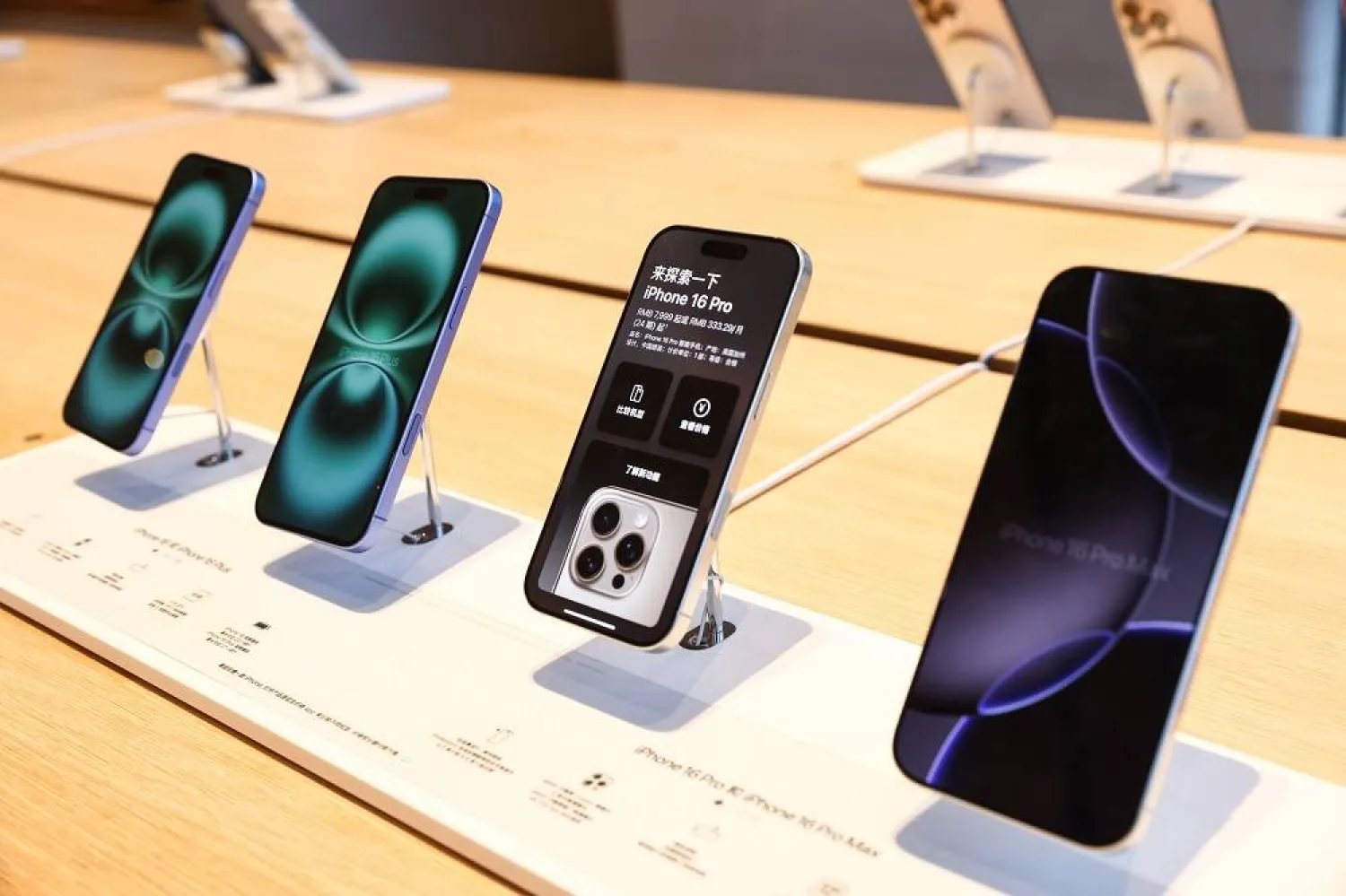
A general view of latest model of iPhone in an Apple store in Beijing, China, 28 July 2025. (EPA)
TT

Spain’s Watchdog Expands Probe into Apple Over App Store Pricing 

A general view of latest model of iPhone in an Apple store in Beijing, China, 28 July 2025. (EPA)

Spain's antitrust regulator said on Tuesday it was expanding its investigation into possible anti-competitive behavior by Apple for allegedly imposing unequal commercial conditions on developers of mobile applications sold at its app marketplace.

The wider probe will examine whether the tech giant set pricing schedules at its App Store, abusing its dominant position, the CNMC said in a statement.

Apple has denied the allegations since the CNMC launched its investigation a year ago.


At CES, Auto and Tech Companies Transform Cars into Proactive Companions

The Afeela Prototype 2026 displayed during a Sony Honda Mobility news conference ahead of the CES tech show, Monday, Jan. 5, 2026, in Las Vegas. (AP)
TT

At CES, Auto and Tech Companies Transform Cars into Proactive Companions

The Afeela Prototype 2026 displayed during a Sony Honda Mobility news conference ahead of the CES tech show, Monday, Jan. 5, 2026, in Las Vegas. (AP)

In a vision of the near future shared at CES, a girl slides into the back seat of her parents' car and the cabin instantly comes alive. The vehicle recognizes her, knows it’s her birthday and cues up her favorite song without a word spoken.

“Think of the car as having a soul and being an extension of your family,” Sri Subramanian, Nvidia's global head of generative AI for automotive, said Tuesday.

Subramanian's example, shared with a CES audience on the show's opening day in Las Vegas, illustrates the growing sophistication of AI-powered in-cabin systems and the expanding scope of personal data that smart vehicles may collect, retain and use to shape the driving experience.

Across the show floor, the car emerged less as a machine and more as a companion as automakers and tech companies showcased vehicles that can adapt to drivers and passengers in real time — from tracking heart rates and emotions to alerting if a baby or young child is accidentally left in the car.

Bosch debuted its new AI vehicle extension that aims to turn the cabin into a “proactive companion.” Nvidia, the poster child of the AI boom, announced Alpamayo, its new vehicle AI initiative designed to help autonomous cars think through complex driving decisions. CEO Jensen Huang called it a “ChatGPT moment for physical AI.”

But experts say the push toward a more personalized driving experience is intensifying questions about how much driver data is being collected.

“The magic of AI should not just mean all privacy and security protections are off,” said Justin Brookman, director of marketplace policy at Consumer Reports.

Unlike smartphones or online platforms, cars have only recently become major repositories of personal data, Brookman said. As a result, the industry is still trying to establish the “rules of the road” for what automakers and tech companies are allowed to do with driver data.

That uncertainty is compounded by the uniquely personal nature of cars, Brookman said. Many people see their vehicles as an extension of themselves — or even their homes — which he said can make the presence of cameras, microphones and other monitoring tools feel especially invasive.

“Sometimes privacy issues are difficult for folks to internalize,” he said. “People generally feel they wish they had more privacy but also don’t necessarily know what they can do to address it.”

At the same time, Brookman said, many of these technologies offer real safety benefits for drivers and can be good for the consumer.

On the CES show floor, some of those conveniences were on display at automotive supplier Gentex’s booth, where attendees sat in a mock six-seater van in front of large screens demonstrating how closely the company’s AI-equipped sensors and cameras could monitor a driver and passengers.

“Are they sleepy? Are they drowsy? Are they not seated properly? Are they eating, talking on phones? Are they angry? You name it, we can figure out how to detect that in the cabin,” said Brian Brackenbury, director of product line management at Gentex.

Brackenbury said it's ultimately up to the car manufacturers to decide how the vehicle reacts to the data that's collected, which he said is stored in the car and deleted after the video frames, for example, have been processed. "

“One of the mantras we have at Gentex is we're not going to do it just because we can, just because the technology allows it,” Brackebury said, adding that “data privacy is really important.”


Nvidia CEO Huang Says Next Generation of Chips Is in Full Production

 Nvidia CEO Jensen Huang speaks during a Nvidia keynote address at CES 2026, an annual consumer electronics trade show, in Las Vegas, Nevada, US January 5, 2026. (Reuters)
Nvidia CEO Jensen Huang speaks during a Nvidia keynote address at CES 2026, an annual consumer electronics trade show, in Las Vegas, Nevada, US January 5, 2026. (Reuters)
TT

Nvidia CEO Huang Says Next Generation of Chips Is in Full Production

 Nvidia CEO Jensen Huang speaks during a Nvidia keynote address at CES 2026, an annual consumer electronics trade show, in Las Vegas, Nevada, US January 5, 2026. (Reuters)
Nvidia CEO Jensen Huang speaks during a Nvidia keynote address at CES 2026, an annual consumer electronics trade show, in Las Vegas, Nevada, US January 5, 2026. (Reuters)

Nvidia CEO Jensen Huang said on Monday that the company’s next generation of chips is in "full production," saying they can deliver five times the artificial-intelligence computing of the company’s previous chips when serving up chatbots and other AI apps.

In a speech at the Consumer Electronics Show in Las Vegas, the leader of the world's most valuable company revealed new details about its chips, which will arrive later this year and which Nvidia executives told Reuters are already in the company's labs being tested by AI firms, as Nvidia faces increasing competition from rivals as well as its own customers.

The Vera Rubin platform, made up of six separate Nvidia chips, is expected to debut later this year, with the flagship server containing 72 of the company’s graphics units and 36 of its new central processors.

Huang showed ‌how they can ‌be strung together into "pods" with more than 1,000 Rubin chips and said they could improve ‌the ⁠efficiency of generating ‌what are known as "tokens" - the fundamental unit of AI systems - by 10 times.

To get the new performance results, however, Huang said the Rubin chips use a proprietary kind of data that the company hopes the wider industry will adopt.

"This is how we were able to deliver such a gigantic step up in performance, even though we only have 1.6 times the number of transistors," Huang said.

While Nvidia still dominates the market for training AI models, it faces far more competition - from traditional rivals such as Advanced Micro Devices as well as customers like Alphabet's Google - in delivering the fruits of those models to hundreds of millions of users of chatbots and other technologies.

Much of ⁠Huang’s speech focused on how well the new chips would work for that task, including adding a new layer of storage technology called "context memory storage" aimed at helping chatbots ‌provide snappier responses to long questions and conversations.

Nvidia also touted a new generation ‍of networking switches with a new kind of connection called co-packaged ‍optics. The technology, which is key to linking together thousands of machines into one, competes with offerings from Broadcom and Cisco ‍Systems.

Nvidia said that CoreWeave will be among the first to have the new Vera Rubin systems and that it expects Microsoft, Oracle, Amazon and Alphabet to adopt them as well.

In other announcements, Huang highlighted new software that can help self-driving cars make decisions about which path to take - and leave a paper trail for engineers to use afterward. Nvidia showed research about software, called Alpamayo, late last year, with Huang saying on Monday it would be released more widely, along with the data used to train it so that automakers can make evaluations.

"Not only do we open-source the models, we also open-source the data that we use ⁠to train those models, because only in that way can you truly trust how the models came to be," Huang said from a stage in Las Vegas.

Last month, Nvidia scooped up talent and chip technology from startup Groq, including executives who were instrumental in helping Alphabet's Google design its own AI chips. While Google is a major Nvidia customer, its own chips have emerged as one of Nvidia's biggest threats as Google works closely with Meta Platforms and others to chip away at Nvidia's AI stronghold.

During a question-and-answer session with financial analysts after his speech, Huang said the Groq deal "won't affect our core business" but could result in new products that expand its lineup.

At the same time, Nvidia is eager to show that its latest products can outperform older chips like the H200, which US President Donald Trump has allowed to flow to China. Reuters has reported that the chip, which was the predecessor to Nvidia's current "Blackwell" chip, is in high demand in China, which has alarmed China hawks across the US political spectrum.

Huang told financial analysts after his keynote ‌that demand is strong for the H200 chips in China, and Chief Financial Officer Colette Kress said Nvidia has applied for licenses to ship the chips to China but was waiting for approvals from the US and other governments to ship them.


TV Makers Tout AI Upgrades at CES, as Smartphone Threat Looms

Attendees view the Samsung Micro RGB 130-inch TV after it was unveiled during the Samsung Electronics First Look event ahead of the Consumer Electronics Show (CES) in Las Vegas, Nevada on January 4, 2026. (AFP)
TT

TV Makers Tout AI Upgrades at CES, as Smartphone Threat Looms

Attendees view the Samsung Micro RGB 130-inch TV after it was unveiled during the Samsung Electronics First Look event ahead of the Consumer Electronics Show (CES) in Las Vegas, Nevada on January 4, 2026. (AFP)

A century after Scottish inventor John Logie Baird demonstrated the first mechanical television system, TVs face mounting competition from a much more recent invention: smartphones.

But with a suite of new models boasting massive screens, richer imagery and artificial intelligence enhancements -- on display this week at the Consumer Electronics Show in Las Vegas -- manufacturers don't plan on TVs being relegated to the dustbin of history.

The proportion of daily viewing on TV sets declined from 61 percent at the start of 2017 to 48 percent late last year, according to market tracker Ampere Analysis. Smartphone viewing, meanwhile, nearly doubled over that same period to 21 percent.

"This is the battle between big screens, which are traditionally for older people who grew up around televisions, and younger people who have either a phone, tablet, or laptop on which they're doing their consumption," said Patrick Horner, leader of TV research at Omdia.

He said that in China, seen as a trendsetter in the global market, young consumers are shunning large-screen televisions in favor of smartphones or tablets.

Around the world, television ownership is constant or declining, with average selling prices also holding steady or dropping, according to Horner.

One way for TV makers to protect or increase revenue when unit sales don't rise is to get people to buy ever larger and smarter screens, at a higher price.

- TVs get personal -

Those massive screens once again starred at CES, with producers touting AI to personalize experiences and sharpen picture quality.

Also in the spotlight was "Micro RGB" technology that dramatically ramps up picture quality using ultra-precise control of colors in LED displays.

Samsung Electronics, the top TV seller for 20 consecutive years, unveiled what it billed as the world's first 130-inch Micro RGB TV and spoke of packing AI into its products.

"We will embed AI across every area, every product, and every service," Samsung device experience division chief executive TM Roh said during a media event.

Hisense, LG, Samsung, Sony, and TCL were also at CES.

AI is being used to improve picture and sound quality, as well as help people find shows they want or ask questions about what they're seeing.

"I am really curious to see if most brands at CES can actually prove their new AI devices live up to their claims," said Forrester principal analyst Thomas Husson.

- Amazon vs Walmart -

Behind the scenes, e-commerce titans Amazon and Walmart are shaping the future of television as they vie for dominance -- not in selling TVs, but in advertising and e-commerce.

"This is really a knockdown, drag-out fight between Amazon.com and Walmart," Horner told AFP.

Walmart closed a $2.3 billion deal to buy TV maker Vizio in late 2024, as a strategic response to Amazon boosting sales through advertising on its Fire smart TVs and devices, often through its Prime Video streaming service.

"Amazon was putting advertisements on television programming for things that Amazon sold," Horner said. "So now Walmart is going to be putting advertisements on your television for things that Walmart sells."

And the profit margin on selling ads dwarfs the markup on selling TV hardware.

Walmart is expected to sell more than a million of its "Onn" brand TVs monthly and use an operating system it acquired with Vizio to pump advertising to viewers.

"Televisions are no longer about making profit from TV hardware," Horner said. "They're an ad delivery device being inserted into your living room to boost e-commerce sales."