

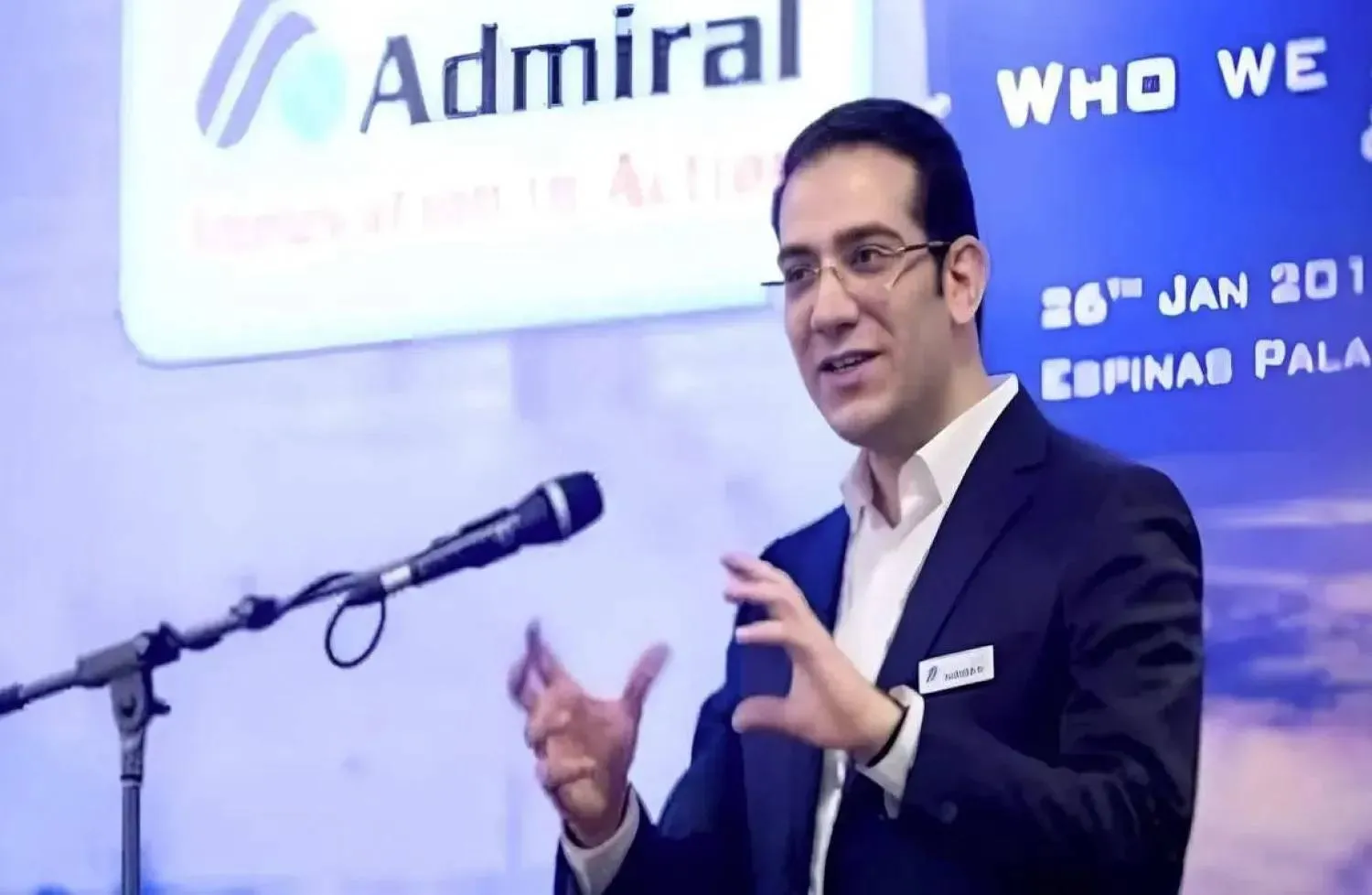

Iran Condemns US Sanctions on 'Shadow Fleet' Controlled by Shamkhani’s Son

Mohammad Hossein Shamkhani, the son of Ali Shamkhani.
TT

Iran Condemns US Sanctions on 'Shadow Fleet' Controlled by Shamkhani’s Son

Mohammad Hossein Shamkhani, the son of Ali Shamkhani.

Iran on Thursday as “malicious” the new US sanctions targeting a fleet of oil tankers and container ships controlled by Mohammad Hossein Shamkhani, the son of Ali Shamkhani, a close political adviser to Iran's supreme leader.

On Wednesday, the US Treasury Department announced fresh sanctions on over 115 Iran-linked individuals, entities and vessels, in a sign the Trump administration is doubling down on its “maximum pressure” campaign after bombing Tehran's key nuclear sites in June.

The sanctions broadly target the shipping interests of Mohammad Hossein Shamkhani, widely known as “Hector,” one of biggest oil traders in Iran, and he owns a group of companies active in the Iranian oil trade. He is also involved in the management of the network’s illicit activities through various companies.

Iran relies heavily on the so-called “shadow fleet” to circumvent western oil sanctions.

The US Treasury said the new sanctions were the most significant Iran-related action since 2018, during President Donald Trump's first administration.

According to Treasury, Mohammad Hossein Shamkhani controls a vast network of container ships and tankers through a complex web of intermediaries that sell Iranian and Russian oil and other goods throughout the world.

It accused him of using personal connections and corruption in Tehran to generate tens of billions of dollars in profits, much of which is used to prop up the Iranian regime.

Overall, the new sanctions target 15 shipping firms, 52 vessels, 12 individuals and 53 entities involved in sanctions evasion in 17 countries, ranging from Panama to Italy to Hong Kong.

A US official said the new sanctions would make it “much more difficult” for Iran to sell its oil, but added that the administration did not anticipate any sustained disruption to global oil markets.

The official said that Iran's oil exports had already declined to around 1.2 million barrels per day, from 1.8 million barrels per day at the start of the year, after the Trump administration imposed several smaller rounds of sanctions targeting Iran's oil business.

“We're still engaging further action to bring that number down even more,” the official said, noting that sanctions pressure during Trump's first term had cut Iran oil flows to a few hundred thousand barrels per day.

Secretary of the Treasury Scott Bessent said: “The Shamkhani family’s shipping empire highlights how the Iranian regime elites leverage their positions to accrue massive wealth and fund the regime’s dangerous behavior.”

Iranian Foreign Ministry spokesman Esmail Baghaei called the sanctions “a clear example of America's hostility towards the Iranian nation.”

He condemned “the new US sanctions against Iranian oil trade” as “a malicious act aimed at sabotaging economic development and the well-being of the Iranian people.”

He also pointed to what he described as recent US and Israeli “military aggression” against Iranian territory, saying it was part of a broader campaign to destabilize the country and obstruct its development, according to AFP.

He accused Washington of pursuing “economic terrorism” through unilateral and coercive measures that he said violated international law and the basic rights of Iranians.

A US official said that Wednesday's action would impact both Russia and Iran, but the action was focused on Iran.

“From our perspective, given where this individual fits, given his connection to the Supreme Leader and his father's previous sanctions activities, given the Iran-related authorities, it's critically important to emphasize that this is an Iran action that is meaningful and very impactful,” the official said.

European sanctions

Earlier in July, the European Union sanctioned Mohammad Hossein Shamkhani, citing his role in the Russian oil trade.

He was added to the bloc’s sanctions list for his role in the Russian oil trade and as “a central player” in the country’s so-called “shadow fleet,” the EU said, reported Bloomberg.

Iran's oil exports reached around $35 billion in the 12 months to end-March 2024.

A Bloomberg News investigation last year showed how the Mohammad Hossein Shamkhani network had become a major player in the export of Russian and Iranian oil, and established a hedge fund with offices in London, Dubai and Geneva to help manage the proceeds.

He has consistently contested Bloomberg’s reporting on his business affairs.

Ali Shamkhani, Mohammad Hossein’s father, was sanctioned by the United States in 2020.

The latest sanctions announcement came as prospects for renewed US-Iran diplomacy remained dim in the aftermath of the US bombing of Iranian nuclear sites in June.



Top Trump Iran Negotiator Says Visits US Aircraft Carrier in Middle East

US Special Envoy Steve Witkoff delivers a press conference upon the signing of the declaration on deploying post-ceasefire force in Ukraine, during the so-called "Coalition of the Willing" summit, at the Elysee Palace in Paris, France, January 6, 2026. (Reuters)
TT

Top Trump Iran Negotiator Says Visits US Aircraft Carrier in Middle East

US Special Envoy Steve Witkoff delivers a press conference upon the signing of the declaration on deploying post-ceasefire force in Ukraine, during the so-called "Coalition of the Willing" summit, at the Elysee Palace in Paris, France, January 6, 2026. (Reuters)

US President Donald Trump's lead Iran negotiator Steve Witkoff on Saturday said he visited the USS Abraham Lincoln aircraft carrier currently in the Arabian Sea, with Washington and Tehran due to hold further talks soon.

"Today, Adm. Brad Cooper, Commander of US Naval Forces Central Command, Jared Kushner, and I met with the brave sailors and Marines aboard the USS Abraham Lincoln, her strike group, and Carrier Air Wing 9 who are keeping us safe and upholding President Trump's message of peace through strength," said Witkoff in a social media post.

Iranian Foreign Minister Abbas Araghchi said on Saturday he hoped talks with the United States would resume soon, while reiterating Tehran's red lines and warning against any American attack.


Israel’s Netanyahu Expected to Meet Trump in US on Wednesday and Discuss Iran

Israeli Prime Minister Benjamin Netanyahu delivers a speech during a special session to mark the 77th anniversary of the Knesset's establishment and the 60th anniversary of the dedication of the current building at the Knesset, the Israeli parliament, in Jerusalem, 02 February 2026. (EPA)
TT

Israel’s Netanyahu Expected to Meet Trump in US on Wednesday and Discuss Iran

Israeli Prime Minister Benjamin Netanyahu delivers a speech during a special session to mark the 77th anniversary of the Knesset's establishment and the 60th anniversary of the dedication of the current building at the Knesset, the Israeli parliament, in Jerusalem, 02 February 2026. (EPA)

Israeli Prime Minister Benjamin Netanyahu is expected to meet US President Donald Trump on Wednesday in Washington, where they will discuss negotiations with Iran, Netanyahu's office said on Saturday.

Iranian and US officials held indirect nuclear ‌talks in the ‌Omani capital ‌Muscat ⁠on Friday. ‌Both sides said more talks were expected to be held again soon.

A regional diplomat briefed by Tehran on the talks told Reuters Iran insisted ⁠on its "right to enrich uranium" ‌during the negotiations with ‍the US, ‍and that Tehran's missile capabilities ‍were not raised in the discussions.

Iranian officials have ruled out putting Iran's missiles - one of the largest such arsenals in the region - up ⁠for discussion, and have said Tehran wants recognition of its right to enrich uranium.

"The Prime Minister believes that any negotiations must include limiting ballistic missiles and halting support for the Iranian axis," Netanyahu's office said in a ‌statement.


Italy FM Rules Out Joining Trump’s ‘Board of Peace’

Italy's Minister for Foreign Affairs Antonio Tajani speaks to the press during the EPP Leaders’ meeting, in Zagreb, Croatia, 30 January 2026. (EPA)
TT

Italy FM Rules Out Joining Trump’s ‘Board of Peace’

Italy's Minister for Foreign Affairs Antonio Tajani speaks to the press during the EPP Leaders’ meeting, in Zagreb, Croatia, 30 January 2026. (EPA)

Italy will not take part in US President Donald Trump's "Board of Peace", Italian Foreign Minister Antonio Tajani said Saturday, citing "insurmountable" constitutional issues.

Trump launched his "Board of Peace" at the World Economic Forum in Davos in January and some 19 countries have signed its founding charter.

But Italy's constitution bars the country from joining an organization led by a single foreign leader.

Prime Minister Giorgia Meloni, a Trump ally, last month noted "constitutional problems" with joining, but suggested Trump could perhaps reopen the framework "to meet the needs not only of Italy, but also of other European countries".

Tajani appeared Saturday to rule that out.

"We cannot participate in the Board of Peace because there is a constitutional limit," he told the ANSA news agency.

"This is insurmountable from a legal standpoint," he said, the day after meeting US Secretary of State Marco Rubio and US Vice President JD Vance at the Olympics in Milan.

Although originally meant to oversee Gaza's rebuilding, the board's charter does not limit its role to the Palestinian territory and appears to want to rival the United Nations.