


How Pakistan Shot Down India's Rafale Fighter Using Chinese Gear

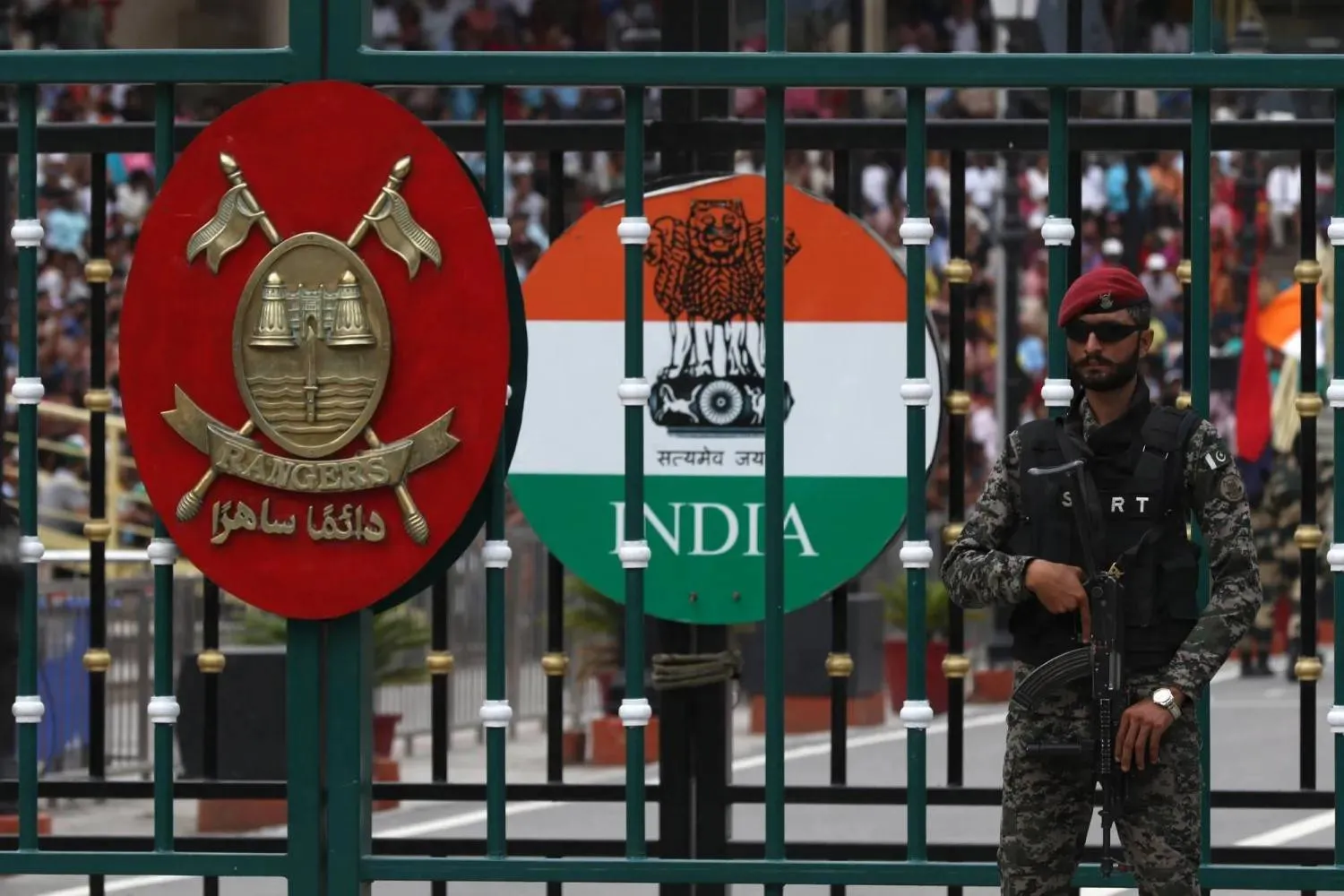
A Pakistani Ranger stands guard during the 'Beating Retreat' ceremony at the border gates of Pakistan and India at the Wagah border post near Lahore on May 4, 2025. (EPA) 
TT

How Pakistan Shot Down India's Rafale Fighter Using Chinese Gear

A Pakistani Ranger stands guard during the 'Beating Retreat' ceremony at the border gates of Pakistan and India at the Wagah border post near Lahore on May 4, 2025. (EPA) 

Just after midnight on May 7, the screen in the Pakistan Air Force's operations room lit up in red with the positions of dozens of active enemy planes across the border in India.

Air Chief Mshl. Zaheer Sidhu had been sleeping on a mattress just off that room for days in anticipation of an Indian assault.

New Delhi had blamed Islamabad for backing militants who carried out an attack the previous month in Indian Kashmir, which killed 26 civilians. Despite Islamabad denying any involvement, India had vowed a response, which came in the early hours of May 7 with air strikes on Pakistan.

Sidhu ordered Pakistan's prized Chinese-made J-10C jets to scramble.

A senior Pakistani Air Force (PAF) official, who was present in the operations room, said Sidhu instructed his staff to target Rafales, a French-made fighter that is the jewel of India's fleet and had never been downed in battle.

“He wanted Rafales,” said the official.

The hour-long fight, which took place in darkness, involved some 110 aircraft, experts estimate, making it the world's largest air battle in decades.

The J-10s shot down at least one Rafale, Reuters reported in May, citing US officials.

Its downing surprised many in the military community and raised questions about the effectiveness of Western military hardware against untested Chinese alternatives.

Shares of Dassault, which makes the Rafale, dipped after reports the fighter had been shot down. Indonesia, which has outstanding Rafale orders, has said it is now considering purchasing J-10s – a major boost to China’s efforts to sell the aircraft overseas.

But Reuters interviews with two Indian officials and three of their Pakistani counterparts found that the performance of the Rafale wasn't the key problem: Central to its downing was an Indian intelligence failure concerning the range of the China-made PL-15 missile fired by the J-10 fighter. China and Pakistan are the only countries to operate both J-10s, known as Vigorous Dragons, and PL-15s.

The faulty intelligence gave the Rafale pilots a false sense of confidence they were out of Pakistani firing distance, which they believed was only around 150 km, the Indian officials said, referring to the widely cited range of PL-15's export variant.

“We ambushed them,” the PAF official said, adding that Islamabad conducted an electronic warfare assault on Delhi's systems in an attempt to confuse Indian pilots. Indian officials dispute the effectiveness of those efforts.

“The Indians were not expecting to be shot at,” said Justin Bronk, air warfare expert at London's Royal United Services Institute (RUSI) think-tank. “And the PL-15 is clearly very capable at long range.”

The PL-15 that hit the Rafale was fired from around 200km away, according to Pakistani officials, and even farther according to Indian officials. That would make it among the longest-range air-to-air strikes recorded.

Delhi hasn't acknowledged a Rafale being shot down, but France's air chief told reporters in June that he had seen evidence of the loss of that fighter and two other aircraft flown by India, including a Russian-made Sukhoi.

A top Dassault executive also told French lawmakers that month that India had lost a Rafale in operations, though he didn't have specific details.

Reuters spoke to eight Pakistani and two Indian officials to piece together an account of the aerial battle, which marked the start of four days of fighting between the two nuclear-armed neighbors that caused alarm in Washington. The officials all spoke on condition of anonymity to discuss national security matters.

Not only did Islamabad have the element of surprise with its missiles' range, the Pakistani and Indian officials said, but it managed to more efficiently connect its military hardware to surveillance on the ground and in the air, providing it with a clearer picture of the battlefield. Such networks, known as “kill chains,” have become a crucial element of modern warfare.

Four Pakistani officials said they created a “kill chain,” or a multi-domain operation, by linking air, land and space sensors. The network included a Pakistani-developed system, Data Link 17, which connected Chinese military hardware with other equipment, including a Swedish-made surveillance plane, two Pakistani officials said.

The system allowed the J-10s flying closer to India to obtain radar feeds from the surveillance plane cruising further away, meaning the Chinese-made fighters could turn their radars off and fly undetected, according to experts. Pakistan's military did not respond to requests for comment on this point.

Delhi is trying to set up a similar network, the Indian officials said, adding that their process was more complicated because the country sourced aircraft from a wide range of exporters.

Retired UK Air Mshl. Greg Bagwell, now a fellow at RUSI, said the episode didn’t conclusively prove the superiority of either Chinese or Western air assets but it showed the importance of having the right information and using it.

“The winner in this was the side that had the best situational awareness,” said Bagwell.

Change in Tactics

After India in the early hours of May 7 struck targets in Pakistan that it called terrorist infrastructure, Sidhu ordered his squadrons to switch from defense to attack.

Five PAF officials said India had deployed some 70 planes, which was more than they had expected and provided Islamabad's PL-15s with a target-rich environment. India has not said how many planes were used.

The May 7 battle marked the first big air contest of the modern era in which weaponry is used to strike targets beyond visual range, said Bagwell, noting both India and Pakistan's planes remained well within their airspaces across the duration of the fight.

Five Pakistani officials said an electronic assault on Indian sensors and communications systems reduced the situational awareness of the Rafale's pilots.

The two Indian officials said the Rafales were not blinded during the skirmishes and that Indian satellites were not jammed. But they acknowledged that Pakistan appeared to have disrupted the Sukhoi, whose systems Delhi is now upgrading.

India’s chief of defense staff Gen. Anil Chauhan previously told Reuters that Delhi quickly “rectified tactics” after the initial losses.

After the May 7 air battle, India began targeting Pakistani military infrastructure and asserting its strength in the skies. Its Indian-made BrahMos supersonic cruise missile repeatedly sliced through Pakistan's air defenses, according to officials on both sides.

On May 10, India said it struck at least nine air bases and radar sites in Pakistan. It also hit a surveillance plane parked in a hangar in southern Pakistan, according to Indian and Pakistani officials. A ceasefire was agreed later that day, after US officials held talks with both sides.


Somalia’s Al-Shabaab Vows to Fight Any Israeli Use of Somaliland

Residents wave Somaliland flags as they gather to celebrate Israel's announcement recognizing Somaliland's statehood in downtown Hargeisa, on December 26, 2025. (AFP)
TT

Somalia’s Al-Shabaab Vows to Fight Any Israeli Use of Somaliland

Residents wave Somaliland flags as they gather to celebrate Israel's announcement recognizing Somaliland's statehood in downtown Hargeisa, on December 26, 2025. (AFP)

Somalia's Al-Qaeda-linked militant group Al-Shabaab vowed Saturday to fight any attempt by Israel "to claim or use parts of Somaliland" following its recognition of the breakaway territory.

"We will not accept it, and we will fight against it," Al-Shabaab said in a statement.

Its spokesman Ali Dheere said in the statement that Israel's recognition of Somaliland as a sovereign state showed it "has decided to expand into parts of the Somali territories" to support "the apostate administration in the northwest regions".

Israel said Friday it was officially recognizing Somaliland, a first for the self-proclaimed republic that in 1991 declared it had unilaterally seceded from Somalia.

Mogadishu immediately denounced a "deliberate attack" on its sovereignty, while Egypt, Türkiye, the six-nation Gulf Cooperation Council and the Saudi-based Organization of Islamic Cooperation all condemned Israel's move.

Regional analysts believe that a rapprochement with Somaliland could allow Israel to secure better access to the Red Sea.

In addition, press reports a few months ago said Somaliland was among a handful of African territories willing to host Palestinians expelled by Israel, but neither the Somaliland authorities nor the Israeli government has ever commented on those reports.

"It is humiliation of the highest level today, to see some Somali people celebrating a recognition by the Israeli Prime Minister (Benjamin) Netanyahu" when "Israel is the biggest enemy of the Islamic society".

The territory of Somaliland is roughly a third the size of France and corresponds more or less to the former British Somaliland protectorate.

It has its own money, army and police and enjoys relative stability compared to its neighbors.

But, until now, Somaliland had not been publicly recognized by any country, which has kept it politically and economically isolated despite its location on one of the world's busiest trade routes connecting the Indian Ocean to the Suez Canal.

Somalia has been battling Al-Shabaab for nearly 20 years and while security has significantly improved in Mogadishu, the war still rages 60 kilometers from the capital.


China Welcomes Cambodia-Thailand Ceasefire, Plans Talks

A handout photo made available by the Defense Ministry of Thailand shows Cambodian Defense Minister Tea Seiha (L) and Thai Defense Minister Natthaphon Narkphanit exchanging ceasefire agreement documents during a General Border Committee Meeting in Ban Pak Kard, Chanthaburi Province, Thailand, 27 December 2025. (EPA/Defense Ministry of Thailand/Handout)
TT

China Welcomes Cambodia-Thailand Ceasefire, Plans Talks

A handout photo made available by the Defense Ministry of Thailand shows Cambodian Defense Minister Tea Seiha (L) and Thai Defense Minister Natthaphon Narkphanit exchanging ceasefire agreement documents during a General Border Committee Meeting in Ban Pak Kard, Chanthaburi Province, Thailand, 27 December 2025. (EPA/Defense Ministry of Thailand/Handout)

China on Saturday welcomed a joint ceasefire statement signed by Cambodia and Thailand and said its foreign minister would meet his counterparts from both countries in China, according to a notice posted on the foreign ministry's website late in the day.

Cambodia and Thailand agreed ‌on Saturday to ‌a second ceasefire ‌in ⁠recent months, ‌ending weeks of intense border clashes described as the worst fighting in years between the two Southeast Asian neighbors.

China's foreign ministry said the agreement showed that dialogue and consultation ⁠were practical and effective ways to resolve ‌complex disputes.

Foreign Minister Wang ‍Yi will meet ‍Cambodian counterpart Prak Sokhonn and ‍Thailand's Sihasak Phuangketkeow in southwestern Yunnan province on December 28–29, the ministry said, adding that military representatives from all three countries would also attend.

China said it was willing to continue ⁠providing a platform and facilitating more substantive and detailed communication between Cambodia and Thailand.

"China will play a constructive role in its own way to help Cambodia and Thailand consolidate the ceasefire, resume exchanges, rebuild political mutual trust, achieve a turnaround in relations and maintain regional ‌peace," the ministry said.


Netanyahu to Meet Trump in US on Monday for Talks on Iran, Gaza, Hezbollah, Syria

 Israeli Prime Minister Benjamin Netanyahu speaks during a joint press conference with Greek Prime Minister Kyriakos Mitsotakis and Cypriot President Nikos Christodoulides (not pictured) after a trilateral meeting in Jerusalem on December 22, 2025. (AFP)
Israeli Prime Minister Benjamin Netanyahu speaks during a joint press conference with Greek Prime Minister Kyriakos Mitsotakis and Cypriot President Nikos Christodoulides (not pictured) after a trilateral meeting in Jerusalem on December 22, 2025. (AFP)
TT

Netanyahu to Meet Trump in US on Monday for Talks on Iran, Gaza, Hezbollah, Syria

 Israeli Prime Minister Benjamin Netanyahu speaks during a joint press conference with Greek Prime Minister Kyriakos Mitsotakis and Cypriot President Nikos Christodoulides (not pictured) after a trilateral meeting in Jerusalem on December 22, 2025. (AFP)
Israeli Prime Minister Benjamin Netanyahu speaks during a joint press conference with Greek Prime Minister Kyriakos Mitsotakis and Cypriot President Nikos Christodoulides (not pictured) after a trilateral meeting in Jerusalem on December 22, 2025. (AFP)

Israeli Prime Minister Benjamin Netanyahu is due to meet US President Donald Trump in Florida on Monday, an Israeli official told AFP, in what is seen as a crucial visit for the next steps of the fragile Gaza truce plan.

It will be Netanyahu's fifth visit to see key ally Trump in the United States this year.

His trip comes as the Trump administration and regional mediators push to proceed to the second stage of the ceasefire between Israel and Hamas in the Gaza Strip.

An Israeli official on Saturday said Netanyahu would leave for the US on December 28 and meet with Trump a day later in Florida, without providing a specific location.

Trump told reporters in mid-December that Netanyahu would probably visit him in Florida during the Christmas holidays.

"He would like to see me. We haven't set it up formally, but he'd like to see me," Trump said before leaving for his Mar-a-Lago resort.

Israel's Yedioth Ahronoth newspaper reported on Wednesday that a wide range of regional issues was expected to be discussed, including Iran, talks on an Israel-Syria security agreement, the ceasefire with Hezbollah in Lebanon and the next stages of the Gaza deal.

- 'Going nowhere' -

Concerning Gaza, the timing of the meeting is "very significant", said Gershon Baskin, the co-head of peacebuilding commission the Alliance for Two States, who has taken part in back-channel negotiations with Hamas.

"Phase one is basically over, there's one remaining Israeli deceased hostage which they (Hamas) are having difficulty finding," he told AFP.

"Phase two has to begin, it's even late and I think the Americans realize that it's late because Hamas has had too much time to re-establish its presence and this is certainly not a situation that the Americans want to leave in place," he added.

Progress in moving to the second phase of October's Gaza ceasefire agreement, which was brokered by Washington and its regional allies, has so far been slow.

Both sides allege frequent ceasefire violations and mediators fear that Israel and Hamas alike are stalling.

Under the next stages, Israel is supposed to withdraw from its positions in Gaza, an interim authority is to govern the Palestinian territory instead of Hamas, and an international stabilization force (ISF) is to be deployed.

It also includes a provision for Palestinian movement Hamas to lay down its weapons -- a major sticking point.

On Friday, US news outlet Axios reported that the meeting between Trump and Netanyahu was key to advancing to the next steps of the deal.

Citing White House officials, Axios said that the Trump administration wanted to announce the Palestinian technocratic government for Gaza and the ISF as soon as possible.

It reported that senior Trump officials were growing exasperated "as Netanyahu has taken steps to undermine the fragile ceasefire and stall the peace process".

"There are more and more signs that the American administration is getting frustrated with Netanyahu," said Yossi Mekelberg, a Middle East expert at London-based think-tank Chatham House.

"The question is what it's going to do about it," he added, "because phase two is right now going nowhere."

- Iran tops agenda -

While the Trump administration is keen for progress on Gaza, analysts said the prospect of Iran rebuilding its nuclear program and ballistic missile capabilities was likely to top the agenda for Netanyahu.

"All the news that we've heard in the Israeli media over the last two weeks about Iran building up its missiles and being a threat to Israel is all part of a planned strategy of deflecting attention from Gaza to the issue that Netanyahu loves to talk about which is Iran," said Baskin.

In June, Israel launched strikes on Iranian military and nuclear sites as well as residential areas.

Iran responded with drone and missile strikes on Israel, and later on in the 12-day war, the United States joined Israel in targeting Iranian nuclear facilities.

Mekelberg shared the view that Netanyahu could be attempting to shift attention from Gaza onto Iran.

With Israel entering an election year, Mekelberg said with regards to the Trump meeting, Netanyahu would be "taking a defensive approach, to minimize what can be difficult for him coming back home".

"Everything is connected to staying in power," he said of the long-time Israeli premier.
