

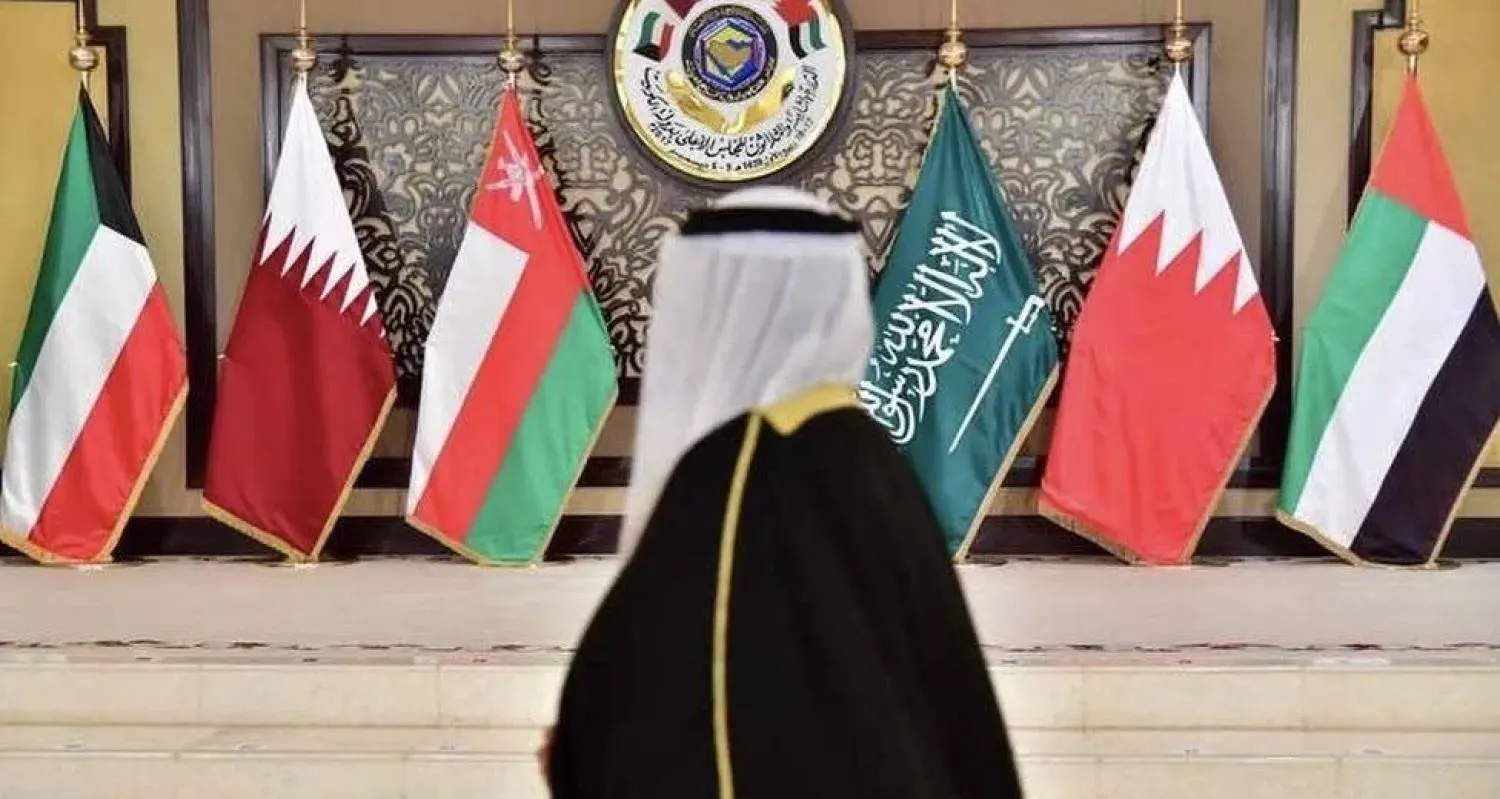

Gulf States Strike Delicate Balance Between Growth, Inflation Control

Flags of the Gulf Cooperation Council countries at an event (AFP)
TT

Gulf States Strike Delicate Balance Between Growth, Inflation Control

Flags of the Gulf Cooperation Council countries at an event (AFP)

Amid the US Federal Reserve’s continued decision to hold interest rates between 4.25% and 4.5%, central banks across the Gulf Cooperation Council (GCC) have followed suit, maintaining their monetary policies closely aligned with the dollar to which their currencies are pegged.

While this approach offers monetary stability, it presents a complex balancing act for GCC economies: stimulating non-oil growth while keeping inflation in check. The region continues to face the ripple effects of global economic uncertainty and supply chain disruptions, prompting governments to reassess policy priorities.

Hamza Dweik, Head of Trading for the Middle East and North Africa at Saxo Bank, told Asharq Al-Awsat that the GCC’s steady monetary stance has reinforced investor confidence in local financial markets, especially amid signs of gradual global economic recovery.

However, he warned that persistently high interest rates could weigh on non-oil sectors, such as real estate and consumer services.

Dweik noted that the Gulf states are well-positioned thanks to strong fiscal surpluses, robust sovereign wealth funds, and relatively stable oil prices, averaging around $73 per barrel. These factors enable governments to maintain capital spending and finance ambitious infrastructure and diversification projects.

To ensure sustained economic expansion without fueling inflation, the expert suggested targeted incentives for sectors like real estate and small businesses, while preserving social spending to protect lower-income groups affected by rising living costs.

Disciplined Policy Frameworks

The stability in interest rates offers GCC central banks room to monitor liquidity conditions, manage credit growth, and expand long-term financing tools, thus reducing dependency on short-term borrowing and contributing to financial stability.

Economic diversification remains critical. GCC countries are pushing forward with strategies in tourism, renewable energy, and digital technologies, in line with Saudi Arabia’s Vision 2030 and the UAE’s Net Zero by 2050 Strategy.

Dweik also emphasized the importance of bolstering food and energy supply chains, as well as improving price-monitoring mechanisms, to mitigate imported inflation pressures exacerbated by ongoing global supply chain challenges.

Cost of Borrowing and Clear Outlook

Vijay Valecha, Chief Investment Officer at Century Financial, highlighted that US monetary policy directly affects GCC economies due to their dollar pegs. He added that rate stability provides borrowers in the region with greater clarity over future financing costs.

Valecha projected solid non-oil GDP growth across the GCC in 2025, with regional economies expected to expand between 3.2% and 3.5%. In 2024, the non-oil sector grew by 3.7%, signaling a positive trajectory.

Saudi Arabia and the UAE are leading this growth. Saudi Arabia’s non-oil GDP is forecast to grow by 3.6% in 2025, while the UAE could achieve 5.5% growth, driven by continued investment in infrastructure, tourism, technology, and logistics.

With global commodity prices stabilizing and government spending remaining disciplined, Valecha sees the macroeconomic environment in the GCC as favorable for growth. He emphasized the need for continued diversification into manufacturing and clean energy to safeguard against external shocks.

Dweik concluded by calling for deeper economic integration among GCC countries, especially in areas like intra-GCC trade, infrastructure development, and digital transformation. Such efforts, he said, would help build a more competitive and resilient regional economy.



Visa Relocates European Headquarters to London's Canary Wharf

FILE PHOTO: A drone view of London's Canary Wharf financial district, two days before the government presents its critical pre-election budget, in London, Britain March 3, 2024. REUTERS/Yann Tessier/File Photo
TT

Visa Relocates European Headquarters to London's Canary Wharf

FILE PHOTO: A drone view of London's Canary Wharf financial district, two days before the government presents its critical pre-election budget, in London, Britain March 3, 2024. REUTERS/Yann Tessier/File Photo

Visa is relocating its European headquarters to London's Canary Wharf financial district, the Canary Wharf Group said on Friday.

The firm is leasing 300,000 square feet on a 15-year term at One Canada Square, and is set to relocate from Paddington in the summer of 2028, the group added.

Canary Wharf Group, which runs the wider financial district and is co-owned by QIA and Canada's Brookfield, was hit hard by the pandemic-induced fall in office demand.

The area is now enjoying a rebound as more firms push staff to return to office, Reuters reported.

"Canary Wharf continues to attract a diverse range of global businesses. We are delighted to welcome Visa who have chosen the Wharf for their European headquarters as the best location to support their business growth," Shobi Khan, Canary Wharf Group CEO, said.

JPMorgan Chase last week unveiled a plan to build a tower in the Canary Wharf financial district that will contribute 9.9 billion pounds ($13.2 billion) over six years to the local economy - including the cost of construction - and create 7,800 jobs.

Qatar's sovereign wealth fund is revising plans for a revamp of its HSBC skyscraper in the east London district to retain more office space, Reuters reported in November.


World Bank Raises GCC Growth Forecast

GCC leaders and their representatives attend the 46th Gulf Summit held in the Bahraini capital (BNA) 
TT

World Bank Raises GCC Growth Forecast

GCC leaders and their representatives attend the 46th Gulf Summit held in the Bahraini capital (BNA) 

The World Bank has lifted its growth forecast for the Gulf Council Cooperation (GCC) to 4.5% for 2026, supported by structural reforms and rapid digital innovation.

A WB forecast issued in October had projected 4.4% growth for 2026.

In its latest edition of the Gulf Economic Update (GEU), the World Bank said economic growth across the Gulf council is gaining momentum in 2025.

It said GCC countries are going through rapid structural transformation to diversify their economies away from oil, where jobs are at the heart of national vision.

The GCC countries are also in a unique position to attract and retain talent equipped with digital skills to build, operate and sustain the large digital infrastructure investments made in Digital Public Infrastructure, cloud computing, data centers and AI.

In Bahrain, the report said the country continues to show robust growth, driven primarily by its non-oil sectors, notably financial services and tourism.

Investments in infrastructure, gas, logistics, financial technology, and tourism are expected to sustain medium-term growth.

However, the report showed that fiscal pressures persist due to high deficits and elevated public debt while the economy is expected to expand by 3.5% in 2025.

Kuwait is emerging from two challenging years marked by regional instability, subdued oil prices, and OPEC+ production cuts, according to the WB report.

After consecutive GDP contractions in 2023 and 2024, the economy is showing signs of recovery, with positive growth expected in 2025 and beyond, supported by higher oil exports.

The recent passage of a financing and liquidity law enabling government debt issuance is a positive step toward easing fiscal pressures, the report said, adding that the economy is expected to expand by 2.7% in 2025.

Oman, the WB report said, has accelerated its diversification efforts, with non-hydrocarbon sectors increasingly driving growth.

The economy is expected to expand by 3.1% in 2025, with further acceleration anticipated in the medium term.

As for Qatar, it maintains a steady growth trajectory, underpinned by strong non-oil sector performance and robust external surpluses despite lower hydrocarbon prices.

As a global leader in liquified natural gas (LNG) production, Qatar is set to significantly boost output through the North Field expansion, reinforcing its position in global LNG markets.

Fiscal and current account surpluses are expected to remain strong, supported by LNG expansion as real GDP growth is projected to reach 2.8% in 2025.

Saudi Arabia is experiencing renewed economic momentum, with both oil and non-oil sectors contributing to growth. Real GDP growth is expected to reach 3.8% in 2025.

The report noted that fiscal pressures have intensified due to subdued oil prices, resulting in a widening deficit.

The country is leveraging its low debt levels to access global capital markets, with recent borrowing raising the debt-to-GDP ratio to close to 32%.

Ongoing reforms under Vision 2030 and changes in foreign ownership regulations are expected to further attract investment.

Also, the WB said, the UAE continues to sustain economic dynamism and diversification, with real GDP growth projected to reach 4.8% in 2025.

The Emirates stands out for its diversified economy, with balanced growth between non-oil and oil sectors, it said, adding that it is also leading in diversifying its export base.

Gulf and AI

The report showed that all GCC countries have robust telecom networks, with 5G coverage exceeding 90% and widespread fiber connections.

It said significant investments in data centers and high-performance computing (HPC) systems, especially in Saudi Arabia and UAE, underpin the region’s digital economy and AI readiness.

“Diversification and digital transformation are no longer optional. They are essential for long-term stability and prosperity. Strategic investments in non-oil sectors and innovation will be critical to sustaining growth and stability,” said Safaa El Tayeb El Kogali, World Bank Division Director for the Gulf Cooperation Council.

“The GCC’s digital leap is remarkable. With robust infrastructure and growing computer power, skills and competencies in Artificial intelligence (AI) capabilities, the region is well-placed to lead in innovation, provided we address labor and environmental challenges proactively,” she added.

The report also showed that women’s participation in the fields of Science, Technology, Engineering, and Mathematics (STEM) surpasses the global average, further reinforcing the region’s digital competitiveness.


Saudi Industry Ministry Signs MoUs to Advance Manufacturing Empowerment

The agreements were signed during the "Industrial Transformation Saudi Arabia 2025” Exhibition. SPA
TT

Saudi Industry Ministry Signs MoUs to Advance Manufacturing Empowerment

The agreements were signed during the "Industrial Transformation Saudi Arabia 2025” Exhibition. SPA

The Ministry of Industry and Mineral Resources has signed a number of memoranda of understanding (MoUs) with leading local and international companies to advance advanced manufacturing, support local content, and strengthen national supply chains, enhancing the regional and global competitiveness of Saudi industry.

The agreements were signed during the "Industrial Transformation Saudi Arabia 2025” Exhibition, organized by the ministry in partnership with Deutsche Messe and Riyadh Exhibitions Company Ltd.

The ministry signed two memoranda to provide innovative financing solutions for industrial establishments, strengthen national supply chains, and support local content.

Additionally, the ministry's National Center for Advanced Manufacturing and Production signed several memoranda of understanding with local and international industrial and advisory companies to support the path of advanced manufacturing, develop supply chains, enhance technological innovation, and boost the competitiveness of national factories, in line with the National Industrial Strategy and Saudi Vision 2030.

These strategic partnerships are part of the ministry's ongoing efforts to develop the Kingdom's industrial ecosystem, enable manufacturers to access the latest industrial solutions, support supply chain development, and stimulate innovation, contributing to the building of a sustainable industrial sector that competes regionally and globally.