


Egypt, Türkiye Highlight ‘Qualitative Development’ in Bilateral Relations

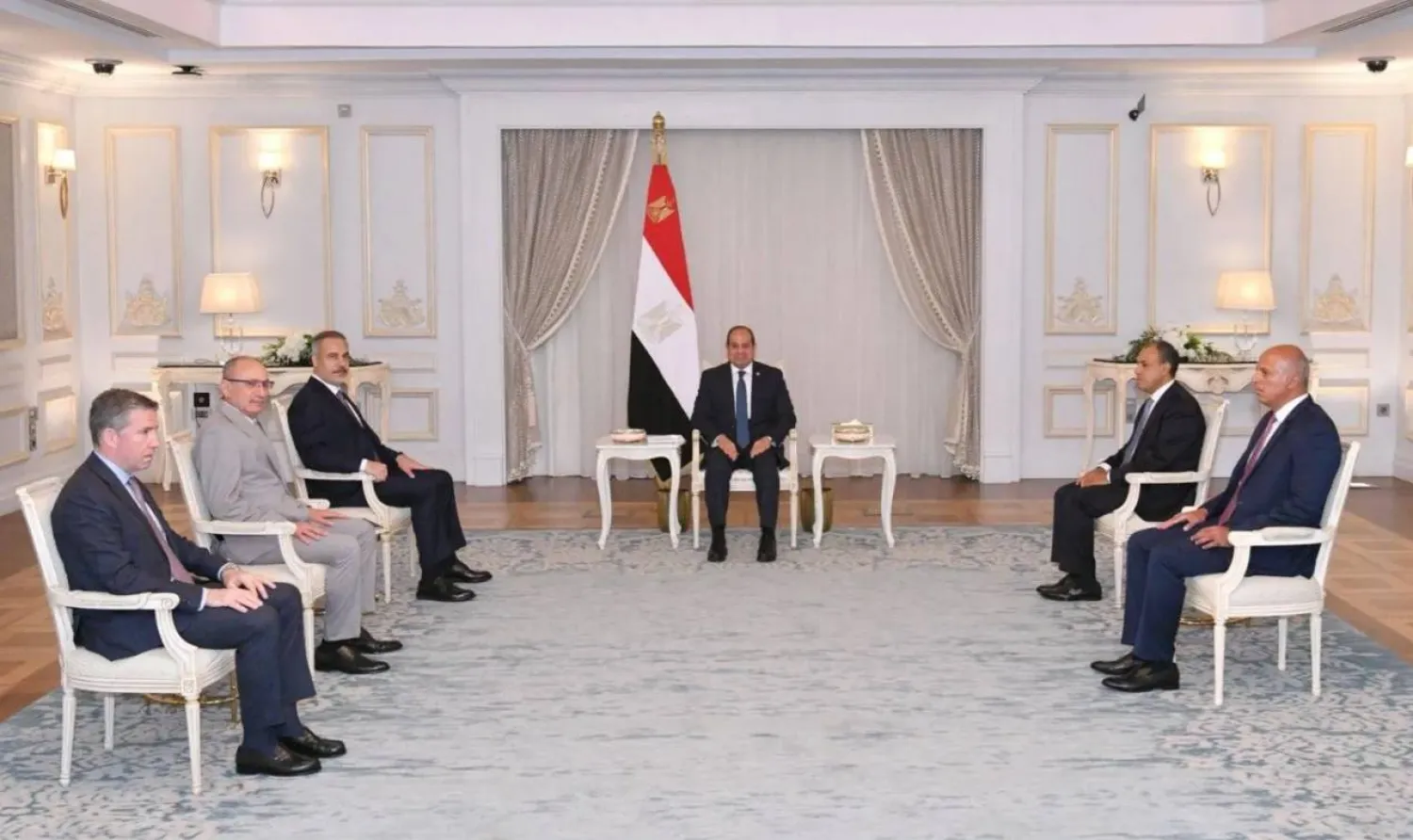
Egyptian President Abdel Fattah El-Sisi on Saturday held talks with Turkish Foreign Minister Hakan Fidan (Egyptian Presidency)
TT

Egypt, Türkiye Highlight ‘Qualitative Development’ in Bilateral Relations

Egyptian President Abdel Fattah El-Sisi on Saturday held talks with Turkish Foreign Minister Hakan Fidan (Egyptian Presidency)

Egyptian President Abdel Fattah El-Sisi and Foreign Minister Badr Abdel-Aty on Saturday held separate talks with Turkish Foreign Minister Hakan Fidan, highlighting the qualitative development in the Egyptian-Turkish relations.

The meetings tackled regional developments, which experts said is an important step in helping resolve challenges in the Middle East.

Presidential spokesperson Mohamed El-Shennawy said Sisi and Fidan affirmed their rejection of an Israeli military re-occupation of Gaza.

They reiterated the urgent need for an immediate ceasefire, the entry of humanitarian aid, and the release of hostages and captives. The two sides also reaffirmed their rejection of the displacement of Palestinians.

Concerning developments in Libya, Syria, and Sudan, Sisi and Fidan underscored the importance of respecting the sovereignty of these countries, and preserving their territorial integrity and the resources of their people.

Later, the Turkish FM held talks with Abdel-Aty. The ministers discussed the pressing regional crises, according to Foreign Ministry spokesperson Tamim Khallaf.

“The displacement of Palestinians from the Gaza Strip and areas in the West Bank is a red line that we will not allow to occur,” Abdel-Aty said at a joint press conference with his Turkish counterpart.

He reiterated Egypt’s ongoing mediation efforts with Qatar and the United States to reach a ceasefire agreement, alongside facilitating the delivery of humanitarian aid to Gaza.

Abdel-Aty urged greater international pressure on Israel to increase the number of aid trucks and ensure their unhindered entry.

For his part, Fidan said Israel's policy aimed to force Palestinians out of their lands through hunger and that it aimed to permanently invade Gaza, adding there was no justifiable excuse for nations to continue supporting Israel.

Fidan said the Organization of Islamic Cooperation had been called to an emergency meeting.

In comments to Asharq Al-Awsat, former Egyptian Assistant Foreign Minister and member of the Egyptian Council for Foreign Affairs Rakha Ahmed Hassan stressed the importance of Fidan's visit to Egypt.

“Cooperation between both countries to address several regional issues could develop solutions to confront and possibly resolve Middle East challenges, and could serve as a lever for exerting pressure on Israel,” he said.

Echoing Hassan’s statements, Assistant Editor-in-Chief of Democracy Magazine, Karam Saeed said the visit aims to coordinate positions on solving conflicts in the region, especially after Israel's decision to occupy Gaza.

Fidan’s meeting with Abel-Aty in Cairo also tackled the situation in Sudan. The two sides discussed the importance of reaching a ceasefire and allowing aid access.

Regarding Syria, the Egyptian minister rejected any moves that would affect the security and stability of the Syrian people and condemned Israeli violations and its occupation of Syrian lands.

The talks also touched on the situation in the Horn of Africa. Abdel-Aty stressed the need to respect Somalia’s sovereignty and territorial integrity.

At the bilateral level, Sisi highlighted the qualitative development in the Egyptian-Turkish relations, particularly after the signing of the Joint Declaration in February 2024 to reactivate the meetings of the High-Level Strategic Cooperation Council and elevate them to the level of the two countries' presidents.

The two sides confirmed the necessity to boost economic cooperation between Egypt and Türkiye. The aim is to reach a trade volume of $15 billion, as agreed upon during Sisi's visit to Ankara in September 2024. They also stressed the significance of expanding the participation of Turkish companies in investment projects within Egypt.



Eight Hezbollah Members Killed in Israel’s Friday Strikes on Lebanon

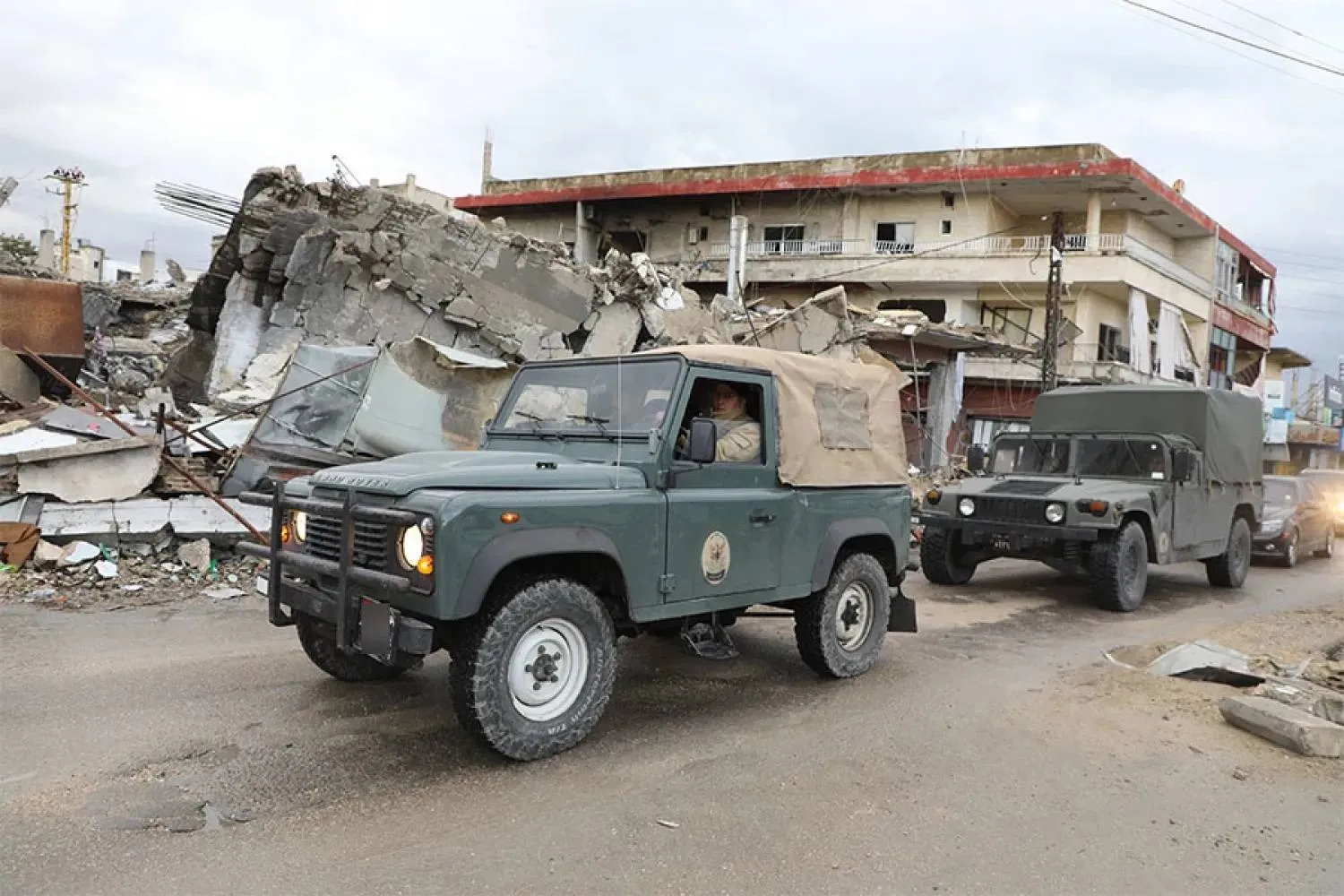
A bulldozer clears debris near heavily-damaged buildings in the village of Bednayel in Lebanon's eastern Bekaa Valley region on February 21, 2026, following Israeli strikes. (AFP)
TT

Eight Hezbollah Members Killed in Israel’s Friday Strikes on Lebanon

A bulldozer clears debris near heavily-damaged buildings in the village of Bednayel in Lebanon's eastern Bekaa Valley region on February 21, 2026, following Israeli strikes. (AFP)

Attacks carried out by Israel on Friday in eastern Lebanon killed eight members of Hezbollah, an official from the group told AFP on Saturday.

Lebanon's health ministry said Friday that a total of 10 people were killed in strikes that hit the eastern Bekaa region.

The Israeli military said it targeted "several terrorists of Hezbollah's missile array in three different command centers in the Baalbek area".

Lebanon's president on Saturday condemned the attacks, the latest despite a ceasefire with Hezbollah.

In a statement, Joseph Aoun called the attacks "a blatant act of aggression aimed at thwarting diplomatic efforts" by the United States and other nations to establish stability.

A lawmaker from Hezbollah called on Beirut to suspend meetings of a multinational committee tasked with monitoring the truce.

Washington is one of five members on the committee overseeing the ceasefire implemented in November 2024, with the body scheduled to meet again next week.

Israel has repeatedly bombed Lebanon despite the ceasefire, usually saying it is targeting Hezbollah but occasionally also the group's Palestinian ally Hamas.

The Friday attacks on southern and eastern Lebanon killed 12 people, according to the health ministry, 10 of them in the east of the country.

Israel's military said it struck "several terrorists of Hezbollah's missile array in three different command centers in the Baalbek area".

Hezbollah said a commander was killed in the raids. Its lawmaker Rami Abu Hamdan said on Saturday the group "will not accept the authorities acting as mere political analysts, dismissing these as Israeli strikes we have grown accustomed to before every meeting of the committee".

He called on Beirut to "suspend the committee's meetings until the enemy ceases its attacks".

Hezbollah, while weakened following war with Israel, remains a strong political force in Lebanon represented in parliament.

Lebanon's government last year committed to disarming the Iran-backed group, with the army saying last month it had completed the first phase of the plan covering the area near the Israeli border.

Israel, which accuses Hezbollah of rearming since the war, has called the Lebanese army's progress on disarming the group insufficient.


Ramadan’s First Friday Prayers Are Held at Jerusalem’s Al-Aqsa Mosque

Palestinians worshippers gather at Al-Aqsa Mosque compound for the first Friday prayers during the holy month of Ramadan, in the Old City of Jerusalem, 20 February 2026. (EPA)
TT

Ramadan’s First Friday Prayers Are Held at Jerusalem’s Al-Aqsa Mosque

Palestinians worshippers gather at Al-Aqsa Mosque compound for the first Friday prayers during the holy month of Ramadan, in the Old City of Jerusalem, 20 February 2026. (EPA)

Tens of thousands of Palestinians gathered under heavy Israeli restrictions at Jerusalem's Al-Aqsa Mosque compound for the first Friday prayers of the Muslim holy month of Ramadan, including some who were allowed to enter from the occupied West Bank.

The Ramadan prayers at Al-Aqsa took place for the first time since a shaky ceasefire deal between Israel and Hamas went into effect in October. It was the first opportunity many had to leave the West Bank and pray at the site in Jerusalem’s Old City since Ramadan last year.

Israel restricted the number of Palestinians allowed to enter from the West Bank to 10,000 on Friday, and only allowed men over 55 and women over 50 as well as children up to 12. It has imposed similar restrictions in the past, citing security concerns.

The hilltop, which Jews refer to as the Temple Mount, is the holiest site in Judaism and was home to the ancient biblical temples. Muslims call the site the Noble Sanctuary. Today it is home to Al-Aqsa Mosque, the third-holiest site in Islam.

It has frequently been a flashpoint in the Israeli-Palestinian conflict.

Israeli police said more than 3,000 police were deployed across Jerusalem. They said their presence was not meant to show aggression or force but was aimed at providing help in case of an emergency.

Many Palestinians view the heightened Israeli security presence, and increasing visits by religious and nationalist Israeli Jews, as a provocation. They fear that Israel intends to take over or partition the compound. The Israeli government denies having any such plans.

Jerusalem’s Islamic Waqf, the Jordanian religious authority that administers the compound, said there were 80,000 in attendance. In normal times, Ramadan Friday prayers at Al-Aqsa can draw up to 200,000.

Ezaldeen Mustafah, a Palestinian from the West Bank, was among those lamenting the restrictions.

“We need more people than this,” he said.

Some Palestinians from the West Bank on Friday said they were turned away from crossing into Jerusalem even though they had permits. Jihad Bisharat said he was told his permit had been canceled and was sent back. Israel's army didn't immediately respond to a request for comment.

The Old City, home to major religious sites sacred to Jews, Christians and Muslims, is in east Jerusalem, which Israel captured in the 1967 Mideast war, along with the West Bank and the Gaza Strip. The Palestinians want all three territories for a future state with its capital in east Jerusalem. Israel annexed east Jerusalem, a move not recognized by most of the international community, and considers the entire city to be its capital.

Ramadan in Gaza

Many Palestinians said the month’s typically festive spirit is eluding them as they struggle with grief and losses following two years of conflict in Gaza sparked by Hamas' Oct. 7, 2023, attack into Israel.

“All the mosques have been bombed,” said Ramiz Firwana, a Gaza resident who gathered with other worshippers for a Friday sermon and prayers held in schoolyard.

On Thursday evening, families sat amid the rubble and destruction for iftar, the meal held at the end of the daily dawn-to-dusk fast.

“Despite the displacement, the pain and the destruction, we want to rejoice and live,” said Mohammad Kollab, from Khan Younis. “We are not a people destined only for destruction and killing."

Israel’s military offensive has killed more than 72,000 Palestinians, according to Gaza’s Health Ministry, and caused widespread destruction and displaced most of the territory’s residents. Israel launched the offensive after Hamas-led militants killed some 1,200 people, mostly civilians, and took another 251 hostage in the initial attack.

The Oct. 10 US-brokered ceasefire deal has brought an end to major military operations and the release of the remaining hostages. But Palestinians, including many civilians, are still being killed in near-daily strikes that Israel says are aimed at militants who threaten or attack its forces.


Parliamentary Elections Preparations Kick off in Lebanon Despite Doubts They Will Be Held

Head of the Lebanese Forces Samir Geagea announces the launch of its electoral campaign in Bcharre. (National News Agency)
TT

Parliamentary Elections Preparations Kick off in Lebanon Despite Doubts They Will Be Held

Head of the Lebanese Forces Samir Geagea announces the launch of its electoral campaign in Bcharre. (National News Agency)

Political forces in Lebanon have kicked off their preparations for the upcoming parliamentary elections in May despite doubts that they may not be held. No more than ten candidates have so far submitted their nominations as the political powers work on postponing the elections while still preparing to run in them.

Shiite duo

Parliament Speaker Nabih Berri has repeatedly said that the elections will be held on time.

He received on Friday a delegation from Hezbollah’s Loyalty to the Resistance bloc headed by MP Mohammed Raad. Talks focused on political developments and the elections.

Berri’s Amal movement and Hezbollah are allies that form the so-called “Shiite duo”.

Following the meeting, Raad said both sides share the same views and that their alliance still stands.

“Together, they will form national unity against all challenges,” he declared. “We will run in the elections together.”

It remains to be seen what other alliances the Shiite duo will manage to forge.

The Free Patriotic Movement (FPM), headed by MP Jebran Bassil, had previously ended its alliance with Hezbollah, but reports have said the two sides may hold negotiations related to the elections.

Geagea: Elections are critical

Samir Geagea’s Lebanese Forces launched on Friday the party’s electoral campaign from Bcharre, announcing the nomination of MP Setrida Tawk Geagea and former MP Joseph Ishak, who will both run in the province.

More candidates will be announced within a week, leading LF sources told Asharq Al-Awsat.

Samir Geagea described the elections as a “pivotal juncture in reclaiming the state and consolidating its sovereignty,” calling for a large turnout.

Sources from the LF acknowledged that the elections may be postponed, but until that happens, the party will operate as though they are going to be held on time.

The FPM had last week cited “negative” signals that may impede the elections given the ongoing dispute over the voting of expatriates and other differences.

The LF sources told Asharq Al-Awsat that preparations for the elections are taking place “on all levels” and “covering all of their aspects.”

The remaining candidates will be announced within days, they revealed.

“For us, the main question is why and how will the current parliament’s term be extended and who will dare to even suggest it?” they said.

“We are therefore convinced that the elections will be held. We are making our preparations based on the firm conviction that the elections need to be held. There really is no reason to delay them, and we will stand against anyone who tries to do so,” they added.

The Interior Ministry had announced that candidates have between February 10 and March 10 to submit their nominations.