


Saudi Arabia Jumps to 23rd in Global Mining Investment Ranking

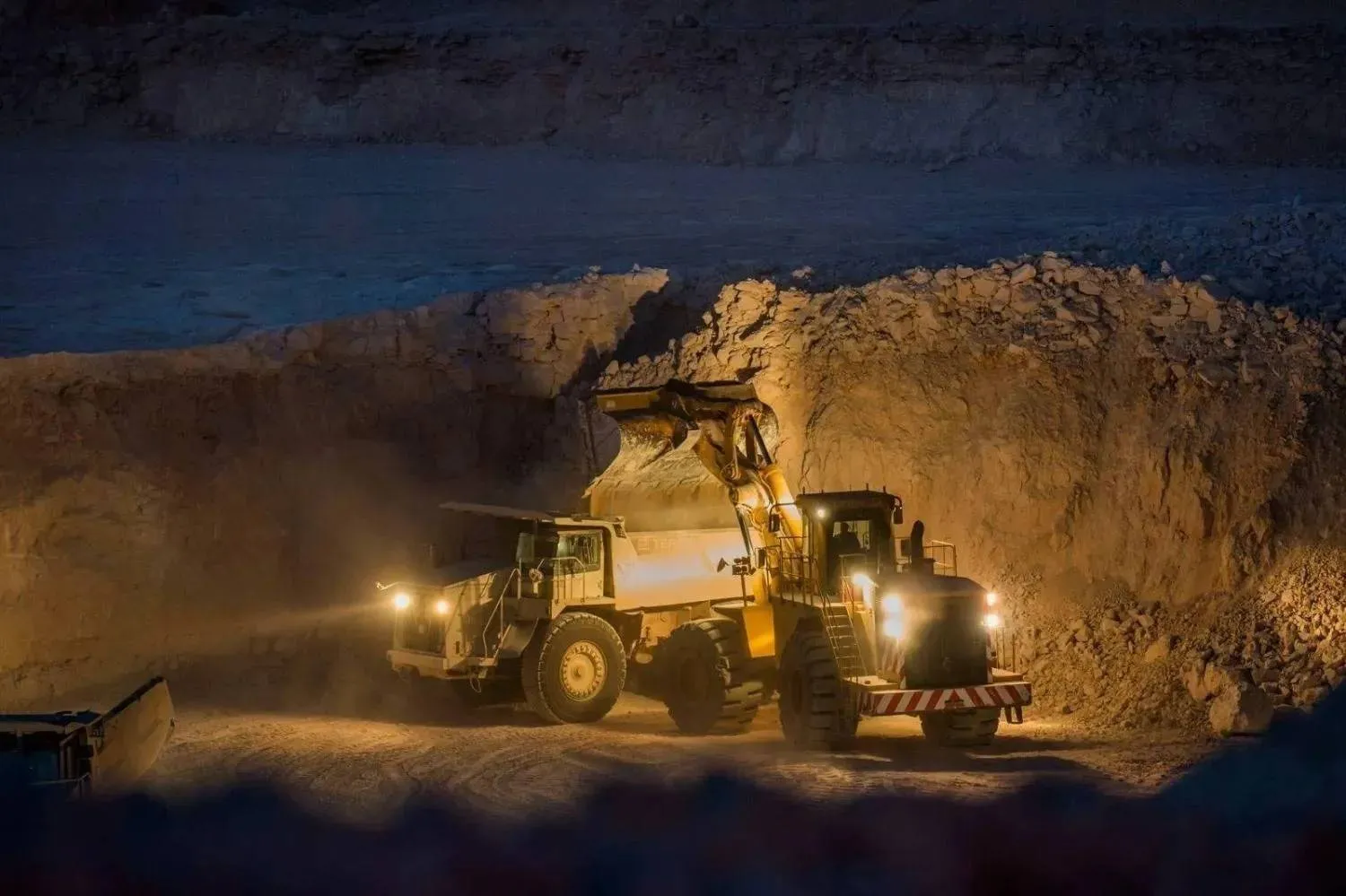
A mining site in Saudi Arabia (Ministry of Industry and Mineral Resources)
TT

Saudi Arabia Jumps to 23rd in Global Mining Investment Ranking

A mining site in Saudi Arabia (Ministry of Industry and Mineral Resources)

Saudi Arabia’s mining sector has vaulted from 104th to 23rd place worldwide in the Fraser Institute’s 2024 Investment Attractiveness Index, marking its biggest leap in the past decade and overtaking leading mining destinations in Asia and Latin America.

The milestone cements the kingdom’s position as one of the world’s fastest-rising mining powers.

The Canada-based institute’s annual survey of mining companies showed Saudi Arabia also climbed sharply in its Policy Perception Index — a measure of the stability and transparency of a country’s regulatory environment — moving from 82nd in 2013 to 20th in 2024.

The rise reflects growing global confidence in the kingdom’s stable legislative and regulatory framework.

Saudi Arabia’s geological potential index recorded a similar leap, jumping from 58th in 2013 to 24th in 2024, underlining the scale of its largely untapped mineral wealth.

The surge has been driven by ongoing geological surveys, recent discoveries and competitive licensing rounds that have drawn interest from major international firms.

Deputy Minister of Industry and Mineral Resources for Mining Affairs Khalid Al-Mudaifer said the performance reflected “a structural transformation” of the sector under the Vision 2030 economic diversification plan.

“In recent years, we have built a globally competitive investment environment for mining, backed by clear regulations, accessible geological data — including one of the most comprehensive geological mapping programs of the Arabian Shield — as well as competitive incentives and world-class infrastructure,” he told Asharq Al-Awsat.

Al-Mudaifer said the government’s focus remained on maximizing the economic value of mineral resources, creating high-quality jobs and localizing industrial supply chains. “Mining has become a key driver of industrial and economic growth, and we will build on this momentum to ensure the sector’s sustainable success,” he added.

He said the Fraser Institute’s 2024 findings underscored the impact of sweeping reforms, from security of tenure to tax rules, environmental legislation, infrastructure and community engagement, which helped place Saudi Arabia in the top quartile of the index for the first time.

Investors surveyed by the institute expressed no concerns about political stability — a factor it cited as one of the kingdom’s strengths — and praised its Mining Exploration Enablement Program as an effective tool for reducing investment risks and boosting early-stage confidence.

Between 2013 and 2024, Saudi Arabia saw dramatic improvements in several key measures, including a 305.8% rise in the clarity and effectiveness of its mining regime — from 17% to 69% — placing it 11th globally.

The clarity of land access for mining improved by 82.2% ranking seventh worldwide, while the rating of labor regulations jumped 102.2% to 91%. The quality of its geological database rose 81.8% to 60%.

The report credited Saudi Arabia’s stable regulations and ambitious reforms with reinforcing its position as a world-class mining investment destination, saying these policies reduced risk, boosted transparency, improved efficiency and expanded access to data — in line with Vision 2030 goals to diversify the economy and develop strategic sectors.

The Fraser Institute’s survey is considered one of the most authoritative global assessments of mining investment climates, used by investors, governments and financial institutions worldwide.



China’s Top Diplomat Tours Africa with Focus on Strategic Trade Routes

China's Foreign Minister Wang Yi delivers a speech at the ministerial conference of the 2024 Summit of the Forum on China-Africa Cooperation (FOCAC) in Beijing, China September 3, 2024. (Reuters)
TT

China’s Top Diplomat Tours Africa with Focus on Strategic Trade Routes

China's Foreign Minister Wang Yi delivers a speech at the ministerial conference of the 2024 Summit of the Forum on China-Africa Cooperation (FOCAC) in Beijing, China September 3, 2024. (Reuters)

China’s top diplomat began his annual New Year tour of Africa on Wednesday, focusing on strategic trade access across eastern and southern Africa as Beijing seeks to secure key shipping ​routes and resource supply lines.

Foreign Minister Wang Yi will travel to Ethiopia, Africa's fastest-growing large economy; Somalia, a Horn of Africa state offering access to key global shipping lanes; Tanzania, a logistics hub linking minerals-rich central Africa to the Indian Ocean; and Lesotho, a small southern African economy squeezed by US trade measures, on this year’s trip, which runs until January 12.

Beijing aims to highlight countries it views as model partners of President Xi Jinping's flagship "Belt and Road" infrastructure program and to expand export markets, particularly in young, ‌increasingly affluent ‌economies such as Ethiopia, where the IMF forecasts growth of ‌7.2% ⁠this ​year.

China, ‌the world's largest bilateral lender, faces growing competition from the European Union to finance African infrastructure, as countries hit by pandemic-era debt strains now seek investment over loans.

"Foreign Minister Wang's visit aims to deepen political and mutual trust," a ministry spokesperson said, adding that the trip would "strengthen exchanges and mutual understanding between the two great civilizations of China and Africa."

Wang opened 2025 by visiting Namibia, the Republic of Congo, Chad and Nigeria.

FIRST DIPLOMATIC MISSION TO SOMALIA IN DECADES

His upcoming visit ⁠to Somalia will be the first by a Chinese foreign minister since the 1980s and is expected to provide Mogadishu ‌with a diplomatic boost after Israel became the first ‍country to formally recognize the breakaway ‍Republic of Somaliland, a northern region that declared itself independent in 1991.

Beijing, which reiterated its ‍support for Somalia after the Israeli announcement in December, is keen to reinforce its influence around the Gulf of Aden, the entrance to the Red Sea and a vital corridor for Chinese trade transiting the Suez Canal to Europe.

Further south, Tanzania is central to Beijing's plan to secure access to ​Africa's vast copper deposits. Chinese firms are refurbishing the Tazara Railway that runs through the country into Zambia. Li Qiang made a landmark trip ⁠to Zambia in November, the first visit by a Chinese premier in 28 years.

The railway is widely seen as a counterweight to the US and European Union-backed Lobito Corridor, which connects Zambia to Atlantic ports via Angola and the Democratic Republic of the Congo.

CHINA CHAMPIONS FREE TRADE IN LESOTHO

By visiting the southern African kingdom of Lesotho, Wang aims to highlight Beijing's push to position itself as a champion of free trade.

Last year, China offered tariff-free market access to its $19 trillion economy for the world's poorest nations, fulfilling a pledge by Chinese President Xi Jinping at the 2024 China-Africa Cooperation summit in Beijing.

Lesotho, one of the world's poorest nations with a gross domestic product of just over $2 billion, was among the countries hardest ‌hit by US President Donald Trump's sweeping tariffs last year, facing duties of up to 50% on its exports to the United States.


Morocco to Ban Frozen Sardine Exports from February

Passengers walk in front of Fes Railway Station, decorated with Africa Cup of Nations (AFCON) theme colors and flags, in the Moroccan city of Fes, January 5, 2026. (Reuters)
TT

Morocco to Ban Frozen Sardine Exports from February

Passengers walk in front of Fes Railway Station, decorated with Africa Cup of Nations (AFCON) theme colors and flags, in the Moroccan city of Fes, January 5, 2026. (Reuters)

Morocco will halt exports of frozen sardines from February ​1 to protect domestic supplies and contain prices, the cabinet member in charge of fisheries, Zakia Driouich, said.

Sardines are a staple for ‌Moroccan households, ‌and ‌the country ⁠is ​the ‌world's top exporter of the fish, thanks to its long Atlantic and Mediterranean coastlines.

The decision was triggered by a noticeable ⁠drop in supply, Driouich told ‌members of parliament ‍late on ‍Tuesday, without specifying how ‍long the ban would last.

Pelagic species such as sardines account for around 80% ​of Morocco's coastal fish resources, compared with 20% ⁠for white fish, she said.

The national canned-sardine industry (UNICOP) urged authorities in June to act against illegal fishing after reporting falling catches.

Morocco's sardine landings dropped 46% in 2024 to 525,000 metric tons, according ‌to official data.


Saudi Cabinet Approves Operating Framework for National Minerals Program

Custodian of the Two Holy Mosques King Salman bin Abdulaziz chairs the cabinet meeting on Tuesday (SPA)
TT

Saudi Cabinet Approves Operating Framework for National Minerals Program

Custodian of the Two Holy Mosques King Salman bin Abdulaziz chairs the cabinet meeting on Tuesday (SPA)

The Saudi Cabinet approved on Tuesday the draft regulations and operating procedures of the National Minerals Program, which was authorized for establishment in July 2024.

The program focuses on boosting the efficiency and adequacy of current and future mineral supply chains and operates under the supervision of the Ministry of Industry and Mineral Resources, as part of the Kingdom’s broader efforts to maximize value from the mining sector and strengthen the continuity of mineral supply chains at both regional and global levels.

The initiative aligns with Saudi Arabia’s strategic push to develop its mining industry as a key pillar of economic diversification.

Minister of Industry and Mineral Resources Bandar Alkhorayef had previously said the program would serve as a powerful enabling tool to bolster the quality and reliability of mineral supply chains, ensure sustained supplies for local industries and major projects, support the development of national infrastructure, and help achieve the goals of Vision 2030.

The program would play an active role in driving growth in the minerals sector and unlocking the Kingdom’s significant mineral resources, he added.

The program is designed to unify key roles among relevant stakeholders, address existing gaps to ensure uninterrupted mineral supply chains, build local capabilities in the sector, contribute to exploration activities, and secure industrial supplies for domestic industries and large-scale projects.

In a related development, Riyadh will host the fifth edition of the International Mining Conference from Jan. 13-15, under the patronage of Custodian of the Two Holy Mosques King Salman bin Abdulaziz.

The event aims to further cement Saudi Arabia’s leadership in the global mining sector, with expectations that around 200 exhibiting and sponsoring entities will participate. Around 150 memorandums of understanding and strategic agreements will be signed to support global mineral supply chains.
