Syria, Jordan, US Agree to Back Ceasefire Enforcement in Sweidahttps://english.aawsat.com/arab-world/5174730-syria-jordan-us-agree-back-ceasefire-enforcement-sweida
Syria, Jordan, US Agree to Back Ceasefire Enforcement in Sweida
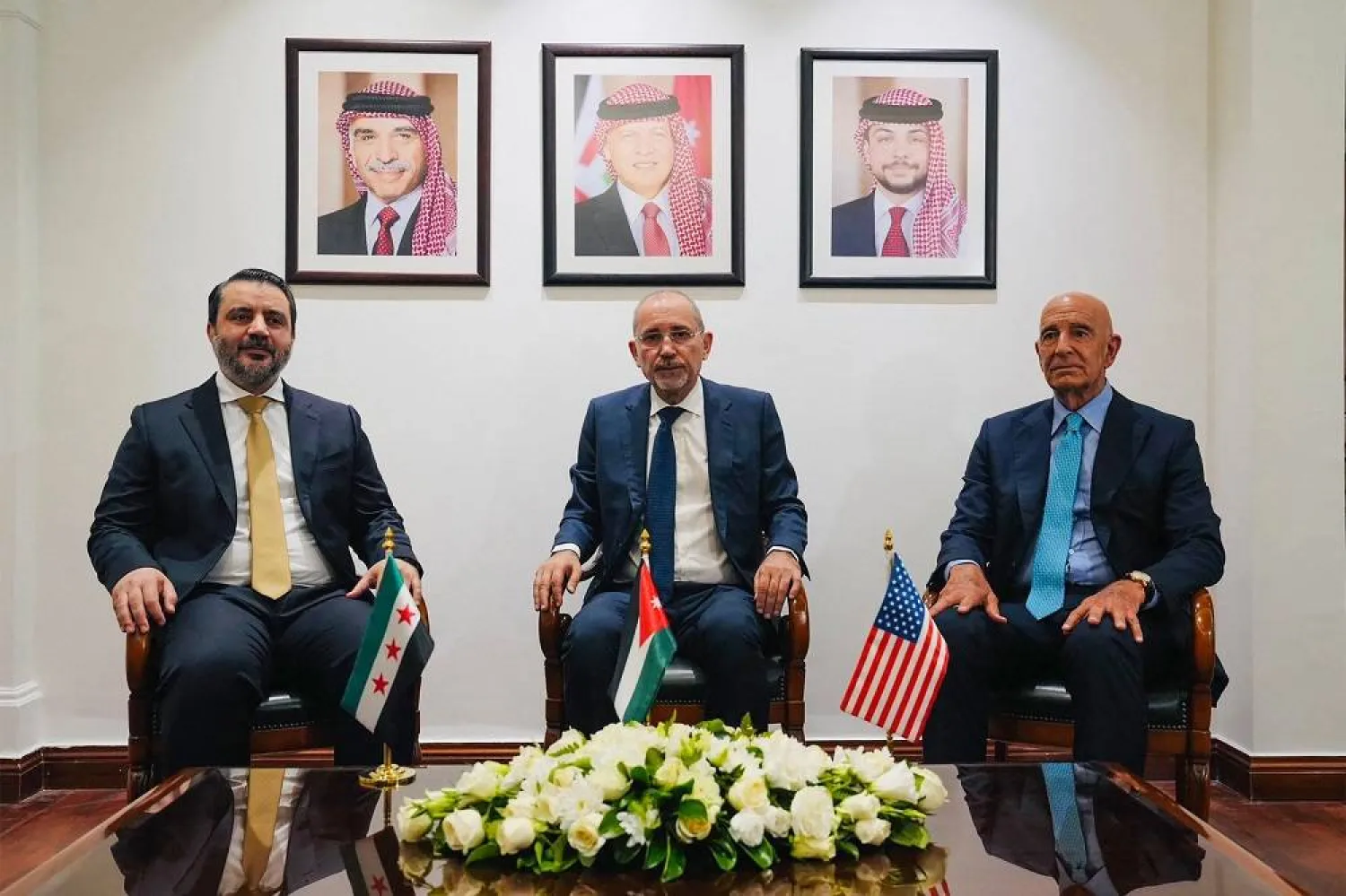
This handout picture released by the Jordanian Foreign Ministry shows (L to R) Syria's interim Foreign Minister Asaad al-Shaibani, Jordan's Foreign Minister Ayman Safadi, and US special envoy for Syria Tom Barrack meeting in Amman on August 12, 2025. (Jordanian Foreign Ministry / AFP)
Syria, Jordan, US Agree to Back Ceasefire Enforcement in Sweida
This handout picture released by the Jordanian Foreign Ministry shows (L to R) Syria's interim Foreign Minister Asaad al-Shaibani, Jordan's Foreign Minister Ayman Safadi, and US special envoy for Syria Tom Barrack meeting in Amman on August 12, 2025. (Jordanian Foreign Ministry / AFP)
Syria, Jordan and the United States agreed on Tuesday to form a joint task force to support Damascus’ efforts to uphold a ceasefire in the Sweida province in southern Syria and end the crisis there, the three countries said in a joint statement.
The agreement was reached during talks in Jordan between Syrian Foreign Minister Asaad al-Shaibani, his Jordanian counterpart Ayman Safadi, and US special envoy to Syria Tom Barrack, the statement said.
The meeting discussed ways to help rebuild Syria “on foundations that guarantee its security, stability, sovereignty, unity and non-interference in its internal affairs.”
Jordan and the United States welcomed Damascus’ steps, including “full investigations and holding all perpetrators of crimes and violations in Sweida accountable” and its readiness to cooperate with relevant UN agencies in the probe, the Syrian foreign ministry said.
They also praised Syria’s moves to expand humanitarian aid access to all areas of Sweida, restore disrupted services, start community reconciliation, and promote civil peace.
Both countries reiterated their “full solidarity” with Syria’s security, stability, sovereignty and territorial integrity. Sweida and its communities were an “integral part of Syria” whose residents’ rights must be preserved in the rebuilding process, the statement said.
The three sides agreed to meet again in the coming weeks to continue Tuesday’s discussions.
Barrack said on X: “Syria remains steadfastly committed to a united process that honors and protects all its constituencies, fostering a shared future for the Syrian people despite intervening forces seeking to disrupt and displace its communities.”
“Delivering justice and ending impunity are paramount to achieving lasting peace,” he stressed.
“The Syrian government has pledged to utilize all resources to hold perpetrators of the Sweida atrocities accountable, ensuring no one escapes justice for violations against its citizens,” he added. “Syria will fully cooperate with the UN to investigate these crimes.”
During a meeting with Shaibani, Safadi reaffirmed Jordan’s rejection of foreign interference in Syria and its support for the country’s security, sovereignty and territorial integrity, according to a Jordanian foreign ministry statement.
The FMs condemned repeated Israeli air strikes and incursions into Syria, calling them a “flagrant violation of international law” that threatened regional stability.
They discussed efforts to cement the Sweida truce, agreed last month after violence between armed groups in the mainly Druze province killed hundreds.
On X, Shaibani said Syria was committed to protecting Sweida’s Druze, Bedouin and Christian residents and to countering any sectarian or inciting rhetoric. “Our Druze people are an integral part of Syria... we reject any attempt to marginalize them under any pretext,” he said.
He pledged accountability for all violations in Sweida “regardless of the party involved,” saying justice was essential to building a state governed by law.
Emboldened Israeli Settlers Lead a Surge of Attacks on Palestinians’ Olive Harvesthttps://english.aawsat.com/arab-world/5332827-emboldened-israeli-settlers-lead-surge-attacks-palestinians%E2%80%99-olive-harvest
A Palestinian woman picks olives during the harvest season in a Palestinian-owned olive grove in the village of Turmus Ayya, northeast of Ramallah in the Israeli-occupied West Bank, on October 20, 2026. (AFP)
TT
TT
Emboldened Israeli Settlers Lead a Surge of Attacks on Palestinians’ Olive Harvest
A Palestinian woman picks olives during the harvest season in a Palestinian-owned olive grove in the village of Turmus Ayya, northeast of Ramallah in the Israeli-occupied West Bank, on October 20, 2026. (AFP)
Attacks by Jewish settlers have surged this year during the Palestinians’ annual olive harvest in the occupied West Bank.
Scenes of Palestinians, journalists and diplomats beaten by masked men spotlight how settlers have been establishing themselves deeper in Palestinian communities, emboldened by Prime Minister Benjamin Netanyahu ’s government. At least four Palestinians have been killed this season, whether by settlers or Israeli soldiers.
The violence has brought new international criticism at a time when Netanyahu faces a razor-thin race in next Tuesday's legislative elections. But the prime minister is doubling down. After a West Bank shooting attack blamed on Palestinian gunmen that killed two Israeli soldiers on Friday, Netanyahu praised settlers as “heroic” and vowed to “destroy the terror infrastructure and establish more and more settlements.”
Here’s a look at the olive harvest and the tensions around it:
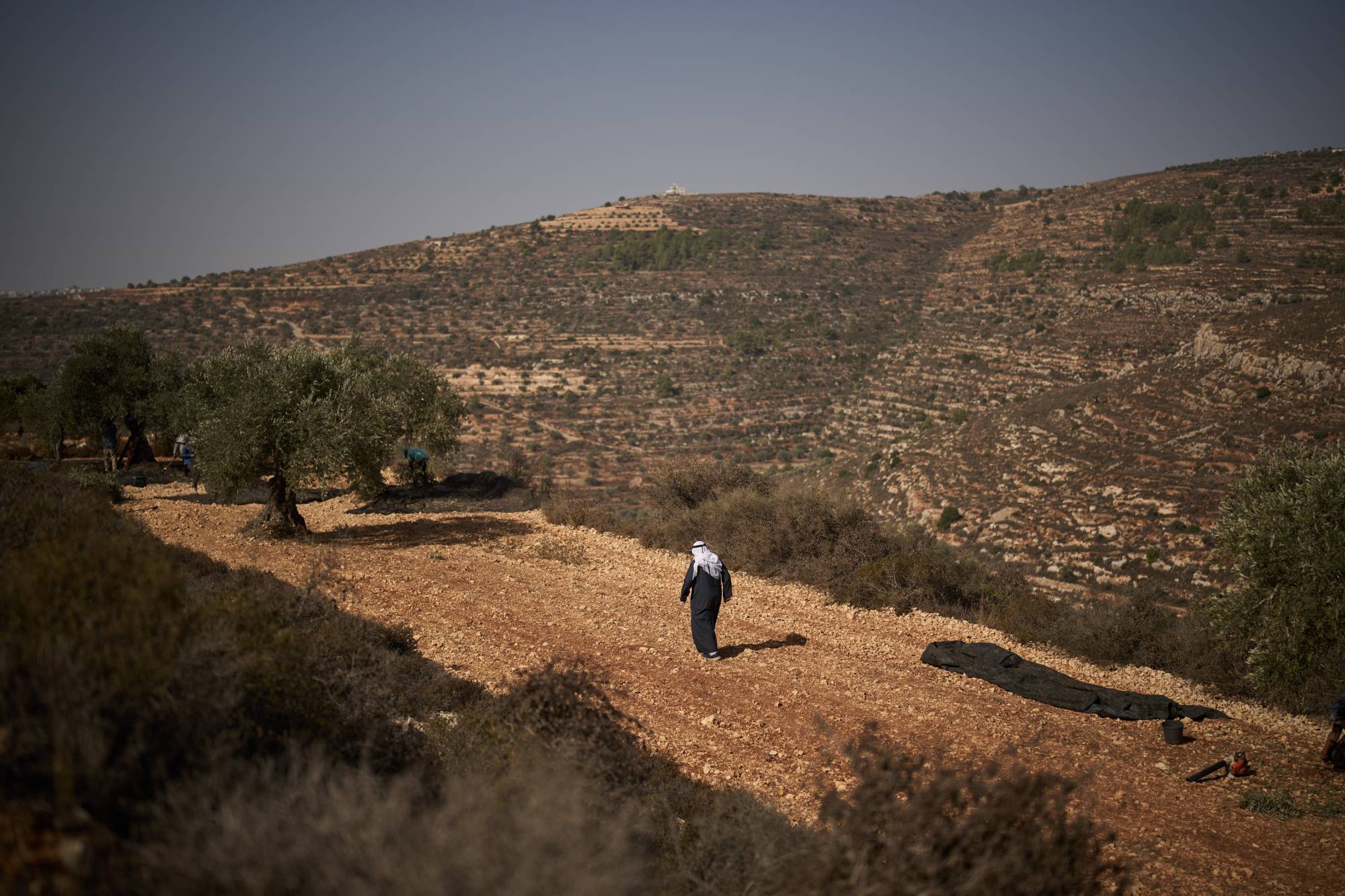
Palestinian Kamal Haloum walks in an olive grove during the olive harvest in the West Bank village of Al-Mazraa al-Sharqiya, Friday, Oct. 23, 2026. (AP)
Palestinians’ ties to the land are challenged
Olive groves across the West Bank represent both heritage and needed income. The harvest traditionally has been a joyous occasion for Palestinians to gather and be thankful for another year.
“In the past, harvesters would enjoy a month of singing and fixing tea and coffee in their groves. Now the journey is full of pain and risk,” said Abbas Milhem of the Palestinian Farmers’ Union.
But the harvest has become a time of friction as Palestinians spread out and, simply by picking olives, assert their ties to the land that many Israeli settlers say should belong to Israel instead.
Olive trees have been destroyed and olives stolen in over 325 incidents of settler violence this harvest season, which began in late September, Israeli rights group Yesh Din says. Over 130 of those incidents involved physical assaults on harvesters.
Yesh Din and the farmers’ union call this harvest the most violent in recent history.
One Palestinian, Abel Atif Bazaari, said last week outside the village of Burqa near Nablus that olives are more than just a crop. He ran his fingers along a branch. “Protected, respected. I think in all religions, olives are respected,” he said. “This is the identity of the Palestinians.”
His cousin, a security guard, was killed when responding to an attack on the family's land this season. Bazaari was hurt. A bandage covered his temple near his blackened left eye. They have paused the harvest, he said. The land has been in the family for over a century.
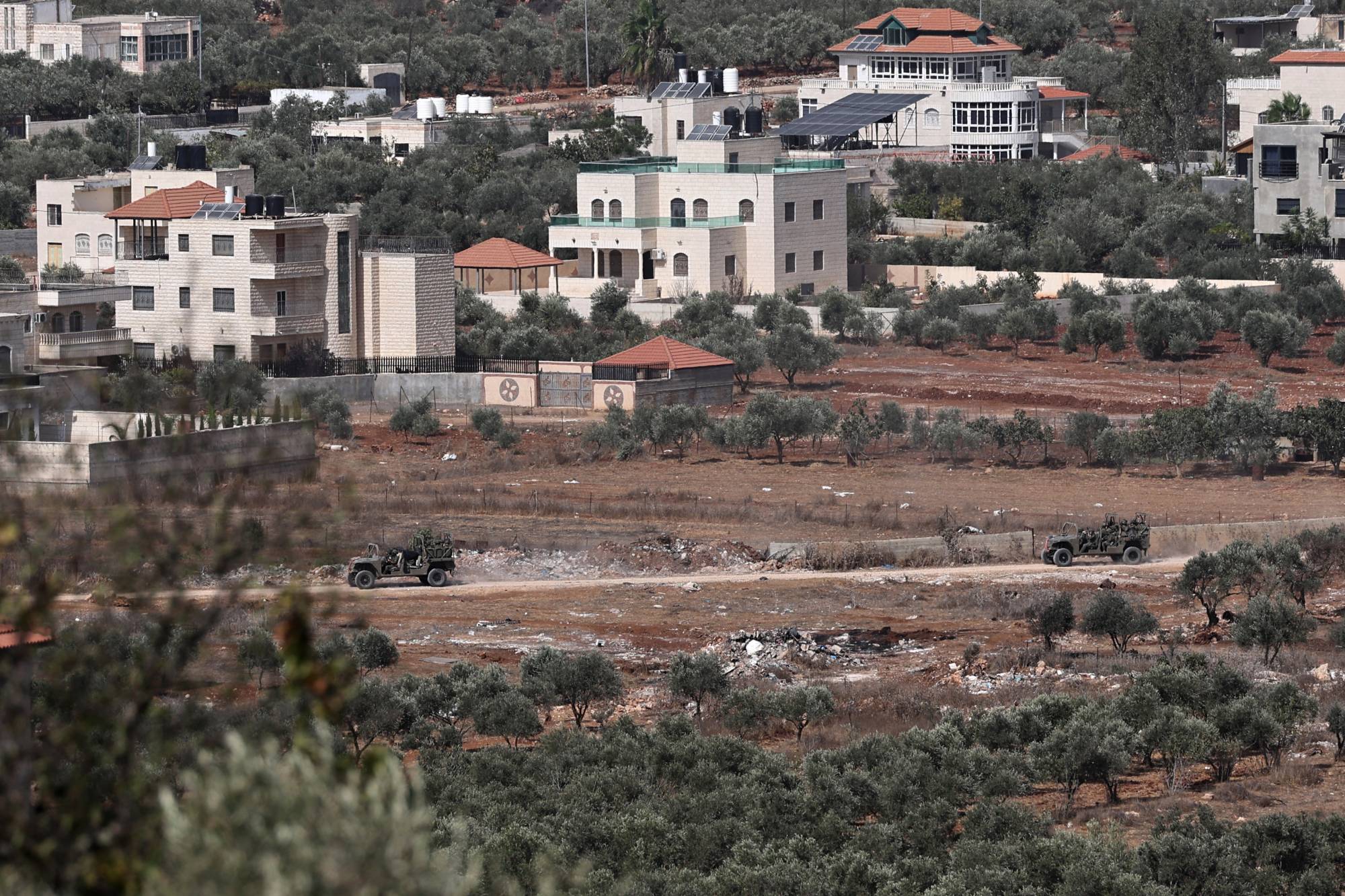
Israeli military vehicles patrol an area during the olive harvest in the town of Turmus Ayya, in the West Bank, 23 October 2026. (EPA)
West Bank outposts have surged under Netanyahu
Since 2023, Israeli settlers have erected more than 180 new outposts in the West Bank, most of them close to Palestinian communities and often on their farmland, according to Peace Now, a watchdog group. Settlers from those outposts have largely been behind intensifying attacks on Palestinians since the war in Gaza began with the Hamas-led assault on Israel on Oct. 7, 2023.
On Wednesday, a joint statement by activists and rabbis from the United States, Israel and the West Bank called the attacks on the harvest and Palestinian farmers part of “ethnic cleansing” in the territory. Israel has denied allegations, previously made by Britain as well, of ethnic cleansing.
The outposts — often made up of a few mobile homes — are not authorized, but the military rarely takes action against them. Palestinians trying to fend off the settlers have been accused of throwing rocks or chunks of concrete.
Netanyahu’s government relies on the support of far-right parties and has dramatically expanded settlements as a way to strengthen Israel’s grip on the West Bank and prevent any potential Palestinian state. Far-right Finance Minister Bezalel Smotrich, a settler leader who is in charge of settlement policy, has sought to steer funding to unauthorized outposts.
Most of the international community views all settlements as illegal and an obstacle to peace. “The clear goal is to drive communities off their land,” UN Secretary-General Antonio Guterres said Thursday of settler attacks.
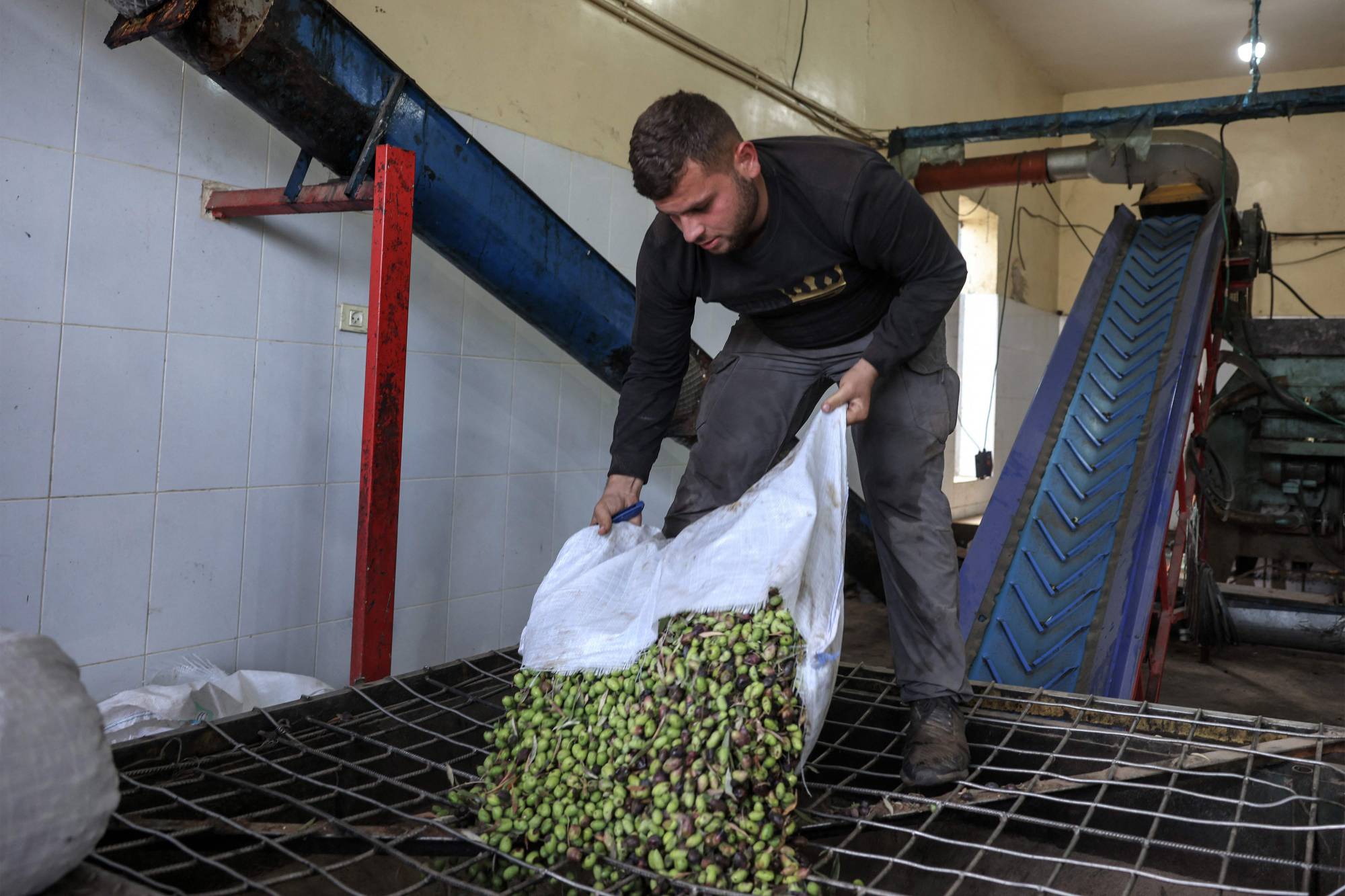
A Palestinian worker unloads freshly harvested olives for processing at an olive press in Turmus Ayya, northeast of Ramallah in the Israeli-occupied West Bank, on October 20, 2026. (AFP)
Outsiders visit in solidarity and are attacked
The olive harvest draws activists, diplomats, rabbis, journalists and others who seek to show solidarity with Palestinians and document attacks and intimidation.
Sometimes they are attacked, too.
A photographer for The Washington Post, Heidi Levine, is recovering after settlers last Friday beat her so badly that several vertebrae were broken and a finger was nearly detached. The following day, masked settlers wielding metal bars attacked a French mayor among a group of diplomats from France, Belgium and Poland at another harvest.
On Wednesday, a US congressional candidate from New York, Brad Lander, was among a group of American rabbis and others detained by Israeli troops at a harvest before being released hours later.
Rights groups say settlers are rarely punished, though several were arrested after last week’s high-profile attacks. Police said most were later released as investigations continue.
It’s becoming harder for Palestinians to reach their land. Peace Now says they have been required to coordinate with Israel’s military to access more of their privately owned farmland than previously. The West Bank is a patchwork of areas under varying levels of Palestinian civil and Israeli military control.
Some of those who coordinate with the military are still attacked, Milhem with the farmers’ union said. He estimated that roughly 110,000 Palestinian families depend on privately owned groves for income that reaches into the millions of dollars in all.
“Palestinian farmers do not — and should not — need permits to harvest their own olive fields,” Lander said Thursday on X, adding that Wednesday’s visit was meant to “call attention to the horrors of the occupation.”
A Jewish settler walks towards olive trees owned by Palestinians due to be harvested, near the Israeli settlement Neve Daniel, in the Israeli-occupied West Bank, October 12, 2026. (Reuters)
‘Handful of criminals’
Settler attacks on Palestinians rarely bring an outcry in Israel, but some Israeli senior politicians and officials have spoken out after Levine was beaten.
Netanyahu’s main rival in the elections, Gadi Eisenkot, said on X that “a handful of criminals is burning up the last shreds of legitimacy left to the state of Israel.” Eisenkot has backed settlement building in the West Bank but says he would shut down the unauthorized outposts.
Levine told the AP that Israeli President Isaac Herzog told her “he’s ashamed for what happened: ‘These people are a stain on Israeli society.’” Herzog has denounced settler attacks against Palestinians in the past.
Netanyahu, meanwhile, has questioned the circumstances around some attacks on the olive harvest and alleged a “coordinated campaign to smear Israel” following the weekend attack on diplomats.
He has blamed overall attacks in the West Bank on a small number of troublemakers.
Italy Calls for Release of Five Activists Held by Israel in West Bankhttps://english.aawsat.com/arab-world/5332821-italy-calls-release-five-activists-held-israel-west-bank
Italy's Foreign Minister Antonio Tajani (R) speaks to media after the meeting of the top diplomats of the R4 mechanism and the European E3 mechanism, in Istanbul on October 23, 2026. (AFP)
TT
TT
Italy Calls for Release of Five Activists Held by Israel in West Bank
Italy's Foreign Minister Antonio Tajani (R) speaks to media after the meeting of the top diplomats of the R4 mechanism and the European E3 mechanism, in Istanbul on October 23, 2026. (AFP)
Italy has called for the immediate release of five Italian activists, all women, held by Israeli forces in the West Bank, Foreign Minister Antonio Tajani said on Friday.
Italian foreign ministry sources said the women were detained on Thursday by Israeli police in Kiryat Arba along with other international activists, while seeking to protect Palestinian farmers during the olive harvest.
"What happened is unacceptable, they were not committing any crime," Tajani told reporters on the sidelines of an international summit in Istanbul, adding he hoped they would be released in a matter of hours.
The women were expected to be transferred to Israel's immigration authority on Friday pending expulsion and repatriation procedures, Israeli authorities told Italian diplomats earlier in the day, according to the sources.
Middle East, European FMs Hold Talks on Regional Developments in Istanbulhttps://english.aawsat.com/arab-world/5332818-middle-east-european-fms-hold-talks-regional-developments-istanbul
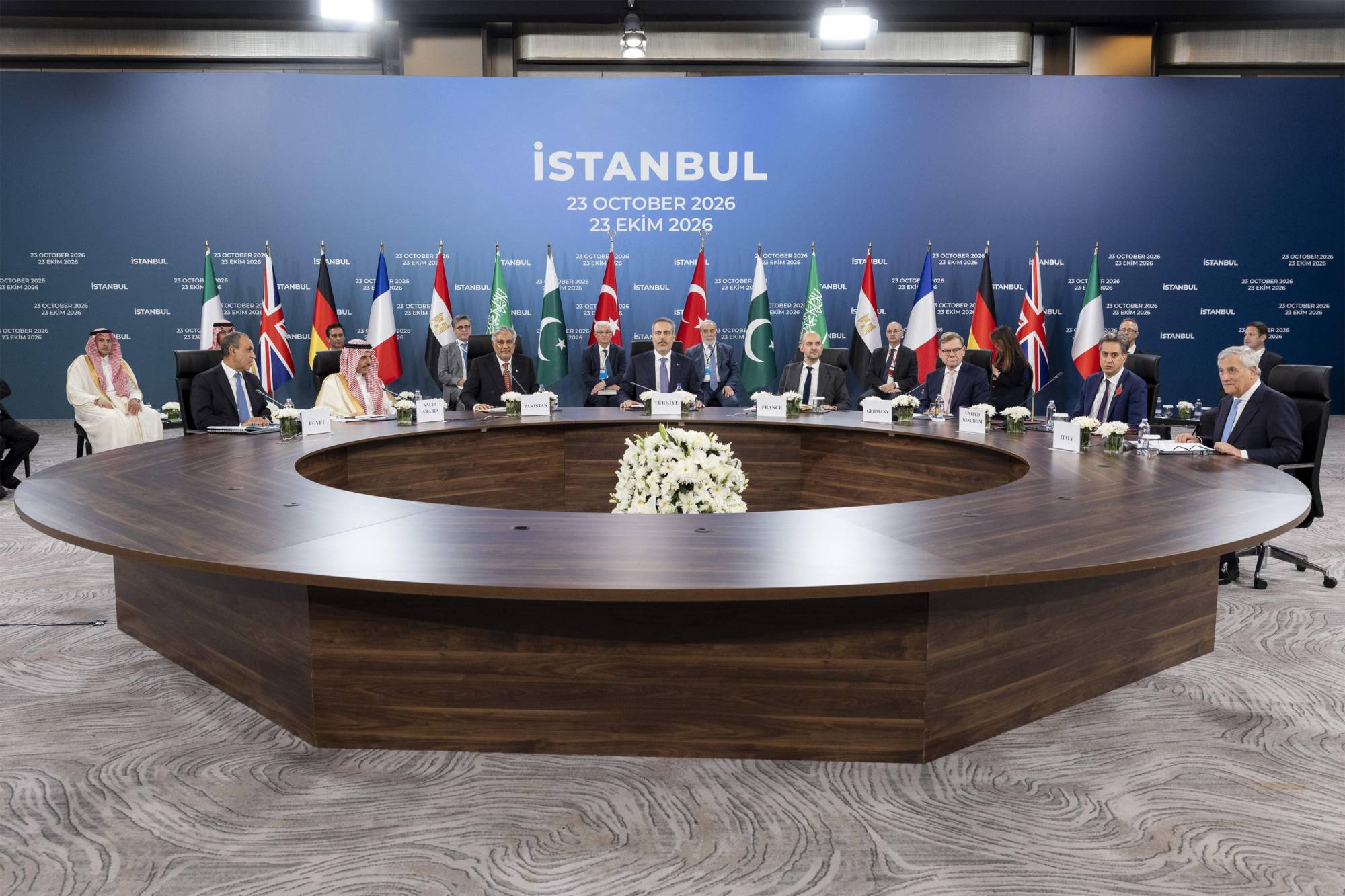
Italian Foreign Minister Antonio Tajani (L), Saudi Foreign Minister Prince Faisal bin Farhan bin Abdullah (2-L), French Foreign Minister Jean-Noel Barrot (3-L), German Foreign Minister Johann Wadephul (4-L), Turkish Foreign Minister Hakan Fidan (4-R), British Foreign Minister Edward Miliband (3-R), Pakistani Foreign Minister Ishaq Dar (2-R) and Egyptian Foreign Minister Badr Abdelatty (R) pose for a group photograph during the R4 and E3 foreign ministers' meeting in Istanbul, Türkiye , 23 October 2026. (EPA)
TT
TT
Middle East, European FMs Hold Talks on Regional Developments in Istanbul
Italian Foreign Minister Antonio Tajani (L), Saudi Foreign Minister Prince Faisal bin Farhan bin Abdullah (2-L), French Foreign Minister Jean-Noel Barrot (3-L), German Foreign Minister Johann Wadephul (4-L), Turkish Foreign Minister Hakan Fidan (4-R), British Foreign Minister Edward Miliband (3-R), Pakistani Foreign Minister Ishaq Dar (2-R) and Egyptian Foreign Minister Badr Abdelatty (R) pose for a group photograph during the R4 and E3 foreign ministers' meeting in Istanbul, Türkiye , 23 October 2026. (EPA)
Foreign ministers from eight European and Middle Eastern countries met in Istanbul on Friday in an unprecedented format for talks on reopening the Strait of Hormuz and crises across the Middle East.
Ministers from Britain, France and Germany -- the so-called E3 -- as well as Italy met counterparts from Saudi Arabia, Egypt, Pakistan and Türkiye to discuss the Palestinian-Israeli conflict, Yemen, Hormuz -- a crucial trade route blocked in the Iran war -- and ways to end the Russia-Ukraine conflict.
The talks began at an Istanbul hotel overlooking the Bosphorus, after separate meetings of top European diplomats and diplomats from regional countries.
French Foreign Minister Jean-Noel Barrot said a new escalation between Iran and the United States "would create nothing but losers and would undoubtedly have very serious consequences for hydrocarbon prices".
"And so the first thing this group of eight countries ... will do is call on both sides to exercise the utmost restraint, because we cannot afford another escalation in the region," he told journalists on the sidelines of the talks in Istanbul.
Italy's Antonio Tajani said the aim was to work for "de-escalation to guarantee freedom of navigation".
"I do not believe the problem can be solved from a purely military standpoint," he said.
"If we want to reopen Hormuz, which is vital for our economies, we must promote dialogue and make Iran understand that this attitude cannot continue."
Egyptian Foreign Minister Badr Abdelatty (L), Saudi Foreign Prince Faisal bin Farhan bin Abdullah (2-L), Pakistani Foreign Minister Ishaq Dar (3-L), Turkish Foreign Minister Hakan Fidan (4-L), French Foreign Minister Jean-Noel Barrot (4-R), German Foreign Minister Johann Wadephul (3-R), British Foreign Secretary Edward Miliband (2-R) and Italian Foreign Minister Antonio Tajani (R) pose for a group photograph during the R4 and E3 foreign ministers' meeting in Istanbul, Türkiye, 23 October 2026. (EPA)
- 'Iranian tactics' -
Turkish Foreign Minister Hakan Fidan hosted the meeting as Türkiye stepped up efforts to strengthen its regional role, including through the Makkah Defense Alliance, a defense pact launched with Saudi Arabia and Pakistan in August.
Türkiye has said the pact is not aimed at any specific country and remains open to others, including Egypt.
"Our platform has several advantages, particularly because it is informal and flexible and focuses specifically on the issues we face. It allows us to exchange information and coordinate our positions more effectively," Fidan told reporters.
"We are not aware of any other platform that brings together countries with such different geographical and political backgrounds. Türkiye, in particular, is well placed to play a constructive role in this process."
Cairo has yet to decide whether to join the alliance. On Wednesday, President Abdel Fattah al-Sisi said Egypt would "defend Saudi territory" and would not take part in any attack on Yemen.
Iran-backed Houthis are battling Yemen's legitimate government and have launched attacks on Saudi Arabia.
British foreign minister Ed Miliband's office said ahead of the talks they would essentially revolve around "the Strait of Hormuz and the situation in Saudi Arabia".
It said Miliband would "advocate for a diplomatic solution to the (Hormuz) crisis that restores full navigational rights and freedoms".
He was also to stress "how Iranian tactics are being replicated across the region, with attacks on Saudi Arabia further destabilizing the region and increasing pressure on vital waterways and global chokepoints, such as Bab al-Mandeb and the Suez Canal".
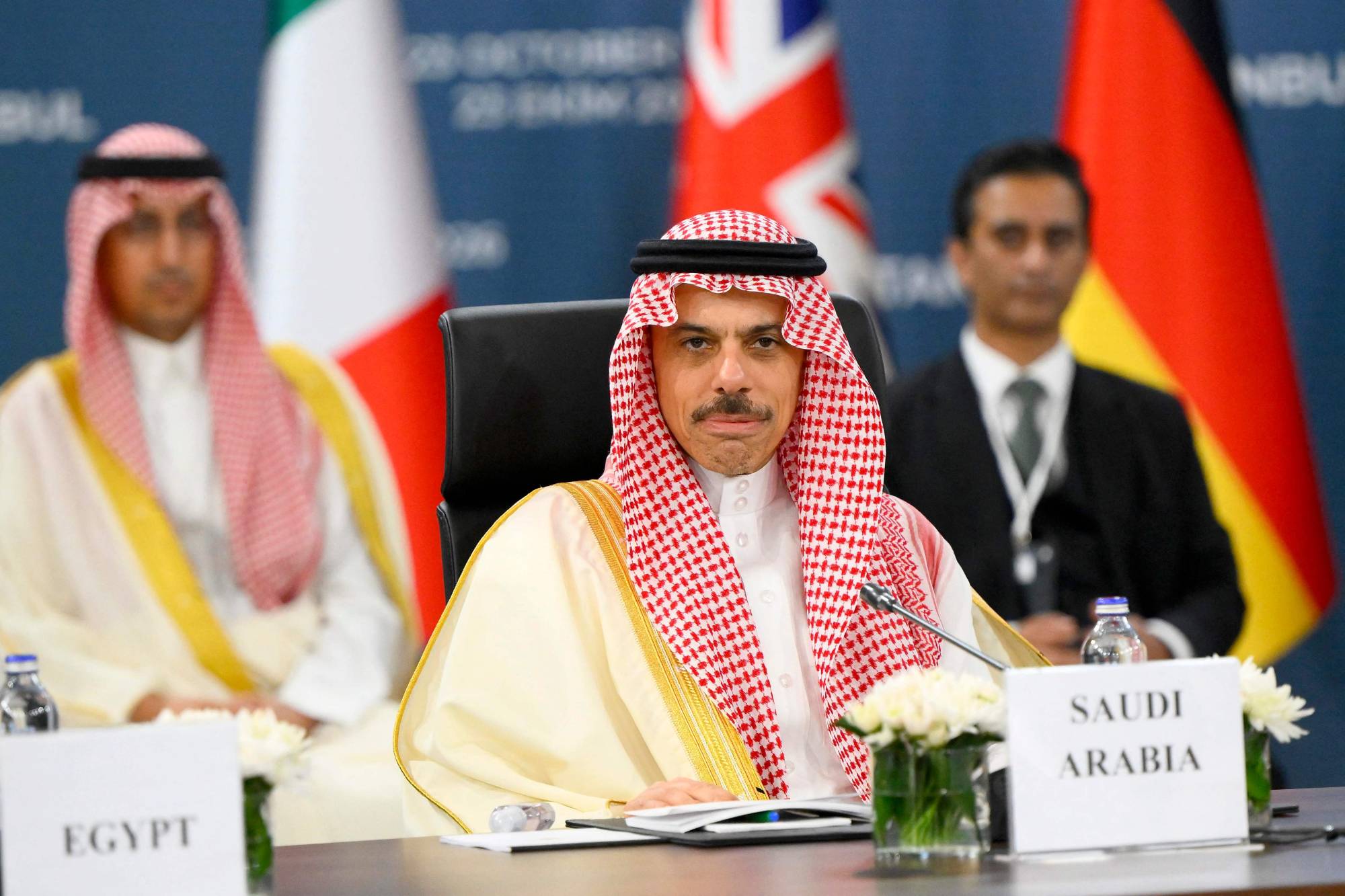
Saudi Arabia's Foreign Minister Prince Faisal bin Farhan bin Abdullah attends the meeting of the top diplomats of the R4 mechanism and the European E3 mechanism in Istanbul on October 23, 2026. (AFP)
- 'De-escalation' -
Fidan stressed that regional security required countries in the region to assume responsibility and that Ankara prioritized cooperation mechanisms based on "regional ownership".
"Regional frameworks turn into credible platforms for action and cooperation", he said ahead of the talks.
"Stability cannot simply be imported, and lasting solutions cannot be imposed from outside. Those who live with conflict must play a central role in resolving it," he added.
The eight countries "decided, after very constructive discussions, to continue the work by meeting at regular intervals", Barrot said.
لم تشترك بعد
انشئ حساباً خاصاً بك لتحصل على أخبار مخصصة لك ولتتمتع بخاصية حفظ المقالات وتتلقى نشراتنا البريدية المتنوعة