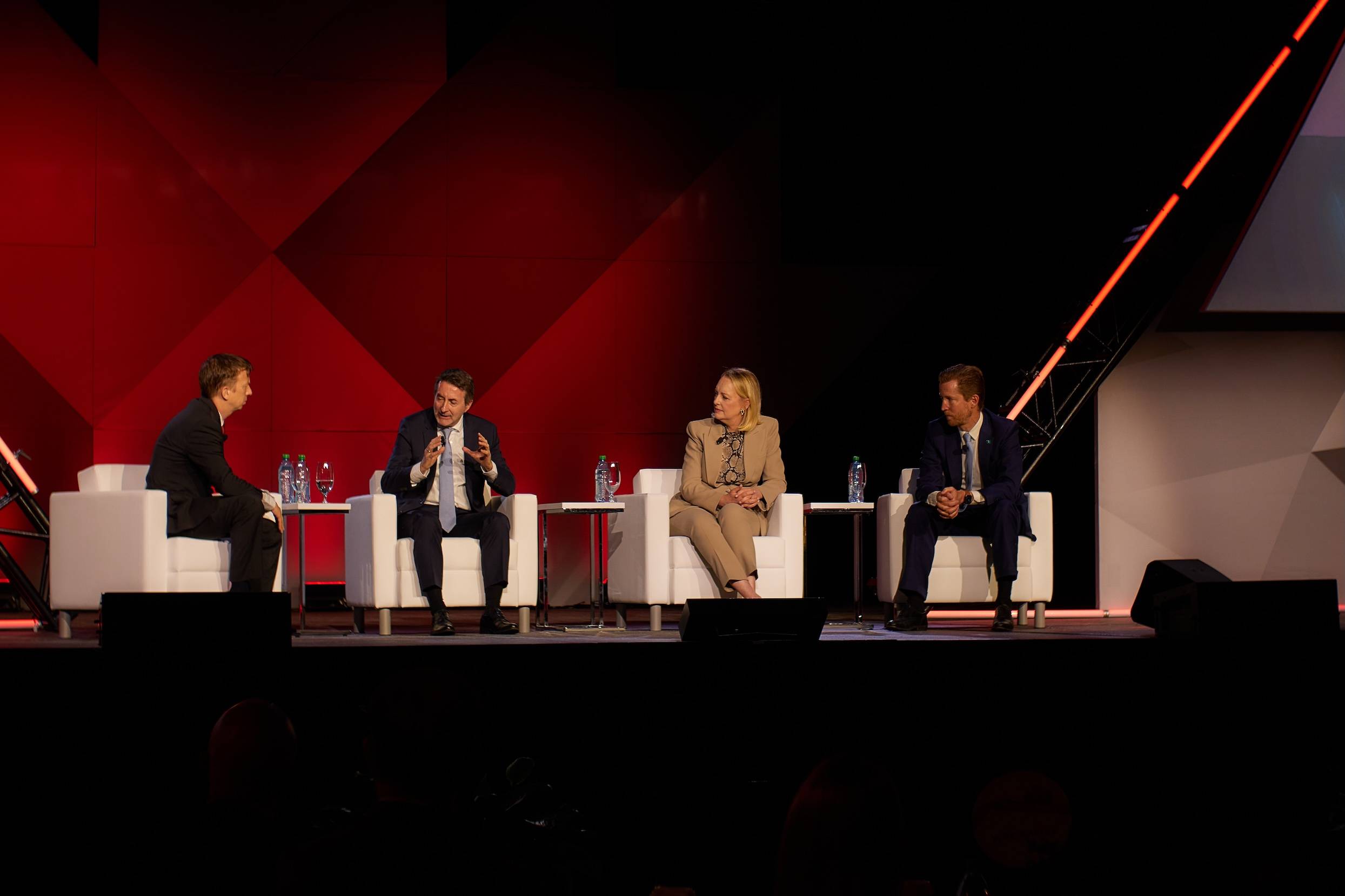

HUMAIN to Launch ‘Allam,’ the First Arabic AI Foundation Model from Saudi Arabia

Allam is the first foundational AI model developed from scratch in Saudi Arabia, focusing on the Arabic language and its dialects
TT

HUMAIN to Launch ‘Allam,’ the First Arabic AI Foundation Model from Saudi Arabia

Allam is the first foundational AI model developed from scratch in Saudi Arabia, focusing on the Arabic language and its dialects

In a bold move reflecting Saudi Arabia’s rapidly accelerating digital transformation, tech company HUMAIN is preparing to launch “Allam” - a foundational artificial intelligence model developed and trained entirely within the Kingdom.

Far from being just another addition to the world of large language models, Allam represents a clear statement from the Arab world: it has the capacity to innovate, build, and compete in this critical field on its own terms.

In an exclusive interview with Asharq Al-Awsat, HUMAIN CEO Tareq Amin revealed that the model will debut at the end of August. Allam, he explained, is built from the ground up to focus on the Arabic language in all its forms, from classical Arabic to a wide range of regional dialects, and is equipped with cultural and political safeguards tailored for the region.

“This is not just another large language model,” Amin said. “It’s proof that the Arab world can innovate, train, and deploy AI at a world-class level, according to our own standards.”

A Saudi-Built Innovation

The project was driven by a team of 40 PhD researchers, all based in the Kingdom. Working under tight confidentiality, they built what Amin describes as “the best Arabic model designed to meet our real needs.”

Allam was trained on proprietary datasets that, the company emphasizes, will “never be released on the public internet.” This gives it an unparalleled depth of local knowledge and accuracy in understanding compared with global models.

The model will first be available to the public via HUMAIN Chat, a free Arabic-language application similar to ChatGPT but with key differences. It not only handles formal Arabic with precision but can also converse naturally in dialects such as Saudi, Egyptian, Jordanian, and Lebanese. The system has already been tested in sensitive applications, including Sawtak, a tool for transcribing court session proceedings in Saudi Arabia.

“ChatGPT will never have the datasets we do,” Amin said. “I want the Arab world to start asking: why don’t we build a coalition to create AI models that reflect our culture and values?”

From the outset, Allam was designed to operate within a clear framework of responsible AI. Built-in safeguards at both the input and output stages ensure that its responses align with the cultural, social, and political norms of the region.

“This isn’t about censorship,” Amin stressed. “It’s about relevance and trust. A model is like a child: it needs guidance, education, and refinement to become a responsible adult. That’s our approach with Allam.”

HUMAIN itself is the product of a unique alliance, combining technical expertise from Aramco Digital and Saudi Arabia’s National Center for AI under the Saudi Data and Artificial Intelligence Authority (SDAIA). Amin views the launch not as a finish line, but as the starting point for continuous improvement, driven by feedback from users across the Arab world.

The company’s broader vision is to create a marketplace where developers and businesses can access Allam and deploy ready-made use cases - from business automation to citizen services - without having to start from scratch.

The Size of the Opportunity

Arabic is spoken by more than 350 million people worldwide, yet Amin points out that it remains underrepresented in leading AI models, which are typically trained primarily in English and a small number of other languages. Even when Arabic support is available, coverage of dialects and cultural nuances is limited.

HUMAIN’s focus is therefore squarely on serving government entities that rely almost entirely on Arabic, as well as private-sector industries such as tourism and healthcare.

For Amin, Allam is more than just a linguistic project. “It’s the spark that can shift the Middle East’s position in the global digital economy, from consumer to creator of original platforms and products,” he said. “We don’t yet have a complete AI ecosystem of developers and companies. We need to believe in our abilities, and the time is now.”

World-Class Infrastructure

Alongside Allam, HUMAIN has been investing heavily in infrastructure. The company recently announced a major agreement with Silicon Valley startup Groq, known for its ultra-fast, cost-efficient AI inference technology.

Amin’s relationship with Groq began two years ago when he met CEO Jonathan Ross, the original inventor of Google’s Tensor Processing Units (TPUs), at an event in Saudi Arabia. Impressed by Groq’s ASIC-based architecture optimized for inference, Amin decided to integrate their technology into HUMAIN’s operations.

That bet has paid off. HUMAIN deployed 19,000 Groq Language Processing Units (LPUs) in just six days, enabling inference services at roughly 60% lower cost than anywhere else globally. The system boasts low energy consumption, SRAM-based memory architecture, and a custom design optimized for running large models efficiently.

OpenAI Models Go Live in Saudi Arabia

The HUMAIN –Groq partnership has already delivered a milestone: the immediate availability of OpenAI’s two latest open-source models - gpt-oss-120B and gpt-oss-20B - on the GroqCloud platform, with full local hosting in the Kingdom.

Both models support a 128,000-token context window, provide real-time responses, and include integrated tools such as code execution and web search. Today, HUMAIN’s Groq-powered inference infrastructure in Dammam is serving users in 130 countries, a first for Saudi Arabia, and likely for the Middle East as a whole.

Rethinking the Enterprise Operating System

While Allam is HUMAIN’s flagship model, the company is also gearing up for another major release in October: HUMAIN One, which Amin describes as “a complete reinvention of the enterprise operating system.”

Instead of switching between dozens of separate applications, users interact with a single unified interface - text or voice-based - that can execute complex tasks seamlessly across multiple systems.

In one pilot case, a single AI agent reduced a payroll preparation process from 30 staff-hours involving four employees down to just 30 minutes, with higher accuracy. HUMAIN One’s voice interface will work on Windows, macOS, and HUMAIN’s own AI-enabled PCs, which all company staff currently use.

The HUMAIN AI Computer

This integration will extend to HUMAIN’s own AI computer, designed entirely in Saudi Arabia in partnership with Qualcomm. The device combines CPU, GPU, and Neural Processing Unit (MPU) capabilities for comprehensive AI computing power, tailored for advanced applications.

The HUMAIN AI computer will debut at the Future Investment Initiative (FII) in Riyadh this October, with a global release planned afterward. “It will change the game,” Amin said. “When you see its specs and price compared to the market, you’ll understand our edge computing strategy - delivering fast, efficient local processing without over-reliance on remote data centers.”

AI as an Economic Pillar

From Allam to Groq-powered infrastructure to HUMAIN One, all of HUMAIN’s initiatives align with Saudi Vision 2030. Amin views AI as “the foundation upon which the entire strategy is built”, not only in tourism, healthcare, and industry, but across every sector.

He praised Crown Prince Mohammed bin Salman’s approach as “both visionary and pragmatic,” treating AI “not as an optional tool, but as a necessity for economic growth, citizen empowerment, and sector-wide adoption.”

Investing in Local Talent

For Amin, HUMAIN’s success is first and foremost the result of its people, especially the Kingdom’s deep pool of AI talent.

“Some doubted whether we had the capabilities,” he said. “I told them: come and see for yourself.”

The presence of 40 PhD researchers behind Allam, he argued, is living proof that the Middle East can produce world-class AI models and challenge the assumption that the region must rely on external innovation.


Lebanese Cabinet Approves Draft Law on Financial Crisis Losses

A photograph released by the Lebanese Government Press Office on December 26, 2025, show Prime Minister Nawaf Salam speaking during a press conference after a cabinet session in Beirut on December 26, 2025. (Photo by Handout / Lebanese Government Press Office / AFP)
TT

Lebanese Cabinet Approves Draft Law on Financial Crisis Losses

A photograph released by the Lebanese Government Press Office on December 26, 2025, show Prime Minister Nawaf Salam speaking during a press conference after a cabinet session in Beirut on December 26, 2025. (Photo by Handout / Lebanese Government Press Office / AFP)

Lebanon's government on Friday approved a draft law to distribute financial losses from the 2019 economic crisis that deprived many Lebanese of their deposits despite strong opposition to the legislation from political parties, depositors and banking officials.

The draft law will be submitted to the country's divided parliament for approval before it can become effective.

The legislation, known as the "financial gap" law, is part of a series of reform measures required by the International Monetary Fund (IMF) in order to access funding from the lender.

The cabinet passed the draft bill with 13 ministers in favor and nine against. It stipulates that each of the state, the central bank, commercial banks and depositors will share the losses accrued as a result of the financial crisis.

Prime Minister Nawaf Salam defended the bill, saying it "is not ideal... and may not meet everyone's aspirations" but is "a realistic and fair step on the path to restoring rights, stopping the collapse... and healing the banking sector.”

According to government estimates, the losses resulting from the financial crisis amounted to about $70 billion, a figure that is expected to have increased over the six years that the crisis was left unaddressed.

Depositors who have less than $100,000 in the banks, and who constitute 85 percent of total accounts, will be able to recover them in full over a period of four years, Salam said.

Larger depositors will be able to obtain $100,000 while the remaining part of their funds will be compensated through tradable bonds, which will be backed by the assets of the central bank.

The central bank's portfolio includes approximately $50 billion, according to Salam.

The premier told journalists that the bill includes "accountability and oversight for the first time.”

"Everyone who transferred their money before the financial collapse in 2019 by exploiting their position or influence... and everyone who benefited from excessive profits or bonuses will be held accountable and required to pay compensation of up to 30 percent of these amounts," he said.

Responding to objections from banking officials, who claim components of the bill place a major burden on the banks, Salam said the law "also aims to revive the banking sector by assessing bank assets and recapitalizing them.”

The IMF, which closely monitored the drafting of the bill, previously insisted on the need to "restore the viability of the banking sector consistent with international standards" and protect small depositors.

Parliament passed a banking secrecy reform law in April, followed by a banking sector restructuring law in June, one of several key pieces of legislation aimed at reforming the financial system.

However, observers believe it is unlikely that parliament will pass the current bill before the next legislative elections in May.

Financial reforms in Lebanon have been repeatedly derailed by political and private interests over the last six years, but Salam and Lebanese President Joseph Aoun have pledged to prioritize them.


Türkiye Says Russia Gave It $9 Billion in New Financing for Akkuyu Nuclear Plant

Türkiye’s Energy Minister Alparslan Bayraktar talks during a meeting in Ankara, Türkiye, September 14, 2023. (Reuters)
TT

Türkiye Says Russia Gave It $9 Billion in New Financing for Akkuyu Nuclear Plant

Türkiye’s Energy Minister Alparslan Bayraktar talks during a meeting in Ankara, Türkiye, September 14, 2023. (Reuters)

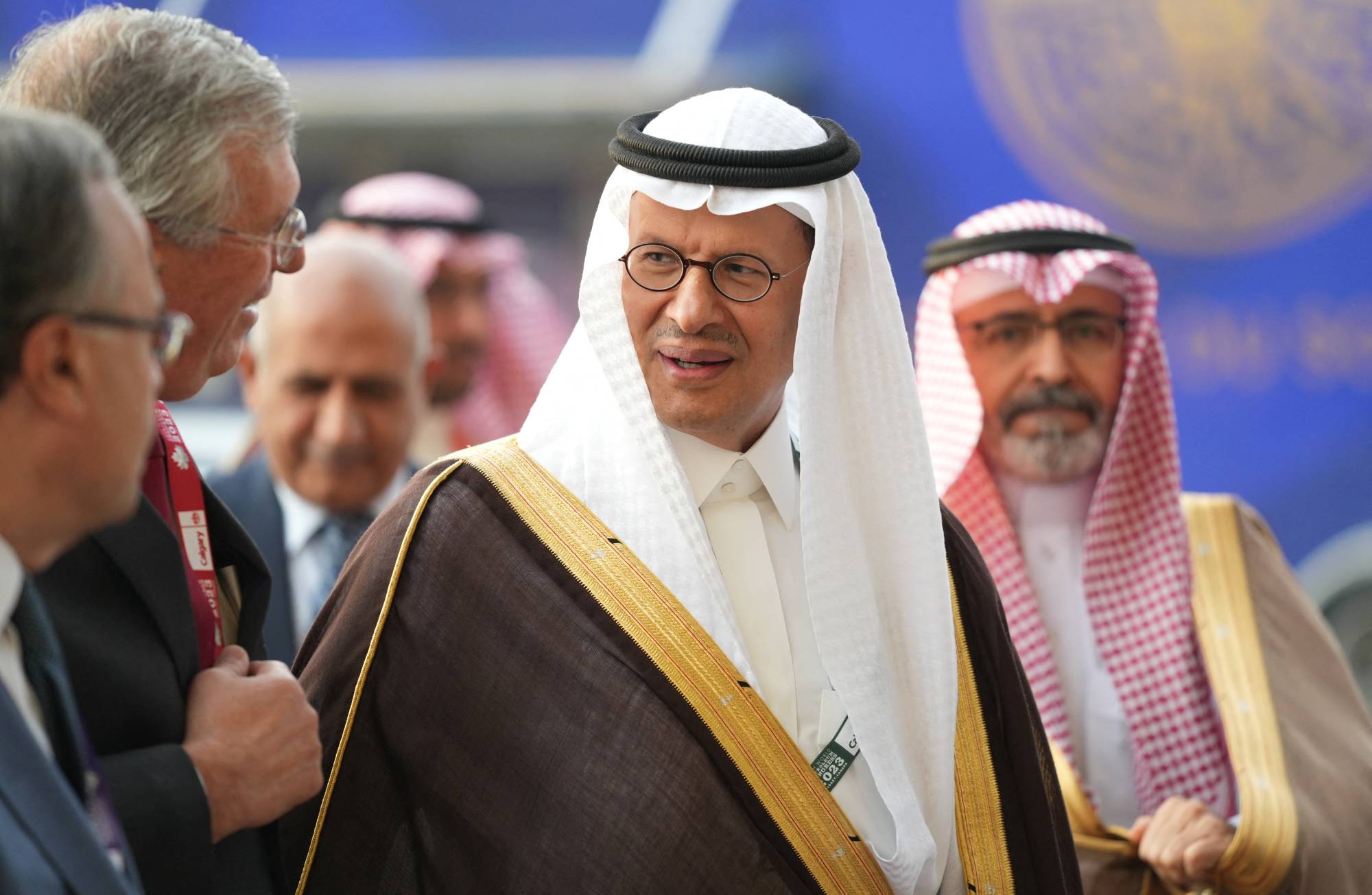
Türkiye's energy minister said Russia had provided new financing worth $9 billion for the Akkuyu nuclear power plant being built by ​Moscow's state nuclear energy company Rosatom, adding Ankara expected the power plant to be operational in 2026.

Rosatom is building Türkiye's first nuclear power station at Akkuyu in the Mediterranean province of Mersin per a 2010 accord worth $20 billion. The plant was expected ‌to be operational ‌this year, but has been ‌delayed.

"This (financing) ⁠will ​most ‌likely be used in 2026-2027. There will be at least $4-5 billion from there for 2026 in terms of foreign financing," Alparslan Bayraktar told some local reporters at a briefing in Istanbul, according to a readout from his ministry.

He said ⁠Türkiye was in talks with South Korea, China, Russia, and ‌the United States on ‍nuclear projects in ‍the Sinop province and Thrace region, and added ‍Ankara wanted to receive "the most competitive offer".

Bayraktar said Türkiye wanted to generate nuclear power at home and aimed to provide clear figures on targets.


China Bets on Advanced Technologies to Revive Tepid Industrial Sector

A humanoid robot Tiangong by Beijing Innovation Center of Humanoid Robotics Co, moves an orange as a demonstration at its company, during an organized media tour to Beijing Robotics Industrial Park, in Beijing Economic-Technological Development Area, also known as Beijing E-Town, China May 16, 2025. (Reuters)
TT

China Bets on Advanced Technologies to Revive Tepid Industrial Sector

A humanoid robot Tiangong by Beijing Innovation Center of Humanoid Robotics Co, moves an orange as a demonstration at its company, during an organized media tour to Beijing Robotics Industrial Park, in Beijing Economic-Technological Development Area, also known as Beijing E-Town, China May 16, 2025. (Reuters)

China pledged on Friday to double down on upgrading its manufacturing base and ​promised capital to fund efforts targeting technological breakthroughs, after its industrial sector delivered an underwhelming performance this year.

China's industry ministry expects output of large industrial companies to have increased 5.9% in 2025 compared with 2024, state broadcaster CCTV said on Friday, almost unchanged from the 5.8% pace in 2024.

It would also be less than the ‌6% pace ‌of the first 11 months of ‌2025, ⁠based ​on ‌data released by the National Bureau of Statistics, as a weak Chinese economy suppressed domestic demand.

Industrial output, which covers industrial firms with annual revenue of at least 20 million yuan ($2.85 million), recorded growth of 4.8% in November, the weakest monthly year-on-year rise since August 2024.

Chinese policymakers have been looking ⁠to create new growth drivers in the economy by focusing on advancing ‌its industrial sector.

China has also vowed stronger ‍efforts to achieve technological self-reliance ‍amid intensifying rivalry with the United States over dominance ‍in advanced technology.

At the annual two-day national industrial work conference in Beijing that ended on Friday, officials pledged to deliver major breakthroughs in building a "modern industrial system" anchored by advanced manufacturing.

The ​focus will be on sectors such as integrated circuits, low-altitude economy, aerospace and biomedicine, an industry ministry ⁠statement showed.

The statement comes after China launched on Friday a national venture capital fund aimed at guiding billions of dollars of capital into "key hard technologies" such as quantum technology and brain-computer interfaces.

On artificial intelligence, the industry ministry said it will expand efforts to help small and medium-sized enterprises adopt the technology, while fostering new intelligent agents and AI-native companies in key industries.

Officials also vowed to "firmly curb" deflationary price wars, dubbed "involution", referring to excessive and low-return competition among ‌firms that erodes profits.