Water Shortages Plague Beirut as Low Rainfall Compounds Woeshttps://english.aawsat.com/features/5175208-water-shortages-plague-beirut-low-rainfall-compounds-woes
People are buying water by the truckload in Beirut as the state supply faces its worst shortages in years, with the leaky public sector struggling after record-low rainfall and local wells running dry.
"State water used to come every other day, now it's every three days," said Rima al-Sabaa, 50, rinsing dishes carefully in Burj al-Baranjeh, in Beirut's southern suburbs.
Even when the state water is flowing, she noted, very little trickles into her family's holding tank.
Once that runs out, they have to buy trucked-in water -- pumped from private springs and wells -- but it costs more than $5 for 1,000 litres and lasts just a few days, and its brackishness makes everything rust.
In some areas, the price can be twice as high.
Like many Lebanese people, Sabaa, who works assisting the elderly, relies on bottled water for drinking. But in a country grappling with a yearslong economic crisis and still reeling from a recent war between Israel and Hezbollah, the costs add up.
"Where am I supposed to get the money from?" she asked, AFP reported.
Water shortages have long been the norm for much of Lebanon, which acknowledges only around half the population "has regular and sufficient access to public water services".
Surface storage options such as dams are inadequate, according to the country's national water strategy, while half the state supply is considered "non-revenue water" -- lost to leakage and illegal connections.
This year, low rainfall has made matters even worse.
Mohamad Kanj from the meteorological department told AFP that rainfall for 2024-2025 "is the worst in the 80 years" on record in Lebanon.
Climate change is set to exacerbate the county's water stress, according to the national strategy, while a World Bank statement this year said "climate change may halve (Lebanon's) dry-season water by 2040".
Energy and Water Minister Joseph Saddi said last week that "the situation is very difficult".
The shortages are felt unevenly across greater Beirut, where tanks clutter rooftops, water trucks clog roads and most people on the ramshackle state grid lack meters.
Last month, the government launched a campaign encouraging water conservation, showing dried or depleted springs and lakes around the country.
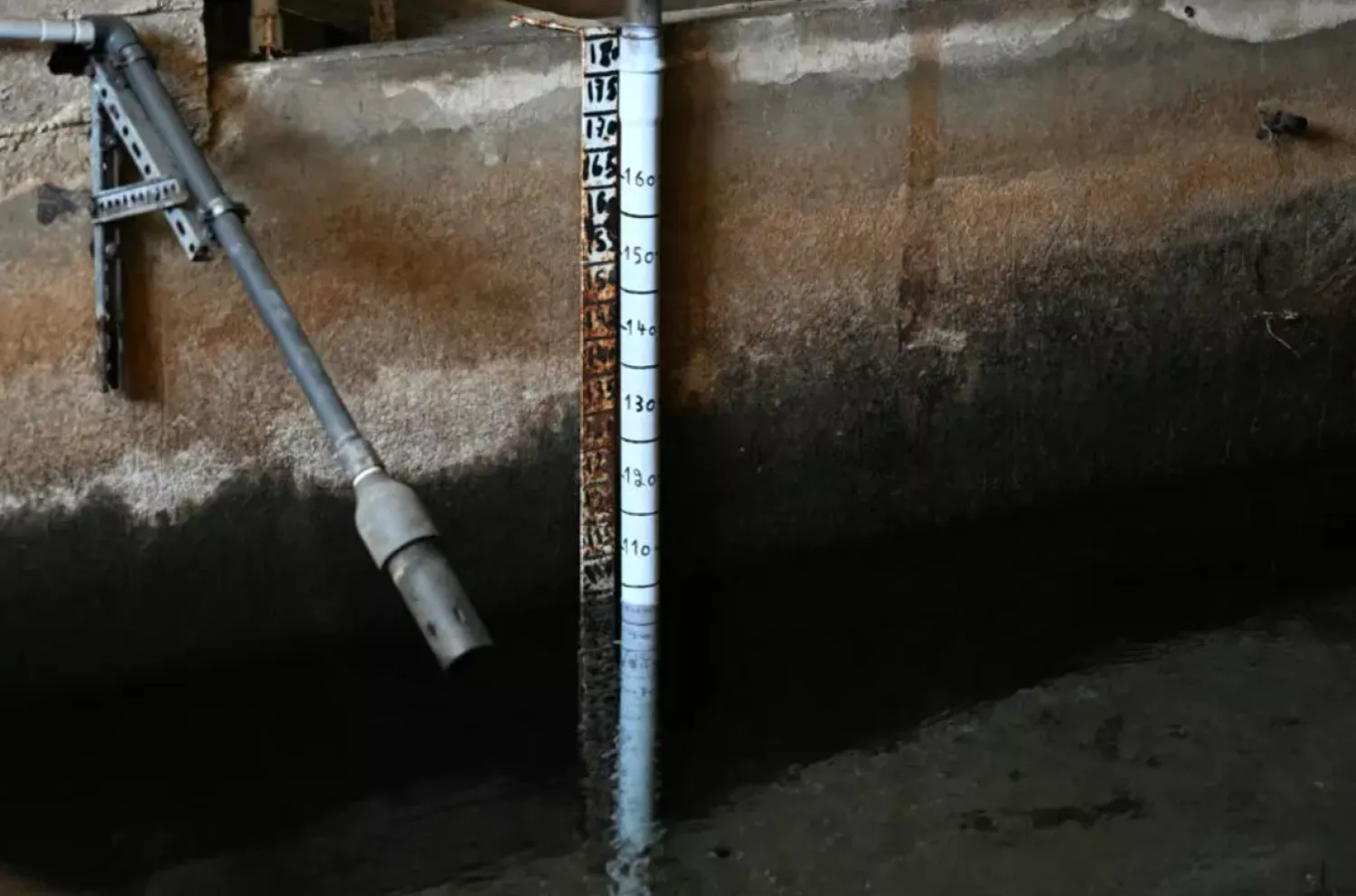
North of the capital, levels were low in parts of the Dbayeh pumping station that should have been gushing with water.
"I've been here for 33 years and this is the worst crisis we've had for the amount of water we're receiving and can pump" to Beirut, said the station's Zouhair Azzi.
Antoine Zoghbi from the Beirut and Mount Lebanon Water Establishment said water rationing in Beirut usually started in October or November, after summer and before the winter rainy season.
But this year it has started months early "because we lack 50 percent of the amount of water" required at some springs, he told AFP last month.
Rationing began at some wells in June, he said, to reduce the risk of overuse and seawater intrusion.
Zoghbi emphasised the need for additional storage, including dams.
In January, the World Bank approved more than $250 million in funding to improve water services for greater Beirut and its surroundings.
In 2020, it cancelled a loan for a dam south of the capital after environmentalists said it could destroy a biodiversity-rich valley.
Wells
In south Beirut, pensioner Abu Ali Nasreddine, 66, said he had not received state water for many months.
"Where they're sending it, nobody knows," he said, lamenting that the cost of trucked-in water had also risen.
His building used to get water from a local well but it dried up, he added, checking his rooftop tank.
Bilal Salhab, 45, who delivers water on a small, rusted truck, said demand had soared, with families placing orders multiple times a week.
"The water crisis is very bad," he said, adding he was struggling to fill his truck because wells had dried up or become salty.
In some areas of greater Beirut, wells have long supplemented or even supplanted the state network.
But many have become depleted or degraded, wrecking pipes and leaving residents with salty, discoloured water.
Nadim Farajalla, chief sustainability officer at the Lebanese American University, said Beirut had ballooned in size and population since the start of the 1975-1990 civil war but water infrastructure had failed to keep up.
Many people drilled wells illegally, including at depths that tap into Lebanon's strategic groundwater reserves, he said, adding that "nobody really knows how many wells there are".
"Coastal aquifers are suffering from seawater intrusion, because we are pumping much more than what's being recharged," Farajalla told AFP.
As the current shortages bite, rationing and awareness campaigns should have begun earlier, he said, because "we all knew that the surface snow cover and rainfall" were far below average.
Entrance to the Trauma and Emergency Complex at Omdurman Hospital (Asharq Al-Awsat)
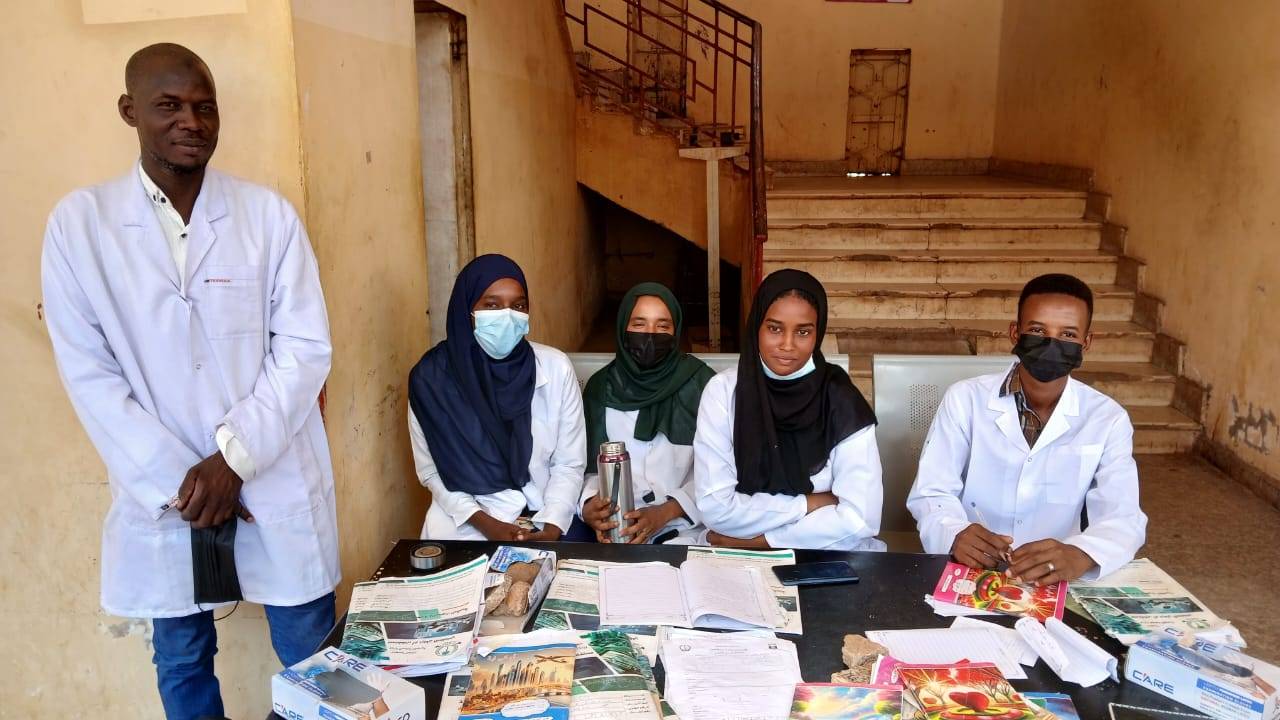
Between hospitals that have reopened after being destroyed and looted, and facilities still struggling with shortages of electricity, equipment, medicines, and staff, two contrasting pictures of Sudan's health system are emerging after more than three years of devastating war.
In Khartoum, major referral hospitals have begun gradually resuming operations as residents return and fighting recedes from large parts of the capital. Elsewhere, however, the picture is much bleaker in Darfur, Kordofan, and other areas, where ongoing fighting, funding shortages, and difficulties accessing facilities continue to deny large segments of the population access to healthcare.
Data from the World Health Organization indicates that around 37 percent of health facilities in Sudan are not functioning, while around 21 million people need medical services, amid shortages of medicines and rising costs of accessing treatment.
At the same time, the organization is monitoring improvements in some states as early recovery efforts and the rehabilitation of facilities begin. This contradiction makes the question more complex: "Has Sudan's health system actually begun to recover, or is what is happening merely a partial restoration of services in areas where the war has receded?"
Hospitals Recovering
At Omdurman Teaching Hospital, one of the capital's largest referral hospitals, signs of a return to activity are evident. Its Director General, Abdel Moneim Ali Al-Qasim, told Asharq Al-Awsat that the hospital suffered extensive wartime destruction affecting its infrastructure, equipment, electrical networks, cables, and generators. In 2024, rehabilitation began on the emergency department to allow it to receive patients, while other parts of the hospital remained destroyed.
With support from the King Salman Humanitarian Aid and Relief Centre and its national partner, Kafaat Organization, the hospital received a 730-kilovolt-ampere generator in July 2025, along with intensive care, emergency, and laboratory equipment. Al-Qasim said the support was worth around $1 million.
According to Al-Qasim, the stabilization of the electricity supply had a direct impact on services. The waiting time for laboratory test results fell from four to six hours to around one hour and 15 minutes. Around 500 surgical procedures were performed during the first month of the support, before the number rose to between 1,000 and 1,500 procedures per month, averaging between 40 and 50 procedures a day.
The hospital currently receives around 600 patients a day. Eleven of its 15 intensive care beds are now operational, while the remaining four are being prepared for service.
The hospital also received an integrated oxygen production unit and opened a prosthetics center with a production capacity of up to 50 prosthetic limbs per month during a single shift. That capacity can be doubled by operating two shifts.
But the return of activity does not mean the problems are over. According to its director, the hospital still suffers from a shortage of wards and a need for fuel, in addition to unstable electricity. The return of residents is also increasing pressure on facilities that have resumed operations.
Buildings Have Returned... But Shortages Remain
The same picture is repeated at Bahri Teaching Hospital, which was rebuilt and reopened after suffering extensive destruction during the war. Its Director General, Ahmed Al-Bashir, told Asharq Al-Awsat that the hospital, with a capacity of 640 beds and 20 operating rooms, still needs intensive care equipment to increase its capacity to handle cases around the clock, as well as a backup power source.
The hospital also needs to complete its sewage system and connect it to the public network, or provide tankers to dispose of wastewater. Meanwhile, the administration is seeking to convert the emergency complex into a continuing vocational training center to make up for some of the staff the hospital lost during the war.
These details reveal one of the major challenges of rebuilding the health system: repairing a building and reopening its doors does not necessarily mean restoring its full capacity to provide services.
A Bleaker Picture Outside Major Hospitals
A short distance from the major referral hospitals that have begun to resume operations, the picture can be very different, even within Khartoum State itself. In Fattasha, west of Omdurman, Eman waited for three days while her son suffered from a high fever and worsening cough because the nearest health facility could not provide the services he needed.
Eman said in testimony published by the United Nations Children's Fund, UNICEF, in December 2025 that the area's only health center had just one health worker and offered no vaccination, nutrition, medicines, pharmacy, or laboratory services. The mother had no choice but to wait for a UNICEF-supported mobile clinic that visits the area twice a month. Despite the time that has passed since that testimony, the same hardship continues, revealing the wide gap between the return of major hospitals in the heart of the capital and those on the outskirts of the state.
The gap becomes even clearer outside Khartoum. At Al-Thawra Health Center in New Halfa locality, Kassala State, Noor, who is pregnant with her eighth child, says she previously had to buy the iron supplements prescribed by doctors during pregnancy. At times, however, she stopped taking them because she could not afford them.
In testimony published by UNICEF in July 2025, Noor said that the free provision of medicines had become a major relief for the family after the cost of treatment had prevented her from obtaining the medication.
At the same center, Aisha, a mother who received medicines for her children, said that receiving treatment for free represented significant assistance given the economic circumstances facing families.
In White Nile State, families face another problem: distance. In January 2026, UNICEF documented the journey of Zahra and her nine-month-old daughter, Amina, to obtain vaccinations.
Zahra takes around two hours to reach the nearest health facility from her home. Previously, she had been forced to travel to the city of Al-Jabalain in search of the service.
In the same area, another mother named Amina arrived with her two-year-old daughter, Aisha, after the child developed severe diarrhea and vomiting and became so weak that she could no longer walk. After being admitted to a stabilization center and receiving treatment and therapeutic milk, the girl began to regain her strength.
El Fasher... Giving Birth Under a Tree
The hardship reaches its most severe levels in areas affected by war and displacement. Amani, a displaced mother from North Darfur, recounted how she was forced to move with her family to escape fighting in El Fasher while she was in the final months of pregnancy.
In testimony published by UNICEF in August 2025, she said the family went days without food or water or anyone to help them. During their displacement journey between Sharika and Tawila, she went into labor, with no hospital or health workers nearby.
Amani gave birth to her daughter by the roadside, under a tree and on a small mat, with the help of her mother and some local residents. She said that during the delivery she did not know whether she would live or die, or what would happen to her children if she died.
After giving birth, she was too weak to carry her newborn or continue the journey. She was forced to stop for about a week before she was able to reach Tawila with her family.
Her experience represents the exact opposite of the picture presented by hospitals resuming activity in Khartoum. In areas affected by war, the issue is not simply the quality of services or the availability of equipment, but whether a health facility exists at all.
Disagreement Over the Definition of "Collapse"
These disparities lie at the heart of the disagreement over how to characterize the condition of the sector. Médecins Sans Frontières has warned that cuts to aid funding are pushing more health facilities to close and depriving millions of Sudanese of essential care.
The organization says the Sudan Humanitarian Response Plan, which amounts to $2.87 billion, had received only around 41 percent of the required funding as of August 11.
Sudanese Health Minister Haitham Mohamed Ibrahim, however, believes the Médecins Sans Frontières report focuses largely on the organization's activities and working conditions. He told Asharq Al-Awsat that it "does not by itself reflect the reality of the health sector in the country."
Omdurman Hospital Director Abdel Moneim Al-Qasim likewise rejects describing the system as "on the verge of collapse." He says the sector is indeed suffering from a major shortage of resources, but has begun to recover gradually as a result of efforts by the state and national, regional, and international organizations.
Bahri Hospital Director Ahmed Al-Bashir agrees that "the description of collapse is inaccurate," while acknowledging at the same time the need to expand support for referral hospitals and provide specialized equipment and medical specialties.
Health workers inside Omdurman Teaching Hospital (Asharq Al-Awsat)
Cancer Patient Searches for Medicine
For patients, recovery is not measured solely by the number of hospitals that have reopened, but by whether they can find the treatment they need when they reach them. In July 2026, Naela Hamad, who has cervical cancer, was receiving chemotherapy at Khartoum Oncology Hospital, known as "Al-Dhura," while her daughter, Ithar Al-Sir, was searching outside the hospital for a medicine needed alongside the treatment that was not available there.
Ithar said in testimony documented by Reuters that the family found the medicine outside the hospital for around 180,000 Sudanese pounds, or about $45 at the time, at the prevailing market price. Her mother needs it with each chemotherapy dose every 21 days.
The costs do not end with the medicine. She said she also pays 40,000 pounds for the bed where her mother receives her dose, asking how the family can afford these expenses when there is no work or income.
Naela says the family had previously struggled to afford food and is now struggling to obtain both food and medicine, while her home was destroyed and she was forced to stay with neighbors.
Reuters quoted Mona Abdel Rahman, head of pharmacy at Khartoum Oncology Hospital, as saying that some patients' doses had been delayed by two weeks or more after the free provision of some medicines stopped because they could not afford to buy them themselves.
The economic crisis is also affecting diagnostic services. Medical laboratory specialist Al-Tayeb Youssef told Asharq Al-Awsat that the rise in the price of the dollar has directly affected the sector, given laboratories' reliance on imported reagents and supplies purchased in foreign currency.
He added that many laboratory owners who returned to Khartoum had been forced to start "from scratch" after losing their premises and equipment and having to face the costs of maintenance, rent, and purchasing equipment again.
The high costs have prompted some laboratory owners to purchase equipment through partnerships and pool it at a single location rather than having each laboratory maintain its own equipment. This is viewed as a temporary solution that helps keep services running.
Expensive Medicine and Factories on the Road to Recovery
The situation in the pharmaceutical market is not very different. Pharmacist Mahmoud Al-Naeem told Asharq Al-Awsat that rising prices and complaints from citizens have worsened since the war, as a result of the destruction of several local pharmaceutical factories, disruptions to external supply chains, and the reliance on imports requiring foreign currency.
He noted that the National Medicines and Poisons Board has begun encouraging the registration of new pharmaceutical products and companies, considering that increased competition could help lower prices.
Some factories in Khartoum have begun returning to production, although they are operating below full capacity. This opens the door to gradual relief if local production and supply chains stabilize.
Epidemics... A Risk That Has Not Gone Away
Alongside destruction, funding shortages, and the high cost of treatment, the health system faces the threat of epidemic diseases. The director of Omdurman Hospital says rates of watery diarrhea, malaria, and dengue fever among the cases treated at the hospital have declined, with epidemic-control campaigns continuing and an isolation center established to handle cases of cholera, dengue fever, and other diseases.
The director of Bahri Hospital says malaria, as an endemic disease in Sudan, cannot be tackled by hospitals alone. It requires coordination among the federal health system, states, localities, and communities, from awareness, prevention, and vector control to diagnosis and treatment.
These risks remain more severe in areas affected by displacement and fighting, where disease and malnutrition coincide with weak water and sanitation services and difficulties accessing health facilities.
Thus, the current picture may not show a sector that has completely collapsed, but neither does it show a health system that has overcome the effects of the war. In Khartoum, hospitals have returned to service, surgeries and intensive care and laboratory services have resumed, and rehabilitation and oxygen production projects have begun. In Kassala and White Nile, there are examples of facilities that have regained their ability to provide free services or services closer to local populations.
But Eman is still waiting for the mobile clinic to treat her son, Zahra still travels two hours to reach a health center, Amani gave birth to her daughter under a tree while fleeing the war, and Naela reached one of the capital's largest cancer treatment centers only to find that the medicine she needed was unavailable.
A Look at How Tariffs Have Shaped India-US Ties under Trumphttps://english.aawsat.com/features/5319376-look-how-tariffs-have-shaped-india-us-ties-under-trump
(FILES) This aerial view shows shipping containers stacked at the Port of Baltimore on April 10, 2025, in Baltimore, Maryland. (Photo by Jim WATSON / AFP)
A Look at How Tariffs Have Shaped India-US Ties under Trump
(FILES) This aerial view shows shipping containers stacked at the Port of Baltimore on April 10, 2025, in Baltimore, Maryland. (Photo by Jim WATSON / AFP)
A sweeping US sanctions and tariff bill has emerged as the latest flashpoint between New Delhi and Washington, adding pressure to ties already strained by US tariffs on Indian goods and Washington's close engagement with India's neighbor Pakistan, Reuters said.
Here is a look at the twists and turns that have shaped India-US ties through President Donald Trump's second term.
FEBRUARY 2025
Trump announced a new tariffs system whereby the US would charge the same tariff rates as India charged.
The countries also agreed to work toward a limited trade deal and set a target of doubling their bilateral trade to $500 billion by 2030.
APRIL 2025
New Delhi and Washington finalized the terms of reference for bilateral trade talks.
The US imposed a 26% tariff on several Indian imports but paused it for 90 days soon after, instead maintaining a 10% duty on all imports.
JULY 2025
Trump announced a 25% tariff on all Indian goods that he then raised to 50% in August, citing New Delhi's continued purchases of Russian oil.
New Delhi termed the tariff "unfair" and vowed to defend its national interests.
FEBRUARY 2026
Trump announced a trade deal that would cut US tariffs on Indian goods to 18% in exchange for India halting Russian oil purchases and lowering trade barriers.
The countries also released an interim framework for their trade deal.
Later, the US Supreme Court struck down Washington's emergency tariffs, after which Trump announced a temporary 10% duty on India and other countries for 150 days.
JULY 2026
On the expiry of the 150-day period, Trump announced a fresh 10% tariff on imports from India, saying it was among several economies that had not curbed imports made with forced labor.
India said about 45% of its exports to the US constituted products exempted from the duty, adding it remained engaged with Washington on their bilateral trade pact.
SEPTEMBER 2026
The US House of Representatives passed a sanctions and tariff bill intended to increase economic pressure on Russia over its invasion of Ukraine and to expand sanctions on Iran.
The legislation also authorized Trump to impose tariffs of up to 100% on goods from countries including India to reduce their dependence on Russian oil and gas.
New Delhi said it had warned Washington that such moves could impact ties, adding it would work with trade and industry bodies to deal with the bill's implications.
Syria’s New Army: Renaming Units or Institutional Restructuring?https://english.aawsat.com/features/5318745-syria%E2%80%99s-new-army-renaming-units-or-institutional-restructuring
Syria’s New Army: Renaming Units or Institutional Restructuring?
A military parade during a graduation ceremony for personnel of the Syrian army’s 56th Division on June 1, 2025. (Defense Ministry)
Syria's drive to build a national army has entered its most difficult phase: dismantling the armed factions that were formally absorbed into the Defense Ministry after the fall of Bashar al-Assad but retained their commanders, local loyalties, and financial networks.
The first stage of the process grouped more than 100 former factions into about 22 army divisions, according to Syrian reporting. That created a formal chain of command without fully eliminating the organizations that had fought the war. In practice, some units remained closely tied to their former leaders, strongholds, and economic interests.
Damascus is now reassigning commanders and fighters, changing deployments, and placing divisions under a proposed five-corps structure divided by region. The objective is to prevent former factions from operating as power blocs inside the army and to make military decisions answerable to the state.
That arrangement, however, did not end factionalism. It was the first stage of a difficult integration process.
The factions adopted new labels, including divisions and brigades, within the ministry's new structure, but did not fully shed their old organizations or the networks of influence and loyalty they had built during the war.
In many cases, they remained tied to their former strongholds, loyal to their commanders and connected to economic, administrative, and social networks.
The process, therefore, resembled the grouping of factions under one umbrella more than the creation of a unified institutional army.
Dismantling factional blocs
Damascus later moved into a clearer second phase of rebuilding the military: reorganizing units, combining them into new formations, and dismantling factional blocs from within.
This more sensitive phase seeks to break up the power blocs inherited by the new army. Personnel have been reassigned across formations to limit groups’ ability to retain their old structures or to recreate separate centers of influence within the military.
Sources who spoke to Asharq Al-Awsat said this was among the most difficult stages of restructuring the army.
The challenge was no longer simply to bring factions into an entity called the army, but to "clip the factions' wings inside that army." Some factions that became Defense Ministry divisions after Assad's fall retained their organizational cohesion and regional character.
Loyalty to commanders also endured to varying degrees, alongside financial, administrative, and social networks built over more than a decade.
An unfinished transition
The process has not reached its final goal. Some army divisions still retain elements of their previous structures, while plans continue to redistribute them, appoint new commanders, and change their deployment areas and missions.
The Syrian army is therefore caught between two models: the limited administrative absorption of factions that followed Assad's fall, and an institutional army in which factional and regional loyalties disappear and the chain of command and military decisions are tied to the Syrian state.
An informed source told Asharq Al-Awsat that "the Syrian state is completing the compulsory integration of all factions and weakening the sources of power they enjoyed in recent years."
The source said the step was essential because Damascus could not establish a unified army or a stable state without it.
The source, who asked not to be named, said the recent dismantling of military blocs included Jaysh al-Islam, which was folded into the 70th Division, as well as the Sultan Suleiman Shah group, commonly known as al-Amshat, the Hamza Division and Ahrar al-Sharqiya.
Similar moves had already affected Ahrar al-Sham and the Levant Front, the source said. Those cohesive factions held economic and regional interests, but President Ahmed al-Sharaa's administration had gradually and quietly dismantled them, reducing their weight within the army.
Factions inside the state
The central task now is to restructure the security and military institutions after the factions joined them, and then dismantle factional structures within the Syrian state.
Some factions remain in the army, but most formations that belonged to the former Syrian National Army have been dismantled, the source said. The Syrian Free Army, a former key US ally based at al-Tanf near the Jordanian border, is also being dismantled, according to the source.
The source said al-Sharaa's administration was fully coordinating with Türkiye and the United States to break up factions within the new army.
Figures such as Abu Amsha, Hatem Abu Shaqra, and Saif Bakour Bolad were Turkish allies, and officials had once expected that sidelining them might prompt Ankara to object. The opposite occurred, the source said, with Türkiye now supporting the dismantling of groups it had previously backed.
HTS in the new structure
Despite efforts to integrate the factions and build a cohesive military, the source said the final structure of the army and security services was intended to keep officers and commanders from Hayat Tahrir al-Sham, as well as prominent former Nusra Front commanders, in key command and decision-making posts.
The source said defected officers and leaders of dissolved factions who were appointed to new positions would ultimately report to an HTS figure.
The source described the approach as logical during a sensitive period in which the state faced major internal and external challenges. Political action required a solid core and internal cohesion, the source said, arguing that institutions would remain vulnerable to infiltration and internal rivalry unless the authorities could rely on pivotal military and security decisions.
The commanders' account
Colonel Abdul Muti al-Halabi, a commander in the new Syrian army who was formerly among the Nusra Front's senior ranks, told Asharq Al-Awsat that dismantling the factions was "not aimed at anyone" but was "an existential necessity for building a real military institution."
Keeping factions together as cohesive blocs inside the army would preserve multiple loyalties within the institution, threatening military and security decisions and leaving the state fragile, he said.
"We cannot build a national army if every group continues to regard itself as an independent entity with its own economy and loyalties," Halabi said, adding that the state was reassigning commanders and personnel.
Halabi disputed reports that corps commanders were being selected exclusively from HTS. He said HTS was the first group to dissolve itself and merge into the state, and that it had more organizational, security and administrative experience than other factions. It had governed Idlib, managed complex security operations and developed the ability to control territory and institutions, he said.
"If we kept the previous arrangement, regional sensitivities and old loyalties would return," Halabi said. "At this stage, we want a unified, solid leadership that is not subject to rival pressures, with everyone taking part without discrimination."
Five corps and expected changes
Rashid Hourani, a military affairs specialist at the Jusoor Center for Studies, told Asharq Al-Awsat that the new structure would probably retain a five-corps model, although commanders, troop composition, deployment areas and operational duties could change.
The previous phase had shown the need to make the formations more mobile in responding to internal and external threats, he said. The next structure could therefore change commanders and adapt each corps' methods to its assigned mission.
Hourani said the reorganization was part of a broader effort to rebuild the Syrian army and develop its working methods for the state's next phase.
Syrian news outlets reported that the proposed arrangements would place the eastern corps under Brigadier General Ahmed Mohammed al-Jassem, known as Abu Mohammed Shoura, whose name had previously been associated with command of the 66th Division.
Other reports said Brigadier General Awad al-Jassem, known as Abu Qutaiba al-Shami and previously linked to the 60th Division, would command the northern region as its four divisions were reorganized.
Some sources named Brig. Gen. Haitham al-Ali, known as Abu Muslim Afes, as the prospective commander of the central corps. Other reports said the Damascus corps would be led by Brigadier General Omar Mohammed Jaftashi, known as Mukhtar al-Turki, who currently commands the Damascus Division.
Local platforms reported that Brig. Gen. Munir al-Sheikh, known as Abu Osama, would oversee the western region and the coast through a corps comprising four recently reorganized divisions.
The problem of more radical factions
Halabi said the state was dealing carefully with more radical factions and would distribute their personnel among the corps to prevent them from forming blocs inside the army.
"These factions have important combat experience, but they must operate within an institution, not with the mentality of a group or organization," he said. "They will therefore be distributed carefully among the corps so that they are absorbed into the new military structure."
The main challenge was to move from a factional mentality to a state mentality, Halabi said.
Hourani said foreign fighters, including Turkistanis and others, had joined the army, particularly the 84th Division, and were in principle subject to the same military rules and laws as other units.
"Foreign Islamist groups joined the army, particularly the 84th Division, and the rules that apply to all military units now apply to them," he said. "Any violations are handled under the military law in force."
Asked whether international demands could lead to further moves against radical factions inside military formations, Hourani said the issue would remain part of the army-building process and its effort to draw lessons from earlier phases. He said two main considerations governed the matter, but the source text did not specify them.
How the factions view restructuring
Hourani said factions that joined the Defense Ministry understood the difference between formations created during the campaign to overthrow Assad and the requirements of an army operating through state institutions.
The factions had largely accepted integration even though Western reports warned about the method and its effects, he said. Their shared objective had eased the task and allowed the army formation to proceed smoothly.
Hourani said the continued presence of some commanders associated with particular factions reflected the experience accumulated by HTS's military wing before Assad's fall.
HTS's military wing had developed substantially in training, organization and methods of warfare, and the leadership now wanted to use that experience, he said.
Syrian Turkish coordination and a US role
Hourani said Syrian-Turkish military coordination was public and included organization and training, as reflected in repeated visits by senior military officials from both countries.
He said Washington had accepted that cooperation. He also referred to US congressional scrutiny of the Syrian government's counterterrorism performance as part of the consideration of future security cooperation.
Türkiye's aims
Hourani said Türkiye's role in building the Syrian army served objectives tied to Turkish national security as well as Ankara's political and military position in Syria and the region.
He said the aims included building a unified Syrian army that would prevent separatist entities from threatening Türkiye, citing the former presence of the Kurdish-led Syrian Democratic Forces in eastern Syria.
He also cited Türkiye's desire to strengthen its political and military influence, draw on its experience training armed forces in African states and support a Syrian administration it had backed during the uprising.
Building an army rather than merely merging factions
Syria's military restructuring shows that Damascus faces a challenge that goes beyond merely placing former armed factions under the Defense Ministry. It must also end their ability to operate as independent blocs within the armed forces.
The first phase brought factions under the state umbrella. The current phase focuses on dismantling their internal structures, reassigning personnel and commanders, and adjusting deployments and missions to prevent regional and factional loyalties from re-emerging.
Military officials say the goal is a unified army for all Syrians. Questions remain, however, about the authority that figures drawn from HTS will retain, the doctrine of the new military and the limits of Turkish and international influence over its development.
The restructuring is ultimately a test of whether Syria's new state can move from an alliance of victorious factions to a military institution subordinate to the state. The process remains unfinished, and its outcome will help shape Syria's government and security.
لم تشترك بعد
انشئ حساباً خاصاً بك لتحصل على أخبار مخصصة لك ولتتمتع بخاصية حفظ المقالات وتتلقى نشراتنا البريدية المتنوعة