


Restructuring Moves SABIC to Reclaim Ground in the Petrochemicals Race

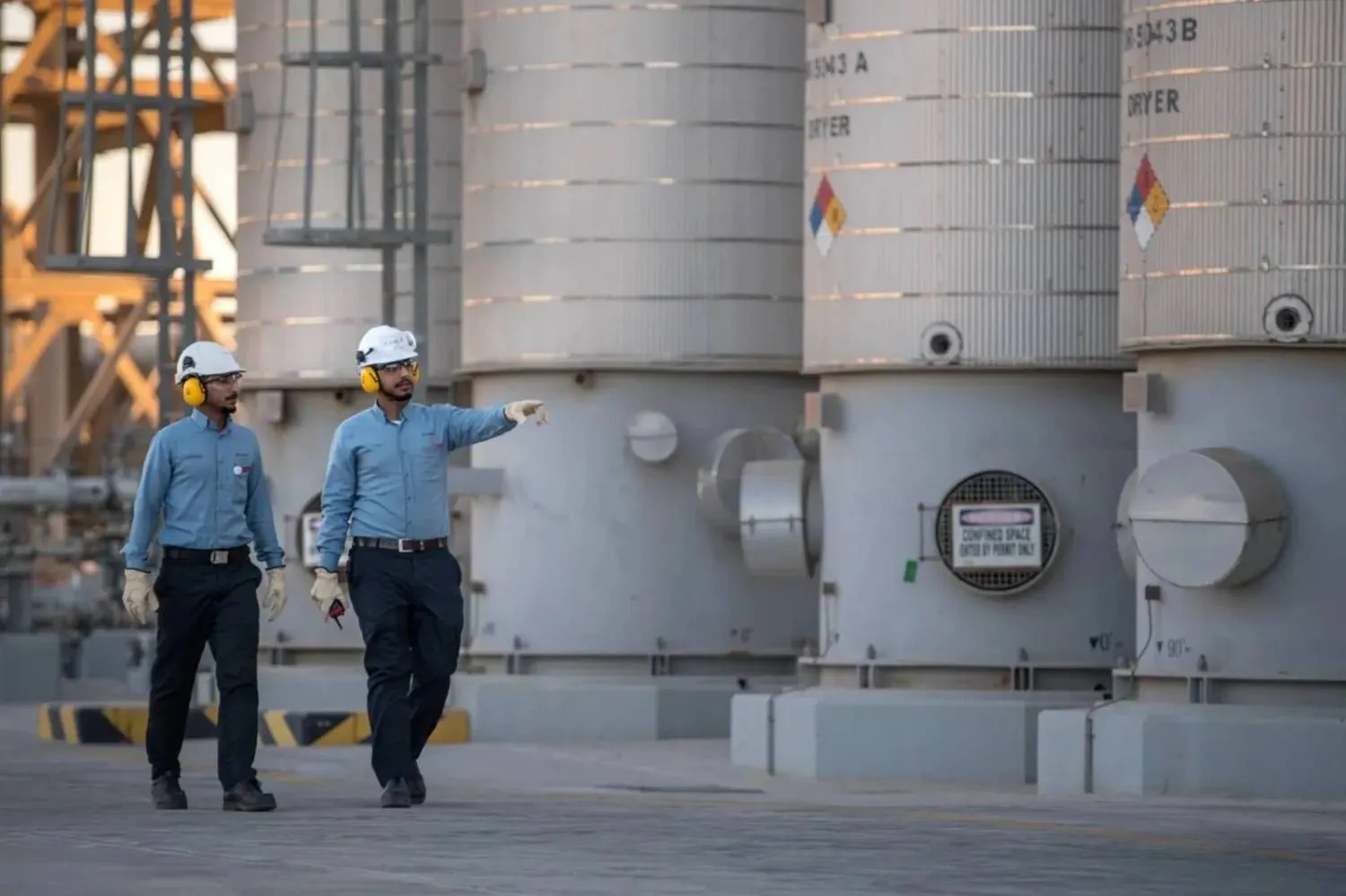
Employees at work in SABIC (The company’s website)
TT

Restructuring Moves SABIC to Reclaim Ground in the Petrochemicals Race

Employees at work in SABIC (The company’s website)

The global petrochemicals industry is grappling with a wave of uncertainty. Sluggish economic growth in key markets, mounting geopolitical tensions, and trade barriers are weighing on demand. Adding to the pressure, Asian producers - particularly in China - are flooding the market with new capacity, intensifying competition and squeezing margins.

For industry giants, survival now depends on swift adaptation. Analysts expect the global petrochemicals market to grow by 3.5 percent this year, but only those companies agile enough to restructure will benefit.

For Saudi Basic Industries Corporation (SABIC), the world’s largest diversified chemicals company, that has meant a bold reset. Earlier this year, SABIC unveiled a restructuring program designed to sharpen competitiveness, streamline operations, and improve financial resilience.

The plan involves reviewing its investment portfolio, exiting non-core activities, and shuttering underperforming assets. Already, SABIC has sold its stake in Bahrain’s Alba, divested its steel arm Hadeed, and closed a plant in the UK. Though the company reported losses of nearly SAR5 billion ($1.33 billion) in the first half of 2025, executives frame these moves as laying the foundation for long-term recovery, innovation, and sustainability.

SABIC remains a heavyweight in the sector. In 2025, it was ranked the world’s second most valuable chemical brand and crowned as the strongest brand in its category, with a valuation of $4.93 billion. At home, it contributes significantly to the Saudi economy, adding SAR4.4 billion ($1.2 billion) to the GDP in 2024.

From Gas Flares to Global Force

SABIC’s journey mirrors Saudi Arabia’s industrial transformation. Founded in 1976 by royal decree, the company was created to turn wasted associated gas into a driver of economic value. Its first major complexes in Jubail during the early 1980s, which produce methanol, polyethylene, and steel, laid the groundwork for an industrial base that fueled job creation and reshaped the national economy.

By 1983, SABIC had made its first international shipments, and a year later, 30 percent of its shares were floated on the Saudi stock market. Through the late 1980s and 1990s, joint ventures with global giants like Shell, ExxonMobil, and Mitsubishi expanded its reach. By 1996, SABIC was the Middle East’s largest listed company, with revenues surpassing $5 billion and exports to more than 100 countries.

The new millennium marked its boldest expansion yet. In 2002, SABIC acquired DSM’s petrochemicals division in the Netherlands, creating SABIC Europe. Five years later, it secured a foothold in North America and Asia by purchasing General Electric’s plastics division. By 2008, SABIC was at its peak, posting net profits of SAR27 billion ($7.2 billion) and ranking among the world’s most profitable petrochemicals firms, with a global presence spanning more than 50 countries.

The Aramco Era

A major shift came in 2019 when Saudi Aramco agreed to purchase a 70 percent stake in SABIC from the Public Investment Fund for $69.1 billion. The deal, closed in 2020, was part of a broader strategy to integrate crude oil with petrochemicals, positioning the Kingdom for the future as global energy demand evolves.

Yet the 2020s brought new headwinds: overcapacity, volatile feedstock prices, tighter environmental regulations, and fluctuating oil markets. These forces eroded profits and pushed SABIC to embark on its current restructuring. According to energy expert Dr. Mohammed Al-Sabban, former senior adviser to the Saudi oil minister, integration with Aramco has already allowed SABIC to cut costs and gain a pricing advantage.

“This period gives SABIC the chance to review its operational expenses, limit losses, and prepare for the next growth cycle,” he told Asharq Al-Awsat.

Market Pressures and Share Performance

The strain is evident in SABIC’s share price. Since 2020, the stock has dropped by nearly 40 percent. It plunged to 62 riyals during the pandemic, rebounded to 139 riyals in 2022, but has since slid to around 57 riyals. Analysts say this mirrors global petrochemical cycles, which oscillate with supply-demand shifts.

Iyad Ghulam, Head of Equity Research at AlAhli Capital, explained that oversupply from China is the main drag. Over the past three years, Chinese producers have ramped up output aggressively - often at thin margins or even losses - to secure self-sufficiency. While global demand is growing at roughly 3 percent annually, supply in some product lines is expanding at more than double that rate, creating a glut that depresses prices.

Plant utilization rates worldwide have already fallen from a healthy 80-85 percent to around 70 percent. Many companies, particularly in Europe, are divesting assets that can no longer compete. SABIC itself announced the sale of certain European operations last quarter.

Looking ahead, Ghulam predicts SABIC’s profits will remain under pressure through 2025 and 2026. Historically, the company earned between 15 and 20 billion riyals annually, but losses in the first half of this year underscore the depth of the downturn. Still, he sees opportunity: “SABIC is trading at around book value, compared to a historical multiple of 1.4 to 1.5. For long-term investors, this could be attractive despite near-term pain.”



Africa Leads Growth in Solar Energy as Demand Spreads Beyond Traditional Markets, Report Says 

Solar panels are seen on the roof of a company in Nairobi, Kenya, on Sept. 1, 2023. (AP)
TT

Africa Leads Growth in Solar Energy as Demand Spreads Beyond Traditional Markets, Report Says 

Solar panels are seen on the roof of a company in Nairobi, Kenya, on Sept. 1, 2023. (AP)

Africa was the world’s fastest-growing solar market in 2025, defying a global slowdown and reshaping where the momentum in renewable energy is concentrated, according to an industry report released in late last month.

The report by the Africa Solar Industry Association says the continent's solar installed capacity expanded 17% in 2025, boosted by imports of Chinese-made solar panels. Global solar power capacity rose 23% in 2025 to 618 GW, slowing from a 44% increase in 2024.

“Chinese companies are the main drivers in Africa’s green transition,” said Cynthia Angweya-Muhati, acting CEO of the Kenya Renewable Energy Association. “They are aggressively investing in and building robust supply chains in Africa green energy ecosystem.”

Some of that capacity has yet to be rolled out. Africa has only 23.4 gigawatts peak (GWp) of working solar capacity even though nearly 64 GWp of solar equipment has been shipped to the continent since 2017. A gigawatt peak represents 1 billion watts of maximum, optimum power output under ideal conditions.

“Africa's growth is driven by changing policies and enabling conditions in a number of countries,” said John Van Zuylen, CEO of the Africa Solar Industry Association.

“Solar energy has moved beyond a handful of early adopters to become a broader continental priority,” he said recently on the sidelines of the Inter Solar Africa summit in Nairobi. “What we are seeing is not temporary. It is policies aligning with market dynamics.”

Historically, South Africa dominated solar imports in Africa, at one point accounting for roughly half of all panels shipped to the continent. The latest data show its share has slipped below a third as demand surged elsewhere. Last year, 20 African nations set new annual records for solar imports, as 25 countries imported a total of at least 100 megawatts of capacity.

Nigeria has overtaken Egypt as Africa's second-largest importer as solar energy and battery storage provide a practical and affordable alternative to diesel generators and unreliable grid power. In Algeria, solar imports soared more than 30-fold year-on-year. Imports also surged in Zambia and Botswana.

At least 23 African countries, including South Africa, Tunisia, Kenya, Chad and the Central African Republic, are now generating over 5% of their electricity from solar energy, the report said.

Prices have fallen both for solar panels and batteries, mostly from China, enabling households and businesses to rely on solar plus batteries for round-the-clock electricity, the report said. Battery storage costs in Africa fell to $112 per kilowatt-hour in 2025 from an average of $144 per kilowatt-hour in 2023 as improved technology made storage systems more flexible and longer lasting.

“This ever-decreasing price of storage has game-changing implications for Africa, which has a dire need for stable and baseload power,” said Van Zuyken.

The gradual removal of diesel subsidies in Nigeria in the past two years also has helped accelerate adoption of solar energy. The policy was implemented sector by sector to cushion its impact, making diesel increasingly expensive and nudging businesses and households toward solar. In September, Nigeria announced plans for a 1 GW solar panel factory, the largest in West Africa. Similar facilities are under construction in Egypt, South Africa and Ethiopia.

As Africa moves to build its own manufacturing capacity, the industry is looking to China to transfer knowhow to help alleviate Africa’s dependence on imported equipment and technology.

Jobs won't be confined to manufacturing.

“The solar jobs boom is occurring in services including installation, maintenance, distribution and financing, where thousands of small and medium enterprises are emerging to meet rising demand,” Van Zuylen said.

Unlike regions such as the Middle East, where governments publish clear 10 or 20-year energy roadmaps, many African markets lack consistent policy signals. So, uncertainty over policies remains a challenge. Solar firms operating across Africa say unpredictable tax regimes, shifting import duties and unclear long-term energy plans undermine investor confidence.

“The problem is not the opportunity. It’s visibility,” said Amos Wemanya, senior analyst on renewable energy at Powershift Africa. “If a government announces a plan, companies need to trust that it will remain in place.”


US Reaches Trade Deal to Lower Taiwan's Tariff Barriers

Containers stacked at the port of Keelung in northern Taiwan (Reuters file photo)
TT

US Reaches Trade Deal to Lower Taiwan's Tariff Barriers

Containers stacked at the port of Keelung in northern Taiwan (Reuters file photo)

The Trump administration reached a trade deal with Taiwan on Thursday, with Taiwan agreeing to remove or reduce 99% of its tariff barriers, the office of the US Trade Representative said.

The agreement comes as the US remains reliant on Taiwan for its production of computer chips, the exporting of which contributed to a trade imbalance of nearly $127 billion during the first 11 months of 2025, according to the Census Bureau.

Most of Taiwan’s exports to the US will be taxed at a 15% rate, the USTR's office said. The 15% rate is the same as that levied on other US trading partners in the Asia-Pacific region, such as Japan and South Korea.

Trade Representative Jamieson Greer and Commerce Secretary Howard Lutnick attended the signing of the reciprocal agreement, which occurred under the auspices of the American Institute in Taiwan and the Taipei Economic and Cultural Representative Office in the United States. Taiwan’s Vice Premier Li-chiun Cheng and its government minister Jen-ni Yang also attended the signing.

“President Trump’s leadership in the Asia-Pacific region continues to generate prosperous trade ties for the United States with important partners across Asia, while further advancing the economic and national security interests of the American people,” The Associated Press quoted Greer as saying in a statement.

The Taiwanese government said in a statement that the tariff rate set in the agreement allows its companies to compete on a level field with Japan, South Korea and the European Union. It also said the agreement “eliminated” the disadvantage from a lack of a free trade agreement between Taiwan and the US.

The deal comes ahead of President Donald Trump’s planned visit to China in April and suggests a deepening economic relationship between the US and Taiwan.

Cheng said Taiwan hopes the agreement will make it a strategic partner with the US “so as to jointly consolidate the democratic camp’s leading position in high technology.”

The agreement would make it easier for the US to sell autos, pharmaceutical drugs and food products in Taiwan. But the critical component might be that Taiwanese companies would invest in the production of computer chips in the US, possibly helping to ease the trade imbalance.

In a separate but related deal, Taiwan will make investments of $250 billion in US industries, such as computer chips, artificial intelligence applications and energy. The Taiwanese government says it will provide up to an additional $250 billion in credit guarantees to help smaller businesses invest in the US.

The investments helped enable the US to reduce its planned tariffs from as much as 32% initially to 15%.

Taiwan's government said it will submit the reciprocal trade deal and investment plans to its legislature for approval.

In Taipei, President Lai Ching-te told reporters that Taiwan had agreed to reduce tariffs on imports from the US but stressed that the rate on 93 items would remain unchanged to protect important agriculture and industrial sectors such as rice farming.

The US side said the deal with Taiwan would help create several “world-class” industrial parks in America in order to help build up domestic manufacturing of advanced technologies such as chips. The Commerce Department in January described it as “a historic trade deal that will drive a massive reshoring of America’s semiconductor sector.”

In return, the US would give preferential treatment to Taiwan regarding the possible tariffs stemming from a Section 232 investigation of the importing of computer chips and semiconductor manufacturing equipment.


Saudi Industry Minister Discusses Localization of Medical Device Manufacturing with Global Firms in Belgium

Saudi Minister of Industry and Mineral Resources Bandar Alkhorayef  (center) during one of his meetings in Brussels on Thursday. (SPA)
Saudi Minister of Industry and Mineral Resources Bandar Alkhorayef (center) during one of his meetings in Brussels on Thursday. (SPA)
TT

Saudi Industry Minister Discusses Localization of Medical Device Manufacturing with Global Firms in Belgium

Saudi Minister of Industry and Mineral Resources Bandar Alkhorayef  (center) during one of his meetings in Brussels on Thursday. (SPA)
Saudi Minister of Industry and Mineral Resources Bandar Alkhorayef (center) during one of his meetings in Brussels on Thursday. (SPA)

Saudi Minister of Industry and Mineral Resources Bandar Alkhorayef held talks in Brussels on Thursday with Pfizer Global President of Emerging Markets Nick Lagunowich and a number of the company’s leaders to discuss ways to boost industrial cooperation and explore opportunities to localize pharmaceutical and vaccine manufacturing in Saudi Arabia.

The meeting addressed areas of cooperation, the exchange of expertise, and the transfer of advanced technologies for the manufacturing of vaccines and biopharmaceuticals to the Kingdom, as well as boosting integration into pharmaceutical supply chains and developing joint investments in high-quality projects that support the Kingdom’s drug security objectives.

Alkhorayef toured Pfizer’s manufacturing units in Brussels, where he was briefed on the company’s operations, key investments, and operational tracks in the pharmaceutical and vaccine industry. Factory officials highlighted its pivotal role in producing vaccines and biopharmaceuticals globally and stressed their interest in transferring similar technologies to the planned factory in the Kingdom.

Alkhorayef also met with the president of Agfa HealthCare to discuss opportunities for cooperation in the manufacturing of medical devices and advanced industrial solutions.

He toured the company’s industrial facilities, reviewing its efforts to develop medical device solutions, digital health data management systems, and the latest radiology technologies, as well as its capabilities in producing specialty chemicals and green hydrogen membranes.

These meetings and field visits are part of the Alkhorayef’s official visit to Belgium and aim to bolster economic partnerships, attract high-quality investments, and transfer advanced technologies in the pharmaceutical and medical industries in line with the objectives of the National Industrial Strategy and Saudi Vision 2030.