


Egypt Reveals 2,000-year-old Ruins Discovered in Alexandria Waters

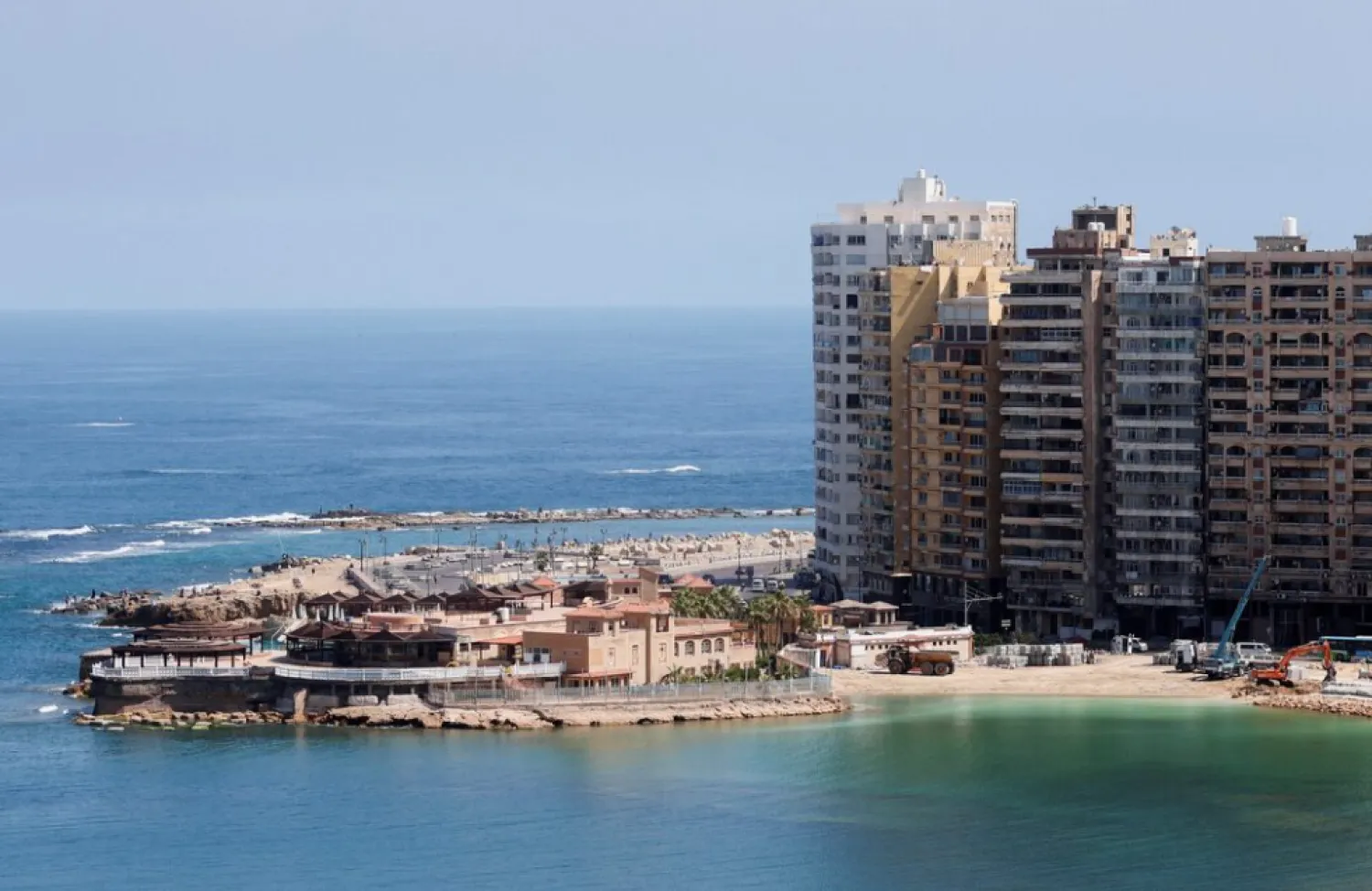
A view of buildings on the corniche in the Mediterranean city of Alexandria, Egypt, April 20, 2025. REUTERS/Mohamed Abd El Ghany/File Photo
TT

Egypt Reveals 2,000-year-old Ruins Discovered in Alexandria Waters

A view of buildings on the corniche in the Mediterranean city of Alexandria, Egypt, April 20, 2025. REUTERS/Mohamed Abd El Ghany/File Photo

Egypt on Thursday unveiled parts of a sunken city submerged beneath waters off the coast of Alexandria, revealing buildings, artefacts and an ancient dock, all dating back over 2,000 years.

Egyptian authorities said the site, located in the waters of Abu Qir Bay, may be an extension of the ancient city of Canopus, a prominent center during the Ptolemaic dynasty, which ruled Egypt for nearly 300 years, and the Roman Empire, which governed for around 600 years, AFP reported.

Over time, a series of earthquakes and rising sea levels submerged the city and the nearby port of Heracleion, leaving behind a treasure trove of historical remains.

On Thursday, cranes slowly hoisted statues from the depths, while divers in wetsuits, who had helped retrieve them, cheered from the shore.

"There's a lot underwater, but what we're able to bring up is limited, it's only specific material according to strict criteria," Egyptian Tourism and Antiquities Minister Sherif Fathi said.

"The rest will remain part of our sunken heritage," he added.

The underwater ruins revealed by the ministry on Thursday include limestone buildings that may have served as places of worship, residential spaces and commercial or industrial structures.

Reservoirs and rock-carved ponds for domestic water storage and fish cultivation were also uncovered.

Other notable finds were statues of royal figures and sphinxes from the pre-Roman era, including a partially preserved sphinx with the cartouche of Ramses II, one of the country's most famous and longest-ruling ancient pharaohs.

Many of the statues are missing body parts, including a beheaded Ptolemaic figure made of granite, and the lower half of a Roman nobleman's likeness carved from marble.

A merchant ship, stone anchors and a harbour crane dating back to the Ptolemaic and Roman eras were found at the site of a 125-metre dock, which the ministry said was used as a harbour for small boats until the Byzantine period.

Alexandria is home to countless ancient ruins and historic treasures, but Egypt's second city is at risk of succumbing to the same waters that claimed Canopus and Heracleion.

The coastal city is especially vulnerable to climate change and rising sea levels, sinking by more than three millimetres every year.

Even in the United Nations' best-case scenario, a third of Alexandria will be underwater or uninhabitable by 2050.



King Salman Arabic Language Academy Launches Arabic Language Month in Mexico

The Arabic Language Month features specialized training courses, scientific and outreach activities - SPA
TT

King Salman Arabic Language Academy Launches Arabic Language Month in Mexico

The Arabic Language Month features specialized training courses, scientific and outreach activities - SPA

The King Salman Global Academy for Arabic Language launched the Arabic Language Month in Mexico as part of its international efforts to support Arabic language education for non-native speakers and strengthen its cultural and intellectual presence in global academic institutions.

The program runs throughout January and includes a variety of scientific and educational events, such as intensive training courses for teachers and learners, specialized programs for teachers of Arabic as a foreign language, a symposium on the current state and challenges of Arabic language education in Mexico, the administration of the “Hamza” academic test to assess learners’ proficiency, and organized scientific and cultural visits, SPA reported.

Implemented in cooperation with key institutions in Mexico, the program targets teachers, learners, and anyone interested in teaching Arabic as a foreign language.

The Arabic Language Month features specialized training courses, scientific and outreach activities, and active participation from the academy leaders in academic events. It aims to enhance institutional and scientific collaboration, expand international partnerships, and advance the academy’s mission of promoting Arabic language education worldwide.


Holy Sites Journey Program Fosters Cultural Dialogue Among Youth

Participants emphasized the importance of cultural dialogue among youth from Islamic countries - SPA
TT

Holy Sites Journey Program Fosters Cultural Dialogue Among Youth

Participants emphasized the importance of cultural dialogue among youth from Islamic countries - SPA

The Holy Sites Journey Program for Arab and Islamic Youth, organized by the Ministry of Sport in collaboration with the Organization of Islamic Cooperation (OIC) and the League Arab, has fostered cultural dialogue among youth from Arab and Islamic countries through specialized discussion sessions.

These sessions highlighted shared values and religious and cultural experiences within a framework that reflects the Kingdom’s civilizational and humanitarian message, SPA reported.

Participants emphasized the importance of cultural dialogue among youth from Islamic countries, highlighting its role in fostering mutual understanding, challenging stereotypes, and building bridges of communication grounded in respect and coexistence.


Janadriyah Village Opens Friday with Culture, Camels, and Family Entertainment

These events are organized under the supervision of the Saudi Camel Sports - SPA
TT

Janadriyah Village Opens Friday with Culture, Camels, and Family Entertainment

These events are organized under the supervision of the Saudi Camel Sports - SPA

The Janadriyah village, part of the Custodian of the Two Holy Mosques Camel Festival, will open to visitors this Friday, offering a rich cultural and entertainment experience for the entire family. Spanning 15,000 square meters, the village includes more than 60 diverse booths designed to meet visitors’ needs, SPA reported.

The village is an ideal destination for families and tourists interested in camel racing heritage. It offers a wide range of restaurants and cafés, alongside shops selling traditional handicrafts and modern products that cater to all tastes.

It also features a dedicated events stage hosting continuous cultural and artistic performances, as well as camel-riding activities that offer visitors a unique hands-on experience.

These events are organized under the supervision of the Saudi Camel Sports, reflecting its commitment to preserving this national heritage, introducing it to younger generations, and transforming camel racing from a traditional sport into a global cultural, tourism, and economic platform, supporting Saudi cultural identity and aligning with the Kingdom’s Vision 2030 goals in culture and entertainment.