


Iran, European Powers Agree to Resume Nuclear, Sanctions Talks Next Week

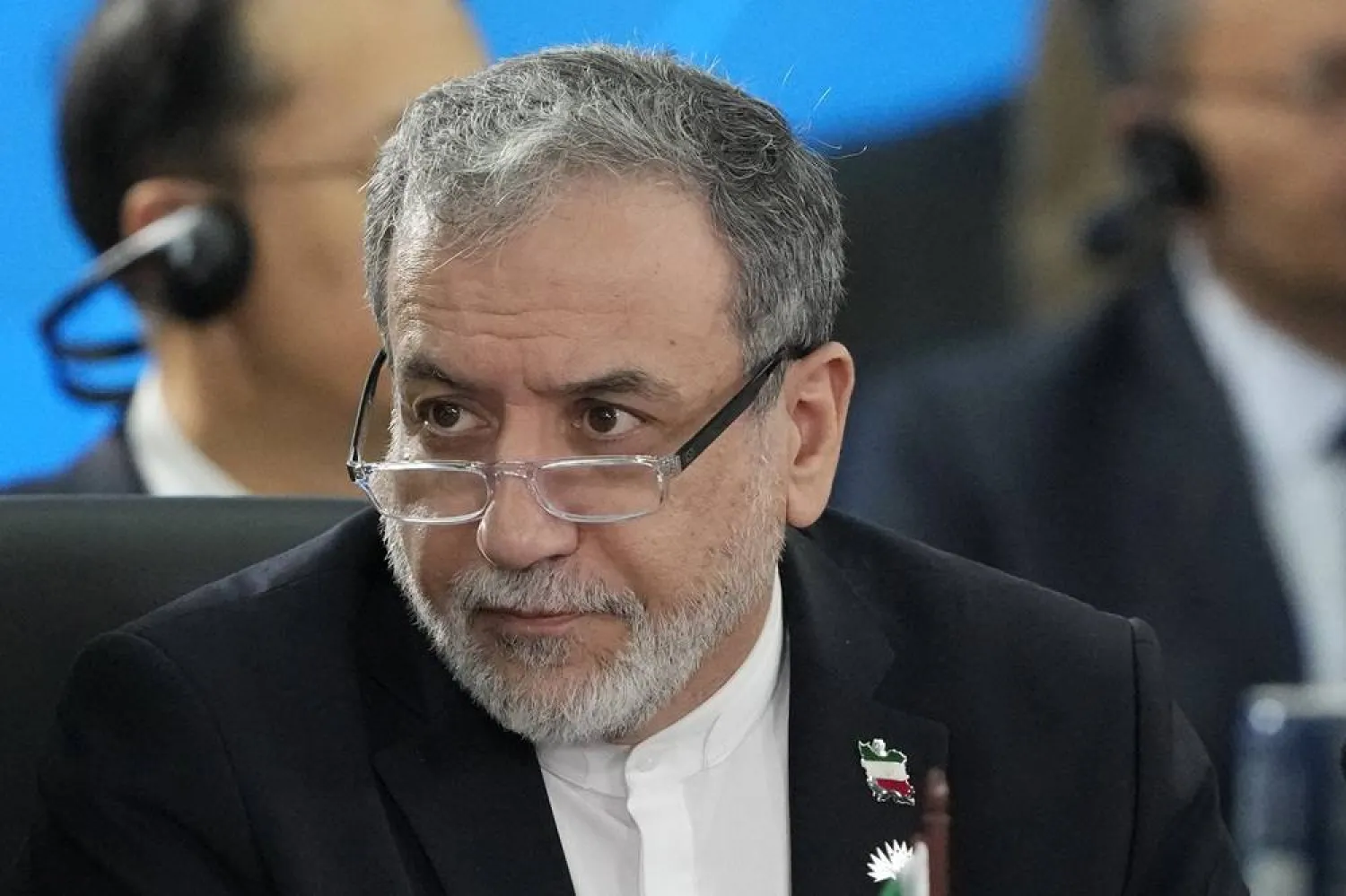
Iran's Foreign Minister Abbas Araghchi attends the 17th annual BRICS summit in Rio de Janeiro, Brazil, July 7, 2025. (AP)
TT

Iran, European Powers Agree to Resume Nuclear, Sanctions Talks Next Week

Iran's Foreign Minister Abbas Araghchi attends the 17th annual BRICS summit in Rio de Janeiro, Brazil, July 7, 2025. (AP)

Iranian Foreign Minister Abbas Araghchi and his French, British and German counterparts agreed on Friday to resume talks next week on nuclear issues, Iranian state media reported, as a threat by the European powers to reimpose sanctions looms.

The three countries have said they could re-activate United Nations sanctions on Iran under a "snapback" mechanism if Tehran does not return to negotiations on a deal to curb its disputed uranium enrichment program.

German Foreign Minister Johann Wadephul confirmed talks next week and warned Iran that sanctions would snap back into effect unless it reached a verifiable and durable deal to defuse concerns about its nuclear ambitions. He reiterated that time was very short and Iran needed to engage substantively.

Iranian state media said Araghchi and the British, French and German foreign ministers agreed during a phone call for deputy foreign ministers to continue the talks on Tuesday.

During the call, Araghchi "emphasized the legal and moral incompetence of these countries to resort to the (snapback) mechanism, and warned of the consequences of such an action", Iranian media reported.

The European trio, along with the US, contend that Iran is using the nuclear energy program to potentially develop weapons capability in violation of the Non-Proliferation Treaty. Iran says it seeks only civilian nuclear power.

The International Atomic Energy Agency, the UN nuclear watchdog, has stated that Iran is nowhere near developing a nuclear bomb, and US national intelligence director Tulsi Gabbard testified in March that intelligence officials had not found evidence of Iran moving toward a nuclear weapon.

Tehran suspended nuclear negotiations with the United States, which were aimed at curbing its accelerating enrichment program, after the US and Israel bombed its nuclear sites during a 12-day war in June. Since then, IAEA inspectors have been unable to access Iran's nuclear installations, despite IAEA chief Rafael Grossi stating that inspections remain essential.

Iran and the three European powers last convened in Geneva on June 20, while the war was still raging, and there were few signs of progress.

Separately, Iran's envoy to the IAEA said an Iranian delegation and IAEA officials had agreed in talks in Vienna on Friday to discuss ways to interact within the framework of a law passed by Iran's parliament that curbs Tehran's cooperation with the nuclear watchdog, the official news agency IRNA reported.



Merz Warns Great Power Politics Makes World 'a Dangerous Place'

Germany's Chancellor Friedrich Merz gestures as he speaks during the World Economic Forum (WEF) annual meeting in Davos on January 22, 2026. (Photo by Fabrice COFFRINI / AFP)
TT

Merz Warns Great Power Politics Makes World 'a Dangerous Place'

Germany's Chancellor Friedrich Merz gestures as he speaks during the World Economic Forum (WEF) annual meeting in Davos on January 22, 2026. (Photo by Fabrice COFFRINI / AFP)

German Chancellor Friedrich Merz warned Thursday that the international order is "unravelling at a breathtaking pace" and that "a world where only power counts is a dangerous place".

Speaking at the World Economic Forum in Davos, Merz pointed to Russia's war in Ukraine, a rising China and a United States that is "radically reshaping its foreign and security policy".

"A world where only power counts is a dangerous place," he said. "First for small states and for the middle powers, ultimately for the great ones."

The conservative leader of the top EU economy said Germany went down this road "to its bitter end" during the 20th century, reported AFP.

"It pulled the world into a black abyss," he said.

"So let us bear in mind: our greatest strength remains the ability to build partnerships and alliances among equals based on mutual trust and respect."

Merz called Russia's invasion of Ukraine "the most drastic expression" so far of a global "new era". He added that China, "with strategic foresight, has worked its way into the ranks of the great powers".

"The United States' global pole position is being challenged," Merz said, with Washington responding by "radically reshaping its foreign and security policy".

"We have entered a time of great power politics. The international order of the past three decades anchored in international law has always been imperfect. Today, its very foundations have been shaken."

He said Europe's power rested on three pillars.

"First we must invest massively in our ability to defend ourselves, and we are doing this," he said.

"Second, we must rapidly make our economies competitive, and we are doing this. Third, we must stand closer together among Europeans and among like-minded partners. We are doing this."


Israel President Says Iran's Future 'Can Only Be Regime Change'

Israeli President Isaac Herzog attends the 56th annual World Economic Forum (WEF) meeting in Davos, Switzerland, January 22, 2026. REUTERS/Romina Amato
TT

Israel President Says Iran's Future 'Can Only Be Regime Change'

Israeli President Isaac Herzog attends the 56th annual World Economic Forum (WEF) meeting in Davos, Switzerland, January 22, 2026. REUTERS/Romina Amato

Israel's President Isaac Herzog said on Thursday that "regime change" can be the only future for Iran, where mass protests against the clerical authorities have faced a deadly crackdown.

Demonstrations initially sparked by economic grievances turned into a movement against the theocracy that has ruled Iran since 1979.

People poured into the streets for several days from January 8, but the demonstrations appear for now to have petered out in the face of what activists describe as a crackdown under the cover of a blanket internet shutdown.

"The Iranian people are yearning for change. The Iranian people deserve change," Herzog said in an interview at the World Economic Forum in Davos.

"The future for the Iranian people can only be in a regime change, and that has to be... within the realms of the Iranian people and the international community and its support," he added.

He added saying that the Iranian “regime is in quite a fragile situation."

The Iranian Republic's long-time foe Israel has expressed support for the protesters, without suggesting it would intervene.

Iran accused Israel in early January of trying to undermine its national unity after Prime Minister Benjamin Netanyahu said Israel stood "in solidarity with the struggle of the Iranian people".

Iranian authorities on Wednesday said 3,117 people were killed during the protests that first erupted in late December, but activists said the actual toll risked being many times higher.

Iran and Israel fought a 12-day war last year, after Israel launched a wave of strikes on Iranian nuclear facilities as well as residential areas, saying it aimed to cripple the Iranian republic's atomic research and ballistic missile capabilities.


US Army Orders Military Police to Get Ready for a Possible Minneapolis Deployment

Federal agents patrol a street, Wednesday, Jan. 21, 2026, in Minneapolis. (AP Photo/Angelina Katsanis)
TT

US Army Orders Military Police to Get Ready for a Possible Minneapolis Deployment

Federal agents patrol a street, Wednesday, Jan. 21, 2026, in Minneapolis. (AP Photo/Angelina Katsanis)


The US Army has ordered several dozen additional active-duty soldiers to prepare for a possible deployment to Minneapolis if needed, a defense official said Wednesday, amid protests over the Trump administration’s immigration enforcement crackdown.

The defense official, who spoke on condition of anonymity to discuss sensitive plans, confirmed that members of an Army military police brigade who are stationed at Fort Bragg in North Carolina have been given prepare-to-deploy orders.

Clashes in Minneapolis (AP)

If deployed, the troops would likely offer support to civil authorities in Minneapolis, according to the official, who stressed that such standby orders are issued regularly and they do not necessarily mean that the troops would end up going, The Associated Press said.

About 1,500 active-duty soldiers from the Army’s 11th Airborne Division based in Alaska also have received similar standby orders. President Donald Trump has threatened to invoke the Insurrection Act, a rarely used 19th century law that would allow him to use active-duty troops as law enforcement.

A person demonstrates during protests against President Donald Trump's administration's crackdown on immigration laws (AP)

That threat followed protests that erupted in Minneapolis after a federal immigration officer killed resident Renee Good on Jan. 7. Trump quickly appeared to walk back the threat, telling reporters a day later that there wasn’t a reason to use the act “right now.”

“If I needed it, I’d use it,” Trump said. “It’s very powerful.”

A teenage girl was arrested on Blaisdell Avenue after colliding with a Border Patrol vehicle (AFP)

When asked about the latest orders, which were reported earlier by MS Now, the Pentagon said it didn't have information to provide at this time.

Minnesota Gov. Tim Walz, a Democrat and frequent target of Trump, has urged the president to refrain from sending in more troops and, in a statement Tuesday, invited him to visit Minnesota and “help restore calm and order and reaffirm that true public safety comes from shared purpose, trust, and respect.”

A person is detained after a confrontation with Border Patrol while arresting teenagers in Minneapolis (AFP)

In his second term, Trump has pushed traditional boundaries by using troops in American cities, often over the objections of local officials, amid federal operations targeting illegal immigration and crime.

Patrols on a street in Minneapolis (AP)

Trump deployed federalized National Guard troops to Los Angeles last June after protesters took to the streets in response to a blitz of immigration arrests. Ultimately, he sent about 4,000 Guard members and 700 active-duty Marines to guard federal buildings and, later, to protect federal agents as they carried out immigration arrests.

A member of the Border Patrol sprays pepper spray on protesters on Blaisdell Avenue in Minneapolis (AFP)

He also mobilized Guard troops in places like Chicago and Portland, Oregon, but has faced a series of legal setbacks. Trump said in December that he was dropping that push for the time being.