


US to Take 10% Equity Stake in Intel, in Trump’s Latest Corporate Move

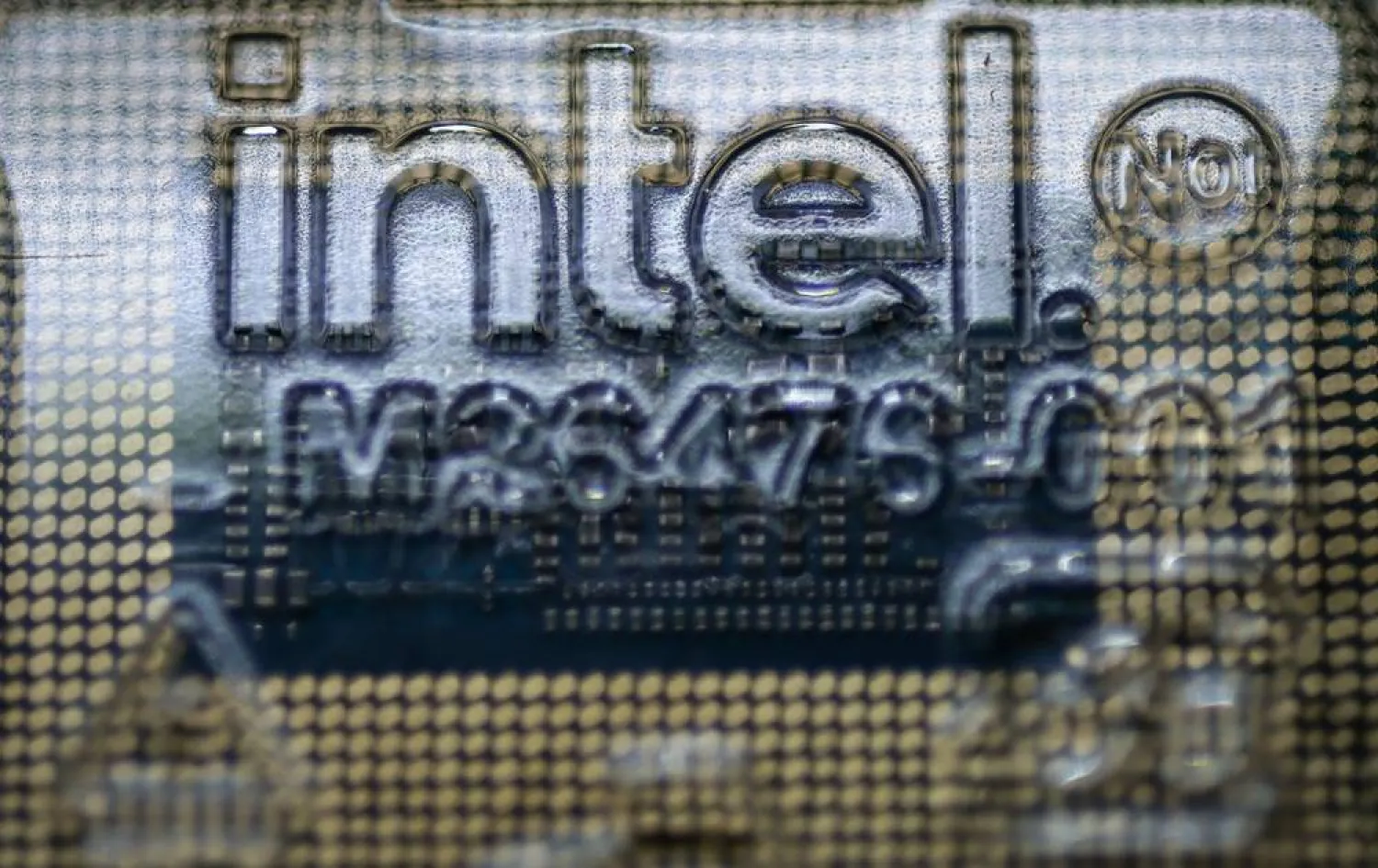
An Intel chip and a package with the logo are photographed in Berlin, Germany, 21 August 2025. (EPA)
TT

US to Take 10% Equity Stake in Intel, in Trump’s Latest Corporate Move

An Intel chip and a package with the logo are photographed in Berlin, Germany, 21 August 2025. (EPA)

President Donald Trump said on Friday the US would take a 10% stake in Intel under a deal with the struggling chipmaker that converts government grants into an equity share, the latest extraordinary intervention by the White House in corporate America.

The deal puts Trump on better terms with Intel CEO Lip-Bu Tan, after the president recently said the CEO should step down due to conflicts of interest. It will ensure that the chipmaker will receive about $10 billion in funds for building or expanding factories in the US.

Under the agreement, the US will purchase a 9.9% stake in Intel for $8.9 billion, or $20.47 per share, which represents a discount of about $4 from Intel's closing share price of $24.80 on Friday.

The purchase of the 433.3 million Intel shares will be made with funding from the $5.7 billion in unpaid grants from the Biden-era CHIPS Act and $3.2 billion awarded to Intel for the Secure Enclave program, also awarded under Trump's predecessor, Democratic President Joe Biden.

Intel stock rose roughly 1% in the extended session on Friday after closing up 5.5% during regular trading.

Trump met with Tan on Friday, a White House official said. That followed Trump's August 11 meeting with the Intel CEO after Trump demanded that Tan resign over his ties to Chinese firms.

"He walked in wanting to keep his job and he ended up giving us $10 billion for the United States. So we picked up $10 billion," Trump said on Friday.

Commerce Secretary Howard Lutnick said on X that Tan had struck a deal "that's fair to Intel and fair to the American People."

PLAYING CATCH UP

The Intel investment marks the latest unusual deal with US companies, including a US government agreement allowing AI chip giant Nvidia to sell its H20 chips to China in exchange for receiving 15% of those sales.

Other recent deals include an agreement for the Pentagon to become the largest shareholder in a small mining company, MP Materials, to boost output of rare earth magnets and the US government's winning a "golden share" with certain veto rights as part of a deal to allow Japan's Nippon Steel to buy US Steel.

The federal government's broad intervention in corporate matters has worried critics, who say Trump's actions create new categories of corporate risk.

Ahead of the US deal with Intel, Japan's SoftBank agreed to take a $2 billion stake in the chip maker on Monday.

Some industry observers still question Intel's ability to surmount its problems.

Daniel Morgan, senior portfolio manager at Synovus Trust, said Intel's problems are beyond a cash infusion from SoftBank or equity interest from the government, singling out Intel's contract chip manufacturing business, known as its foundry unit.

"Without government support or another financially stronger partner, it will be difficult for the Intel foundry unit to raise enough capital to continue to build out more Fabs at a reasonable rate," he said.

Intel "needs to catch up with TSMC from a technological perspective to attract business," he added.

The government's stake is to be passive ownership and does not include a board seat, Intel said. The government will be required to vote with Intel's board when shareholder approval is necessary, with "limited exceptions." Intel did not specify the exceptions.

The equity stake also includes a five-year warrant at $20 a share for an additional 5% of Intel stock, which the US can use if Intel loses control of the foundry business.

Federal backing could give Intel more breathing room to revive its loss-making foundry business, analysts said, but it ceded the AI market to Nvidia and has lost market share to Advanced Micro Devices in its central processor business for several years.

It has also faced challenges in attracting customers to its new factories. Tan, who became CEO in March, has been tasked to turn around the American chipmaking icon, which recorded an annual loss of $18.8 billion in 2024 - its first such loss since 1986. The company's last fiscal year of positive adjusted free cash flow was 2021.



Tesla Loses Title as World's Biggest Electric Vehicle

(FILES) BYD's display booth is seen during the 32nd Gaikindo Indonesia International Auto Show (GIIAS) at the Indonesia Convention Exhibition (ICE) in Tangerang, Greater Jakarta, on July 23, 2025. (Photo by Yasuyoshi CHIBA / AFP)
TT

Tesla Loses Title as World's Biggest Electric Vehicle

(FILES) BYD's display booth is seen during the 32nd Gaikindo Indonesia International Auto Show (GIIAS) at the Indonesia Convention Exhibition (ICE) in Tangerang, Greater Jakarta, on July 23, 2025. (Photo by Yasuyoshi CHIBA / AFP)

Tesla lost its crown as the world’s bestselling electric vehicle maker on Friday as a customer revolt over Elon Musk’s right-wing politics and stiff overseas competition pushed sales down for a second year in a row.

Tesla said that it delivered 1.64 million vehicles in 2025, down 9% from a year earlier.

Chinese rival BYD, which sold 2.26 vehicles last year, is now the biggest EV maker, The Associated Press reported.

For the fourth quarter, sales totaled 418,227, falling short of the 440,000 that analysts polled by FactSet expected. The sales total may likely have been impacted by the expiration of a $7,500 tax credit that was phased out by the Trump administration at the end of September.

Even with multiple issues buffeting the company, the stock finished 2025 with a gain of approximately 11%, as investors hope Tesla CEO Musk can deliver on his ambitions to make Tesla a leader in robotaxi service and get consumers to embrace humanoid robots that can perform basic tasks in homes and offices.

Shares of Tesla rose almost 2% before the opening bell Friday.


Precious Metals Start 2026 Strong on Rate-cut Optimism, Global Risks

(FILES) A worker polishes gold bullion bars at the ABC Refinery in Sydney on August 5, 2020. (Photo by DAVID GRAY / AFP)
TT

Precious Metals Start 2026 Strong on Rate-cut Optimism, Global Risks

(FILES) A worker polishes gold bullion bars at the ABC Refinery in Sydney on August 5, 2020. (Photo by DAVID GRAY / AFP)

Precious metals kicked off the New Year on a strong note on Friday, rebounding from year-end declines as tensions between major powers and US rate cut hopes boosted investor appetite for bullion.

Spot gold climbed 1.7% to $4,387.58 per ounce, as of 1322 GMT, after hitting a record high of $4,549.71 on December 26. It had dropped to a two-week low on Wednesday, Reuters reported.

US gold futures for February delivery gained 1.3% to $4,399.20/oz.

"Precious metals have kicked off 2026 on ⁠a firmly positive note ... after a bout of profit taking in the last days of 2025, bulls seem to be drawing strength from geopolitical risk and hopes of lower US rates this year," said Lukman Otunuga, senior research analyst at FXTM.

On the physical demand side, gold traded at a premium in top hubs India and China for the first time in about ⁠two months, as a recent correction from all-time highs helped lift retail demand.

Bullion surged 64% in 2025, its biggest annual gain since 1979, driven by Fed rate cuts, geopolitical tensions, strong central bank buying, and rising ETF holdings.

"Gold prices are expected to move higher in 2026 - we target a move to USD 5,000/oz - driven by lower real yields, ongoing global economic concerns, and uncertainty surrounding US domestic policy," said UBS analyst Giovanni Staunovo.

"Both central banks and investors are likely to continue favoring real assets like gold for its freedom from counterparty risk."

Investors currently expect at least two ⁠quarter-point Fed rate cuts this year.

Non-yielding assets tend to do well in low-interest-rate environments.

Spot silver advanced 3.4% to $73.71 per ounce, after hitting an all-time high of $83.62 on Monday, while platinum jumped 3.3% at $2,121.38 per ounce, after rising to an all-time high of $2,478.50 on Monday.

Both metals recorded their best year ever, with silver leading by posting 147% annual gains, driven by its designation as a critical US mineral, supply shortages and low inventories amid rising industrial and investment demand.

Palladium rose 1.9% to $1,636.19 per ounce, after closing the previous year up 76%, its best in 15 years.

All metals retreated sharply earlier in the week as traders booked profits after CME raised margins on precious metal futures.


Oil Steadies after Biggest Annual Loss Since 2020

FILE PHOTO: A worker stands in front of storage tanks at the Rosneft oil refinery in Tuapse at the Russian Black Sea coast September 6, 2006. REUTERS/Sergei Karpukhin/File Photo
TT

Oil Steadies after Biggest Annual Loss Since 2020

FILE PHOTO: A worker stands in front of storage tanks at the Rosneft oil refinery in Tuapse at the Russian Black Sea coast September 6, 2006. REUTERS/Sergei Karpukhin/File Photo

Oil prices steadied on the first day of trade in 2026 after registering their biggest annual loss since 2020 as investors weighed oversupply concerns against geopolitical risks including the war in Ukraine and Venezuela exports.

Brent crude futures dropped 4 cents on Friday to $60.81 a barrel by 1029 GMT while US West Texas Intermediate crude was down 3 cents at $57.39, said Reuters.

Russia and Ukraine traded allegations of attacks on civilians on ‌New Year's Day ‌despite talks overseen by US President Donald ‌Trump ⁠that are ‌aimed at bringing an end to the nearly four-year-old war.

Kyiv has been intensifying strikes against Russian energy infrastructure in recent months, aiming to cut off Moscow's sources of financing for its military campaign in Ukraine.

Elsewhere, the Trump administration's efforts to increase pressure on Venezuelan President Nicolas Maduro continued with Wednesday's imposition of sanctions on four companies and associated oil ⁠tankers that it said were operating in Venezuela’s oil sector.

Traders widely expect OPEC+ to continue its pause on output increases in the first quarter, said Sparta Commodities analyst June Goh.

"2026 will be an important year on assessing OPEC+ decisions for balancing supply," ⁠she said, adding that China would continue to build crude stockpiles in the first half, providing a floor for oil prices.

2025 LOSSES

The Brent and WTI benchmarks recorded annual losses of nearly 20% in 2025, the steepest since 2020, as concerns about oversupply and tariffs outweighed geopolitical risks. It was the third straight year of losses for Brent, the longest such streak on record.

"As of now, we are expecting a fairly boring year for (Brent) oil prices, range-bound around $60-65 a barrel," said DBS energy analyst Suvro Sarkar.

Phillip Nova analyst Priyanka Sachdeva said ‌the muted price movement reflected a struggle between short-term geopolitical risks and longer-term market fundamentals that point towards oversupply.