


Saudi Arabia Records 84,516 Seabirds and 1,219 Large Marine Creatures in 2025 

The results highlight Saudi Arabia's ongoing commitment to protecting biodiversity and preserving marine and coastal ecosystems. (SPA) 
TT

Saudi Arabia Records 84,516 Seabirds and 1,219 Large Marine Creatures in 2025 

The results highlight Saudi Arabia's ongoing commitment to protecting biodiversity and preserving marine and coastal ecosystems. (SPA) 

The National Center for Wildlife (NCW) announced record sightings of seabirds and large marine species along the Saudi coasts in the Red Sea and the Arabian Gulf during 2025. These findings are part of NCW field monitoring and exploration programs in the Kingdom’s marine and coastal environments, reported the Saudi Press Agency on Sunday.

The results highlight Saudi Arabia's ongoing commitment to protecting biodiversity and preserving marine and coastal ecosystems, in line with Saudi Vision 2030 and its goals for sustainable development.

NCW researchers documented 84,516 seabirds, including 50,356 along the Kingdom's eastern coast on the Arabian Gulf, and more than 34,160, representing 63 species, along its western coast on the Red Sea.
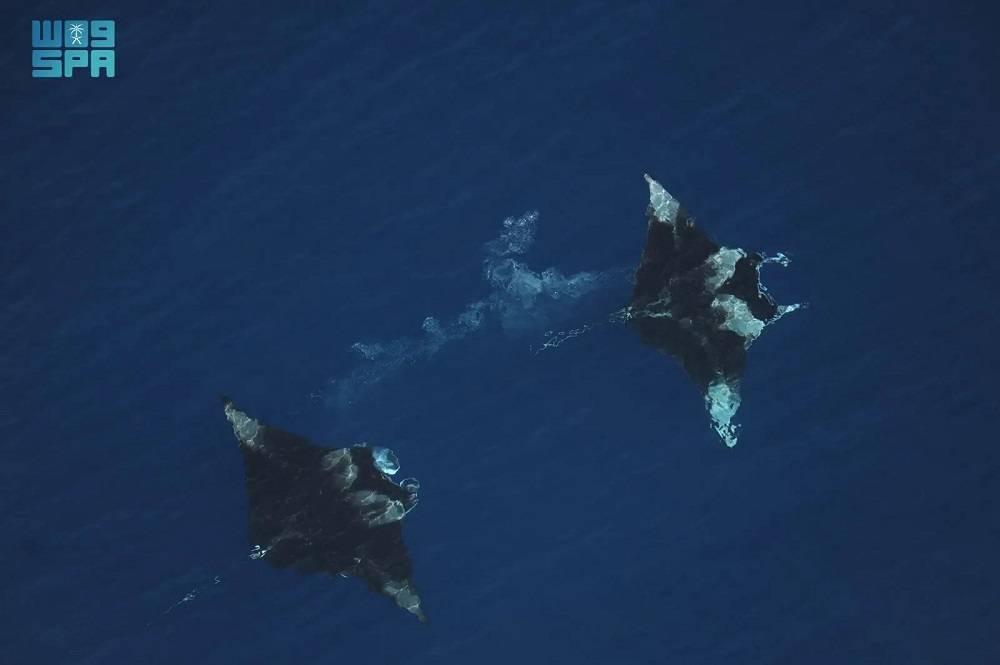
The center's monitoring efforts also recorded sightings of 1,219 large marine creatures. (SPA)

The team also identified 39 key sites for bird migration and breeding, five of which are officially recognized by BirdLife International as critical areas for birds and marine biodiversity.

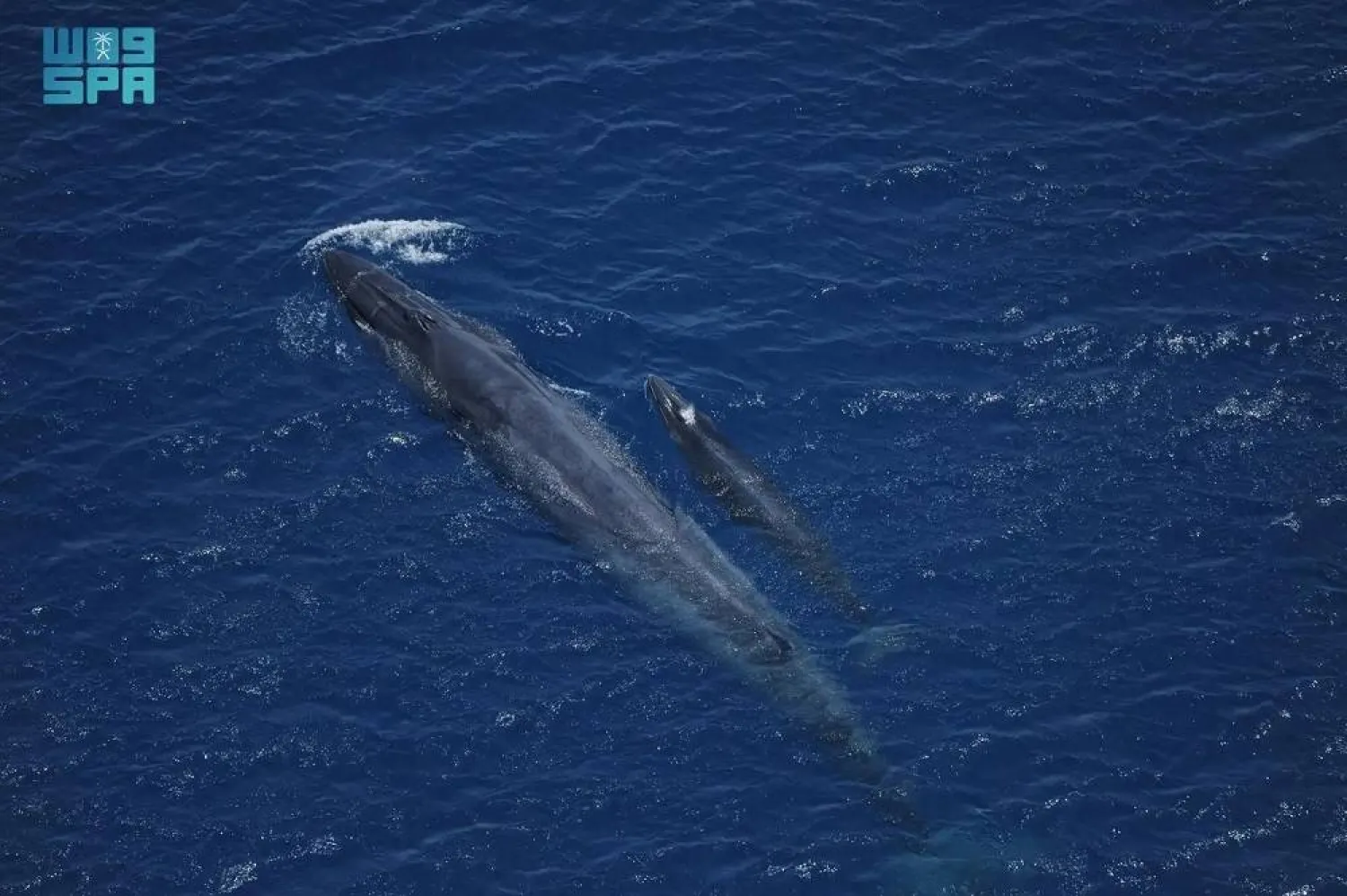
The center's monitoring efforts also recorded exceptional sightings of 1,219 large marine creatures, 159 on the eastern coast and 1,060 on the western coast, reflecting the effectiveness of ongoing efforts to conserve biodiversity and protect marine ecosystems.

These findings reinforce the Kingdom's biodiversity database and help identify key environmental zones. They also strengthen NCW efforts to build a foundation for the integrated and sustainable management of environmental resources, support the Kingdom's push for eco-tourism, and contribute to raising environmental awareness.



US: Tourist Arrested after Video Shows Rock Hurled at Endangered Hawaiian Monk Seal's Head

Igor Mykhaylovych Lytvynchuk was charged with harassing and attempting to harass a protected animal after being seen throwing a rock at a Hawaiian monk seal. Photo: US Attorney's Office District of Hawaii
TT

US: Tourist Arrested after Video Shows Rock Hurled at Endangered Hawaiian Monk Seal's Head

Igor Mykhaylovych Lytvynchuk was charged with harassing and attempting to harass a protected animal after being seen throwing a rock at a Hawaiian monk seal. Photo: US Attorney's Office District of Hawaii

A tourist who drew widespread condemnation in Hawaii after a witness recorded him chucking a coconut-sized rock at “Lani,” a beloved, endangered Hawaiian monk seal off a Maui beach, was arrested Wednesday by federal agents.

Igor Mykhaylovych Lytvynchuk, 38, of Covington, Washington, is charged with harassing a protected animal, the US attorney's office in Honolulu said, adding that National Oceanic and Atmospheric Administration special agents arrested him near Seattle. He was scheduled to appear in US District Court in Seattle on Thursday.

The court docket didn’t list an attorney, and a person who answered the phone at a number associated with Lytvynchuk declined to comment.

A state Department of Land and Natural Resources officer last week investigated a report of Hawaiian monk seal harassment in Lahaina, the community that was largely destroyed by a deadly wildfire in 2023. A witness showed the officer video of the seal swimming in shallow water while a man watched from shore, The Associated Press reported.

“In the cellphone video, the man can be seen holding a large rock with one hand, aiming, and throwing it directly at the monk seal," prosecutors said a criminal complaint. The rock, described by a witness as the size of a coconut, narrowly missed the seal's head, but caused the “animal to abruptly alter its behavior,” the complaint said.

When a witness confronted the man, he said "he did not care and was ‘rich’ enough to pay any fines," the complaint said.

Maui Mayor Richard Bissen, in a video posted on social media after the incident, vowed consequences for anyone who harms Hawaii's wildlife.

“Many of our residents know her, watch over her and care deeply about her well-being,” he said. “Lani, we have your back.”

Lytvynchuk is charged with harassing and attempting to harass an endangered Hawaiian monk seal.

Hawaiian monk seals are a critically endangered species. Only 1,600 remain in the wild.

If convicted, Lytvynchuk, faces up to one year in prison for each charge. He also faces a fine of up to $50,000 under the Endangered Species Act and a fine of up to $20,000 under the Marine Mammal Protection Act.


Historic Swiss Solar-powered Plane Crashes Into Sea

(FILES) The Solar Impulse 2 solar powered airplane flies off Kapolei, Hawaii, on March 3, 2016 on a all-day test flight. (Photo by Eugene TANNER / AFP)
TT

Historic Swiss Solar-powered Plane Crashes Into Sea

(FILES) The Solar Impulse 2 solar powered airplane flies off Kapolei, Hawaii, on March 3, 2016 on a all-day test flight. (Photo by Eugene TANNER / AFP)

The experimental plane Solar Impulse 2, which completed a historic round-the-world trip in 2016 without using jet fuel, crashed into the Gulf of Mexico recently, its owner revealed.

Flown by Swiss pilots Bertrand Piccard and Andre Borschberg, Solar Impulse 2 circumnavigated the globe in 17 stages, covering a remarkable 26,700 miles (43,000 kilometers) across four continents, two oceans and three seas, in 23 days of flying without using a drop of fuel.

Three years after the globe-trotting flight, the solar-powered vessel was sold to Skydweller Aero, which converted the aircraft into a drone to carry out "controlled ditching," the company said in a press release issued Tuesday.

Skydweller Aero said Solar Impulse 2 took off from Stennis, Mississippi on April 26 but crashed into the Gulf of Mexico on May 4, AFP reported.

"Ultimately, a record-breaking flight of 8 days and 14 minutes validates the reality of perpetual, solar-powered flight in a military mission-relevant environment," the company said, in reference to a US Navy exercise in which the vessel was used.

The US National Transportation Safety Board said it was investigating the accident.


'Ocean Dream' Blue-green Diamond Sells for More Than $17 Million at Christie's

A Christie's employee displays "The Ocean Dream," the largest fancy vivid blue-green diamond, weighting 5.50 carats, during a preview at Christie's in Geneva, Switzerland, Thursday, May 7, 2026. (Jean-Christophe Bott/Keystone via AP)
TT

'Ocean Dream' Blue-green Diamond Sells for More Than $17 Million at Christie's

A Christie's employee displays "The Ocean Dream," the largest fancy vivid blue-green diamond, weighting 5.50 carats, during a preview at Christie's in Geneva, Switzerland, Thursday, May 7, 2026. (Jean-Christophe Bott/Keystone via AP)

A 5.5-carat triangular-cut diamond billed as the largest fancy vivid blue-green diamond known to exist sold for more than 13.5 million Swiss francs ($17.3 million) on Wednesday, Christie’s said, calling it a record price for a stone of its kind sold at auction.

The “Ocean Dream,” the standout offer at the auction house's Geneva sale of jewelry, was found in Central Africa in the 1990s. The price easily topped the presale estimate to fetch 7-10 million francs (around $9-13 million), The Associated Press reported.

Rahul Kadakia, president of Christie's Asia Pacific, said that an unspecified private client was the buyer, and the stone took about 20 minutes to sell — an indication that interest was high.

The price was more than double that of the roughly $8.5 million that the gem, which was featured among rare colored diamonds at the Smithsonian Splendour of Diamonds Exhibition in 2003, sold for at Christie's in 2014.

“A stellar result worthy of the world’s rarest blue-green diamond,” Tobias Kormind, managing director of online jeweler 77 Diamonds, said in a statement.

On Tuesday, a 6-carat fancy vivid blue diamond at a Geneva auction at Sotheby's didn't sell.

The auction house said that the rare stone unearthed from South Africa’s famed Cullinan mine had come in with a presale estimate of 7.2 million to 9.6 million francs ($9.2 million to $12.3 million).

“Although the diamond didn’t find a buyer during the auction, we are now in conversations with several interested parties and are confident that it will find a new home soon,” Sotheby’s said in a statement.

Both houses say collectors are increasingly drawn to rare, colored diamonds, which make up only a fraction of all the diamonds mined around the world.