


Saudi Arabia Aims to Transform Industrial Heritage into Cultural Destinations

The Saudi Heritage Commission officially registered the Tapline oil pipeline as the country’s first industrial heritage site (SPA). 
TT

Saudi Arabia Aims to Transform Industrial Heritage into Cultural Destinations

The Saudi Heritage Commission officially registered the Tapline oil pipeline as the country’s first industrial heritage site (SPA). 

Saudi Arabia is stepping up efforts to preserve and repurpose its industrial heritage sites, with an ambition to join the ranks of countries that have long recognized the cultural and social value of industrial landmarks.

The Kingdom sees these sites not only as reminders of its industrial beginnings but also as potential cultural destinations that can enrich communities, attract visitors, and support national development.

Industrial heritage refers to the achievements of the post-Industrial Revolution era and includes factories, mills, mines, workshops, warehouses, and transport infrastructure, along with the housing, schools, and religious buildings that grew around them. These sites embody not just technological progress, but also the social, architectural, and economic dimensions of industrial growth.

Khalid Al-Humaidi, a Saudi heritage specialist, said that growing recognition of the importance of cataloging and preserving these sites has fueled significant progress in recent years. Dedicated researchers have been mapping and documenting historic industrial landmarks across the Kingdom, laying the groundwork for their potential inclusion in global heritage lists, including UNESCO.

He stressed that such initiatives are vital in connecting younger generations to their national heritage. By recognizing industrial sites as part of Saudi Arabia’s cultural legacy, the country can foster a stronger sense of identity and historical awareness.

Al-Humaidi also urged greater investment in restoring these landmarks to their original condition, while promoting them through media platforms and cultural initiatives. He called for allowing visitors to explore sites directly, under proper safeguards, and suggested developing souvenirs and miniature models to strengthen public engagement.

The Ministry of Culture launched its Industrial Heritage Program in 2019 to build a national framework for preserving Saudi Arabia’s industrial legacy. The program highlights the role of factories and industrial infrastructure in shaping the country’s economic and social development and seeks to reposition them as cultural and tourism destinations.

To raise awareness, the ministry organized a national competition encouraging Saudis to discover and document industrial sites. The initiative spotlighted a range of landmarks linked to the Kingdom’s industrial growth, while broadening public understanding of what industrial heritage represents.

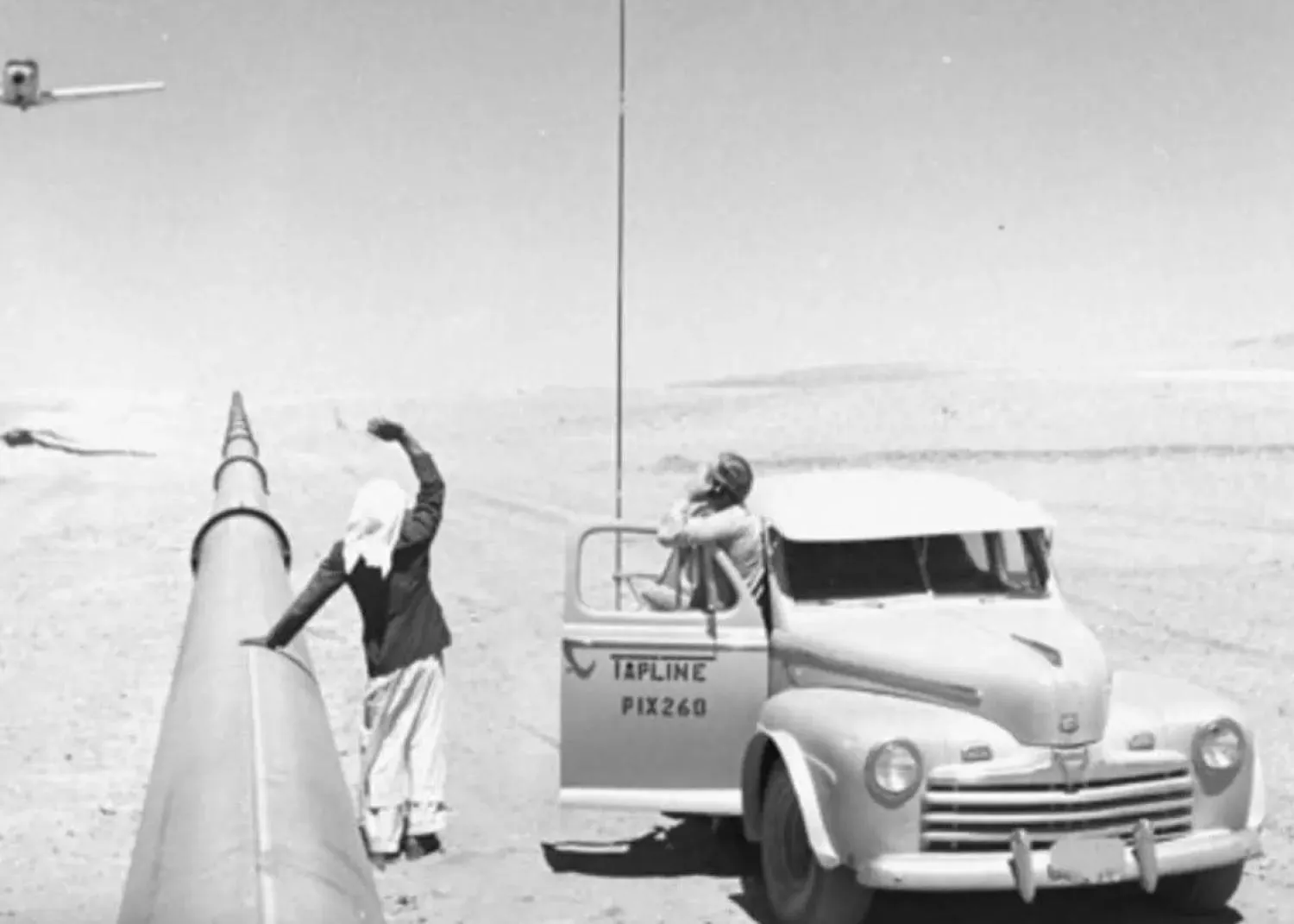
One of the most notable achievements came in 2020, when the Saudi Heritage Commission officially registered the Tapline oil pipeline as the country’s first industrial heritage site. Built in 1948 by order of King Abdulaziz, the pipeline once connected the Eastern Province to northern Saudi Arabia, symbolizing the dawn of the Kingdom’s oil industry. Its registration followed a decision by cultural and energy authorities to halt its removal, allowing it to be preserved and studied.

Another example is JAX District in Diriyah, northwest of Riyadh. Once an industrial warehouse zone, it has been transformed into a creative hub hosting galleries, studios, and cultural spaces. Today, it stands as one of Riyadh’s most dynamic artistic communities, showcasing how industrial heritage can be repurposed for modern cultural life.


Saudi Arabia Ranks 5th Globally, 1st in Arab World for AI Sector Growth on Global AI Index

File photo of the Saudi flag/AAWSAT
TT

Saudi Arabia Ranks 5th Globally, 1st in Arab World for AI Sector Growth on Global AI Index

File photo of the Saudi flag/AAWSAT

The Kingdom of Saudi Arabia ranked fifth globally and first in the Arab world in artificial intelligence sector growth, according to the Global AI Index, the Saudi Press Agency reported on Sunday.

This marks a national achievement that builds on the Kingdom’s steady progress in artificial intelligence and reflects the effectiveness of its development plans and its ability to achieve high international competitiveness under Saudi Vision 2030.

During the period measured by the Global AI Index, Saudi Arabia launched a wide range of national initiatives led by the Saudi Data and Artificial Intelligence Authority (SDAIA). These initiatives strengthened Saudi Arabia’s position on the index.

They included several projects, notably the Rowad Package initiative, which supports entrepreneurs and startups by enabling them to verify customer data through electronic linkage with the National Information Center’s databases.

SDAIA also launched the AI Ethics Incentive Badges initiative to raise awareness of ethical practices and promote responsible use of technologies. The initiative provides a clear framework to help organizations and developers adhere to global best standards. More than 50 accreditation certificates have been granted to national AI companies for developing AI-based products serving priority sectors.

The generative Gaia AI accelerator, supported by SDAIA and the National Technology Development Program (NTDP) in collaboration with New Native, has helped numerous startups enter the market more quickly and efficiently.

These efforts also extended to the SDAIA Academy, which has focused on building national capabilities and empowering young talent through advanced training programs in data and AI, offered in partnership with international organizations.

As part of its efforts, the SDAIA Academy trained more than one million Saudi men and women in data and AI skills through the SAMAI initiative, conducted in collaboration with several government entities. The initiative is considered one of the world’s largest training programs targeting the general population.

These achievements highlight SDAIA’s success in the field of data and AI, both nationally and internationally. They reinforce its role as the Kingdom’s central authority for regulation, development, and application, and advance the nation toward leadership in data- and AI-driven economies.


Saudi Arabia: Newest State-of-the-Art Film Production Hub Launched in Qiddiya City

Located at the heart of Qiddiya City, PlayMaker Studios sits just 40 minutes from Riyadh
TT

Saudi Arabia: Newest State-of-the-Art Film Production Hub Launched in Qiddiya City

Located at the heart of Qiddiya City, PlayMaker Studios sits just 40 minutes from Riyadh

Qiddiya Investment Company has announced the official opening of PlayMaker Studios at Qiddiya City, marking the launch of Saudi Arabia’s newest state-of-the-art film production hub. The opening represents a major milestone in the Kingdom’s rapidly advancing film and creative industries.

The launch of PlayMaker Studios marks a strategic addition to Saudi Arabia’s production infrastructure. The studios feature two high-spec, purpose-built soundstages, flexible workshops, and fully integrated production facilities designed to meet the needs of large-scale international and regional productions. The complex also includes modern production offices and on-site support amenities, offering a seamless, end-to-end production environment.

With strong demand already recorded for studio space, construction has begun on two additional world-class soundstages, scheduled for completion in 2026, which will significantly expand PlayMaker Studios’ capacity and enable it to host multiple major productions simultaneously.

Qiddiya Investment Company has also established a dedicated on-the-ground team to provide hands-on support for producers across permitting, logistics, and operational services. In addition, PlayMaker Studios offers streamlined access to Saudi Arabia’s industry-leading 40% production cash rebate, one of the most competitive incentives globally.

As part of its long-term development strategy, PlayMaker Studios will introduce dedicated post-production, visual effects, volumetric, and music studios, further strengthening the Kingdom’s creative and production ecosystem. The complex is set to become both a creative powerhouse and a core pillar of Qiddiya City’s entertainment offering.

Qiddiya Investment Company Managing Director Abdullah Aldawood said: “PlayMaker Studios is a cornerstone of Qiddiya City’s ambition and builds on Saudi Arabia’s growing success in the creative industries. It marks an important step in strengthening this momentum and realizing our vision to create a world class destination where innovation, culture and entertainment come together, and where the global film industry can find a new home in the Kingdom.”

Located at the heart of Qiddiya City - the world’s first destination where culture, sport, and creativity converge - PlayMaker Studios sits just 40 minutes from Riyadh, offering producers integrated logistics solutions, premium accommodation options for production teams, and direct access to a dynamic entertainment environment designed to inspire world-class content creation.


Brigitte Macron Visits an Old Friend in China: Giant Panda Called Yuan Meng

FILE - French First lady Brigitte Macron attends a naming ceremony of the panda born at the Beauval Zoo, in Saint-Aignan-sur-Cher, France, on Dec. 4, 2017. (AP Photo/Thibault Camus, Pool, File)
TT

Brigitte Macron Visits an Old Friend in China: Giant Panda Called Yuan Meng

FILE - French First lady Brigitte Macron attends a naming ceremony of the panda born at the Beauval Zoo, in Saint-Aignan-sur-Cher, France, on Dec. 4, 2017. (AP Photo/Thibault Camus, Pool, File)

French first lady Brigitte Macron caught up with an old friend — a giant panda born in France — at the tail end Friday of a visit to China with President Emmanuel Macron.

At a panda reserve in southwest China that Yuan Meng now calls home, the first lady marveled at how big he has grown. She helped choose his name — which means “accomplishment of a dream” — when he was born in a French zoo in 2017.

“When they're born, they're like this,” she said, holding up two fingers a short distance apart. Meanwhile, the chunky male roamed in his enclosure, feasting on bamboo and ignoring bystanders who cried out his name, hoping to elicit a reaction.

“They have a very independent character,” she said. “They do only what they want.”

For decades, China has deployed what's often called “panda diplomacy” to smooth and promote relations with other countries, gifting the animals to friendly nations and lending pandas to zoos overseas on commercial terms.

Emmanuel Macron’s state visit this week to China, his fourth as president, included meetings with Chinese leader Xi Jinping and other officials, discussing Russia’s war in Ukraine, trade ties and other issues.

The China Wildlife Conservation Association said during the visit that it signed a letter of intent to send two of the animals to the Beauval Zoo south of Paris in 2027 under what would be a new 10-year round of panda cooperation with France.

The French zoo sent two 17-year-old pandas — Huan Huan, a female, and her partner Yuan Zi — back to China last month after 13 years on loan in France.

Yuan Meng was their cub, conceived using artificial insemination.

Despite being made in France, he officially belonged to the Chinese government. Yuan Meng bid ‘’adieu’’ to France in 2023, sent off to a new life in the Chengdu Research Base of Giant Panda Breeding in southwest China where Brigitte Macron, considered to be his “godmother,” dropped in to see him.

Huan Huan and Yuan Zi also produced female twins in France in 2021.

Huanlili and Yuandudu are also expected to leave the Beauval Zoo for China in the future. The China Wildlife Conservation Association has previously said that it expects them to remain at the French zoo until January 2027.
