


Australian State Bans Plastic Fish Soy Sauce Bottles Favored by Sushi Eaters 

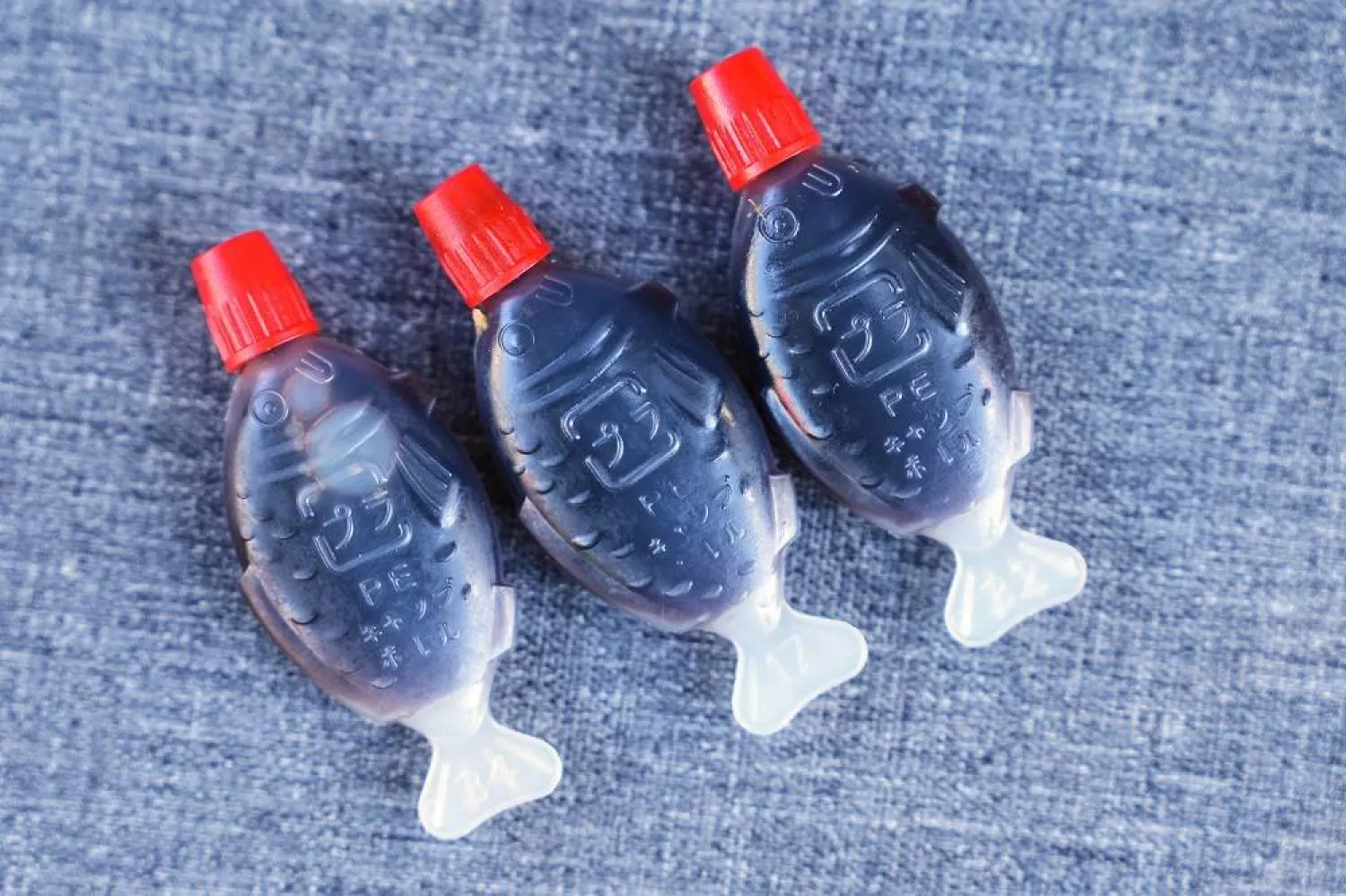
This photo shows plastic soy sauce fish containers in Newcastle, Australia, Monday, Sept. 1, 2025. (AP)
TT

Australian State Bans Plastic Fish Soy Sauce Bottles Favored by Sushi Eaters 

This photo shows plastic soy sauce fish containers in Newcastle, Australia, Monday, Sept. 1, 2025. (AP)

Plastic soy sauce bottles shaped like fish are popular among takeout sushi eaters in many counties. But restaurants in the state of South Australia were banned from offering the decorative containers to customers beginning Monday in a new measure enacted to curb plastic waste.

The state of 1.9 million was the first in Australia to enact a prohibition on the fish-shaped bottles. South Australia's government has annually added new items to its list of banned plastics, making the measures the country's most comprehensive.

Singling out the fishy containers might seem unusually specific, but officials said the receptacles were particularly bad for the environment and could be mistaken by marine life for food when they reached the ocean.

The tiny bottles were “easily dropped, blown away, or washed into drains,” South Australia Deputy Premier Susan Close said in a statement.

Even when the bottles landed in recycling bins, they were “too small to be captured by sorting machinery and often end up in landfill or as fugitive plastic in the environment,” she said.

Instead, restaurants were required to use larger bottles, refillable condiment containers or what officials said were less harmful single-use alternatives such as sachets, squeezable packs or compostable vessels. The ban covered fish-shaped or rectangular containers that had lids, caps or stoppers and held less than 30 milliliters (1 ounce) of soy sauce.

Balloon sticks and Q-Tips among banned items

Other items banned beginning Monday included cutlery or straws attached to food items, such as the plastic-wrapped straws often connected to juice boxes.

The move was the latest expansion of plastic elimination measures that began in 2009 when South Australia became the first state to ban single-use plastic shopping bags.

Plastic cutlery, plastic straws and many forms of takeout packaging and single-use coffee cups have followed since a 2021 law change. Plastic balloon sticks, confetti and Q-Tips are among other items banned.

Breaches of the law are enforced by the state's Environment Protection Authority, with possible penalties ranging from warnings to prosecution.

Next on the list for prohibition are stickers often applied to fresh produce, such as apples, that identify the item’s branding or origin. The state government delayed the change, which was due to take effect in 2025, after producers said it would drive up costs and hamper the supply chain moving fresh fruit and vegetables between Australian states.

Talks on a global plastics treaty have collapsed

Governments around the world have enacted various forms of consumer plastic bans.

In 2023, New Zealand’s government said it was the first to implement a nationwide prohibition on thin plastic bags used for produce in grocery stores. Authorities in Lagos, Nigeria, one of the world's most plastic polluted urban areas, established a prohibition on single-use items in July, with mixed results so far.

The world has seen an explosion in plastic use this century, much of it single-use items that take hundreds of years to break down. Every day, the equivalent of 2,000 garbage trucks full of plastic are dumped into the world’s oceans, rivers and lakes where they drive environmental degradation, poisoning of marine life and human ill-health, according to the United Nations Environment Program.

Very little plastic is recycled. About 85% of single-use plastic bottles, containers and packaging end up in landfills or are mismanaged, UN reports say.

Talks to create a binding global plastic pollution treaty collapsed in August with no consensus. Plastics are made from fossil fuels, such as oil, and oil-producing countries oppose any moves to include limiting the production of plastics in the accord.


China’s Population Falls Again as Births Drop to Lowest Rate Since 1949 Communist Revolution

 Women push baby strollers as they walk along a street in Beijing on January 4, 2026. (AFP)
Women push baby strollers as they walk along a street in Beijing on January 4, 2026. (AFP)
TT

China’s Population Falls Again as Births Drop to Lowest Rate Since 1949 Communist Revolution

 Women push baby strollers as they walk along a street in Beijing on January 4, 2026. (AFP)
Women push baby strollers as they walk along a street in Beijing on January 4, 2026. (AFP)

How do you persuade a population to have more babies after generations of limiting families to just one?

A decade after ending China's longtime one-child policy, authorities are pushing a range of ideas and policies to try and encourage more births — tactics that range from cash subsidies to taxing condoms to eliminating a tax on matchmakers and day care centers.

The efforts haven't paid off yet. At least, that's what population figures released Monday show for what is now the world's second-most populous nation. China's population of 1.4 billion continued to shrink, marking the fourth straight year of decrease, new government statistics show. The total population in 2025 stood at 1.404 billion, which was 3 million less than the previous year.

Measured another way, the birth rate in 2025 is the lowest on record since 1949, the year that Mao Zedong’s Communists overthrew the Nationalists and began running China. Figures before that, under the previous Nationalist government, were not available. The rate of 5.63% is the number of births per 1,000 people.

China was long the world’s most populous nation until 2023, when it was surpassed by regional neighbor and sometime rival India. Monday's statistics illustrate the stark demographic pressures faced by the country as it tries to pivot from a problem it is working hard to overcome: status as a nation with a growing but transitional economy that, as is often said, is “getting old before it gets rich.”

Is a snake involved? The number of new babies born was just 7.92 million in 2025, a decline of 1.62 million, or 17%. The latest birth numbers show that the slight tick upwards in 2024 was not a lasting trend. Births declined for seven years in a row through 2023.

Most families cite the costs and pressure of raising a child in a highly competitive society as significant hurdles that now loom larger in the face of an economic downturn that has impacted households struggling to meet their living costs. Another potential factor in the numbers: last year in China was the year of the snake, considered one of the least favored years for having a child under the Chinese zodiac.

Like many other countries in Asia, China has faced a declining fertility rate, or the average number of babies a woman is expected to have in her lifetime. While the government does not regularly publish a fertility rate, last saying it was 1.3 in 2020, experts have estimated it is now around 1. Both figures are far below the 2.1 rate that would maintain the size of China's population.

For decades, the Chinese government barred people from having more than one baby and often sanctioned those who did — a policy that produced more than two generations of only children. In 2015, the government raised the permitted amount of offspring to two and then, facing demographic pressure, further revised the limit to three kids in 2021.

The push for more births is about the economy. China now has 323 million people over 60, or 23% of the entire population. That number has continued to rise, while the working-age population is shrinking, meaning there are fewer workers to support the older population.

This demographic shift is happening while China is in the process of trying to transition away from labor-intensive industries like farming and manufacturing into a consumer-driven economy built with high-tech manufacturing. The difficulty is in trying to get richer as a country, while this population shift likely means a slowing economy.

Officials have had limited success with policy changes to incentivize families to have more children. In July, the government announced cash subsidies of 3,600 yuan ($500) per child to families.


UK, France Mull Social Media Bans for Youth as Debate Rages

Some experts worry a blanket ban on social media could have unintended consequences. Saeed KHAN / AFP/File
TT

UK, France Mull Social Media Bans for Youth as Debate Rages

Some experts worry a blanket ban on social media could have unintended consequences. Saeed KHAN / AFP/File

Countries including France and Britain are considering following Australia's lead by banning children and some teenagers from using social media, but experts are still locked in a debate over the effectiveness of the move.

Supporters of a ban warn that action needs to be taken to tackle deteriorating mental health among young people, but others say the evidence is inconclusive and want a more nuanced approach.

Australia last month became the first nation to prohibit people under-16s from using immensely popular and profitable social media platforms such as Instagram, Facebook, Tiktok and YouTube.

France is currently debating bills for a similar ban for under-15s, including one championed by President Emmanuel Macron.

The Guardian reported last week that Jonathan Haidt, an American psychologist and supporter of the Australian ban, had been asked to speak to UK government officials.

Haidt argued in his bestselling 2024 book "The Anxious Generation" that too much time looking at screens -- particularly social media -- was rewiring children's brains and "causing an epidemic of mental illness".

While influential among politicians, the book has proven controversial in academic circles.

Canadian psychologist Candice Odgers wrote in a review of the book that the "scary story" Haidt was telling was "not supported by science".

One of the main areas of disagreement has been determining exactly how much effect using social media has on young people's mental health.

Michael Noetel, a researcher at the University of Queensland in Australia, told AFP that "small effects across billions of users add up".

There is "plenty of evidence" that social media does harm to teens, he said, adding that some were demanding an unrealistic level of proof.

"My read is that Haidt is more right than his harshest critics admit, and less right than his book implies," Noetel said.

Given the potential benefit of a ban, he considered it "a bet worth making".

After reviewing the evidence, France's public health watchdog ANSES ruled last week that social media had numerous detrimental effects for adolescents -- particularly girls -- while not being the sole reason for their declining mental health.

Everything in moderation?

Noetel led research published in Psychological Bulletin last year that reviewed more than 100 studies worldwide on the links between screens and the psychological and emotional problems suffered by children and adolescents.

The findings suggested a vicious cycle.

Excessive screen time -- particularly using social media and playing video games -- was associated with problems. This distress then drove youngsters to look at their screens even more.

However, other researchers are wary of a blanket ban.

Ben Singh from the University of Adelaide tracked more than 100,000 young Australians over three years for a study published in JAMA Pediatrics.

The study found that the young people with the worst wellbeing were those who used social media heavily -- more than two hours a day -- or not at all. It was teens who used social networks moderately that fared the best.

"The findings suggest that both excessive restriction and excessive use can be problematic," Singh told AFP.

Again, girls suffered the most from excessive use. Being entirely deprived of social media was found to be most detrimental for boys in their later teens.

'Appallingly toxic'

French psychiatrist Serge Tisseron is among those who have long warned about the huge threat that screens pose to health.

"Social media is appallingly toxic," he told AFP.

But he feared a ban would easily be overcome by tech-savvy teens, at the same time absolving parents of responsibility.

"In recent years, the debate has become extremely polarized between an outright ban or nothing at all," he said, calling for regulation that walks a finer line.

Another option could be to wait and see how the Australian experiment pans out.

"Within a year, we should know much more about how effective the Australian social media ban has been and whether it led to any unintended consequences," Cambridge University researcher Amy Orben said.

Last week, Australia's online safety watchdog said that tech companies have already blocked 4.7 million accounts for under 16s.


Innovative Drug Lowers Triglycerides, Other Blood Lipids

High levels of triglycerides in the blood increase the risk of heart disease (Monash University) 
TT

Innovative Drug Lowers Triglycerides, Other Blood Lipids

High levels of triglycerides in the blood increase the risk of heart disease (Monash University) 

A study led by researchers from the Ecole Polytechnique Fédérale de Lausanne (EPFL) in Switzerland, revealed a new liver- and gut-targeted oral drug that can safely lower triglycerides and other blood lipids.

Researchers of the study, published last Friday in Nature Medicine, said the innovative drug could represent a breakthrough in treating metabolic diseases related to high triglycerides in the body.

The study said that when we eat, our bodies convert extra calories, especially from carbs, sugar, fats, and alcohol, into molecules called “triglycerides.”

Triglycerides are a form of fat or “lipid,” which the body stores away into its fat cells as an energy fuel for energy between meals.

But, excess amounts of fat in the body can be dangerous, causing a condition known as “hypertriglyceridemia” (“excess triglycerides in the blood”), which significantly increases the risk of heart disease, stroke, and pancreatitis.

This is why we are universally advised to make healthy lifestyle choices in diet, exercise, while particularly bad cases require medication.

The study also found that keeping blood fats in check depends on a careful balance.

It said the liver and intestine release fat particles into the bloodstream, while enzymes work to break them down and clear them away.

When fat production outpaces clearance, triglycerides build up, setting the stage for metabolic diseases like dyslipidemia, acute pancreatitis, and metabolic dysfunction-associated steatotic liver disease (MASLD).

One of the master switches in this system is a protein called Liver X Receptor, or LXR, which controls several genes that are involved in making and handling fats.

When LXR is active, triglycerides and cholesterol tend to rise.

Therefore, dialing it down through medication seems promising, but as LXR is also involved in protective cholesterol pathways elsewhere in the body, blocking it everywhere could do more harm than good.

Now, scientists have addressed this problem with an orally administered compound that can repress the activity of LXR specifically in the liver and gut to lower triglycerides without disrupting the body’s protective cholesterol pathways.

The compound, TLC‑2716, is what is known as an “inverse agonist” for the LXR. Unlike a “blocker” (“antagonist”) that merely stops a receptor from being activated, an “inverse agonist” makes the receptor signal the opposite effect to what it would normally do.

Clinical Trial

The lab findings set the stage for a randomized, placebo-controlled Phase 1 study in healthy adults. Participants received TLC‑2716 for 14 days given as a single dose per day and the trial focused first on safety and tolerability, and the authors report that the drug met these primary endpoints.

But even this short trial had clear effects: participants who received higher doses of TLC‑2716 showed notable drops in triglycerides as well as remnant cholesterol.

At the highest doses of TLC‑2716 (12mg), triglycerides fell by up to 38.5%, while postprandial (“after eating”) remnant cholesterol dropped by as much as 61%.

This happened despite participants starting with relatively normal lipid levels and without the use of other lipid-lowering drugs, the study showed.

Also, the treatment sped up triglyceride clearance by reducing the activity of two proteins that normally slow it down, ApoC3 and ANGPTL3.

At the same time, the study did not detect reductions in blood-cell expression of ABCA1 and ABCG1, genes used here as markers linked to reverse cholesterol transport.

Researchers said larger trials will be needed, but, for now, the concept has its first human proof of principle.