
Sudan Appeals for Aid After Landslide Kills More than 1,000 People in Single Village in Darfur

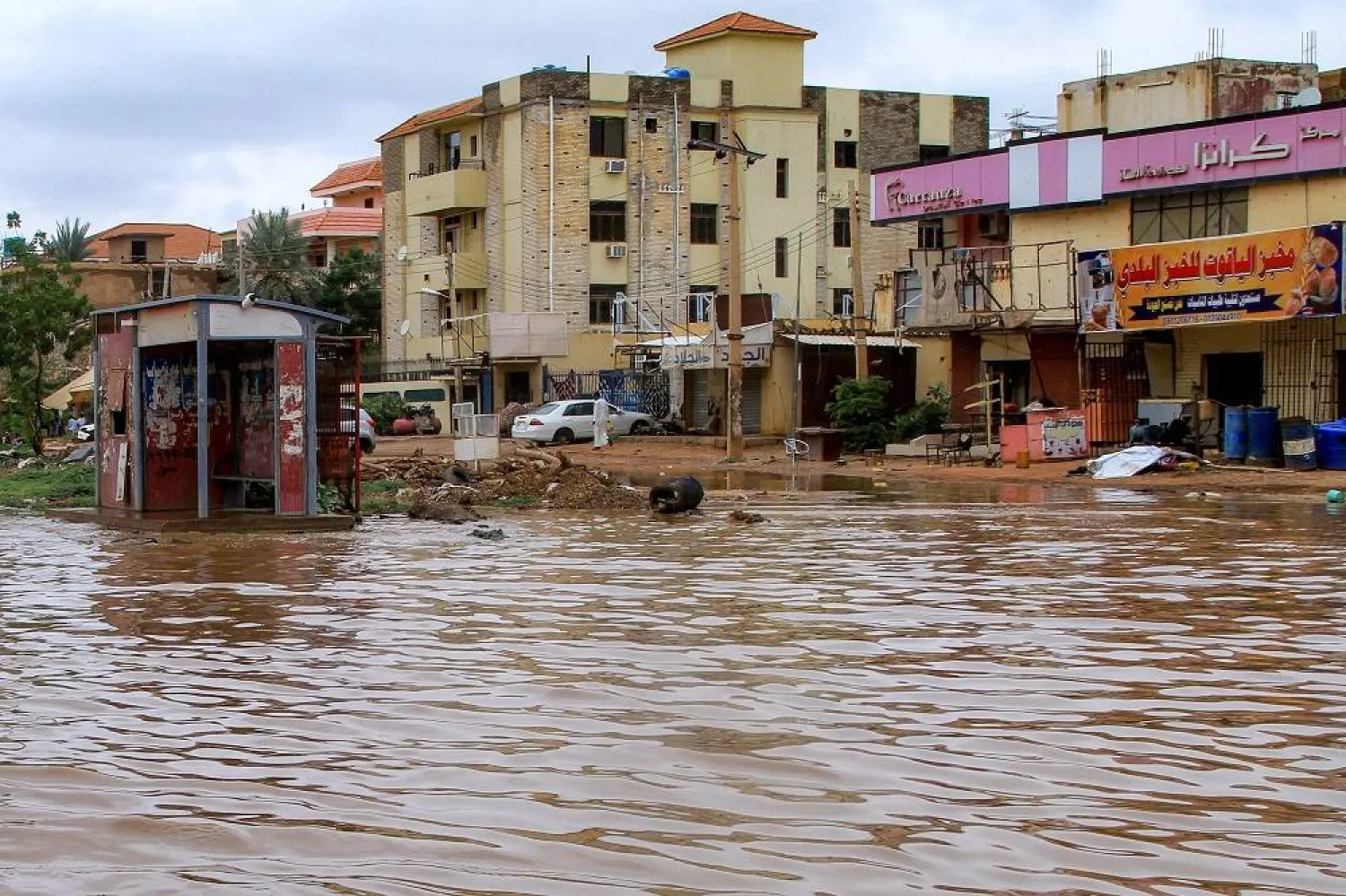
Flood water inundates a main street in Sudan's capital Khartoum following heavy rain on August 27, 2025. (AFP)
TT

Sudan Appeals for Aid After Landslide Kills More than 1,000 People in Single Village in Darfur

Flood water inundates a main street in Sudan's capital Khartoum following heavy rain on August 27, 2025. (AFP)

Sudan appealed for international aid on Tuesday after a landslide wiped out an entire village in western region of Darfur, killing an estimated 1,000 people in one of the deadliest natural disasters in the African country’s recent history. 

The village of Tarasin was "completely leveled to the ground," the Sudan Liberation Movement-Army said as it appealed to the UN and international aid groups for help to recover the bodies. 

The tragedy happened Sunday in the village, located in Central Darfur’s Marrah Mountains, after days of heavy rainfall. 

"Initial information indicates the death of all village residents, estimated to be more than 1,000 people," the rebel group said in a statement. "Only one person survived," it added. 

Abdel-Wahid Nour, the group’s leader, made an appeal on Tuesday for international help. "The scale and magnitude of the disaster are immense and defy description," he said. 

The ruling Sovereign Council in Khartoum said it mourned "the death of hundreds of innocent residents" in the Marrah Mountains' landslide. In a statement, it said "all possible capabilities" have been mobilized to support the area. 

Footage shared by the Marrah Mountains news outlet showed a flattened area between mountain ranges with a group of people searching the area. 

Luca Renda, the UN humanitarian coordinator in Sudan, said he was "deeply saddened" by the reported landslide, adding that local sources indicated that "between 300 and 1,000 people may have lost their lives." He said the UN and its partners were mobilizing to support the impacted communities at the scene. 

A local emergency network, which has been providing support to communities across Sudan during the war, said its teams recovered the bodies of at nine people on Tuesday. Search teams were facing challenges to reach the area because of bad weather and lack of resources, it added. 

‘Unprecedented tragedy’ 

Al-Amin Abdallah Abbas, a farmer from Ammo — a cluster of villages that includes Tarasin — said the area has seen weeks of heavy rainfall, with Tarasin among the worst hit. He said tribal and community leaders in nearby areas have mobilized efforts to recover and bury the victims. 

"The village and its people disappeared," he said. "It's an unprecedented tragedy." 

Mohamed Abdel-Rahman al-Nair, a spokesman for the Sudan Liberation Movement-Army, told The Associated Press that the village where the landslide took place is remote and accessible only by foot or donkeys. 

Tarasin is located in the central Marrah Mountains, a volcanic area with a height of more than 3,000 meters (9,840 feet) at its summit. A world heritage site, the mountain chain is known for its lower temperature and higher rainfall than surrounding areas, according to UNICEF. It’s located more than 900 kilometers (560 miles) west of the capital city, Khartoum. 

Sunday’s landslide was one of the deadliest natural disasters in Sudan’s recent history. Hundreds of people die every year in seasonal rains that run from July to October. Last year’s heavy rainfall caused the collapse of a dam in the eastern Red Sea Province, killing at least 30 people, according to the UN. 

The tragedy came as a devastating civil war has engulfed Sudan after tensions between the country’s military and the paramilitary Rapid Support Forces, or RSF, exploded into open fighting in April 2023 in the capital, Khartoum, and elsewhere in the country. 

‘Deprived of adequate assistance’  

Most of the conflict-stricken Darfur region has become mostly inaccessible for the UN and aid groups, given crippling restrictions and fighting between the military and RSF. 

Aid group Doctors Without Borders has warned that multiple communities in Darfur, including the Marrah Mountains, have been cut off after more than two years of war and isolation, describing these areas as "a black hole" in Sudan’s humanitarian response. 

It said in a July report that people in these communities have been "deprived of adequate assistance and neglected by aid actors for over two years." 

The International Organization for Migration on Tuesday called for safe access and scaling-up support to the area, saying in a statement: "The people of Sudan cannot bear this never-ending suffering alone." 

The Sudan Liberation Movement-Army, centered in the Marrah Mountains area, is one of multiple rebel groups active in the Darfur and Kordofan regions. It hasn’t taken sides in the war. 

The Marrah Mountains are a rugged volcanic chain extending for 160 kilometers (100 miles) southwest of el-Fasher, an epicenter of fighting between the military and the RSF. The area has turned into a hub for displaced families fleeing fighting in and around the besieged city. 

On Monday, the RSF shelled el-Fasher, the military’s last stronghold in Darfur, killing at least 18 people and injuring over 100 others, according to the Sudan Doctors Network, a group of professionals tracking the war. 

The RSF didn’t immediately respond to a request for comment. 

The conflict in Sudan has killed more than 40,000 people, forced more than 14 million to flee their homes and left some families eating grass in a desperate attempt to survive as famine swept parts of the country. 

It has been marked by gross atrocities including ethnically motivated killing and rape, according to the United Nations and rights groups. The International Criminal Court said it was investigating alleged war crimes and crimes against humanity. 

The conflict created the world’s largest humanitarian crisis, with more than 30 million of the country’s 50 million population needing assistance. Of those, over 630,000 live in famine-stricken areas in Darfur and Kordofan regions, according to the international hunger experts. 


Lebanon FM Urges Iran to Find ‘New Approach’ on Hezbollah Arms

Iranian Foreign Minister Abbas Araghchi (L) shakes hands with Lebanese Minister of Foreign Affairs and Emigrants Youssef Raggi (R) at the Foreign Ministry in downtown Beirut, Lebanon, 09 January 2026. (EPA)
TT

Lebanon FM Urges Iran to Find ‘New Approach’ on Hezbollah Arms

Iranian Foreign Minister Abbas Araghchi (L) shakes hands with Lebanese Minister of Foreign Affairs and Emigrants Youssef Raggi (R) at the Foreign Ministry in downtown Beirut, Lebanon, 09 January 2026. (EPA)

Lebanese Foreign Minister Youssef Raggi on Friday urged his visiting Iranian counterpart to find a "new approach" to the thorny issue of disarming the Iran-backed Hezbollah group.

Lebanon is under heavy US pressure to disarm Hezbollah, which was heavily weakened in more than a year of hostilities with Israel that largely ended with a November 2024 ceasefire, but Iran and the group have expressed opposition to the move.

Iran has long wielded substantial influence in Lebanon by funding and arming Hezbollah, but as the balance of power shifted since the recent conflict, officials have been more critical towards Tehran.

"The defense of Lebanon is the sole responsibility of the Lebanese state", which must have a monopoly on weapons, Raggi told Iranian Foreign Minister Abbas Araghchi, a Lebanese foreign ministry statement said.

Raggi called on Iran to engage in talks with Lebanon to find "a new approach to the issue of Hezbollah's weapons, drawing on Iran's relationship with the party, so that these weapons do not become a pretext for weakening Lebanon".

He asked Araghchi "whether Tehran would accept the presence of an illegal armed organization on its own territory".

Last month, Raggi declined an invitation to visit Iran and proposed meeting in a neutral third country.

Lebanon's army said Thursday that it had completed the first phase of disarming Hezbollah, doing so in the south Lebanon area near the border with Israel, which called the efforts "far from sufficient".

Araghchi also met President Joseph Aoun on Friday and was set to hold talks with several other senior officials.

After arriving on Thursday, he visited the mausoleum of former Hezbollah leader Hassan Nasrallah, who was killed in a massive Israeli air strike on south Beirut in September 2024.

Last August, Lebanese leaders firmly rejected any efforts at foreign interference during a visit by Iran's security chief Ali Larijani, with the prime minister saying Beirut would "tolerate neither tutelage nor diktat" after Tehran voiced opposition to plans to disarm Hezbollah.


Hamas Says Israeli Strikes on Gaza ‘Cannot Happen without American Cover’

 Palestinians inspect damaged tents at a displacement camp following an Israeli strike in Gaza City, Friday, Jan. 9, 2026. (AP)
Palestinians inspect damaged tents at a displacement camp following an Israeli strike in Gaza City, Friday, Jan. 9, 2026. (AP)
TT

Hamas Says Israeli Strikes on Gaza ‘Cannot Happen without American Cover’

 Palestinians inspect damaged tents at a displacement camp following an Israeli strike in Gaza City, Friday, Jan. 9, 2026. (AP)
Palestinians inspect damaged tents at a displacement camp following an Israeli strike in Gaza City, Friday, Jan. 9, 2026. (AP)

A Hamas official said Friday that Israeli strikes on Gaza "cannot happen without American cover", the day after Israeli attacks killed at least 13 people according to the Palestinian territory's civil defense agency.

Since October 10, a fragile US-sponsored truce in Gaza has largely halted the fighting between Israeli forces and Hamas, but both sides have alleged frequent violations.

Gaza's civil defense agency -- which operates as a rescue force under Hamas authority -- said Israeli attacks across the territory on Thursday killed at least 13 people, including five children.

In a statement on Friday morning, the Israeli military said it "precisely struck Hamas terrorists and terror infrastructure" in response to a "failed projectile" launch.

"Just yesterday, 13 people were killed in different areas of the Strip on fabricated pretexts, in addition to the hundreds of killed and wounded who preceded them after the ceasefire," Hamas political bureau member, Bassem Naim, wrote on Telegram.

"This cannot happen without American cover or a green light."

Israeli forces have killed at least 439 Palestinians in Gaza since the ceasefire took effect, according to the health ministry in the Hamas-run territory.

The Israeli military said gunmen have killed three of its soldiers during the same period.

Media restrictions in Gaza and difficulties in accessing many areas mean AFP is unable to independently verify the tolls and details provided by both sides.

Naim also accused Israeli Prime Minister Benjamin Netanyahu of "evading his commitments and escalating in order to sabotage the agreement and return to war".

He said the Palestinian movement had "complied with all its obligations under the agreement" and was "ready to engage positively and constructively with the next steps of the plan".

Israel has previously said it is awaiting the return of the last hostage body held in Gaza before beginning talks on the second phase of the ceasefire and has insisted that Hamas disarm.

Hamas officials told AFP that search operations for the remains of deceased hostage Ran Gvili resumed on Wednesday after a two-week pause due to bad weather.


Germany Calls on Israel to Halt E1 Settlement Plan

A view of Israeli settlement of Maale Adumim, in the West Bank, Sunday, June 18, 2023. (AP)
TT

Germany Calls on Israel to Halt E1 Settlement Plan

A view of Israeli settlement of Maale Adumim, in the West Bank, Sunday, June 18, 2023. (AP)

Germany calls on Israel to halt its controversial ​E1 settlement project, said a foreign ministry spokesperson in Berlin on Friday, warning that construction carries the risk of ‌creating more ‌instability in the ‌West ⁠Bank ​and ‌the region.

"The plans for the E1 settlement project, it must be said, are part of a comprehensive ⁠intensification of settlement policy in ‌the West Bank, ‍which ‍we have recently ‍observed," said the spokesperson at a regular government press conference.

"It carries the ​risk of creating even more instability, as it ⁠would further restrict the mobility of the Palestinian population in the West Bank," as well as jeopardize the prospects of a two-state solution, the spokesperson added.