


Construction Intensifies at Site Linked to Israel’s Suspected Nuclear Program, Satellite Photos Show 

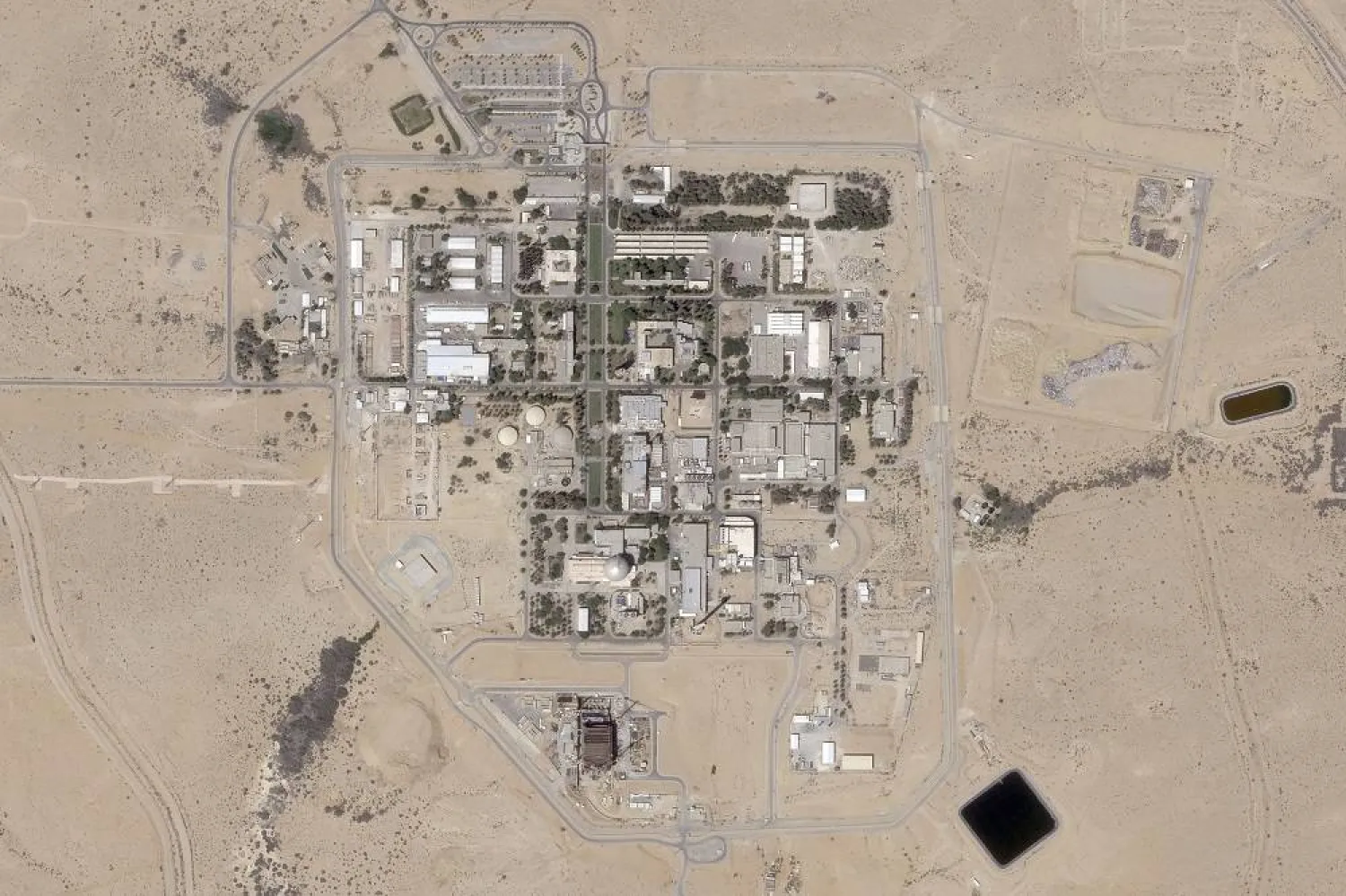
This satellite photo provided by Planet Labs PBC shows the Shimon Peres Negev Nuclear Research Center near the city of Dimona, Israel, July 5, 2025. (Planet Labs PBC via AP)
TT

Construction Intensifies at Site Linked to Israel’s Suspected Nuclear Program, Satellite Photos Show 

This satellite photo provided by Planet Labs PBC shows the Shimon Peres Negev Nuclear Research Center near the city of Dimona, Israel, July 5, 2025. (Planet Labs PBC via AP)

Construction work has intensified on a major new structure at a facility key to Israel’s long-suspected atomic weapons program, according to satellite images analyzed by experts. They say it could be a new reactor or a facility to assemble nuclear arms, but secrecy shrouding the program makes it difficult to know for sure.

The work at the Shimon Peres Negev Nuclear Research Center near the city of Dimona will renew questions about Israel’s widely believed status as the Middle East’s only nuclear-armed state.

It could also draw international criticism, especially since it comes after Israel and the United States bombed nuclear sites across Iran in June over their fears that Tehran could use its enrichment facilities to pursue an atomic weapon. Among the sites attacked was Iran's heavy water reactor at Arak.

Seven experts who examined the images all said they believed the construction was related to Israel’s long-suspected nuclear weapons program, given its proximity to the reactor at Dimona, where no civilian power plant exists. However, they split on what the new construction could be.

Three said the location and size of the area under construction and the fact that it appeared to have multiple floors meant the most likely explanation for the work was the construction of a new heavy water reactor. Such reactors can produce plutonium and another material key to nuclear weapons.

The other four acknowledged it could be a heavy water reactor but also suggested the work could be related to a new facility for assembling nuclear weapons. They declined to be definitive given the construction was still in an early stage.

“It’s probably a reactor — that judgement is circumstantial but that’s the nature of these things,” said Jeffrey Lewis, an expert at the James Martin Center for Nonproliferation Studies at the Middlebury Institute of International Studies, who based his assessment on the images and Dimona's history. “It’s very hard to imagine it is anything else.”

Israel does not confirm or deny having atomic weapons, and its government did not respond to requests for comment. The White House, which is Israel's staunchest ally, also did not respond to requests for comment.

Construction underway for years

The Associated Press first reported on excavations at the facility, some 90 kilometers (55 miles) south of Jerusalem, in 2021. Then, satellite images only showed workers digging a hole some 150 meters (165 yards) long and 60 meters (65 yards) wide near the site's original heavy water reactor.

Images taken July 5 by Planet Labs PBC show intensified construction at the site of the dig. Thick concrete retaining walls seem to be laid at the site, which appears to have multiple floors underground. Cranes loom overhead.

There’s no containment dome or other features typically associated with a heavy water reactor now visible at the site. However, one could be added later or a reactor could be designed without one.

Dimona’s current heavy water reactor, which came online in the 1960s, has been operating far longer than most reactors of the same era. That suggests it will need to be replaced or retrofitted soon.

“It’s tall, which you would expect, because the reactor core is going to be pretty tall,” Lewis said. “Based on the location, size and general lack of construction there, it’s more likely a reactor than anything.”

Edwin Lyman, a nuclear expert at the Cambridge, Massachusetts-based Union of Concerned Scientists, also said the new construction could be a box-shaped reactor that doesn't have a visible containment dome, though he acknowledged the lack of transparency made it difficult to be certain.

Israel “doesn’t allow any international inspections or verification of what it’s doing, which forces the public to speculate,” said Lyman.

While details about Dimona remain closely held secrets in Israel, a whistleblower in the 1980s released details and photos of the facility that led experts to conclude that Israel had produced dozens of nuclear warheads.

“If it’s a heavy water reactor, they’re seeking to maintain the capability to produce spent fuel that they then can process to separate plutonium for more nuclear weapons,” said Daryl G. Kimball, the executive director of the Washington-based Arms Control Association. “Or they are building a facility to maintain their arsenal or build additional warheads.”

Israel’s program is thought to rely on byproducts of a heavy water reactor

Israel, like India and Pakistan, is believed to rely on a heavy water reactor to make its nuclear weapons. The reactors can be used for scientific purposes, but plutonium — which causes the nuclear chain reaction needed in an atomic bomb — is a byproduct of the process. Tritium is another byproduct and can be used to boost the explosive yield of warheads.

Given the secrecy of Israel’s program, it remains difficult to estimate just how many nuclear weapons it possesses. The Bulletin of Atomic Scientists in 2022 put the number at around 90 warheads.

Obtaining more tritium to replace decaying material may be the reason for the construction at Dimona, as Lyman noted it decays 5% each year.

“If they’re building a new production reactor,” he said, “it doesn’t necessarily mean they’re looking to expand the plutonium they have, but to manufacture tritium.”

Israel has a policy of nuclear ambiguity

Israel is believed to have begun building the nuclear site in the desert in the late 1950s after facing several wars surrounding its founding in 1948 in the wake of the Holocaust.

Its policy of nuclear ambiguity is thought to have helped deter its enemies.

It is among nine countries confirmed or believed to have atomic weapons and among just four that have never joined the Nuclear Nonproliferation Treaty, a landmark international accord meant to stop the spread of nuclear arms. That means the International Atomic Energy Agency, the United Nations’ nuclear watchdog, has no right to conduct inspections of Dimona.

Asked about the construction, the Vienna-based IAEA reiterated that Israel “is not obligated to provide information about other nuclear facilities in the country” outside of its Soreq research reactor.



Israel Says Struck Site it Claims Iran Used for Developing Nuclear Arms

This satellite image released on March 11, 2026 courtesy of Vantor shows a view of Taleghan 2 facility at the Parchin military complex, some 30 kms (20 miles) southeast of Tehran, Iran, on March 6, 2026. (Photo by Satellite image 2026 Vantor / AFP)
TT

Israel Says Struck Site it Claims Iran Used for Developing Nuclear Arms

This satellite image released on March 11, 2026 courtesy of Vantor shows a view of Taleghan 2 facility at the Parchin military complex, some 30 kms (20 miles) southeast of Tehran, Iran, on March 6, 2026. (Photo by Satellite image 2026 Vantor / AFP)

Israel's military said Thursday that it had struck a site in Iran it claimed was being used to develop nuclear weapons.

"The Israeli Air Force, acting on precise IDF intelligence, struck an additional Iranian nuclear program site," the military said, claiming the "Taleghan compound was utilized by the regime to advance critical capabilities for developing nuclear weapons.”

The Taleghan compound likely refers to a facility in Parchin, southeast of Tehran, where US-based think tank the Institute for Science and International Security, which has been monitoring Iran's nuclear program, recently claimed Iran conducts covert military activities.


Scores killed and Missing after Landslides Sweep Ethiopia

Children gather at a market stall to collect goods in Chercher, Southern Tigray, on March 4, 2026. (Photo by Abel Gerezgiher / AFP)
TT

Scores killed and Missing after Landslides Sweep Ethiopia

Children gather at a market stall to collect goods in Chercher, Southern Tigray, on March 4, 2026. (Photo by Abel Gerezgiher / AFP)

At least 50 people have died and 125 others are missing after landslides hit three districts in southern Ethiopia following a week of heavy rains, a local official said Thursday.

The landslides happened in Gamo Zone and affected the Gacho Baba District, Kamba District and Bonke District, according to Gamo Zone director of disaster response Mesfin Manuqa.

According to The Associated Press, Manuqa said that one person was pulled out of the mud alive during the rescue operation.

The Gacho Baba District communication chief, Abebe Agena, said most of those who died were found buried in the mud. It is not yet clear how many households were affected.

Tilahun Kebede, president of the South Ethiopia Regional State, expressed his sorrow over the disaster and urged residents to move to higher ground as rains continue.

“Given that it is the rainy season and these types of disasters could happen again, I am calling on communities living in the highlands and flood-prone areas to take the necessary precautions,” he said.

Mudslides and floods caused by heavy rainfall are common in Ethiopia, especially during the rainy season.


Kremlin Accuses Ukraine of 'Reckless' Strikes on Major Gas Pipeline

File photo: Pipes at the landfall facilities of the Nord Stream 1 gas pipeline are pictured in Lubmin, Germany, March 8, 2022. (Reuters)
TT

Kremlin Accuses Ukraine of 'Reckless' Strikes on Major Gas Pipeline

File photo: Pipes at the landfall facilities of the Nord Stream 1 gas pipeline are pictured in Lubmin, Germany, March 8, 2022. (Reuters)

The Kremlin accused Ukraine on Thursday of targeting a major gas pipeline in southern Russia that leads to Türkiye with "reckless" drone strikes.

Ukraine has hit Russian energy targets throughout Moscow's four-year offensive, a war that has killed thousands and displaced millions.

"At night, there were renewed attempts to attack the Russkaya compressor station with drones," Kremlin spokesman Dmitry Peskov said, calling the pipeline an "international facility" that "ensures energy security for Türkiye".

"These are absolutely reckless actions by the Kyiv regime," Peskov said.

Russia's defense ministry said it had downed 10 Ukrainian-launched drones in the early hours of Thursday "above the gas compressor station that supplies gas to the TurkStream pipeline".

The station lies in Russia's southern Krasnodar region, which is regularly targeted by Ukrainian drone strikes.

State-owned Russian gas producer Gazprom earlier said that the Russkaya and Beregovaya stations were targeted.

It called them "critical energy infrastructure facilities ensuring the reliability of gas exports via the TurkStream and Blue Stream gas pipelines."

Russia has decimated much of Ukraine's energy infrastructure in more than four years of war.