


European Leaders Face Tough Choices as the UK, France Host Another Meeting on Ukraine

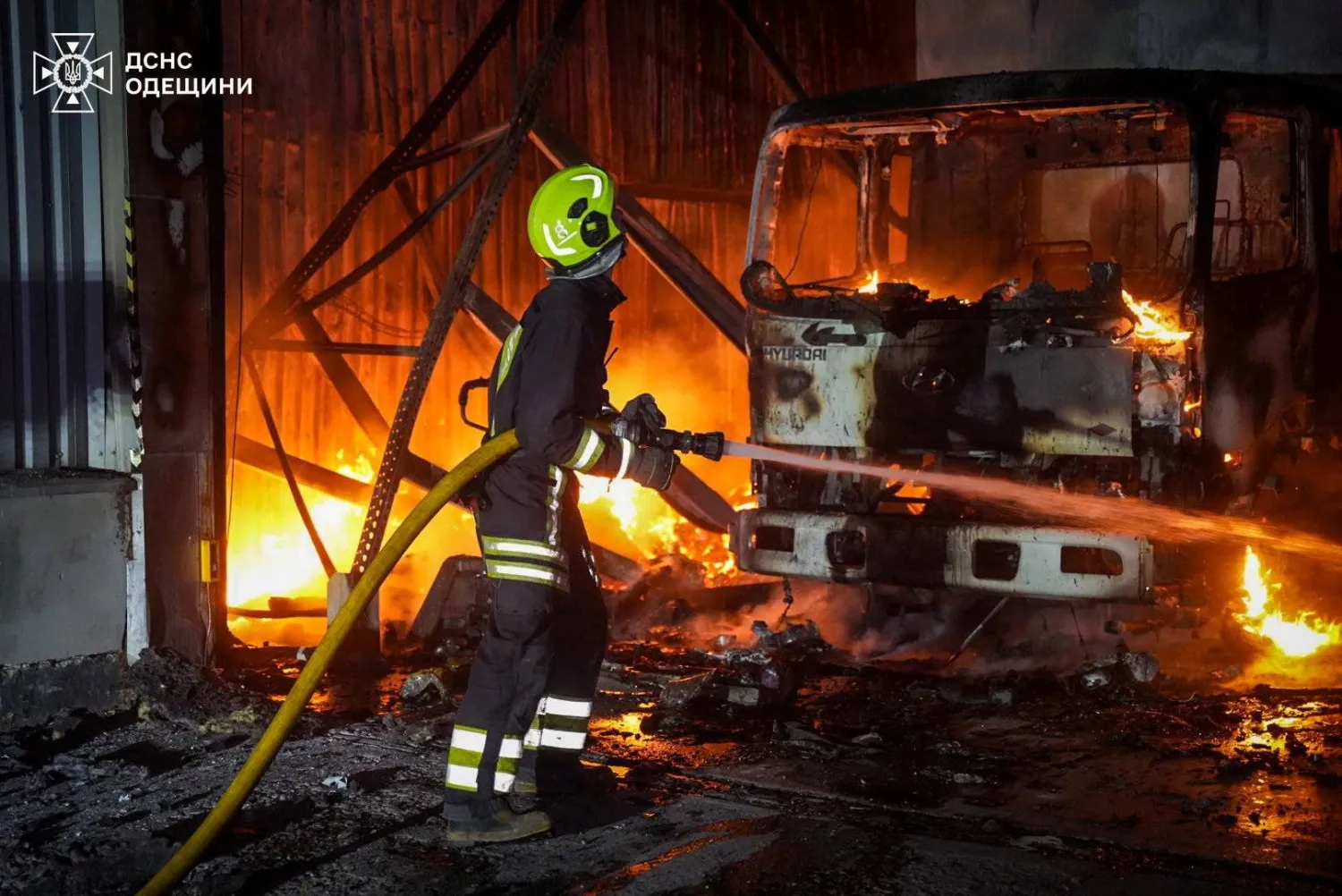
A firefighter works at the site of a warehouse hit by a Russian drone strike, amid Russia's attack on Ukraine, in Odesa, Ukraine September 4, 2025. Press service of the State Emergency Service of Ukraine in Odesa region/Handout via REUTERS
TT

European Leaders Face Tough Choices as the UK, France Host Another Meeting on Ukraine

A firefighter works at the site of a warehouse hit by a Russian drone strike, amid Russia's attack on Ukraine, in Odesa, Ukraine September 4, 2025. Press service of the State Emergency Service of Ukraine in Odesa region/Handout via REUTERS

European countries are stuck between a rock and a hard place as a coalition of countries meets in Paris on Thursday to discuss security guarantees for a postwar Ukraine.

The war is raging unabated, with no ceasefire in sight — and the crucial question of American involvement in ensuring Ukraine’s future security remains unresolved.

For months, the so-called “coalition of the willing” has been meeting to discuss aid for Ukraine, including sketching out plans for military support in the event of a ceasefire to deter future Russian aggression.

The coalition leaders — French President Emmanuel Macron and UK Prime Minister Keir Starmer — have insisted that any European “reassurance” force in Ukraine needs the backing of the United States. But while US President Donald Trump has hinted his country will be involved, he has moved away from calling for a ceasefire in Ukraine and refrained from implementing tough additional economic measures to punish Moscow.

Although Trump said he is “disappointed” in Russian President Vladimir Putin and issued several threats to try to cajole him into negotiating an end to hostilities, none has worked. At a meeting with Putin in Alaska in August, Trump failed to persuade the Russian leader to stop fighting and has not yet managed to broker talks between Putin and Ukraine's President Volodymyr Zelenskyy.

While Trump and European leaders met in Washington after the Alaska summit — and US, European and NATO military chiefs held discussions on support for Ukraine — little concrete detail has emerged on the security guarantees to deter Moscow from a future conflict.

Former military generals and experts suggest Europe is in a bind — not knowing the level of support the US is prepared to provide the coalition, the nature of any ceasefire or if the US will abide by commitments made. It's also far from certain that Putin would agree to a cessation of hostilities, something Russian officials have invariably dismissed.

“Talking about detailed operational planning when you don’t actually have your mission is, quite frankly, impossible,” said Ed Arnold, an expert in European Security at the Royal United Services Institute in London and a former military planner.

The “coalition of the willing” is a broad term for about 30 nations supporting Ukraine, but the so-called “reassurance force” that would provide security guarantees to Kyiv is a subset of that group.

The UK, France and Estonia have all suggested they are ready to deploy troops to Ukraine to deter Putin from attacking again, while officials in Poland said Warsaw will not take part and will instead focus on bolstering NATO security in the east of Europe.

There is “no suggestion” that any troops will be deployed without a ceasefire because it's too risky, said François Heisbourg, special adviser at the Foundation for Strategic Research in Paris.

Despite Zelenskyy signaling his willingness to talk, a ceasefire agreement is not currently in the cards — not least because of the positions of the US and Russian presidents.

At his Aug. 18 meeting with European leaders at the White House — three days after meeting Putin — Trump walked back his previous demands for a ceasefire in Ukraine and said he thought a peace agreement was preferable.

According to The Associated Press, the comments marked a shift toward the Russian position from Trump and would allow Moscow to fight on in Ukraine while peace negotiations are underway.

Russian Foreign Minister Sergey Lavrov later suggested an end to hostilities was even further away, stating that Moscow will not accept Zelenskyy's signature on any peace agreement as Russia considers him to be an illegitimate president.

“If Putin doesn’t want a ceasefire — and if Trump doesn’t call for a ceasefire — what are the chances of a ceasefire happening?” asked Heisbourg.

What a European security guarantee for Ukraine could look like Even if a ceasefire or peace agreement for Ukraine were implemented, it's not clear it would be a sufficient deterrent to Putin and would be “very, very risky” for European nations, said Arnold at RUSI.

Such an operation hinges on the US providing intelligence support and the deterrent effect of US airpower in countries outside Ukraine.

The Western appetite to potentially shoot down Russian missiles violating a ceasefire or target launchers firing them from within Russia is “close to zero,” said Heisbourg.

Any response to a ceasefire violation, he said, would likely depend on “how many Western soldiers the Russians would have actually killed...and nobody wants to think about that too much in advance.”

In March, Starmer told allies that a force for Ukraine would need at least 10,000 troops, but that would potentially require around 30,000 troops when taking into account those on rotation and rest.

As a coalition leader, the UK should look at contributing a brigade of 5,000 soldiers which would become 15,000 when taking into account rest and rotation, said Arnold.

That figure would account for about 30% of the deployable capacity of the British Army, he said, and potentially create a “tricky” problem whereby the UK deploys more forces on behalf of non-NATO ally Ukraine than it does for NATO allies such as Estonia.

European officials have indicated that the troops could be involved in training Ukrainian soldiers and likely based away from the frontlines although the risk of Russian missile and drone strikes would remain high.

But there would be “zero credibility" if Western troops were put in various Ukrainian towns without a clear mission or purpose, said Ben Hodges, former commanding general of the US Army in Europe.

"That will not impress the Russians at all," he added.

European leaders are also grappling with the question of whether to take Trump and his officials at their word while also eyeing the rise of populist parties — particularly in the UK, France and Germany — which may not share the same commitment to Ukraine as current political leadership.

That means the future of any security guarantees for Kyiv could be extremely fragile.

There is “absolutely no guarantee” that Trump will abide by commitments made to European nations over Ukraine, said Arnold, pointing to Trump's withdrawal from previous agreements, including the Paris climate agreement and Iran's nuclear deal.

That means European nations cannot rely on him ordering US jets into action in the event of a ceasefire violation because “at one time he may say yes, at another time he may say no,” Arnold said.

With NATO membership for Kyiv ruled out by Trump and a host of hurdles to overcome to implement security guarantees for Ukraine, European leaders may decide to navigate the situation by spending “a lot more money on weapons” for Kyiv, said Heisbourg.

Arnold agreed, adding that the best option could be to give Kyiv “loads of guns and loads of ammo.”

“There’s no easy way out," he said. “None of the options, especially for the Europeans, are good.”



Trump Says Agreed to Greenland Meeting in Davos

United States President Donald Trump waves as he arrives at the White House in Washington, DC, USA, 20 January 2026. (EPA)
TT

Trump Says Agreed to Greenland Meeting in Davos

United States President Donald Trump waves as he arrives at the White House in Washington, DC, USA, 20 January 2026. (EPA)

US President Donald Trump said Tuesday he had agreed to a meeting of "various parties" at the Davos gathering of global elites about his bid to seize Greenland.

Trump's attempt to buy the Danish autonomous territory has rocked the global order, with the US president stepping up pressure on European leaders over their pushback against his plan to seize the strategic Arctic island.

"I agreed to a meeting of the various parties in Davos, Switzerland," Trump posted on his Truth Social platform.

"As I expressed to everyone, very plainly, Greenland is imperative for National and World Security. There can be no going back - On that, everyone agrees!"

Trump has insisted that the United States needs Greenland's vast territory, with Russia and China increasing military activities nearby and Arctic ice melting due to climate change.

In a separate post, the US president shared an AI-generated image of himself holding an American flag next to a sign that read "Greenland - US territory est. 2026," flanked by his Vice President JD Vance and Secretary of State Marco Rubio.

Trump, who is due in Davos on Wednesday, shared another AI-generated image of world leaders at a meeting at which he presents a map with the American flag covering the United States, Canada, Greenland and Venezuela.

An emboldened Trump has ramped up threats to Greenland after sending US forces to remove Venezuela's leftist president Nicolas Maduro.

He has also vowed to annex Canada and routinely refers to country as the 51st US state.
Trump also wrote on Truth Social that he had a "very good telephone call" on Greenland with NATO chief Mark Rutte.

The US president posted a screenshot he claimed showed a message from Rutte saying he was "committed to finding a way forward on Greenland."

Trump said he did not think European leaders would "push back too much" on his attempt to seize the territory, telling reporters on Monday: "They can't protect it."


UN Rights Council to Hold Emergency Session on Iran, Document Shows

FILE - This frame grab from footage circulating on social media shows protesters dancing and cheering around a bonfire as they take to the streets despite an intensifying crackdown as the Iranian Republic remains cut off from the rest of the world, in Tehran, Iran, Jan. 9, 2026. (UGC via AP, File)
TT

UN Rights Council to Hold Emergency Session on Iran, Document Shows

FILE - This frame grab from footage circulating on social media shows protesters dancing and cheering around a bonfire as they take to the streets despite an intensifying crackdown as the Iranian Republic remains cut off from the rest of the world, in Tehran, Iran, Jan. 9, 2026. (UGC via AP, File)

The UN Human Rights Council will hold an emergency session on Iran on Friday, with proponents aiming to discuss "alarming violence" used against protesters, a document showed on Tuesday.

An Iranian official said authorities have verified at least 5,000 deaths in the protests ‌which are ‌the biggest demonstrations since 2022, ‌prompting ⁠UN rights ‌chief Volker Turk to condemn the violence.

"A special session is needed because of the importance and urgency of the situation, in particular due to credible reports of alarming violence, crackdowns on protesters and violations of international human ⁠rights law across the country," according to a letter written ‌by Iceland's ambassador Einar ‍Gunnarsson on behalf of ‍a group of countries including Germany and ‍Britain, and seen by Reuters.

The special session will happen on Friday, the UN confirmed, adding that 21 countries so far have supported the proposal.

Human Rights Watch has denounced mass unlawful killings and is asking for an existing ⁠UN probe, set up by the council in 2022 after the last wave of protests, to investigate the deaths and be given extra financing to do so.

Iran's diplomatic mission did not immediately respond to a request for comment. Diplomats said Iran had sent to missions pages of rebuttal against allegations of a crackdown, saying the clashes followed armed ‌attacks on security forces.


Iran FM Says Davos Appearance Cancellation Based on ‘Lies’

Iranian Foreign Minister Abbas Araqchi adjusts glasses during a press conference following talks with Russian Foreign Minister Sergei Lavrov in Moscow, Russia, December 17, 2025. (Reuters)
TT

Iran FM Says Davos Appearance Cancellation Based on ‘Lies’

Iranian Foreign Minister Abbas Araqchi adjusts glasses during a press conference following talks with Russian Foreign Minister Sergei Lavrov in Moscow, Russia, December 17, 2025. (Reuters)

Iran's foreign minister hit out at the World Economic Forum in Davos for cancelling his appearance over a crackdown on recent protests, saying the decision was based on "lies and political pressure".

Protests in Iran sparked by economic strain in late December exploded into the biggest challenge to the Iranian leadership in years, with the full scale of the violent crackdown yet to emerge due to an internet blackout.

Iranian Foreign Minister Abbas Araghchi was slated to speak on Tuesday at the annual gathering of global elites in Switzerland, but was disinvited after the WEF said it would not be "right" due to the "loss of lives of civilians in Iran over the past few weeks".

Araghchi said his appearance was cancelled "on the basis of lies and political pressure from Israel and its US-based proxies and apologists", in an X post late Monday.

He called it a "blatant double standard" to disinvite him while inviting Israel after its war in Gaza, saying it "conveys moral depravity and intellectual bankruptcy".

Iranian officials have said the recent demonstrations were peaceful before descending into "riots" fueled by Iran's arch-foes the United States and Israel in an effort to destabilize the nation.

Araghchi's post on X was accompanied by a video saying the demonstrations were a "terror operation" spurred by Israel's Mossad spy agency.

Rights groups say they have verified at least several thousand protesters killed by Iranian security forces, with some estimates putting the true figure as high as 20,000 dead.

The Norway-based NGO Iran Human Rights, which has verified the deaths of at least 3,428 protesters, said on Monday that "all indications are that this massacre was planned and carried out with full coordination" by the country.