


Lebanon Faces Crunch Point on Hezbollah Arms

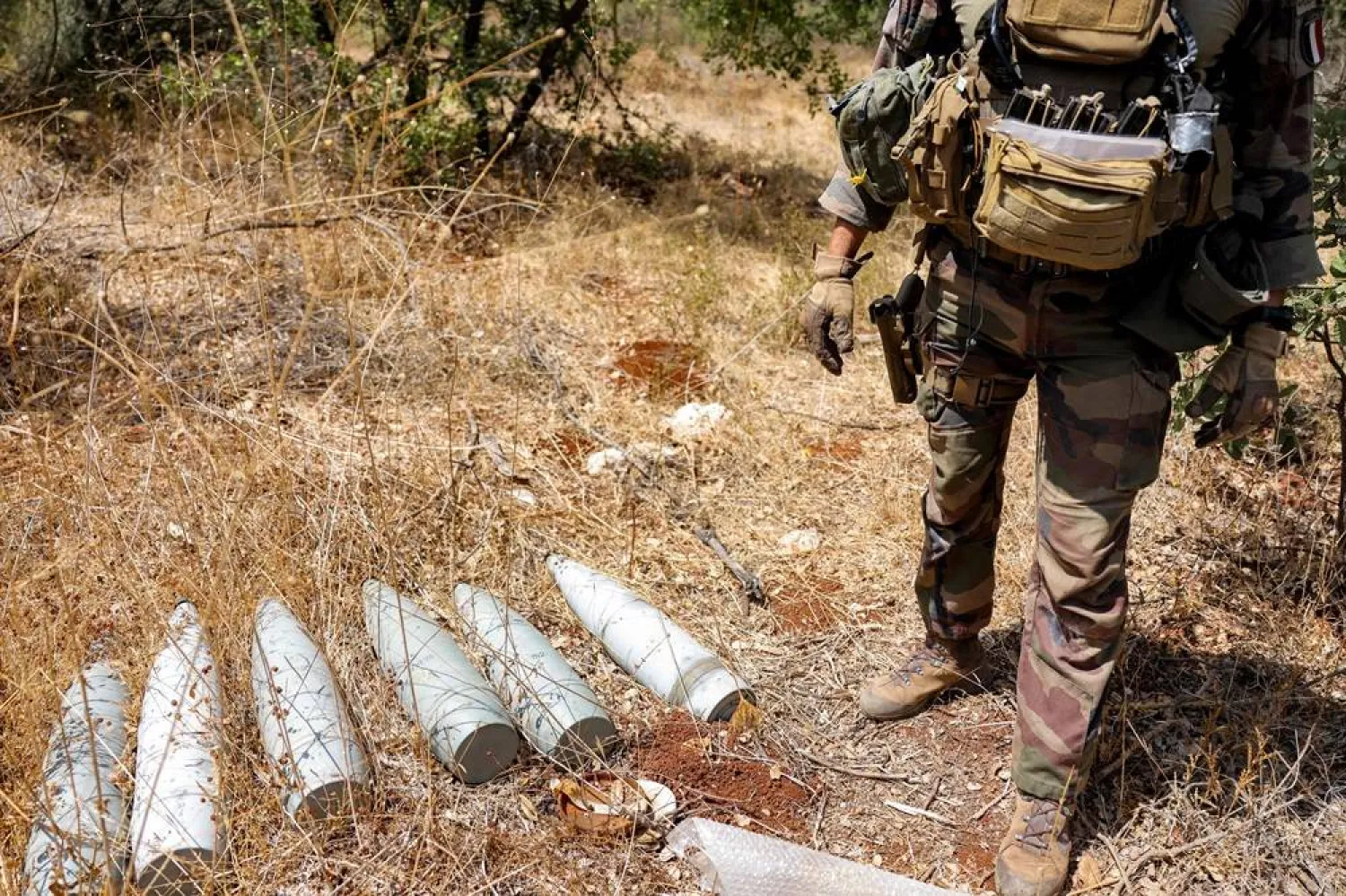
 A French peacekeeper of the United Nations Interim Force in Lebanon (UNIFIL) stands by munitions formerly used by Iran-backed Hezbollah at a position that was held by the group in the Khraibeh Valley in al-Meri in south Lebanon on August 27, 2025. (AFP)
A French peacekeeper of the United Nations Interim Force in Lebanon (UNIFIL) stands by munitions formerly used by Iran-backed Hezbollah at a position that was held by the group in the Khraibeh Valley in al-Meri in south Lebanon on August 27, 2025. (AFP)
TT

Lebanon Faces Crunch Point on Hezbollah Arms

 A French peacekeeper of the United Nations Interim Force in Lebanon (UNIFIL) stands by munitions formerly used by Iran-backed Hezbollah at a position that was held by the group in the Khraibeh Valley in al-Meri in south Lebanon on August 27, 2025. (AFP)
A French peacekeeper of the United Nations Interim Force in Lebanon (UNIFIL) stands by munitions formerly used by Iran-backed Hezbollah at a position that was held by the group in the Khraibeh Valley in al-Meri in south Lebanon on August 27, 2025. (AFP)

Lebanon's government is set to discuss a plan on Friday for disarming Hezbollah, a critical juncture in a standoff between the Iran-backed group which is refusing to give up its weapons and rivals who want it to disarm in line with US demands.

Calls for Hezbollah's disarmament have taken center stage in Lebanon since last year's devastating war with Israel, which upended a power balance long dominated by the Shiite group.

Despite mounting pressure, Hezbollah has rejected any move to dismantle its arsenal, leaving a deep divide between the group and its Shiite ally Amal on the one hand, and other Lebanese, among them leading Christian and Sunni politicians.

Friday's cabinet session takes place against a backdrop of an escalation in Israeli strikes in southern Lebanon, which killed four people on Wednesday, adding to fears in Lebanon of further attacks if Hezbollah does not disarm. The Israeli military said it targeted a site where Hezbollah stored engineering tools being used for "the organization's recovery".

Longstanding tensions in Lebanon over Hezbollah's arms have sharpened since the administration led by President Joseph Aoun and Prime Minister Nawaf Salam tasked the US-backed army on August 5 with devising a plan to establish a state monopoly on arms by the end of the year.

It is not yet clear how Friday's session will pan out. With the army keen to avoid confrontation with Hezbollah, the plan could avoid any disarmament timeline, a diplomat and a Lebanese source said.

Any cabinet decision opposed by Hezbollah is likely to prompt a walk-out by Shiite ministers loyal to the group and Amal, stripping the government of sectarian consensus. One possibility could be to delay a vote on the plan.

The army, drawn from Lebanon's mosaic of religious groups, split along sectarian lines at the start of the 1975-90 civil war, and has been widely regarded as the guarantor of civil peace since being rebuilt after that conflict.

Israel last week signaled it would scale back its military presence in southern Lebanon if the army took action to disarm Hezbollah.

But Hezbollah has ruled out disarming, saying its weapons protect Lebanon from Israeli attack. Senior Iranian official Ali Akbar Velayati last month criticized Beirut's moves on disarmament.

Hezbollah politician Mohammed Raad said on Wednesday it was "imperative" for Lebanese authorities to refrain from agreeing on any plans regarding Hezbollah's arms.

A US proposal discussed by Beirut last month foresaw Hezbollah's disarmament by the end of the year, along with Israel's withdrawal and an end to its military operations in Lebanon. It also held out the prospect of economic support.

A source close to Hezbollah said Lebanon faced mounting US pressure to implement the proposal, but that the group continued to communicate, including to the army, that it would neither hand in its arms nor allow anyone to take them.

'BALL OF FIRE'

Amal leader and Parliament Speaker Nabih Berri had been insisting that any discussion happen without a deadline, the source said.

Berri, in an August 31 speech, indicated that the Shiite parties were ready to discuss the fate of Hezbollah's arms, but "within the framework of a calm and consensual dialogue".

He said it was "nationally unacceptable to throw the ball of fire into the lap of the Lebanese army" by requiring it to tackle the long taboo issue of Hezbollah arms too abruptly.

A US-backed ceasefire agreed in November 2024 required Hezbollah's disarmament, beginning in areas south of the Litani River, the area adjacent to Israel.

Hezbollah says the deal only applies to that region and that it has handed over weapons to Lebanese troops in that area. Israeli forces continue to occupy five hilltops in the south and to carry out airstrikes on Hezbollah fighters and arms depots.


China Confirms Invited to Join Trump’s ‘Board of Peace’

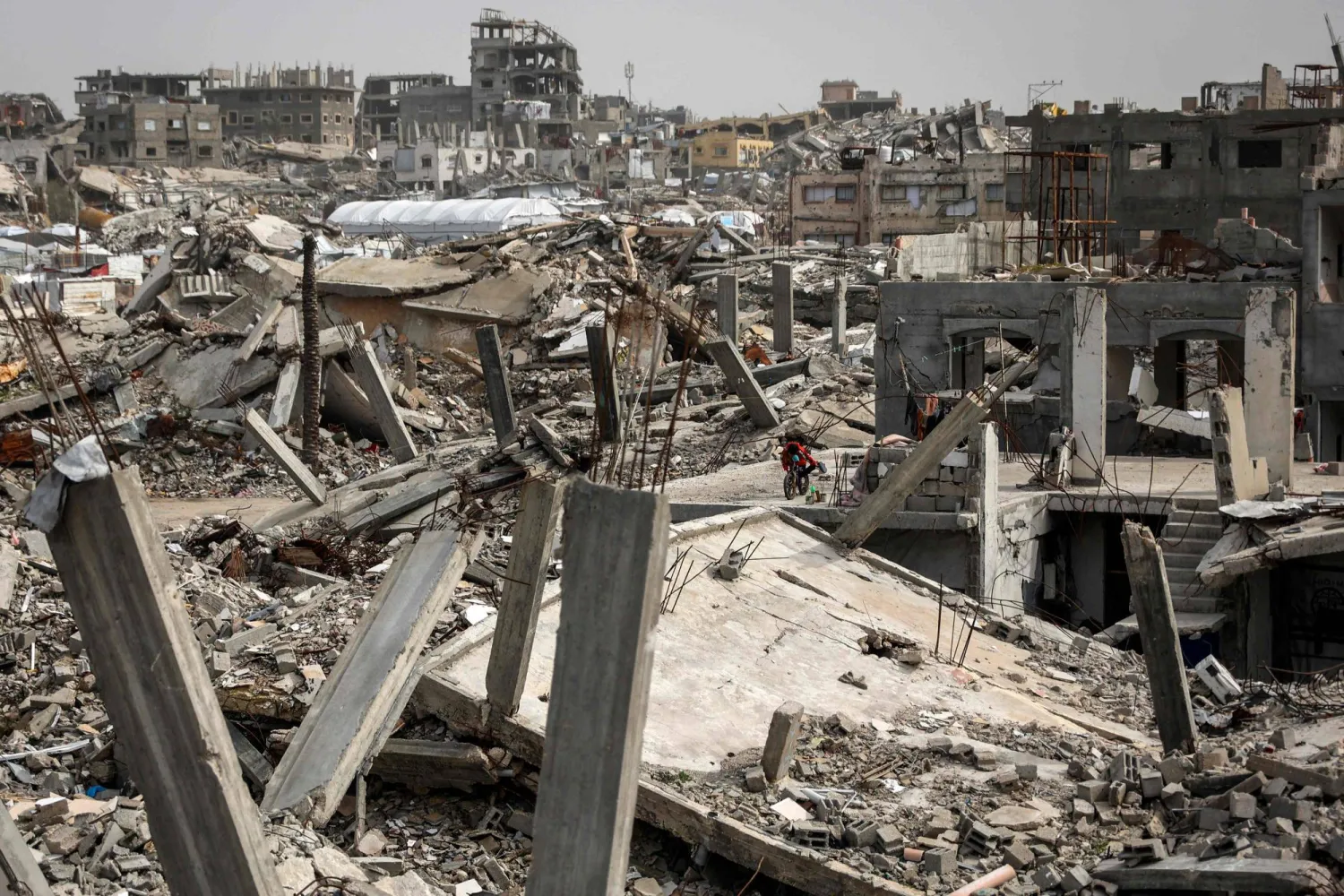
 Displaced Palestinians shelter in a tent camp in Deir al-Balah, central Gaza Strip, January 19, 2026. (Reuters)
Displaced Palestinians shelter in a tent camp in Deir al-Balah, central Gaza Strip, January 19, 2026. (Reuters)
TT

China Confirms Invited to Join Trump’s ‘Board of Peace’

 Displaced Palestinians shelter in a tent camp in Deir al-Balah, central Gaza Strip, January 19, 2026. (Reuters)
Displaced Palestinians shelter in a tent camp in Deir al-Balah, central Gaza Strip, January 19, 2026. (Reuters)

Beijing confirmed on Tuesday that China had been invited to join US President Donald Trump's "Board of Peace".

"China has received the United States' invitation," foreign ministry spokesman Guo Jiakun told a regular news briefing, without specifying whether Beijing would accept the invitation.

The board was originally conceived to oversee the rebuilding of war-torn Gaza, but the charter does not appear to limit its role to the occupied Palestinian territory.

Washington has asked various leaders to sit on the board, chaired by Trump, including Russian President Vladimir Putin, Hungarian premier Viktor Orban and Canadian Prime Minister Mark Carney.

Guo said China-US relations had achieved overall stability in the past year, despite a trade war that saw both countries impose tit-for-tat tariffs on each others' products.

"Over the past year, China-US relations have experienced ups and downs, but have maintained overall dynamic stability," Guo told reporters.

"Cooperation between China and the US benefits both sides, while confrontation harms both," he added.


UN: More Than 8 Million Sudanese Need Food in 2026

Famine spreads in North Darfur and South Kordofan in Sudan (AP) 
TT

UN: More Than 8 Million Sudanese Need Food in 2026

Famine spreads in North Darfur and South Kordofan in Sudan (AP) 

Sudan continues to face critical gaps in humanitarian nutrition services, exacerbated by ongoing conflict, displacement, and limited access to health and nutrition services, the UN and its partners said on Monday.

According to the Office for the Coordination of Humanitarian Affairs (OCHA), an estimated 8.4 million people in Sudan will require nutrition assistance in 2026.

This includes approximately 5 million children under the age of five and 3.4 million pregnant and breastfeeding women.

Of the 8.4 million in need, OCHA estimated that 4.2 million children and pregnant and breastfeeding women are projected to be acutely malnourished across Sudan, including over 824,000 cases of children under five suffering from Severe Acute Malnutrition (SAM).

Recent SMART surveys show further deterioration in the nutrition situation, with 31 out of the 61 validated SMART surveys reporting global acute malnutrition (GAM) prevalence of 15% and above the WHO emergency threshold, out of which one survey recorded GAM of 34.2 %, which is the famine threshold.

Kordofan and Darfur Battles

At the field level, military pressure is significantly escalating in the Kordofan and Darfur regions.

Earlier this month, the UN said road blockades and siege-like conditions have exasperated the delivery of food and health care to several areas, including the city of Kadugli and the city of Dilling in south Kordofan.

For months, the RSF and its ally, the Sudan People's Liberation Movement, have imposed a harsh siege on the two cities, with recurring artillery and drone strikes that led to 800,000 internally displaced people.

Military operations have targeted markets and troop concentrations, including an attack that killed 12 people and left tens of injuries, according to local reports.

Also, fierce battles took place in Habila and Kertala.

Meanwhile, the use of drones in combat zones in Sudan constitutes to play a leading role in the fighting between the two warrying parties.

This month, drones have been heavily documented in El-Obeid, the capital of North Kordofan, and surrounding areas in Sudan, as part of the ongoing conflict between the Sudanese Army and the RSF.

More than 13 people, including children and women, were reportedly killed by drone attacks in and around El-Obeid, amid widespread targeting of vital facilities in the city.

Local reports said violent clashes happened in axes linking North Kordofan to strategic areas, increasing the risk of limiting access to supplies and the movement of civilians.

The UN said gaps in humanitarian nutrition is projected to further deteriorate in 2026 due to expanding conflict, food security decline, compromised health and water services, and prolonged and recent displacements.

It warned that the actual number of malnourished individuals, particularly among IDPs, returnees, and non-displaced communities, are expected to exceed the current projected People in Need (PIN) figures as the situation worsens.

Turk’s Warnings

UN Human Rights commissioner Volker Turk said on Sunday he is alarmed by the increasing militarization of society by all parties to the conflict in Sudan, also expressing his worries that the atrocity crimes committed during and after the takeover of El Fasher would be repeated in the Kordofan region.

Speaking at a press conference in Port Sudan, where the government had been operating as a temporary capital since the conflict began, the UN envoy said the proliferation of advanced military equipment, in particular drones, across Sudan has enhanced the military capabilities of both the Sudanese army and the RSF, prolonging hostilities and deepening the crisis for civilians.

Turk said the international community must ensure that the perpetrators of the horrific violations in Sudan face justice, regardless of their affiliation.


Lebanese Army Chief to Make Pivotal Visit to Washington Next Month

Lebanese army chief General Rodolphe Haykal. Photo: Army command
TT

Lebanese Army Chief to Make Pivotal Visit to Washington Next Month

Lebanese army chief General Rodolphe Haykal. Photo: Army command

Lebanese army chief General Rodolphe Haykal is gearing up for an official visit to Washington in early February, after the US cancelled meetings with him in November.

The visit comes at a sensitive time, preceding the Paris conference to supporting the Lebanese army in March.

Ministerial sources told Asharq Al-Awsat that Haykal’s visit to Washington has been set for between February 3 and 5, saying the army’s needs, cooperation between the US and Lebanese militaries, and continued American support for the Lebanese army will be high on the agenda of the talks.

Military sources said that the visit’s postponement in November has not frozen contacts between the two sides. On the contrary, intense contacts have since been made to reschedule the visit, resulting in setting a new date next month.

The army’s plan to confiscate all unauthorized arms and extend state authority over all Lebanese territory will most likely top the agenda of the visit. This plan has drawn broad international attention.

A statement issued by the army command on January 8 regarding the achievement of the objectives of the first phase of the weapons-control plan will constitute a key component of Haykal’s briefing to US officials.

The army said in that statement that it had achieved the initial goal to clear non-state weaponry from the southern area near the Israeli border by the end of 2025.

It said it secured areas south of the Litani River, excluding positions still held by Israeli forces, though there was more work to be done clearing unexploded ordnance and tunnels.

Haykal’s briefing will most likely refer to the challenges hindering the full implementation of the plan, foremost among them ongoing Israeli attacks and the occupation of a number of sites inside Lebanese territory, in addition to the establishment of buffer zones that restrict freedom of movement, as well as the daily violations of the ceasefire agreement of November 27, 2024.

The army chief will also stress continued close cooperation with the United Nations Interim Force in Lebanon (UNIFIL) and with the ceasefire monitoring committee known as the mechanism, which held its last meeting on January 7 at the military level in the absence of civilians.

Ministerial sources told Asharq Al-Awsat that the mechanism will not hold meetings this month. “We are awaiting the return of the US general who is abroad, as well as the appointment of a civilian representative to replace US envoy Morgan Ortagus, who has been relieved of her duties,” they said.

Meanwhile, Lebanon continues its preparations for the Paris conference to support the army, scheduled for March 5.

Lebanese President Joseph Aoun told a recent security meeting that the army and security forces should prepare accurate reports on their needs and brief the conferees to secure the required assistance for their institutions.