


26 Nations Vow to Give Ukraine Postwar Security Guarantees, Macron Says

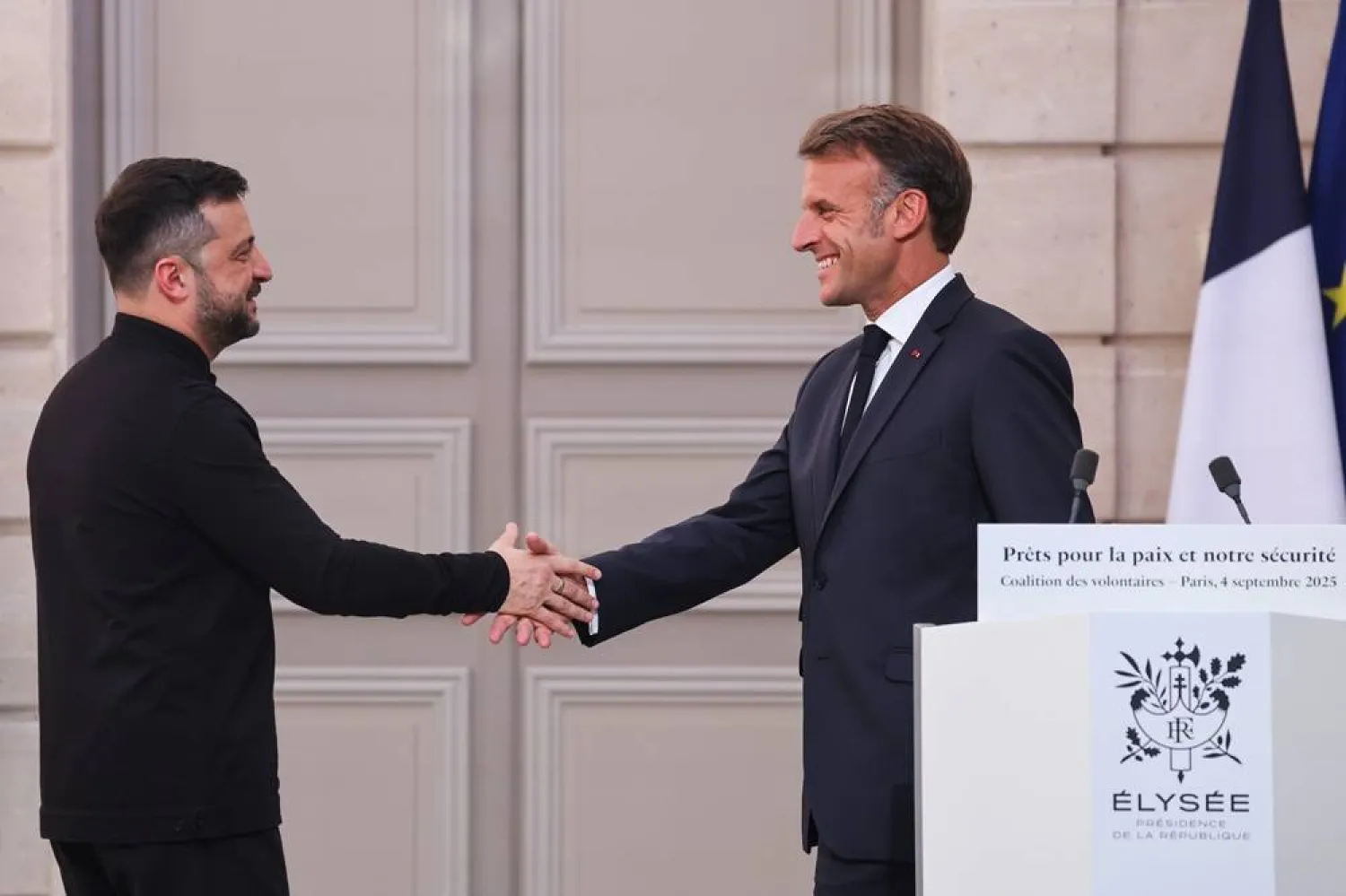
Ukraine's President Volodymyr Zelenskiy (L) and France's President Emmanuel Macron address a press conference following the Coalition of the Willing Summit, at the Elysee Palace in Paris, France, 04 September 2025. (EPA)
TT

26 Nations Vow to Give Ukraine Postwar Security Guarantees, Macron Says

Ukraine's President Volodymyr Zelenskiy (L) and France's President Emmanuel Macron address a press conference following the Coalition of the Willing Summit, at the Elysee Palace in Paris, France, 04 September 2025. (EPA)

Twenty-six nations have pledged to provide postwar security guarantees to Ukraine, which will include an international force on land and sea and in the air, French President Emmanuel Macron said after a summit meeting of Kyiv's allies on Thursday.

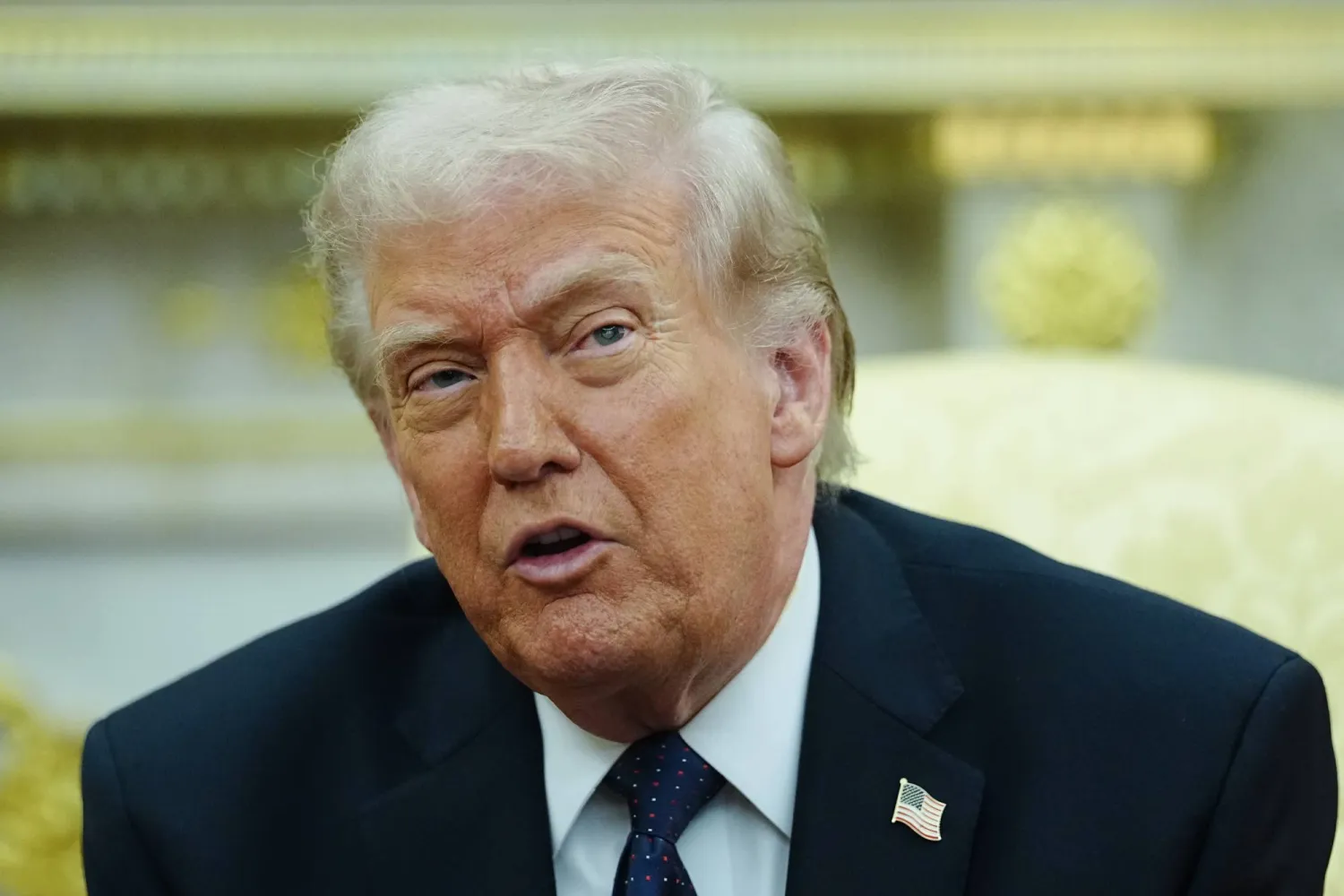
Macron said he, fellow European leaders and Ukrainian President Volodymyr Zelenskiy held a call with US President Donald Trump after their summit and US contributions to the guarantees would be finalized in the coming days.

The meeting of 35 leaders from the "coalition of the willing" - of mainly European countries - was intended to finalize security guarantees and ask Trump for the backing that Europeans say is vital to make such guarantees viable.

Security guarantees are intended to reassure Ukraine and deter Russia, which launched a full-scale invasion of Ukraine in 2022, from attacking its neighbor again.

"The day the conflict stops, the security guarantees will be deployed," Macron told a press conference at the Elysee Palace in Paris, standing alongside Zelenskiy.

European officials say peace looks a distant prospect for now, but they want to be ready whenever the war ends. They also see the planning of security guarantees as a way to reassure Kyiv of their support and hope Trump will join their efforts.

Macron initially said the 26 nations - which he did not name - would deploy to Ukraine. But he later said some countries would provide guarantees while remaining outside Ukraine, for example by helping to train and equip Kyiv's forces.

He did not say how many troops would be involved in the guarantees.

'VERY SPECIFIC SUBSTANCE'

Germany and other countries pledged they would be involved in that effort. But Berlin said it would decide on a military commitment only when conditions were clear, including the extent of US involvement in security guarantees.

Italian Prime Minister Giorgia Meloni made clear she would not send troops to Ukraine but said Italy was open to monitoring a ceasefire and training Ukrainian troops outside the country.

France and Britain, which co-chair the coalition of the willing, have indicated they are open to deploying troops to Ukraine after the war ends.

"We are working out which countries will take part in which security component," Zelenskiy said.

"Twenty-six countries agreed to provide security guarantees. Today, for the first time in a long time, this is the first such serious, very specific substance."

On his call with the coalition leaders, Trump said Europe must stop purchasing Russian oil that he said is helping Moscow fund its war against Ukraine, a White House official said.

"The president also emphasized that European leaders must place economic pressure on China for funding Russia’s war efforts," the official said.

Macron said the coalition and the United States had agreed to work more closely on future sanctions, notably on Russia's oil and gas sector, and on China.

MONTHS OF TALKS

European governments have said European forces in Ukraine would need their own US security guarantees as a "backstop". Trump has made no explicit commitment to go that far.

His special envoy, Steve Witkoff, met French, British, German, Italian and Ukrainian senior diplomats ahead of the summit, before briefly attending the opening session.

European officials also wanted to highlight a lack of progress toward direct peace talks between Russian President Vladimir Putin and Zelenskiy since Trump hosted Putin in August, and to prod Trump to raise pressure on Moscow now.

Having rolled out the red carpet in Alaska, Trump on Wednesday accused Putin of conspiring with China and North Korea after the three countries' leaders staged a show of unity in Beijing at a lavish commemoration of the end of World War Two.

Putin told Kyiv on Wednesday there was a chance to end the war in Ukraine via negotiations "if common sense prevails", an option he said he preferred, although he was ready to end it by force if that was the only way.

Putin also ruled out the deployment of troops from NATO nations to Ukraine as part of a peace settlement. But NATO Secretary General Mark Rutte dismissed his objections.

"Why are we interested in what Russia thinks about troops in Ukraine? It's a sovereign country," he said at a conference in Prague before joining the Paris summit by video link.

"Russia has nothing to do with this," he said. "I think we really have to stop making Putin too powerful."


NATO: Ukraine Still Receiving Arms Despite Mideast War

NATO Secretary General Mark Rutte via Reuters/File
TT

NATO: Ukraine Still Receiving Arms Despite Mideast War

NATO Secretary General Mark Rutte via Reuters/File

Ukraine is still getting essential defense equipment despite the war in the Middle East, which is depleting stockpiles in Europe and the United States, NATO Secretary General Mark Rutte said Thursday.

"The good news is that essential equipment into Ukraine continues to flow," he told reporters. That included American-made Patriot missile interceptors, which Ukraine desperately needs, he added, AFP reported.

The PURL program, launched last year, allows Ukraine to receive US equipment financed by European countries.

Some 75 percent of the missiles used by Patriot batteries in Ukraine have been supplied through the program, and 90 percent of the munitions used by other air-defense systems, Rutte added.

Rutte called on European countries to increase their own production capacity.

"They need to produce more extra production lines, extra shifts, opening new factories. The money is there," he said.


Germany FM Says 'Encouraging' if US Speaking Directly to Iran

German Foreign Minister Johann Wadephul. (Reuters: File Photo)
TT

Germany FM Says 'Encouraging' if US Speaking Directly to Iran

German Foreign Minister Johann Wadephul. (Reuters: File Photo)

Germany's foreign minister Thursday said it was encouraging if the United States was talking directly to Iran to end the war in the Middle East, but Washington should make its intentions clear.

"I hear that there are signs that the US is speaking directly to Iran. I think that this is encouraging and this is welcome," Johann Wadephul told reporters before heading into the meeting of G7 foreign ministers outside Paris, AFP reported.

With US Secretary of State Marco Rubio set to join the discussions from Friday, he added: "For the German government it is of great importance to know precisely what our American partners are intending."


US Envoy Witkoff Says Iran is Seeking an Off-ramp

US Special Envoy Steve Witkoff speaks during a cabinet meeting at the White House in Washington, DC, US, March 26, 2026. REUTERS/Evelyn Hockstein
TT

US Envoy Witkoff Says Iran is Seeking an Off-ramp

US Special Envoy Steve Witkoff speaks during a cabinet meeting at the White House in Washington, DC, US, March 26, 2026. REUTERS/Evelyn Hockstein

The United States has sent Iran a "15-point action list" as a basis for negotiations to end the current conflict, US Special Envoy Steve Witkoff said on Thursday, adding that there are signs that Tehran was interested in making a deal.


Witkoff, speaking during a cabinet meeting at the White House, said that the nascent talks could be successful if the Iranians realize there were no good alternatives - a realization Tehran might be coming to, he argued, Reuters reported.


"We will see where things lead, and if we can convince Iran that this is the inflection point with no good alternatives for them other than more death and destruction," Witkoff told reporters.


"We have strong signs that this is a possibility."


Witkoff said Pakistan had been acting as a mediator, confirming statements from Pakistani officials.
