


Japan's Prime Minister Resigns after His Party Suffered a Historic Defeat in a Summer Election

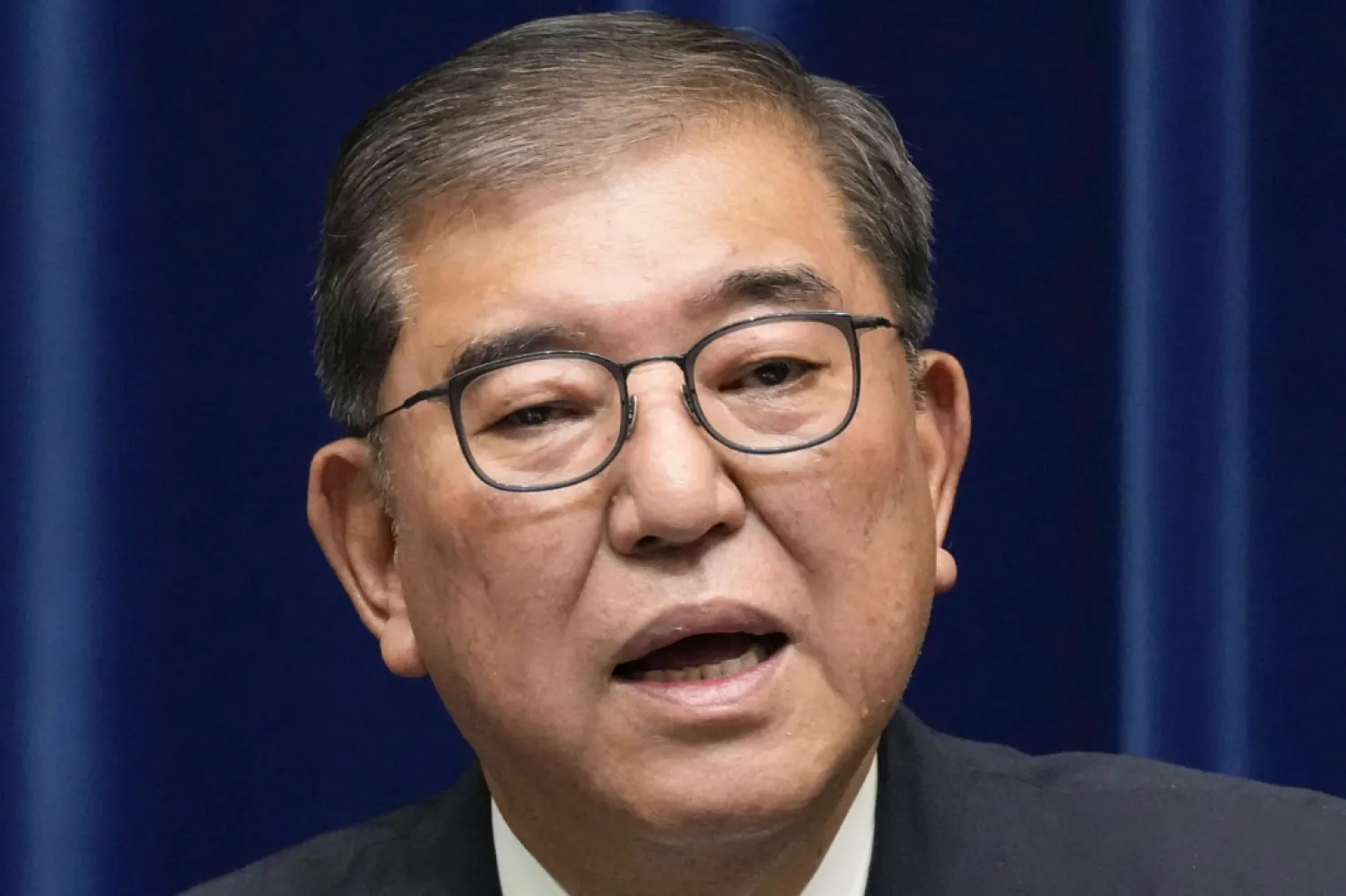
Japanese Prime Minister Shigeru Ishiba speaks during a press conference at the prime minister's office in Tokyo, Japan, Sunday, Sept. 7, 2025. (Kyodo News via AP)
TT

Japan's Prime Minister Resigns after His Party Suffered a Historic Defeat in a Summer Election

Japanese Prime Minister Shigeru Ishiba speaks during a press conference at the prime minister's office in Tokyo, Japan, Sunday, Sept. 7, 2025. (Kyodo News via AP)

Japan’s Prime Minister Shigeru Ishiba announced Sunday that he will resign, following growing calls from within his party to take responsibility for a historic defeat in July’s parliamentary election.

Ishiba, who took office in October, said he was stepping down as prime minister and as the head of his conservative Liberal Democratic Party.

Ishiba, a 68-year-old centrist, had resisted demands from opponents further to the right within his own party to resign. He argued that he wanted to avoid a political vacuum at a time when Japan faces key domestic and international challenges, including US tariffs, rising prices and growing tensions in the Asia-Pacific, The AP news reported.

Ishiba explained at a news conference Sunday night that he had intended for some time to take responsibility for his party's summer election loss, but was first determined to make progress in tariff negotiations with the United States. He described it as matter of the national interest.

“Who would seriously negotiate with a government whose leader says he is stepping down?" Ishiba said.

He said the moment had arrived with an order by US President Donald Trump on Friday to lower tariffs on Japanese cars and other products from 25% to 15%.

“Having reached a milestone in the US tariff negotiations, I decided now is the time to make way for a successor," Ishiba said.

Pressure from the party The resignation came one day before Ishiba's party was to decide whether to hold an early leadership election, which would have amounted to a virtual no-confidence motion against him if approved.

He said he made the “painful decision to resign” to avert that step because “it would cause a critical division within the party, and that is absolutely not my intention.”

Ishiba said he would instead start a process to hold a party leadership vote to choose his replacement, which is expected to be held in October. He is to remain as prime minister until a new leader is elected and endorsed by the parliament.

Ishiba’s leadership that lasted only one year underscores the instability of Japan’s minority government.

A maverick who won the leadership in his fifth attempts, Ishiba said he regrets he could not live up to voters' expectations for change. “As a result, I failed to go my own way, and I wonder how I could have done better,” he said.

He said he is not going to run in the next leadership race, even though he regrets leaving behind unfinished business, such as measures for salary increases, agricultural reforms and further strengthening Japan's security. He asked his future successor to tackle the issues he cherished.

Loss after loss In July, Ishiba’s ruling coalition failed to secure a majority in the 248-seat upper house in a crucial parliamentary election, weakening his government. The loss followed a defeat in the more powerful lower house, where the party-led coalition lost its majority in October, only two weeks after Ishiba took over.

Liberal Democratic lawmakers who support the prime minister said those who lost seats were largely ultra-conservatives who were linked to corruption scandals before Ishiba took office. Public polling showed that pressure on Ishiba to resign had the reverse effect and caused his support to grow.

Calls for Ishiba to step down grew after the Liberal Democratic Party last week called for a “complete overhaul” of the party following its losses.

Taro Aso, a conservative heavyweight known for his anti-Ishiba stance, and a minister and several deputy ministers in the Ishiba Cabinet requested an early vote, prompting others to follow suit.

Former Health Minister Norihisa Tamura said on a talk show of the public broadcaster NHK earlier Sunday that the best way to heal party divisions and move forward is for Ishiba “to settle” the dispute before Monday’s vote. The party has already been distracted from necessary work on economic measures and on figuring out ways to gain opposition support in the next parliamentary session, Tamura said.

Possible candidates to replace Ishiba include Agriculture Minister Shinjiro Koizumi, as well as ultra-conservative former economic security minister Sanae Takaichi and Chief Cabinet Secretary Yoshimasa Hayashi, a moderate and the protege of former Prime Minister Fumio Kishida.

Lacking a majority in both houses, the next party leader will have to work with the main opposition parties to get bills passed, experts say, or else face constant risks of no-confidence motions.

The opposition parties, however, are too splintered to form a coalition to topple the government.



Top Trump Iran Negotiator Says Visits US Aircraft Carrier in Middle East

US Special Envoy Steve Witkoff delivers a press conference upon the signing of the declaration on deploying post-ceasefire force in Ukraine, during the so-called "Coalition of the Willing" summit, at the Elysee Palace in Paris, France, January 6, 2026. (Reuters)
TT

Top Trump Iran Negotiator Says Visits US Aircraft Carrier in Middle East

US Special Envoy Steve Witkoff delivers a press conference upon the signing of the declaration on deploying post-ceasefire force in Ukraine, during the so-called "Coalition of the Willing" summit, at the Elysee Palace in Paris, France, January 6, 2026. (Reuters)

US President Donald Trump's lead Iran negotiator Steve Witkoff on Saturday said he visited the USS Abraham Lincoln aircraft carrier currently in the Arabian Sea, with Washington and Tehran due to hold further talks soon.

"Today, Adm. Brad Cooper, Commander of US Naval Forces Central Command, Jared Kushner, and I met with the brave sailors and Marines aboard the USS Abraham Lincoln, her strike group, and Carrier Air Wing 9 who are keeping us safe and upholding President Trump's message of peace through strength," said Witkoff in a social media post.

Iranian Foreign Minister Abbas Araghchi said on Saturday he hoped talks with the United States would resume soon, while reiterating Tehran's red lines and warning against any American attack.


Israel’s Netanyahu Expected to Meet Trump in US on Wednesday and Discuss Iran

Israeli Prime Minister Benjamin Netanyahu delivers a speech during a special session to mark the 77th anniversary of the Knesset's establishment and the 60th anniversary of the dedication of the current building at the Knesset, the Israeli parliament, in Jerusalem, 02 February 2026. (EPA)
TT

Israel’s Netanyahu Expected to Meet Trump in US on Wednesday and Discuss Iran

Israeli Prime Minister Benjamin Netanyahu delivers a speech during a special session to mark the 77th anniversary of the Knesset's establishment and the 60th anniversary of the dedication of the current building at the Knesset, the Israeli parliament, in Jerusalem, 02 February 2026. (EPA)

Israeli Prime Minister Benjamin Netanyahu is expected to meet US President Donald Trump on Wednesday in Washington, where they will discuss negotiations with Iran, Netanyahu's office said on Saturday.

Iranian and US officials held indirect nuclear ‌talks in the ‌Omani capital ‌Muscat ⁠on Friday. ‌Both sides said more talks were expected to be held again soon.

A regional diplomat briefed by Tehran on the talks told Reuters Iran insisted ⁠on its "right to enrich uranium" ‌during the negotiations with ‍the US, ‍and that Tehran's missile capabilities ‍were not raised in the discussions.

Iranian officials have ruled out putting Iran's missiles - one of the largest such arsenals in the region - up ⁠for discussion, and have said Tehran wants recognition of its right to enrich uranium.

"The Prime Minister believes that any negotiations must include limiting ballistic missiles and halting support for the Iranian axis," Netanyahu's office said in a ‌statement.


Italy FM Rules Out Joining Trump’s ‘Board of Peace’

Italy's Minister for Foreign Affairs Antonio Tajani speaks to the press during the EPP Leaders’ meeting, in Zagreb, Croatia, 30 January 2026. (EPA)
TT

Italy FM Rules Out Joining Trump’s ‘Board of Peace’

Italy's Minister for Foreign Affairs Antonio Tajani speaks to the press during the EPP Leaders’ meeting, in Zagreb, Croatia, 30 January 2026. (EPA)

Italy will not take part in US President Donald Trump's "Board of Peace", Italian Foreign Minister Antonio Tajani said Saturday, citing "insurmountable" constitutional issues.

Trump launched his "Board of Peace" at the World Economic Forum in Davos in January and some 19 countries have signed its founding charter.

But Italy's constitution bars the country from joining an organization led by a single foreign leader.

Prime Minister Giorgia Meloni, a Trump ally, last month noted "constitutional problems" with joining, but suggested Trump could perhaps reopen the framework "to meet the needs not only of Italy, but also of other European countries".

Tajani appeared Saturday to rule that out.

"We cannot participate in the Board of Peace because there is a constitutional limit," he told the ANSA news agency.

"This is insurmountable from a legal standpoint," he said, the day after meeting US Secretary of State Marco Rubio and US Vice President JD Vance at the Olympics in Milan.

Although originally meant to oversee Gaza's rebuilding, the board's charter does not limit its role to the Palestinian territory and appears to want to rival the United Nations.