

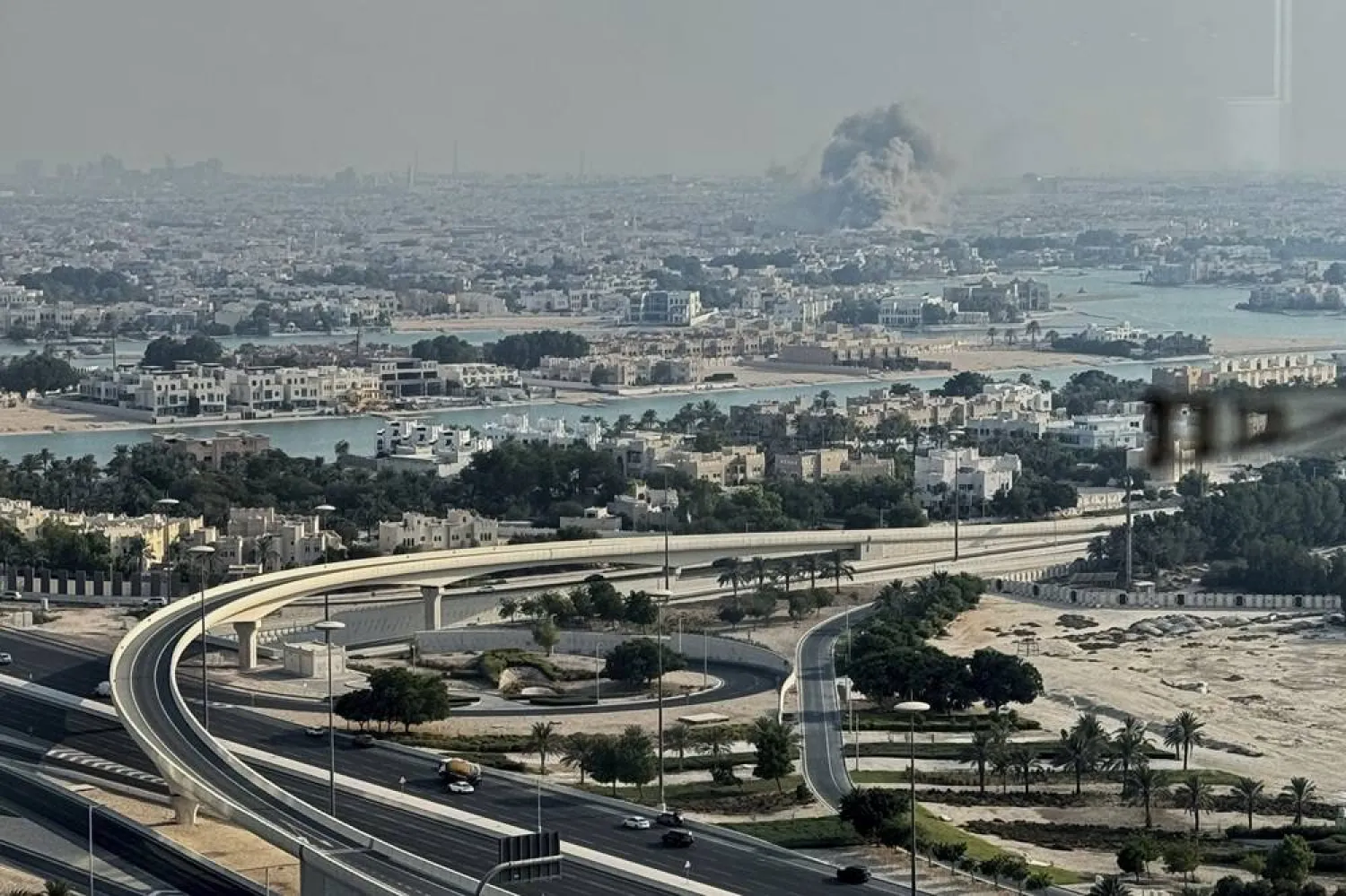

Arab and International Condemnation of Israeli Strike on Qatar

 Smoke rises from an explosion, caused by an Israeli strike, in Doha, Qatar, on Tuesday, Sept. 9, 2025. (UGC via AP)
Smoke rises from an explosion, caused by an Israeli strike, in Doha, Qatar, on Tuesday, Sept. 9, 2025. (UGC via AP)
TT

Arab and International Condemnation of Israeli Strike on Qatar

 Smoke rises from an explosion, caused by an Israeli strike, in Doha, Qatar, on Tuesday, Sept. 9, 2025. (UGC via AP)
Smoke rises from an explosion, caused by an Israeli strike, in Doha, Qatar, on Tuesday, Sept. 9, 2025. (UGC via AP)

The Arab world and international community condemned on Tuesday Israel’s strikes on Qatar that targeted Hamas officials.

The Egyptian presidency said in a statement that the attack "targeted a meeting of Palestinian leaders in the Qatari capital, Doha, to discuss ways to reach a ceasefire agreement" in Gaza.
"This attack sets a serious precedent and an unacceptable development, and constitutes a direct assault on the sovereignty of the sisterly State of Qatar, which plays a pivotal role in mediation efforts to achieve a ceasefire in the Gaza Strip," it said.

Iraq’s foreign ministry said in a statement that this "cowardly act represents a flagrant violation" of Qatar’s sovereignty and poses a threat to its security and stability.

"The Ministry of Foreign Affairs reiterates Iraq’s firm position in standing with the government and people of the sisterly State of Qatar, and fully supporting it in confronting any attacks that undermine its sovereignty or threaten its national security," the statement read.

Lebanese President Joseph Aoun said the attack "falls within the series of aggressions committed by Israel, which demonstrate its determination to strike all efforts made to achieve stability and security in the countries of the region."

He urged "the international community to put an end to these Israeli practices that continue to violate all international laws and agreements and obstruct every commendable effort made by the State of Qatar to establish peace in the region and put an end to the suffering of the brotherly Palestinian people."

Syria’s Foreign Ministry warned in a statement that the Israeli strikes targeting Hamas leadership represented "a dangerous escalation that would undermine security and stability in the region."
The ministry called the attack “a blatant violation of international law and the sovereignty of the sisterly State of Qatar.”

In a statement, Arab League Secretary General Ahmed Abou Gheit said the attack violated Qatar’s sovereignty.

He said Israel "does not care about the consequences of its shameful actions."

United Nations Secretary-General Antonio Guterres condemned the strikes as a "flagrant violation of the sovereignty and territorial integrity of Qatar."

He said Qatar has been playing a very positive role to try to achieve a ceasefire in Gaza and the release of all hostages held by Hamas.

"All parties must work towards achieving a permanent ceasefire, not destroying it," Guterres told reporters.

Türkiye condemned the attack, saying Israel had adopted "expansionist politics in the region and terrorism" as state policies.

"The targeting of the Hamas negotiating delegation while ceasefire talks continue shows that Israel does not aim to reach peace, but rather continue the war," the ministry said in a statement.

"This situation is clear proof that Israel has adopted its expansionist politics in the region and terrorism as a state policy," it added.

Pope Leo expressed concern for the consequences of Israel's strikes.

"There's some really serious news right now: Israel's attack on some Hamas leaders in Qatar. The entire situation is very serious," Leo said outside the papal summer residence of Castel Gandolfo, as quoted by ANSA news agency.

Iran's Foreign Ministry spokesperson said Israel's attack is "dangerous" and a "violation of international law," Iranian media reported.

British Prime Minister Keir Starmer condemned the Israeli military strikes, saying they risked further escalation in the region. 

"I condemn Israel's strikes on Doha, which violate Qatar's sovereignty and risk further escalation across the region," he said in a post on X. 

"The priority must be an immediate ceasefire, the release of hostages, and a huge surge in aid into Gaza. This is the only solution towards long-lasting peace."

Pakistan’s Ministry of Foreign Affairs described the attack as a violation of international law and a threat to regional stability.
The ministry said in a statement that Pakistan is in "complete solidarity" with Qatar and urged the international community to hold Israel accountable.
It called the attack "provocative and reckless" and said it shows Israel’s "continued disregard for international peace and security."
Pakistan reaffirmed its support for Qatar’s sovereignty and territorial integrity, vowing to stand "shoulder to shoulder" with the Gulf nation’s leadership and people.

The Israeli attack on Doha is "unacceptable," German Foreign Minister Johann Wadephul said in a statement.
"Israel’s strike in Doha not only violates Qatar’s territorial sovereignty, but also jeopardizes all our efforts to secure the hostages’ release," Wadephul said, noting that Qatar plays a crucial role in efforts to achieve a ceasefire and release the hostages.

Somalia Cancels All UAE Deals

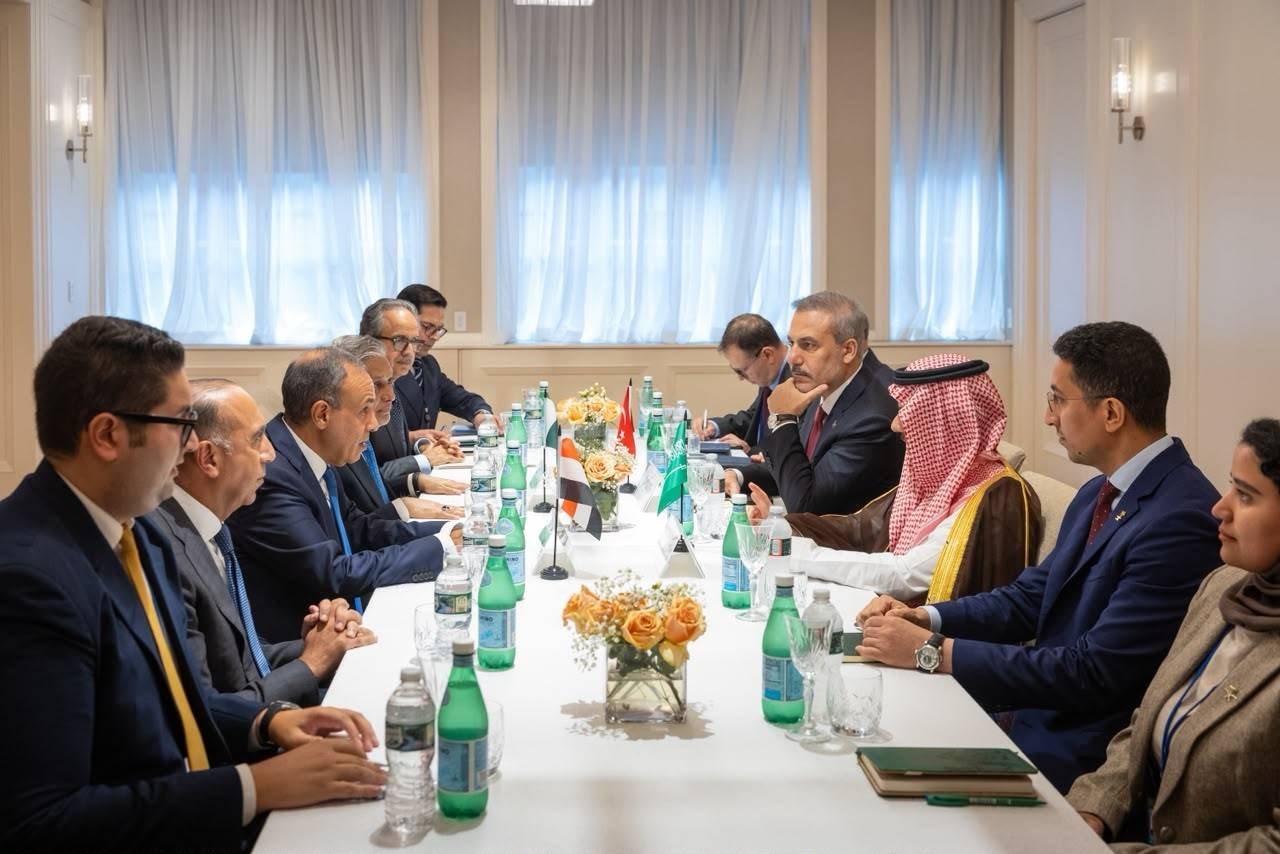
A meeting of the Somali government. (Somali National News Agency)
TT

Somalia Cancels All UAE Deals

A meeting of the Somali government. (Somali National News Agency)

Somalia's government said on Monday that it was annulling all agreements with the United Arab Emirates, including port deals and defense and ‌security cooperation, ‌citing ‌evidence ⁠the UAE had ‌undermined its national sovereignty. 

"The Council of Ministers has annulled all agreements concluded with the United Arab Emirates, ⁠including those involving federal governmental ‌institutions, affiliated entities, and ‍regional administrations ‍operating within the territory ‍of the Federal Republic of Somalia," a statement from Somalia's Council of Ministers said. 

"This decision applies to all agreements ⁠and partnerships relating to the ports of Berbera, Bosaso, and Kismayo ... (and) bilateral security and defense cooperation agreements," the statement added. 


Somali Foreign Minister: Any Unilateral Recognition of Breakaway Regions Is Unviable

Somali Foreign Minister Abdisalam Abdi Ali (Somali Foreign Ministry)
TT

Somali Foreign Minister: Any Unilateral Recognition of Breakaway Regions Is Unviable

Somali Foreign Minister Abdisalam Abdi Ali (Somali Foreign Ministry)

At a highly sensitive regional juncture, Somali Foreign Minister Abdisalam Abdi Ali issued a clear warning against any unilateral recognition of breakaway regions, describing such moves as unviable and politically irresponsible, with negative repercussions for bilateral relations and regional stability.

In an interview with Asharq Al-Awsat, Ali stressed the alignment between Mogadishu and Riyadh on the need to shield the Red Sea and the Gulf of Aden from militarization, illicit activities and geopolitical rivalries.

He said his second visit to Saudi Arabia within two weeks reflects the depth of coordination with the Kingdom amid rapidly evolving regional developments, particularly those related to maritime security and the Horn of Africa.

Objectives of the Saudi visit

Ali said the primary aim of his visit was close consultation with Saudi Arabia on accelerating regional developments, notably those affecting the Red Sea, the Horn of Africa and maritime navigation security.

He added that discussions also focused on strengthening bilateral cooperation across political, economic, security and development fields, while ensuring full coordination on issues touching on Somalia’s sovereignty, unity and stability.

He noted that the visit — his second to Riyadh in less than two weeks — underscored the intensity of engagement with the Kingdom at a delicate moment, saying that his previous meeting with Saudi Foreign Minister Prince Faisal bin Farhan featured frank and constructive talks aimed at preventing escalation, maintaining regional balance and upholding international law.

Ali also highlighted the convening of an emergency meeting of foreign ministers of the Organization of Islamic Cooperation (OIC) to address what he described as the “illegal violation of Somalia’s sovereignty, unity and territorial integrity,” calling it further evidence of Saudi Arabia’s pivotal role in supporting regional stability.

Historic relations

The foreign minister described relations between Somalia and Saudi Arabia as “strong, historic and strategic,” grounded in shared faith, longstanding people-to-people ties and converging regional interests.

He said Somalia views the Kingdom as a key partner in national recovery, security-sector reform, economic stabilization and regional diplomacy, adding that current discussions are focused on translating this partnership into tangible outcomes that benefit both countries and reinforce wider regional stability.

Firm rejection of recognition of “Somaliland”

Ali stressed that the Somali federal government “categorically rejects” any declaration or action aimed at recognizing any part of Somalia as a separate entity. Such steps, he said, lack any legal basis, violate Somalia’s sovereignty and territorial integrity, and contravene international law, the UN Charter, the OIC charter and African Union principles.

He expressed Somalia’s appreciation for Saudi Arabia’s principled stance in support of Somali unity, as well as for regional and international partners that have voiced solidarity with Mogadishu.

He warned that unilateral recognition would not merely be a political position but a “destabilizing precedent” threatening the regional order. He added that Somalia is addressing the issue through balanced diplomacy and close coordination with regional and international partners.

A pivotal and constructive Saudi role

Ali said Saudi Arabia plays a “pivotal and constructive” role in promoting stability and security in the Arab world, the Red Sea region and the Horn of Africa, noting that its leadership in diplomacy, de-escalation and maritime security is widely recognized and appreciated.

Potential repercussions

The foreign minister warned that any unilateral recognition of Somaliland would be “legally and practically null and void,” further exacerbating fragility in a region already facing serious security, humanitarian and climate challenges. He said that such moves encourage fragmentation, fuel proxy conflicts and open the door to external interference, undermining the security of the Horn of Africa and international maritime navigation.

Militarization of the Red Sea

Ali said Mogadishu and Riyadh share a vital interest in protecting one of the world’s most strategic maritime corridors, stressing the need to keep the Red Sea and the Gulf of Aden free from militarization and illegal activities.

“We agree on the necessity of keeping the Red Sea and the Gulf of Aden away from militarization, illicit activities and geopolitical brinkmanship,” he underlined.


New KSrelief Aid Convoy Crosses Rafah to Deliver Food Baskets to Gaza

The latest KSrelief convoy was carrying food baskets for the people of Gaza. (SPA)
TT

New KSrelief Aid Convoy Crosses Rafah to Deliver Food Baskets to Gaza

The latest KSrelief convoy was carrying food baskets for the people of Gaza. (SPA)

A new humanitarian aid convoy from the King Salman Humanitarian Aid and Relief Center (KSrelief) crossed the Rafah border into Gaza on Friday with essential food baskets for Palestinians affected by the ongoing crisis, as part of the Saudi fundraising campaign to aid the Palestinian people.

The Saudi Center for Culture and Heritage, KSrelief’s implementing partner, has established several new camps in Al-Qarara area of southern Gaza and Al-Mawasi area of Khan Younis in preparation for winter.

Through these efforts, KSrelief aims to alleviate the severe suffering caused by the dire living conditions in Gaza, ensuring that vital food and shelter reach those in the most vulnerable areas.
