



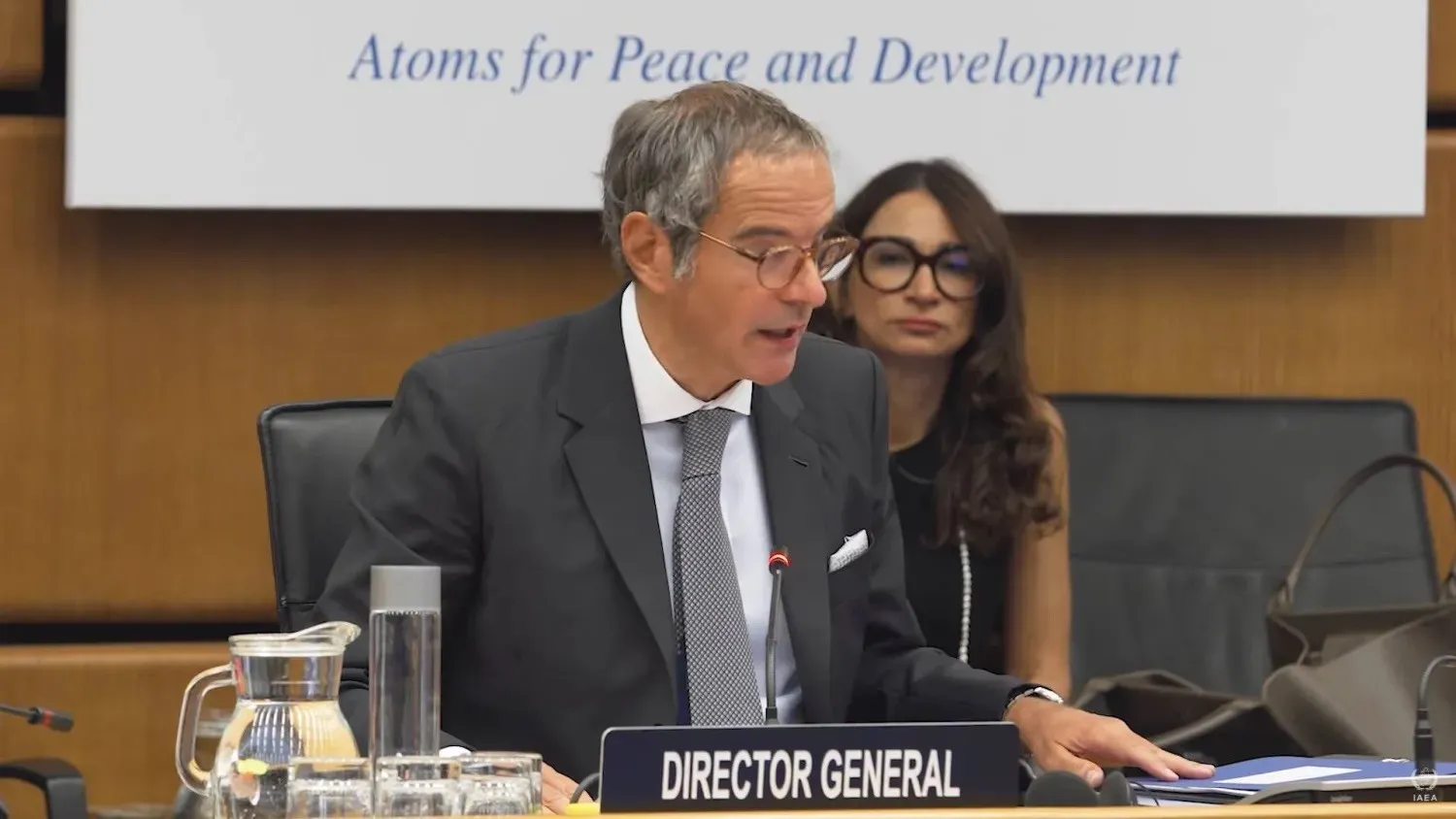

The International Atomic Energy Agency (IAEA) chief, Rafael Grossi, confirmed on Wednesday that a new cooperation framework with Iran will cover all nuclear facilities and infrastructure across the country. But Iranian Foreign Minister Abbas Araghchi cautioned that the arrangement does not currently authorize inspectors to resume visits.
Grossi told the IAEA Board of Governors in Vienna that the deal includes full reporting obligations on Iran’s nuclear sites, including facilities damaged during the June confrontation with Israel.
He described the agreement as a step forward after months of paralysis and escalation, noting that inspections in Iran had been completely halted for the first time since the signing of the comprehensive safeguards accord. He added that resuming them would require complex technical and political arrangements, not simply routine procedures.
Iran’s enrichment plants sustained heavy damage in the strikes, leaving unanswered questions about uranium enriched to 60 percent purity. That level falls just short of weapons-grade material, which requires enrichment to about 90 percent.
According to a recent IAEA report, before the attacks Iran possessed enough enriched material to produce ten nuclear warheads if further refined. Following the strikes, Iran’s parliament passed a law suspending cooperation with the agency and giving the Supreme National Security Council the authority to approve any inspection.
Talks with the IAEA resumed as Britain, France, and Germany moved toward triggering the UN’s snapback sanctions mechanism by late September if Iran failed to allow inspectors into three bombed sites, provide clarity on roughly 400 kilograms of enriched uranium, and engage directly with Washington on a new nuclear deal.
Diplomats cited by Bloomberg said the Cairo accord laid the groundwork for inspectors to return as early as next month. They explained that Iran must first submit detailed reports identifying uranium stockpiles before additional negotiations on how inspectors might safely access damaged facilities. Those sites could still contain unexploded ordnance or chemical contamination, requiring special arrangements.
Grossi warned that the Iranian law suspending cooperation would have amounted to a breach of international obligations with broad implications for global security.
He welcomed Tehran’s stated decision to remain within the Non-Proliferation Treaty and expressed hope that the new framework, finalized after weeks of consultations in Cairo, could open space for diplomacy. He also thanked Egypt’s leadership for hosting the negotiations and facilitating dialogue.
Araghchi’s Conditions
Araghchi, however, stressed that inspectors would not be allowed entry for the time being. He explained that the agreement conformed to Iranian law and took account of national security concerns following US strikes. Cooperation, he said, would proceed under a new legal framework that recognized Iran’s vulnerabilities.
He clarified that Bushehr remains the only facility where inspections continue under current approvals. Future access to other sites, he said, will depend on technical reporting and further talks. Araqchi also warned that activating the snapback sanctions mechanism would result in Iran halting the deal entirely.
International Reactions
The framework prompted a wave of international responses. A senior French diplomat stressed the urgency of restarting monitoring quickly, while European Union foreign policy chief Kaja Kallas called the accord a potentially decisive step if implemented without delay.
Saudi Arabia welcomed the deal as an important move to build trust and support diplomatic solutions, while China described it as a positive contribution to reducing tensions.
Russia’s envoy to the IAEA, Mikhail Ulyanov, said Iran’s demand for security guarantees after repeated strikes was justified, warning against outside interference that could derail the agreement.


