



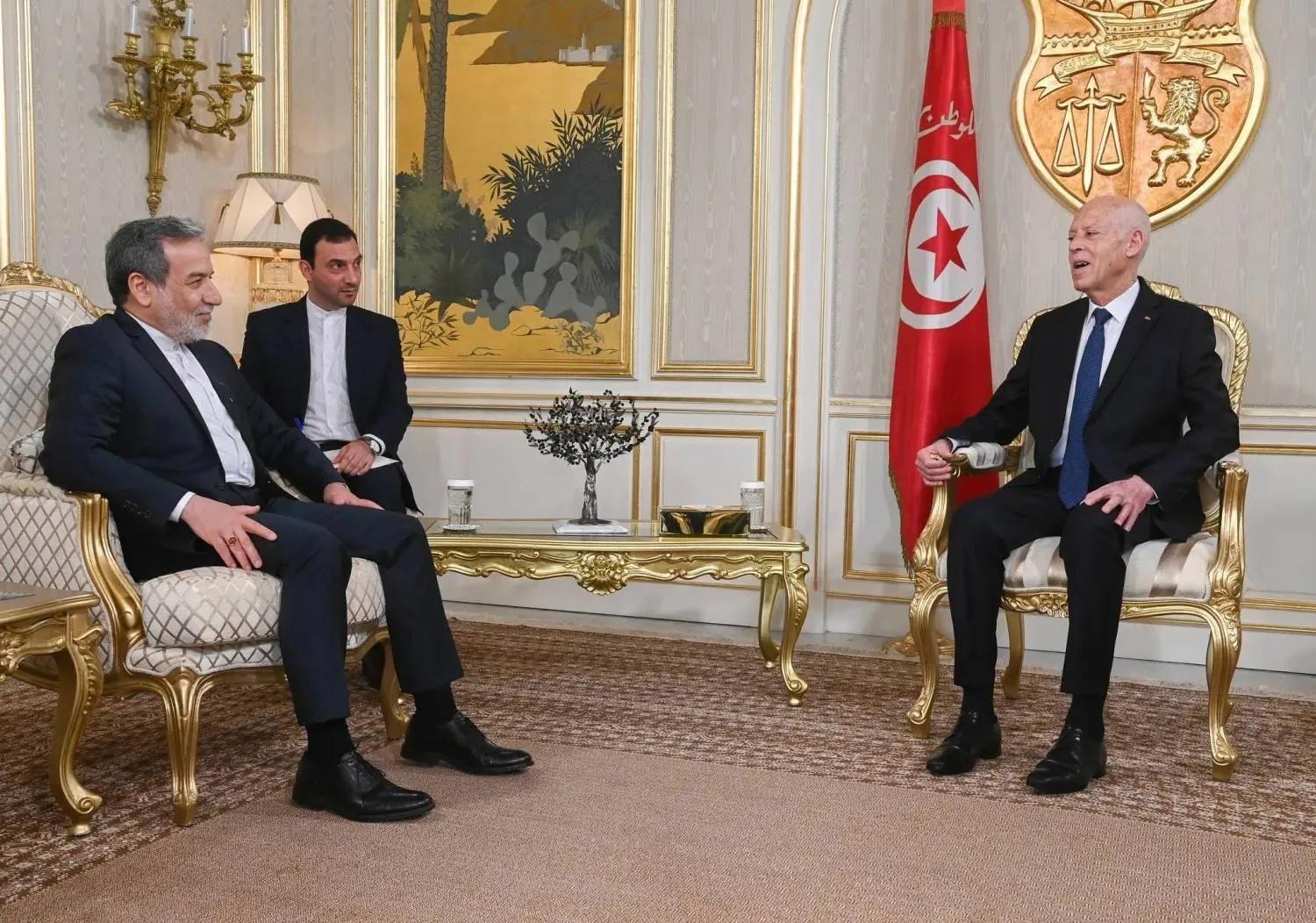

Iran’s Foreign Minister Abbas Araghchi said on Thursday that a new agreement with the UN nuclear watchdog marks the start of a “fresh page” in Tehran’s relations with countries involved in its atomic file, following Israeli and US strikes on Iranian nuclear facilities.
Speaking at a news conference in Tunis, Araghchi told Asharq Al-Awsat newspaper that the deal reached in Cairo with International Atomic Energy Agency (IAEA) chief Rafael Grossi, in the presence of Egypt’s foreign minister, came “amid major changes requiring different technical arrangements to safeguard Iran’s interests and nuclear rights.”
“The agency is the only international authority empowered to verify nuclear programs, and no deal is signed without taking its technical considerations into account. That is exactly what happened with this agreement,” he said.
Araghchi criticized unnamed states for questioning Iran’s Atomic Energy Organization despite long calling for verification of the program’s peaceful nature. “It is surprising to see some now ignore the right of every country to seek new arrangements when circumstances change,” he said.
Iran’s nuclear sites had been struck “illegally” by Israel and then the United States during 12 days of attacks, Araghchi said. “In such a situation, the IAEA cannot continue its routine operations, and new arrangements are required that reflect the realities on the ground,” he added.
On disputes over inspectors’ access, Araghchi said Tehran and the agency had agreed on a new mechanism. “From now on, cooperation will take place within this new framework, which the agency itself has welcomed,” he said.
He warned European powers against trying to revive UN sanctions by sending Iran’s file back to the Security Council under the “snapback” mechanism. “No objective can be achieved through threats, escalation or new sanctions. This file can only be resolved through diplomatic solutions,” he said.
Araghchi said the recent strikes had caused severe damage to Iranian facilities but insisted knowledge “cannot be destroyed by bombs.” Military action, he argued, had once again proven futile. “Buildings can be rebuilt and equipment replaced. But expertise remains,” he said.
He dismissed the likelihood of renewed military action if the IAEA deal falters, reiterating Tehran’s commitment to dialogue. He accused Israel of ignoring red lines at regional and international levels, citing its “latest attack on Qatar” as evidence that no state in the region is safe from Israeli strikes.
Despite repeated attacks, Araghchi said Israel had failed to achieve its objectives and was eventually forced to agree to an unconditional ceasefire after Iranian forces defended the country. “If others try the same failed experiment again, the outcome will not be any different,” he warned.


