


Extraordinary Doha Summit Tackles Response to Israeli Attack

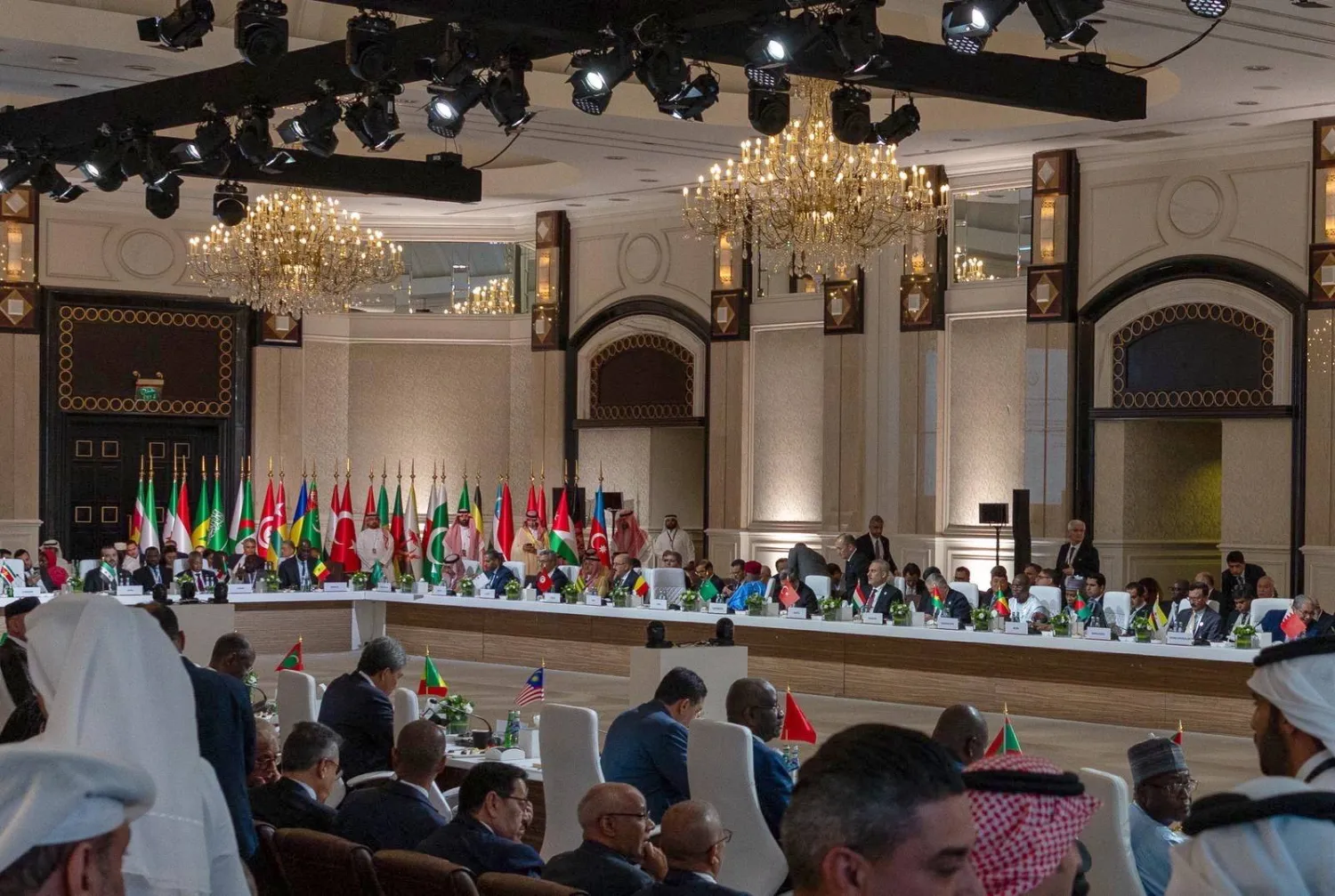
A handout photo made available by the Turkish Foreign Minister's Press Office shows delegations at the Foreign Ministers Meeting of the Organization of Islamic Cooperation-Arab League Joint Extraordinary Summit in Doha, Qatar, 14 September 2025. (EPA/Turkish Foreign Minister Press Office Handout)
TT

Extraordinary Doha Summit Tackles Response to Israeli Attack

A handout photo made available by the Turkish Foreign Minister's Press Office shows delegations at the Foreign Ministers Meeting of the Organization of Islamic Cooperation-Arab League Joint Extraordinary Summit in Doha, Qatar, 14 September 2025. (EPA/Turkish Foreign Minister Press Office Handout)

Arab and Muslim leaders will meet in Doha on Monday to issue a joint response to the Israeli attack on Qatar on Tuesday that targeted Hamas leaders.

Fifty-seven foreign ministers and representatives of the Arab and Muslim countries met in Doha on Sunday for a preparatory meeting ahead of the Arab-Islamic summit.

The Qatari Foreign Ministry said the summit reflects Arab and Islamic solidarity against Israel.

Qatar's Prime Minister and Foreign Minister Sheikh Mohammed bin Abdulrahman Al Thani told the FMs on Sunday that his country “will not be lenient with any violation of its sovereignty or threat to its national security.”

Doha will confront any threat in line with international laws, he vowed.

He described Israel’s attack as a “dangerous precedent” that demands Arab and Islamic countries to work together to confront it.

Moreover, he stressed that the Israeli government’s actions are an open declaration that “Israel has no red lines that rein in its behavior and that it is forging ahead in destabilizing any country in the world and undermining any diplomatic efforts that go against its agenda.”

“We must not remain silent or be lenient with this barbaric behavior,” he urged, calling for “real and tangible measures on various levels” to prevent more attacks, which if left unconfronted, will continue.

Sheikh Mohammed said that Qatar will continue to act as mediator to reach a ceasefire in the war on Gaza.

“Israel’s practices will not deter us from continuing our dedicated efforts with Egypt and the United States to end this unjust war,” he went on to say.

Sunday’s meeting was attended by several officials, including Saudi Foreign Minister Prince Faisal bin Farhan bin Abdullah and Iranian FM Abbas Araghchi. Turkish Foreign Minister Hakan Fidan was also in Doha.

Qatari Foreign Ministry Majed bin Mohammed al-Ansari said the summit reflects Arab and Islamic solidarity with Qatar against “the cowardly Israeli aggression that targeted Hamas leaders.”

“It reflects their categorical rejection of state terrorism adopted by Israel,” he added in a post on the X platform.

Five Hamas members and a member of the Qatari security forces were killed in the Israeli strike.

Several Arab and Muslim leaders, including Palestinian President Mahmoud Abbas, have arrived in Doha for Monday’s summit. Iran confirmed that President Masoud Pezeshkian will attend. Iraqi Prime Minister Mohammed Shia al-Sudani will head to Doha, while the Turkish presidency said Recep Tayyib Erdogan will also visit the Qatari capital.

International condemnation

The attack on Qatar sparked wide Arab and international condemnation.

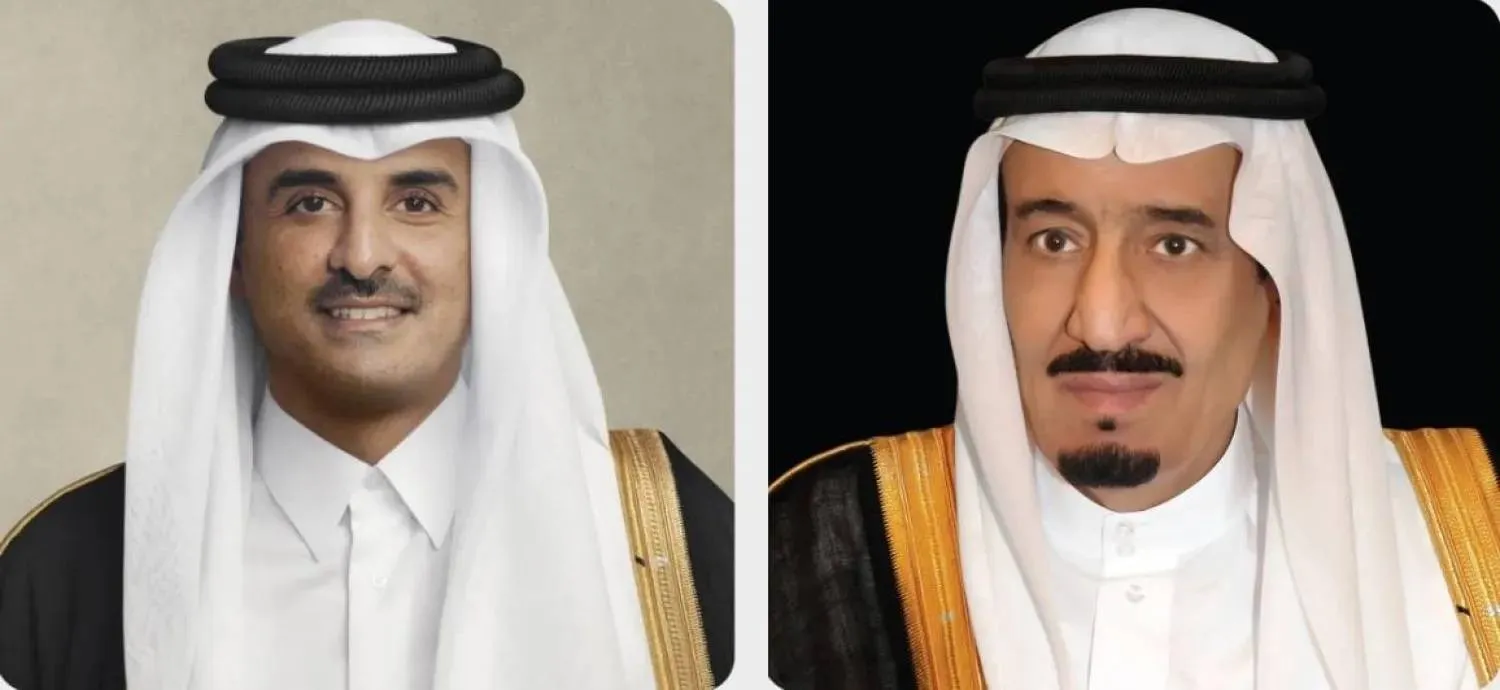
Prince Mohammed bin Salman, Saudi Crown Prince and Prime Minister, telephoned Qatari Emir Sheikh Tamim bin Hamad Al-Thani soon after the attack to express the Kingdom’s solidarity and support.

US President Donald Trump also expressed his solidarity, saying Washington was upset with the attack.

Trump has distanced himself from the strike, saying it “does not advance Israel or America’s goals” and has promised Qatar that it would not be repeated.

On Friday, Trump met with PM Sheikh Mohammed in New York. The Qatari PM also met with Vice President JD Vance, Secretary of State Marco Rubio and Middle East envoy Steve Witkoff.

The US stressed that Qatar was a “trusted strategic ally”, also joining a UN Security Council statement condemning the strike without mentioning Israel by name.

At a UN Security Council meeting Thursday, Sheikh Mohammed accused Israel of not caring about the hostages held in Gaza because of the strike, but said Qatar would continue “our diplomatic role without any hesitation in order to stop the bloodshed.”

Saudi Foreign Minister Meets with French Counterpart in Riyadh

Photo by SPA
Photo by SPA
TT

Saudi Foreign Minister Meets with French Counterpart in Riyadh

Photo by SPA
Photo by SPA

Saudi Minister of Foreign Affairs Prince Faisal bin Farhan bin Abdullah met Thursday in Riyadh French Minister for Europe and Foreign Affairs Jean-Noël Barrot, SPA reported.

During the meeting, they reviewed relations and discussed regional and international developments and their implications for security and stability.


How Did the Jeddah Summit Support Joint Gulf Action?

The flags of Gulf countries are raised in Jeddah ahead of the summit (SPA)
TT

How Did the Jeddah Summit Support Joint Gulf Action?

The flags of Gulf countries are raised in Jeddah ahead of the summit (SPA)

Gulf leaders meeting in Jeddah this week urged faster progress on joint projects and deeper military integration, seeking to reinforce collective security and economic coordination amid heightened regional tensions.

In a statement after the consultative summit on Tuesday, GCC Secretary-General Jasem Albudaiwi said leaders called for accelerating completion of requirements to link all shared Gulf projects, including transport and logistics. They stressed speeding up implementation of the Gulf railway, advancing electricity interconnection, and taking prompt steps toward oil and gas pipeline and water-link projects.

The statement also pointed to studying strategic Gulf stockpiles, while emphasizing intensified military integration and faster completion of a joint early warning system against ballistic missiles.

The direct wording - repeating terms such as “accelerate” and “urgency” - reflected a push for concrete outcomes and highlighted Saudi Arabia’s initiative in convening the summit amid complex regional conditions.

28 April 2026, Saudi Arabia, Jeddah: Saudi Crown Prince Mohammed bin Salman meets with Bahrain's King, Hamad bin Isa bin Salman, on the sidelines of the Gulf Cooperation Council Consultative Summit. Photo: Saudi Press Agency/APA Images via ZUMA Press Wire/dpa

Qatar’s Emir, Sheikh Tamim bin Hamad Al Thani, said the meeting reflected Gulf unity. “Our consultative summit today in Jeddah embodies a unified Gulf position toward current developments and the need to intensify coordination and consultation,” he stated, adding that this would strengthen diplomatic efforts, safeguard regional security and stability, and support development and prosperity.

Extending Gulf leadership efforts

Abdulaziz Sager, chairman of the Gulf Research Center, told Asharq Al-Awsat that the summit was convened in response to conditions facing the Gulf region following the US-Israeli-Iranian war, aiming to coordinate GCC positions and contain its repercussions.

The goal is to enhance efforts to address this crisis and its consequences - security, economic and otherwise - to stabilize the region, safeguard GCC interests and strengthen collective security, he underlined.

Sager added that the summit builds on efforts led by Saudi Crown Prince Mohammed bin Salman and other Gulf leaders, within the broader vision of King Salman bin Abdulaziz to strengthen joint Gulf action, deepen economic unity, and develop defense and security systems toward more sustainable integration.

He revealed that these discussions also addressed reinforcing Gulf unity to better manage current challenges and anticipate future crises.

Saudi Crown Prince Mohammed bin Salman receives the Kuwaiti Crown Prince Sheikh Sabah Khaled Al-Hamad Al-Sabah ahead of an exceptional meeting of the Gulf Cooperation Council (GCC), In Jeddah, Saudi Arabia, April 28, 2026. Bandar Algaloud/Courtesy of Saudi Royal Court/Handout via REUTERS

Toward independent Gulf decision-making

Sager said the summit is expected to build on the GCC success in confronting Iranian missile and drone attacks, using that experience to develop a comprehensive defense strategy, which would focus on modern armament suited to evolving warfare, training, and external defense partnerships, while reinforcing self-reliance.

Leaders reaffirmed the right of GCC states to self-defense, individually or collectively, under Article 51 of the United Nations Charter, and to take all measures to protect sovereignty, security and stability. They stressed full solidarity among member states and that their security is indivisible, with any attack on one considered an attack on all, in line with the joint defense agreement.

Albudaiwi said leaders praised the “courage and high readiness” of GCC armed forces in defending against Iranian attacks, noting their ability to intercept missiles and drones with professionalism and efficiency while safeguarding national assets.

Saudi Crown Prince Mohammed bin Salman receives The Emir of Qatar, Sheikh Tamim bin Hamad Al Thani ahead of an exceptional meeting of the Gulf Cooperation Council (GCC), In Jeddah, Saudi Arabia, April 28, 2026. Bandar Algaloud/Courtesy of Saudi Royal Court/Handout via REUTERS

Alternative routes on the agenda

Sager noted that developing alternative corridors to secure energy supply chains will likely be a key focus in the coming period, reflected in leaders’ directives to move ahead with pipeline projects and transport infrastructure.

Political analyst Ahmed Alibrahim agreed, saying the summit statement underscored Saudi Arabia’s role in securing supply chains during the crisis and working on alternative energy routes, including through the East-West pipeline, as part of addressing risks linked to the Strait of Hormuz.

He described the statement as unusually direct. “This is one of the rare times we see a clear and explicit communiqué with firm directives, especially regarding future requirements and open-ended scenarios,” he said, citing uncertainties including potential setbacks in US-Iran negotiations or other serious developments.

For his part, political analyst Mohammed Al-Dossary believes that the importance of the GCC lies in its ability to navigate many crises, including the Iraq-Iran War and Iraq's occupation of Kuwait.

He stressed that the collective consciousness of Gulf citizens recognizes the importance of unifying the Gulf stance to overcome crises, including the current one and the implications of the Strait of Hormuz closure.


Saudi Crown Prince Receives Written Messages from Rwanda’s President, Japanese PM

Crown Prince Mohammed bin Salman bin Abdulaziz Al Saud. SPA
TT

Saudi Crown Prince Receives Written Messages from Rwanda’s President, Japanese PM

Crown Prince Mohammed bin Salman bin Abdulaziz Al Saud. SPA

Prince Mohammed bin Salman bin Abdulaziz Al Saud, Saudi Crown Prince and Prime Minister, received a written message from Rwanda’s President, Paul Kagame, expressing his country's solidarity with the Kingdom in light of the current situation in the region.

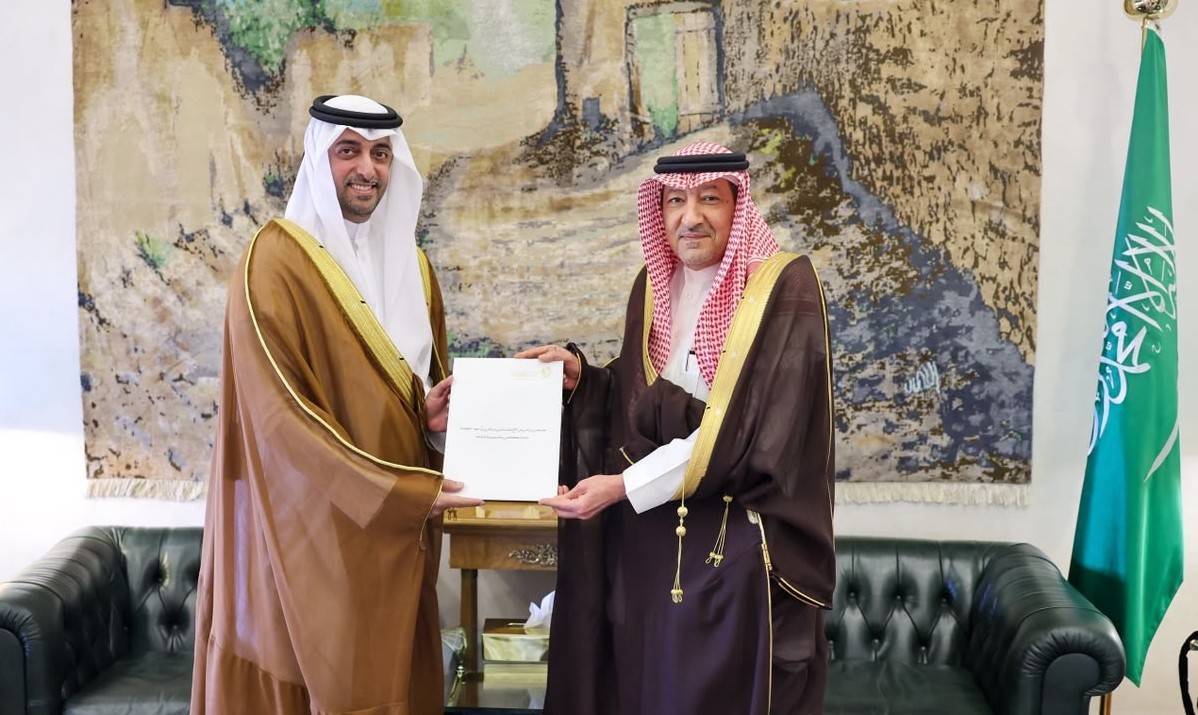
The message was received by Minister of Foreign Affairs Prince Faisal bin Farhan bin Abdullah during a meeting at the ministry's headquarters in Riyadh with his Rwandan counterpart, Olivier Nduhungirehe.

During the meeting, the two sides discussed bilateral relations and reviewed a number of issues of common interest.

The Crown Prince also received a written message from Japanese Prime Minister Sanae Takaichi, concerning relations between the two countries.

The message was received by Vice Minister of Foreign Affairs Waleed Elkhereiji during a meeting at the ministry's headquarters in Riyadh with the Japanese Ambassador to the Kingdom Yasunari Morino.

During the meeting, the two officials reviewed relations between Saudi Arabia and Japan and discussed various topics of common interest.
