
US, China Reach Framework Deal on TikTok; Trump and Xi to Speak on Friday

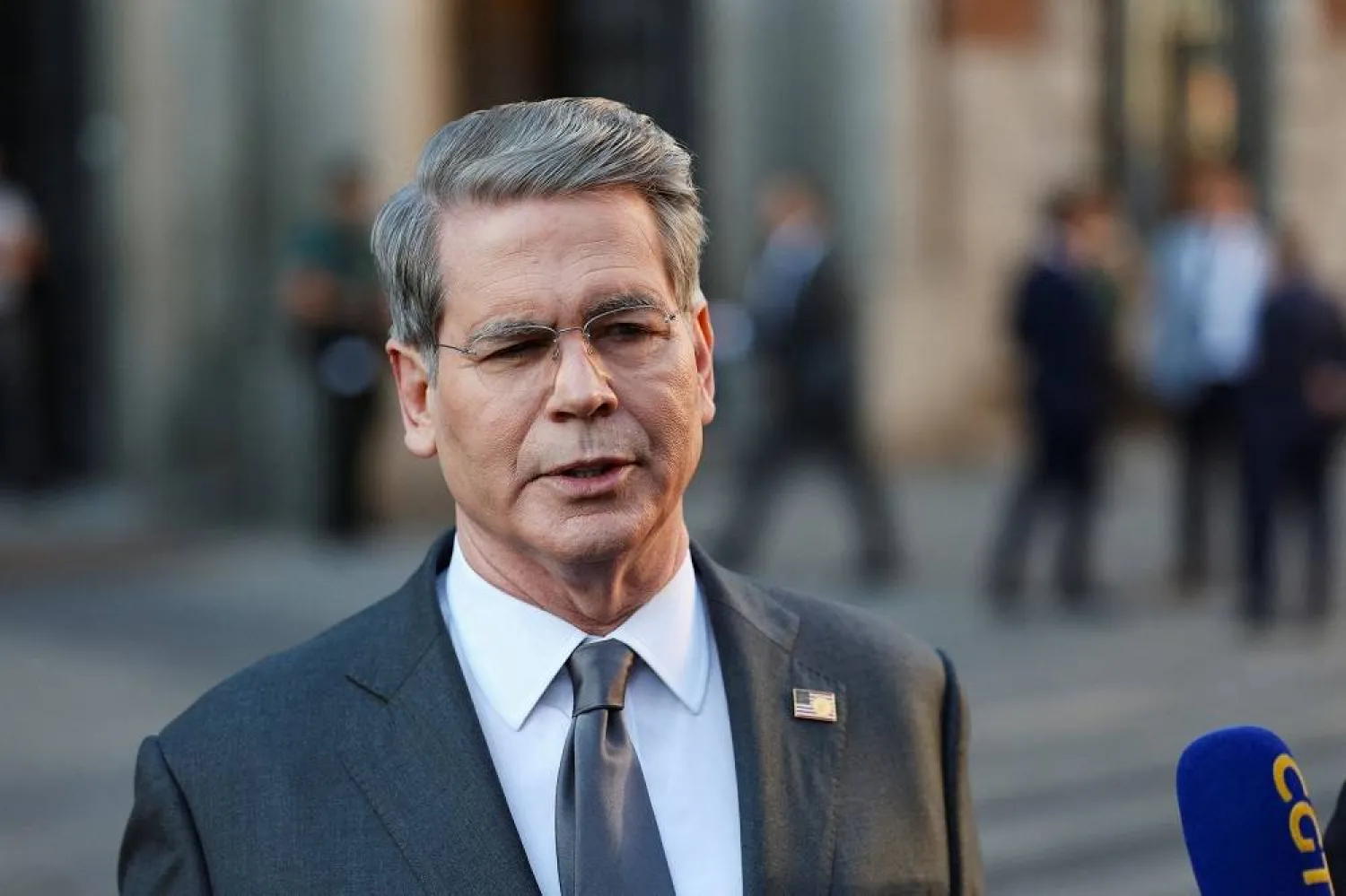
US Treasury Secretary Scott Bessent speaks to the press, on the day of US-China talks on trade, economic and national security issues, in Madrid, Spain, September 15, 2025. (Reuters)
TT

US, China Reach Framework Deal on TikTok; Trump and Xi to Speak on Friday

US Treasury Secretary Scott Bessent speaks to the press, on the day of US-China talks on trade, economic and national security issues, in Madrid, Spain, September 15, 2025. (Reuters)

The United States and China reached a framework agreement to switch short-video app TikTok to US-controlled ownership that will be confirmed in a call between President Donald Trump and Chinese President Xi Jinping on Friday, US officials said on Monday. 

US Treasury Secretary Scott Bessent said a Wednesday deadline that could have switched off the popular social media app in the US encouraged Chinese negotiators to reach a potential deal. He said that deadline could be extended by 90 days to allow the deal to be finalized. He declined to discuss specifics of the deal. 

Bessent said when commercial terms of the deal are revealed, it will preserve aspects of TikTok that Chinese negotiators care about, including its "Chinese characteristics."  

"They're interested in Chinese characteristics of the app, which they think are soft power. We don't care about Chinese characteristics. We care about national security," Bessent told reporters at the conclusion of two days of talks in Madrid.  

It is the second time this year that the two sides have said they were nearing a TikTok deal. The earlier announcement in March ultimately did not pan out. 

Any agreement could require approval by the Republican-controlled Congress, which passed a law in 2024 requiring divestiture due to fears that TikTok's US user data could be accessed by the Chinese government, allowing Beijing to spy on Americans or conduct influence operations through the app. 

But the Trump administration has repeatedly declined to force a shutdown, which could anger the app's millions of users and disrupt political communications, including those of the White House. It is not clear whether parent company ByteDance would transfer control of the app's underlying technology to the unnamed US buyer. 

Trump praised the TikTok deal on Monday. 

"The big Trade Meeting in Europe between The United States of America, and China, has gone VERY WELL! It will be concluding shortly," Trump wrote on his Truth Social platform. "A deal was also reached on a ‘certain’ company that young people in our Country very much wanted to save. They will be very happy! I will be speaking to President Xi on Friday. The relationship remains a very strong one!!!"  

The US-China negotiations at the Spanish foreign ministry's baroque Palacio de Santa Cruz were the fourth round of talks in four months to address strained trade ties as well as TikTok’s looming divestiture deadline. 

Delegations led by Bessent and Chinese Vice Premier He Lifeng have met in European cities since May to try to resolve a trade war that has seen tit-for-tat tariff hikes and a halt in the flow of rare earths to the United States. 

US Trade Representative Jamieson Greer, who was also part of the US delegation in Madrid, said the TikTok deal was an indication of good faith between the two sides. 

"It's no secret that there are serious issues on trade, economics, and national security between the United States and China. To be able to come, sit down, quickly identify the issues, narrow them down to a very granular spot, and be able to come to a conclusion, subject to the leaders’ approval, I mean, that is remarkable," Greer said. 

TRUMP, XI TO DISCUSS MEETING 

Bessent said talks on other issues would continue, probably in the coming weeks. Trump has repeatedly expressed interest in a meeting with Xi, and China is trying to woo Trump to Beijing for a summit. 

Bessent said it was up to the leaders to discuss whether to meet during Friday's call. 

Earlier on Monday a US official with knowledge of the negotiations had said that the US would press ahead with a ban on TikTok if China didn't drop its demands for reduced tariffs and technological restrictions as part of a divestiture deal. 

Speaking to reporters, Bessent and Greer said China wanted concessions on trade and technology in exchange for agreeing to divest from the popular social media app. 

"Our Chinese counterparts have come with a very aggressive ask," Bessent said, adding: "We are not willing to sacrifice national security for a social media app."  

The talks took place as Washington demands that its allies place tariffs on imports from China over Chinese purchases of Russian oil, which Beijing on Monday said was an attempt at coercion.  

Bessent said the issue of Russia was briefly discussed.  

Beijing separately announced on Monday that a preliminary investigation of Nvidia had found the US chip giant had violated its anti-monopoly law. Bessent said the announcement on Nvidia was poor timing. 

The probe is widely seen as a retaliatory shot against Washington's curbs on the Chinese chip sector.  


Visa Relocates European Headquarters to London's Canary Wharf

FILE PHOTO: A drone view of London's Canary Wharf financial district, two days before the government presents its critical pre-election budget, in London, Britain March 3, 2024. REUTERS/Yann Tessier/File Photo
TT

Visa Relocates European Headquarters to London's Canary Wharf

FILE PHOTO: A drone view of London's Canary Wharf financial district, two days before the government presents its critical pre-election budget, in London, Britain March 3, 2024. REUTERS/Yann Tessier/File Photo

Visa is relocating its European headquarters to London's Canary Wharf financial district, the Canary Wharf Group said on Friday.

The firm is leasing 300,000 square feet on a 15-year term at One Canada Square, and is set to relocate from Paddington in the summer of 2028, the group added.

Canary Wharf Group, which runs the wider financial district and is co-owned by QIA and Canada's Brookfield, was hit hard by the pandemic-induced fall in office demand.

The area is now enjoying a rebound as more firms push staff to return to office, Reuters reported.

"Canary Wharf continues to attract a diverse range of global businesses. We are delighted to welcome Visa who have chosen the Wharf for their European headquarters as the best location to support their business growth," Shobi Khan, Canary Wharf Group CEO, said.

JPMorgan Chase last week unveiled a plan to build a tower in the Canary Wharf financial district that will contribute 9.9 billion pounds ($13.2 billion) over six years to the local economy - including the cost of construction - and create 7,800 jobs.

Qatar's sovereign wealth fund is revising plans for a revamp of its HSBC skyscraper in the east London district to retain more office space, Reuters reported in November.


World Bank Raises GCC Growth Forecast

GCC leaders and their representatives attend the 46th Gulf Summit held in the Bahraini capital (BNA) 
TT

World Bank Raises GCC Growth Forecast

GCC leaders and their representatives attend the 46th Gulf Summit held in the Bahraini capital (BNA) 

The World Bank has lifted its growth forecast for the Gulf Council Cooperation (GCC) to 4.5% for 2026, supported by structural reforms and rapid digital innovation.

A WB forecast issued in October had projected 4.4% growth for 2026.

In its latest edition of the Gulf Economic Update (GEU), the World Bank said economic growth across the Gulf council is gaining momentum in 2025.

It said GCC countries are going through rapid structural transformation to diversify their economies away from oil, where jobs are at the heart of national vision.

The GCC countries are also in a unique position to attract and retain talent equipped with digital skills to build, operate and sustain the large digital infrastructure investments made in Digital Public Infrastructure, cloud computing, data centers and AI.

In Bahrain, the report said the country continues to show robust growth, driven primarily by its non-oil sectors, notably financial services and tourism.

Investments in infrastructure, gas, logistics, financial technology, and tourism are expected to sustain medium-term growth.

However, the report showed that fiscal pressures persist due to high deficits and elevated public debt while the economy is expected to expand by 3.5% in 2025.

Kuwait is emerging from two challenging years marked by regional instability, subdued oil prices, and OPEC+ production cuts, according to the WB report.

After consecutive GDP contractions in 2023 and 2024, the economy is showing signs of recovery, with positive growth expected in 2025 and beyond, supported by higher oil exports.

The recent passage of a financing and liquidity law enabling government debt issuance is a positive step toward easing fiscal pressures, the report said, adding that the economy is expected to expand by 2.7% in 2025.

Oman, the WB report said, has accelerated its diversification efforts, with non-hydrocarbon sectors increasingly driving growth.

The economy is expected to expand by 3.1% in 2025, with further acceleration anticipated in the medium term.

As for Qatar, it maintains a steady growth trajectory, underpinned by strong non-oil sector performance and robust external surpluses despite lower hydrocarbon prices.

As a global leader in liquified natural gas (LNG) production, Qatar is set to significantly boost output through the North Field expansion, reinforcing its position in global LNG markets.

Fiscal and current account surpluses are expected to remain strong, supported by LNG expansion as real GDP growth is projected to reach 2.8% in 2025.

Saudi Arabia is experiencing renewed economic momentum, with both oil and non-oil sectors contributing to growth. Real GDP growth is expected to reach 3.8% in 2025.

The report noted that fiscal pressures have intensified due to subdued oil prices, resulting in a widening deficit.

The country is leveraging its low debt levels to access global capital markets, with recent borrowing raising the debt-to-GDP ratio to close to 32%.

Ongoing reforms under Vision 2030 and changes in foreign ownership regulations are expected to further attract investment.

Also, the WB said, the UAE continues to sustain economic dynamism and diversification, with real GDP growth projected to reach 4.8% in 2025.

The Emirates stands out for its diversified economy, with balanced growth between non-oil and oil sectors, it said, adding that it is also leading in diversifying its export base.

Gulf and AI

The report showed that all GCC countries have robust telecom networks, with 5G coverage exceeding 90% and widespread fiber connections.

It said significant investments in data centers and high-performance computing (HPC) systems, especially in Saudi Arabia and UAE, underpin the region’s digital economy and AI readiness.

“Diversification and digital transformation are no longer optional. They are essential for long-term stability and prosperity. Strategic investments in non-oil sectors and innovation will be critical to sustaining growth and stability,” said Safaa El Tayeb El Kogali, World Bank Division Director for the Gulf Cooperation Council.

“The GCC’s digital leap is remarkable. With robust infrastructure and growing computer power, skills and competencies in Artificial intelligence (AI) capabilities, the region is well-placed to lead in innovation, provided we address labor and environmental challenges proactively,” she added.

The report also showed that women’s participation in the fields of Science, Technology, Engineering, and Mathematics (STEM) surpasses the global average, further reinforcing the region’s digital competitiveness.


Saudi Industry Ministry Signs MoUs to Advance Manufacturing Empowerment

The agreements were signed during the "Industrial Transformation Saudi Arabia 2025” Exhibition. SPA
TT

Saudi Industry Ministry Signs MoUs to Advance Manufacturing Empowerment

The agreements were signed during the "Industrial Transformation Saudi Arabia 2025” Exhibition. SPA

The Ministry of Industry and Mineral Resources has signed a number of memoranda of understanding (MoUs) with leading local and international companies to advance advanced manufacturing, support local content, and strengthen national supply chains, enhancing the regional and global competitiveness of Saudi industry.

The agreements were signed during the "Industrial Transformation Saudi Arabia 2025” Exhibition, organized by the ministry in partnership with Deutsche Messe and Riyadh Exhibitions Company Ltd.

The ministry signed two memoranda to provide innovative financing solutions for industrial establishments, strengthen national supply chains, and support local content.

Additionally, the ministry's National Center for Advanced Manufacturing and Production signed several memoranda of understanding with local and international industrial and advisory companies to support the path of advanced manufacturing, develop supply chains, enhance technological innovation, and boost the competitiveness of national factories, in line with the National Industrial Strategy and Saudi Vision 2030.

These strategic partnerships are part of the ministry's ongoing efforts to develop the Kingdom's industrial ecosystem, enable manufacturers to access the latest industrial solutions, support supply chain development, and stimulate innovation, contributing to the building of a sustainable industrial sector that competes regionally and globally.