

Friends of Lebanon accuse Hezbollah of needlessly disrupting the government’s decision to task the army with a plan to enforce the state’s monopoly on weapons, whether by clinging to its arsenal or dismissing two recent cabinet votes as unconstitutional.
A Western diplomat told Asharq Al-Awsat that Hezbollah should have shown patience rather than “rushing to judge intentions,” arguing that its interests lie in supporting President Joseph Aoun’s diplomatic push to compel Israel to withdraw from the south and enable the Lebanese army, backed by UN peacekeepers, to deploy to the border under UN resolution 1701.
The diplomat questioned Hezbollah’s motives in what he called a populist bid to outmaneuver Aoun and Prime Minister Nawaf Salam, both of whom insist the army’s plan begin south of the Litani River.
“They are placing the United States, as co-sponsor of the ceasefire with France, before its responsibility to pressure Israel to pull out,” said the diplomat.
They added that subsequent phases of the plan hinge on Israel’s response to the first stage – withdrawal from south of the Litani. Hezbollah’s insistence on retaining its weapons, they warned, undermines Aoun and the government internationally instead of giving them space to secure results, while the party could simply monitor Israel’s reaction.
The diplomat urged Hezbollah to adopt a calming policy, noting that both Aoun and Salam had linked implementation to commitments from Israel and Syria. While Damascus, they said, has shown readiness to cooperate, Israel continues to stall.
Lebanon’s allies back the government’s stance on reciprocal steps with Israel and are pressing Washington to ensure Israeli compliance, the diplomat said. Hezbollah, they added, erred by escalating politically and refusing to surrender its arms, handing Israel a free excuse to resist the step-by-step formula demanded by Beirut.
The diplomat noted that Hezbollah’s acceptance of the ceasefire since it took effect on Nov. 27 – unlike Israel, which violated it – amounted in the eyes of Lebanon’s friends to tacit consent to put its weapons on the table.
The party’s support for Gaza, they said, had led to a miscalculation of Israel’s response, eroding its deterrence posture unless it persists in “denial and defiance,” which cannot be cashed militarily.
Western officials, particularly in Paris, have advised Hezbollah through established channels to cooperate with the arms monopoly plan, seeing it as a way to pressure Israel to leave the south.
They are urging restraint, warning against getting drawn into Israel’s “daily escalation” under Prime Minister Benjamin Netanyahu, unless Washington steps in to restore credibility to its plan for extending state authority nationwide.
Separately, a Lebanese cabinet minister criticized remarks by Hussein Khalil, political aide to Hezbollah’s leader, for drawing lines between the party’s relations with the army and the executive branch.
The minister told Asharq Al-Awsat the distinction was misplaced, stressing the army falls under the government and both reject using force to impose the state’s monopoly on weapons.
Hezbollah, they argued, knows the military is bound by cabinet decisions and remains respected for safeguarding civil peace. The minister questioned why the party insists on keeping its arsenal after endorsing the ministerial statement affirming exclusive state control of arms, and after joining the cabinet on that basis.
The minister said President Aoun’s pledge to craft a national security strategy does not freeze debate on the issue, but rather ensures Hezbollah’s weapons are central to it. They also questioned whether Hezbollah consulted the army before stepping up its support for Gaza, noting the move provoked unnecessary tensions at home and hurt Lebanon’s credibility abroad.
“There is no turning back on the state’s monopoly on weapons,” said the minister, insisting Israel’s refusal to withdraw is the only obstacle. He added that Hezbollah has already agreed to contain its arms under the plan, meaning it has no intention of using them for now.


Hezbollah Accused of Cornering Lebanese Gov’t, Giving Israel Excuses
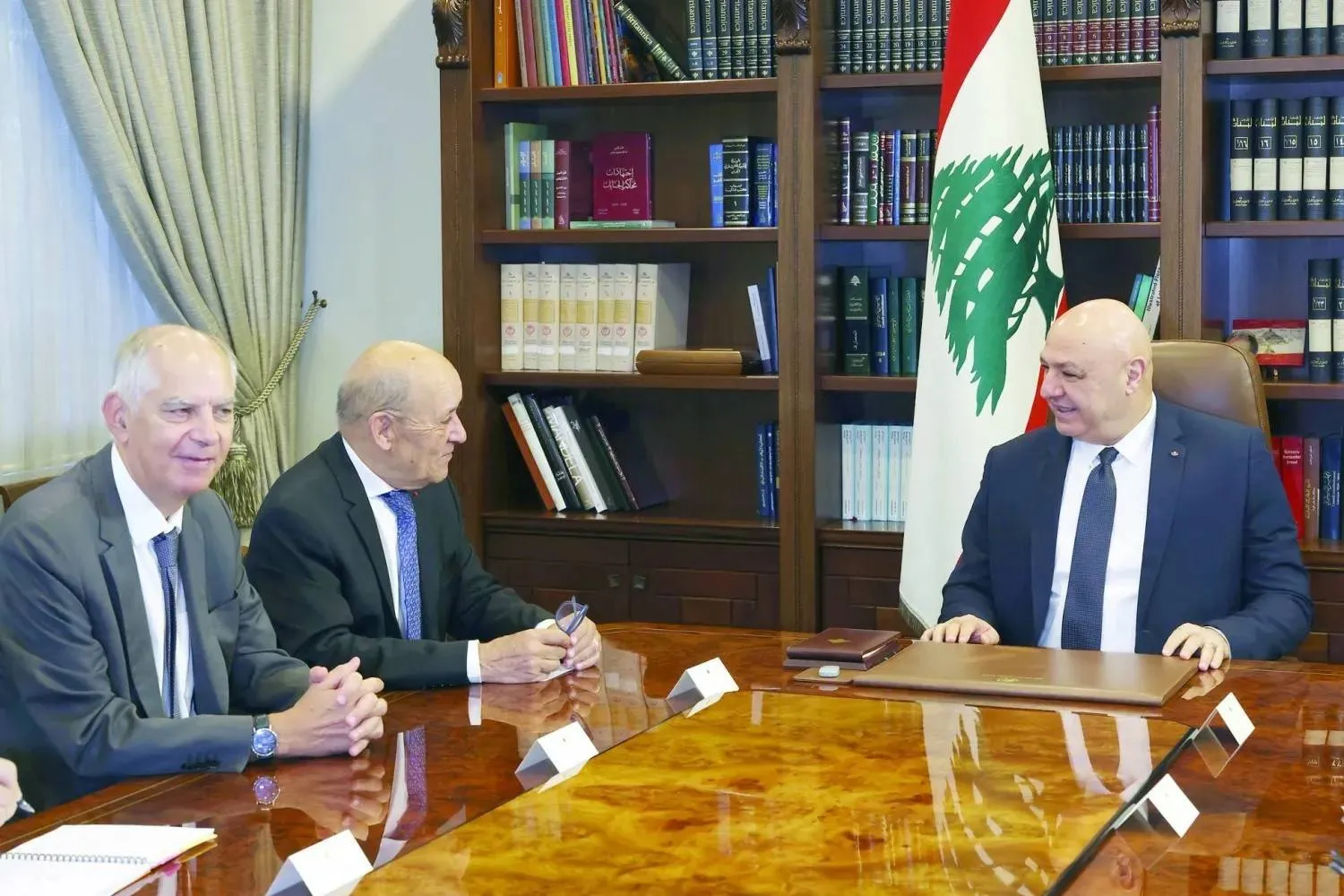
Lebanon’s President Joseph Aoun meets French envoy Jean-Yves Le Drian (Lebanese Presidency Handout)

Hezbollah Accused of Cornering Lebanese Gov’t, Giving Israel Excuses
Lebanon’s President Joseph Aoun meets French envoy Jean-Yves Le Drian (Lebanese Presidency Handout)



لم تشترك بعد
انشئ حساباً خاصاً بك لتحصل على أخبار مخصصة لك ولتتمتع بخاصية حفظ المقالات وتتلقى نشراتنا البريدية المتنوعة
