



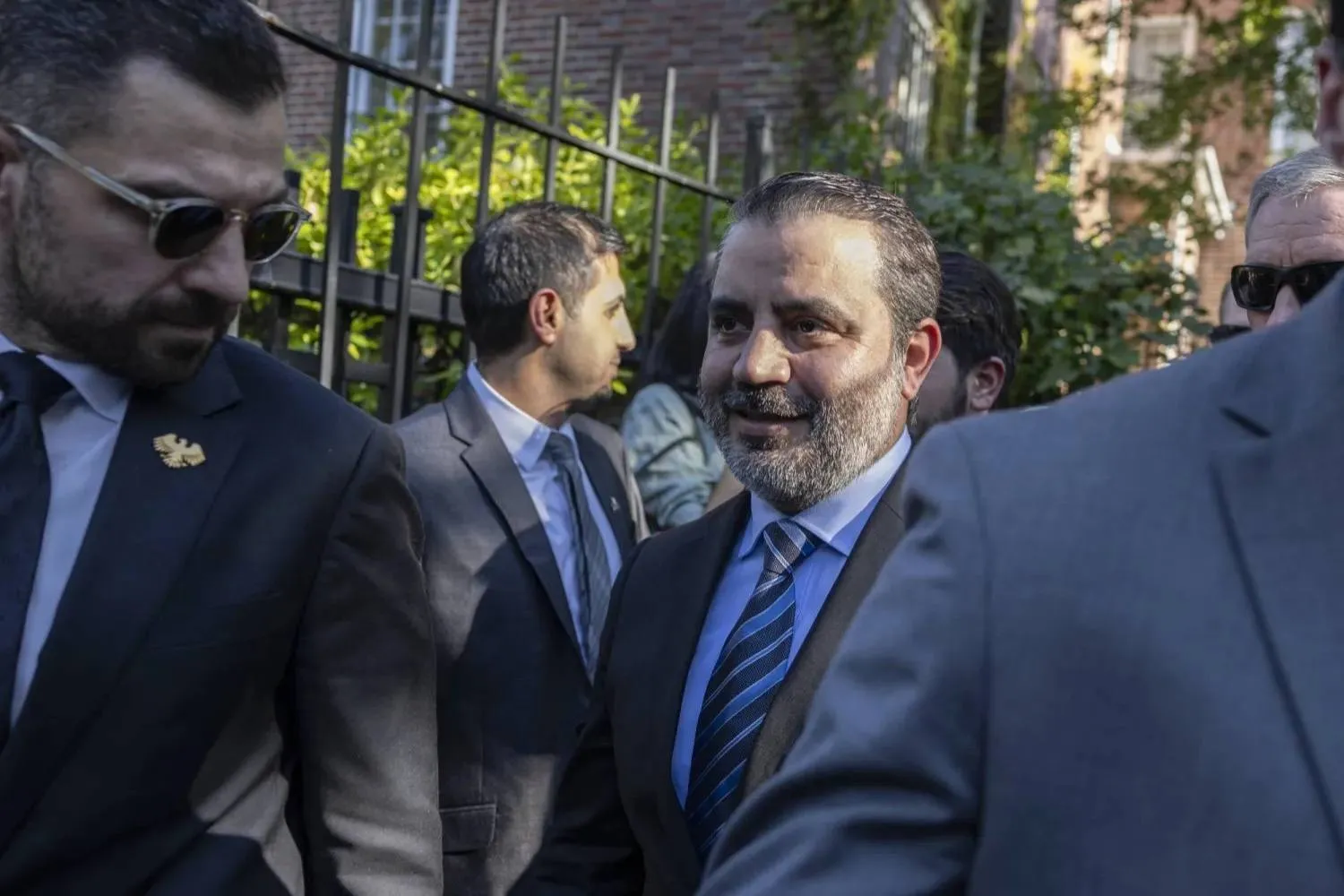

Syrian Foreign Minister Asaad al-Shaibani’s visit to Washington this week looked like a rare diplomatic breakthrough, testing the limits of what is possible in a relationship defined by hostility for decades.
In a highly unusual scene, Shaibani walked the halls of Congress and met senior officials at the State and Treasury departments, opening a cautious window onto what could be a new phase of cooperation between Damascus and Washington.
The outreach comes as Syrian President Ahmed al-Sharaa prepares to travel to New York for the United Nations General Assembly and the annual Concordia Summit, part of a push to signal Syria’s return to the international stage. A key objective for Damascus is to press for the easing or repeal of the “Caesar Act,” Washington’s main sanctions tool against the former Assad government since 2020.
US officials said discussions focused heavily on sanctions. The Trump administration has already taken tentative steps, including a Treasury Department general license issued in May allowing most economic dealings with the Syrian government and central bank, alongside a temporary State Department waiver to expand humanitarian investment. US President Donald Trump also ended the Syria emergency designation in June, in what was widely seen as a signal of readiness to loosen restrictions.
But sanctions remain in place, with Congress insisting on retaining a central role. Republican Senator Lindsey Graham and others warned that any relief must be tied to Damascus’ cooperation on counterterrorism, Israel’s security, and curbing narcotics and arms smuggling, making the issue a political and security matter as much as an economic one.
Deputy Secretary of State Christopher Landau and US envoy Tom Barrack discussed with Shaibani the future of Syria, its relations with Israel, counterterrorism, and implementation of a March 10 deal between Damascus and the US-backed Syrian Democratic Forces (SDF), as well as potential economic cooperation, the State Department said.
“We are interested in creating a peaceful, prosperous and stable path for Syria,” a US official told Reuters, adding that it would require inclusive governance embracing minorities and local groups from Alawites and Druze to tribes and Kurds.
Since the fall of Bashar al-Assad’s regime, Syria has been plagued by violence and instability. Coastal rebellions were met with harsh crackdowns by pro-government security forces, while Israeli airstrikes and clashes in the south deepened volatility. This fragility, some US officials argue, makes engagement with Damascus risky.
Washington’s broader goal is to close the “open circles” that allow Iran, Hezbollah, and militant groups to use Syria as a base for influence and trafficking. Tackling these issues, officials say, is a prerequisite for deeper political or economic partnerships.
The most sensitive file remains engagement with Israel. Leaked reports spoke of undisclosed contacts that could lead to security or economic understandings, though no details were confirmed. US officials hinted that any sanctions relief would be contingent on Damascus’ willingness to pursue this track.
Former Syrian diplomat Bassam Barabandi told Asharq Al-Awsat that building ties with Israel could unlock opportunities for regional and international cooperation in trade and security. But he cautioned that it would require a clear strategy to bolster internal stability and sustainable development, “so it does not become a source of domestic division.”
In a symbolic moment, Shaibani helped raise the Syrian flag over the embassy in Washington for the first time in more than a decade. Dozens of Syrians in the United States celebrated what they saw as the revival of Syrian diplomacy after years of isolation under Assad.
Yet the symbolism was undercut by a contradictory message: The Department of Homeland Security said it would end Temporary Protected Status for Syrian refugees, exposing thousands to possible deportation starting Nov. 21. The agency offered free flights and a $1,000 stipend for those leaving within 60 days.
“This is disappointing, though not surprising,” said Mohammed Ghanem of the Syrian American Council. He told Asharq Al-Awsat the group had expected the move after similar programs for other nationalities were terminated. “We warned beneficiaries – about 6,000 Syrians – to prepare alternatives, as immigration remains one of the most divisive issues between Republicans and Democrats, and a Trump priority.”
Alongside Shaibani’s Washington talks, Syrian opposition figures also met US officials to present alternative views. Sinam Mohamad of the Syrian Democratic Council office in Washington said the meetings showed discussions were not limited to the government.
Shaibani’s visit “is part of efforts to reinforce the legitimacy of the transitional government,” she told Asharq Al-Awsat. “But Washington must also take into account the concerns of Syria’s other communities if it wants to support lasting stability rather than a short-term political deal.”
As President al-Sharaa prepares to address the UN General Assembly and join world leaders at Concordia, US-Syrian relations appear to stand at a crossroads - with a door now open, but its future dependent on complex domestic, regional, and international dynamics.


