


South Lebanon Residents Mired in Humanitarian Crisis, Prevented to Return Home

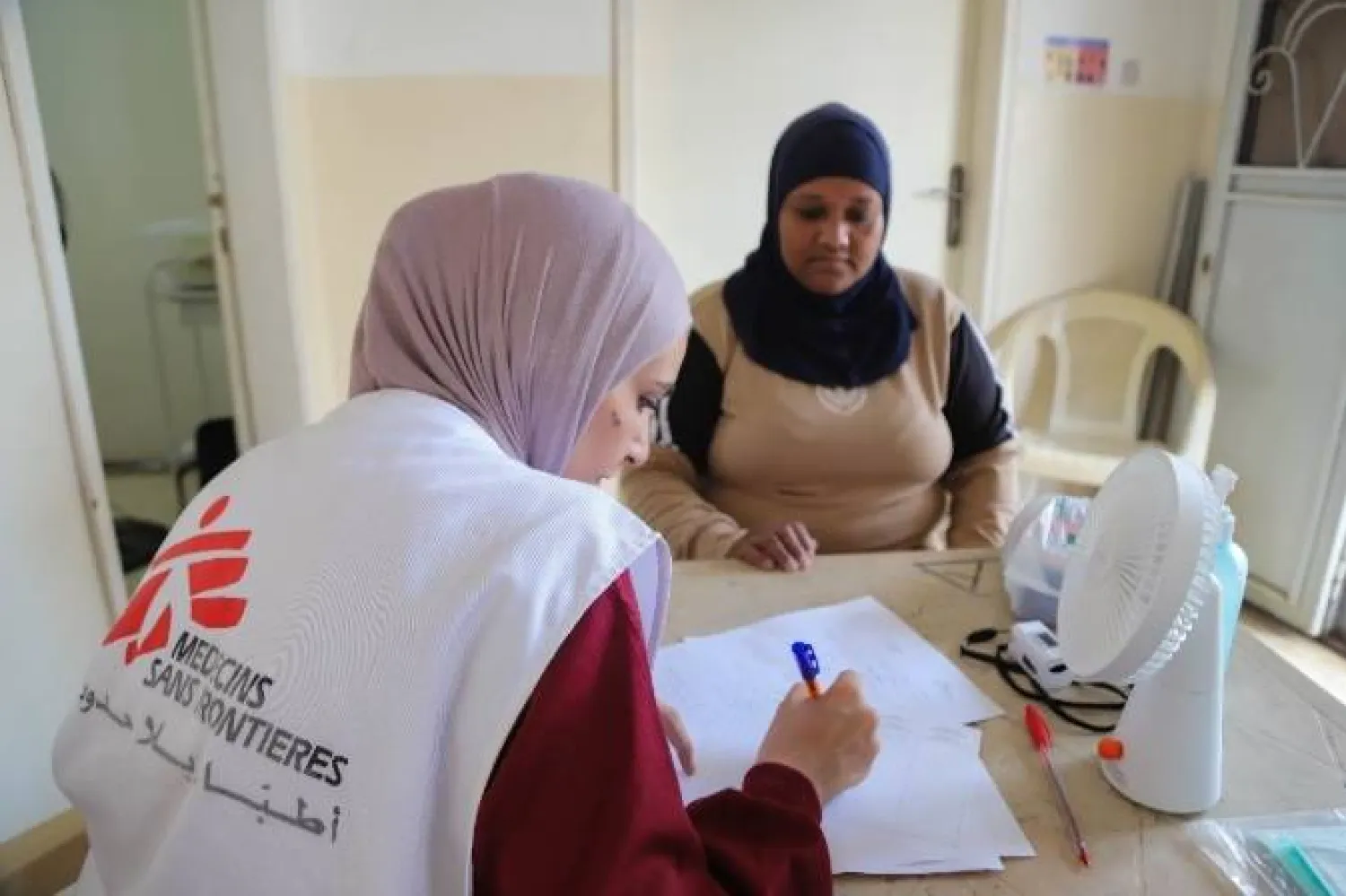
MSF team working in Lebanon
TT

South Lebanon Residents Mired in Humanitarian Crisis, Prevented to Return Home

MSF team working in Lebanon

Doctors Without Borders (MSF) warned Monday that Israeli attacks on South Lebanon are almost a daily reality, hindering people’s ability to recover and restricting their access to care.

Also, the medical humanitarian organization said Lebanon remains mired in a deep humanitarian crisis a year after Israel’s war, as ongoing cross-border attacks and ceasefire breaches prevent tens of thousands from returning home.

“One year has passed since Israel escalated its war in Lebanon, yet the humanitarian crisis is far from over,” MSF said in a report released on Monday.

Despite the ceasefire agreement in November 2024, it said Israeli forces are still occupying several points along the southern border preventing people’s return and leaving more than 82,000 displaced.

The report includes live testimonies, like Abdel Karim who said rebuilding his life remains an uphill battle.

“I came back to repair the damages to my house, but without safety and the ability to afford basic things like medicines, how can anyone really start over?” he said as his words almost drowned out by the hum of an Israeli drone overhead.

In southern Lebanon, war has devastated infrastructure, including healthcare facilities.

At the height of the escalation, eight hospitals, mostly in the southern areas, were evacuated, while 21, or around 13% of the country’s total, were damaged, drastically reduced their services or were forced to close. Another 133 primary healthcare facilities also shut their doors, and Nabatieh alone lost 40% of its hospital capacity.

MSF said today, many damaged facilities remain closed, and many need rehabilitation.

The medical humanitarian organization said it set up new activities in the hardest-hit governorates—Nabatieh, the South, and Baalbek-Hermel, while maintaining its presence and provision of services in Beirut, Bekaa and the North.

In the southern governorates, where available services remain financially out of reach for many returnees, MSF set up mobile clinics to ensure communities’ access to vital medical and mental health services. It is also rehabilitating and supporting three primary healthcare centers to restore provision of services in areas of return.

Tharwat Saraeb, a psychologist with MSF’s mobile clinic in the Nabatieh governorate, said, “Wars leave an immense toll on the communities that are directly impacted.”

“Here, not a day goes by without people re-experiencing the devastation. Drone sounds, continued occupation of lands and non-stop airstrikes all deepen the suffering of people,” she added.

Samira, a patient of MSF’s mobile clinic, said her daughter faints at the sound of any strike, even if it’s far away. “She has a child of her own, and we all tremble with fear – it affects us all deeply.”

MSF teams said they continue to witness the human cost of the escalation and the lasting impacts of a war that has not fully abated.

“Many patients live in fear and uncertainty, many unable to begin recovery. Mental health needs are also profound, as children and adults alike experience stress, anxiety and constant fear,” MSF said.

While the war devastated Lebanese families, refugees and migrants alike, the organization said Lebanon is home to more than a million Syrian refugees, hundreds of thousands of Palestinians, and many migrants who already live in precarious conditions.

These communities, it noted, were excluded from many relief efforts during the escalation, despite facing the same urgent needs for food, shelter and healthcare.

One year on, refugees’ and migrants’ needs are neglected. Their access to secondary healthcare through humanitarian organizations is at risk.

By the end of 2025, the UN Refugee Agency and the International Organization for Migration will cease covering secondary healthcare, while UNRWA and UNICEF face unprecedented funding cuts.

The severe global funding cuts for humanitarian programs leave enormous needs unmet, create new vulnerabilities and deepen existing ones.

MSF teams said they remain committed to providing services wherever they are needed, ensuring that communities are not left without access to vital healthcare.

Yet, the organization affirmed, true recovery will only be possible when people can live free from fear and can access the medical, mental health and essential services they so urgently need to start over.



Israeli Soldiers Kill Palestinian Teen in West Bank

Israeli Soldiers Kill Palestinian Teen in West Bank
TT

Israeli Soldiers Kill Palestinian Teen in West Bank

Israeli Soldiers Kill Palestinian Teen in West Bank

Israeli soldiers shot dead a Palestinian hurling a rock at them in the occupied West Bank, the military said on Friday, and the Palestinian health ministry said the person killed was a 14-year-old boy.

There was no further comment from Palestinian officials about the fatal incident in the village of ⁠Al-Mughayyir. Official Palestinian news agency WAFA said the teen was killed during an Israeli military raid that led to confrontations, Reuters reported.

The Israeli military said its forces were called to the area after ⁠receiving reports that Palestinians were throwing stones at Israelis and blocking a road with burning tires.

The soldiers fired warning shots in an attempt to repel a person who was running at them with a rock, the military said, and then shot and killed him to eliminate the ⁠danger.

Violence has surged over the past year in the West Bank. Attacks by Israeli settlers on Palestinians have risen sharply, while the military has tightened movement restrictions and carried out sweeping raids in several cities.

Palestinians have also carried out attacks on Israeli soldiers and civilians, some of them deadly.


Israeli Strikes in South Lebanon Kill Two

Smoke rises from the site of an Israeli airstrike that targeted the village of Sohmor, in southern Lebanon on January 15, 2026. (Photo by Rabih DAHER / AFP)
TT

Israeli Strikes in South Lebanon Kill Two

Smoke rises from the site of an Israeli airstrike that targeted the village of Sohmor, in southern Lebanon on January 15, 2026. (Photo by Rabih DAHER / AFP)

An Israeli strike on south Lebanon killed one person on Friday, the health ministry in Beirut said a day after raids that Israel said had targeted Hezbollah.

Israel has kept up regular strikes in Lebanon despite a November 2024 ceasefire that sought to end more than a year of hostilities with Hezbollah, usually saying it is targeting members of the group or its infrastructure.

In a statement, the health ministry said an "Israeli enemy strike" on a vehicle in Mansuri in south Lebanon killed one person.

According to AFP, it also said that a strike on Mayfadun in south Lebanon the previous night killed one person.

Israel said Thursday's attack killed a Hezbollah member it alleged "took part in attempts to reestablish Hezbollah's infrastructure in the Zawtar al-Sharqiyah area.”

The attacks come a week after Lebanon's military said it had completed disarming Hezbollah south of the Litani River, the first phase of a nationwide plan, although Israel has called those efforts insufficient.

On Thursday, Israel carried out several strikes against eastern Lebanon's Bekaa region, north of the Litani, after issuing warnings to evacuate.

United Nations peacekeepers, deployed in the south to separate Lebanon from Israel, said on Friday that an Israeli drone "dropped a grenade" on its troops.

On Monday, the peacekeeping force said an Israeli tank fired near its troops, and warned that such incidents were becoming "disturbingly common".


Syria's Leader Sharaa in Berlin on Tuesday, Says German Presidency

Syria's President Ahmed al-Sharaa.
TT

Syria's Leader Sharaa in Berlin on Tuesday, Says German Presidency

Syria's President Ahmed al-Sharaa.

Syria's President Ahmed al-Sharaa will be visiting Berlin next Tuesday and meet his German counterpart Frank-Walter Steinmeier, the German presidency said.

The office of Chancellor Friedrich Merz has yet to announce whether they would also hold talks during the visit, which comes at a time when the German government is seeking to step up repatriations of Syrians to their homeland.