



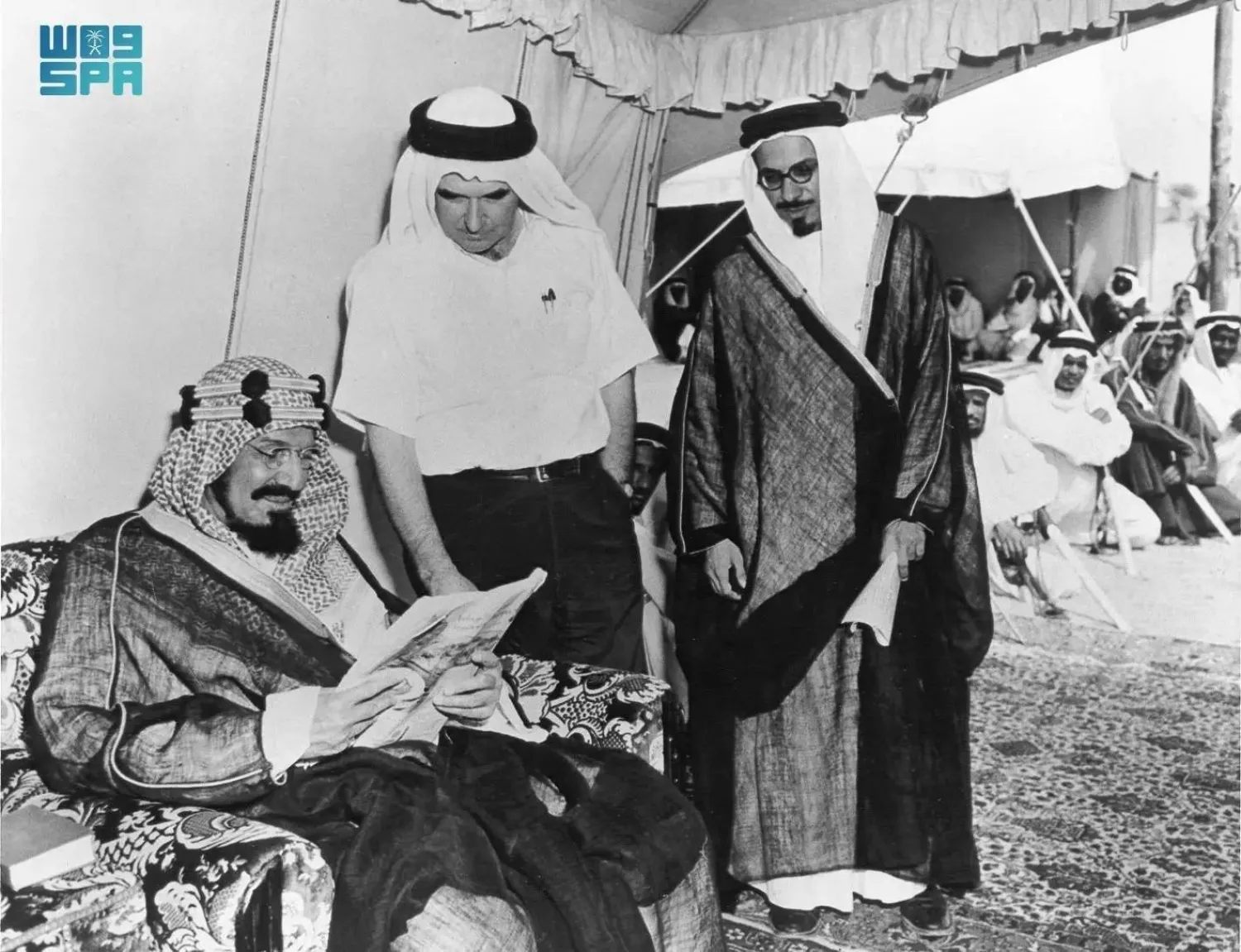

King Abdulaziz bin Abdulrahman Al Saud was a leader who deeply valued science and culture. Even while preoccupied with unifying the nation, he understood that Saudi Arabia’s future depended on an educated and aware generation.
He encouraged the youth to pursue knowledge and instilled in them the importance of combining learning with action to build their nation, reported the Saudi Press Agency on Tuesday on the occasion of Saudi Arabia’s 95th National Day.
His vision is captured in the words of Custodian of the Two Holy Mosques King Salman bin Abdulaziz Al Saud, who said: "King Abdulaziz's history goes beyond his well-known struggles and achievements in unifying and building the Kingdom, as it also highlights many aspects of his humane personality."
In a speech to students in 1931, King Abdulaziz emphasized that knowledge without action is like a "tree without fruit," encouraging them to take pride in their work and strive for excellence, regardless of their background.
One of the clearest examples of King Abdulaziz's intellectual curiosity was his passion for reading and collecting books. His personal library, a testament to his dedication, contained over 3,000 books, including rare volumes. He was particularly fond of reading Arabic and Islamic law books, many of which he had printed at his own expense and distributed freely to libraries.
His leadership in spreading knowledge was further demonstrated through the scholarly gatherings he hosted in his palace after each Hajj season. These sessions, attended by scholars and dignitaries, were forums for learning and advancing religious and cultural awareness.
King Abdulaziz's reign saw a significant expansion in printing and publishing. He issued two regulations for publications in 1928 and 1939 and ordered the exemption of printing press imports from customs duties to encourage the industry.
The establishment of the Umm Al-Qura government press in Makkah was a pivotal moment. It became the central hub for printing government publications, official newspapers, and school curricula. The press's work is considered the foundation of the intellectual renaissance in the Kingdom. During his reign, approximately 100 books were printed and disseminated, with over 100,000 copies distributed, some in languages other than Arabic.


