


Hezbollah Weakened But Financially Resilient a Year After Israel War 

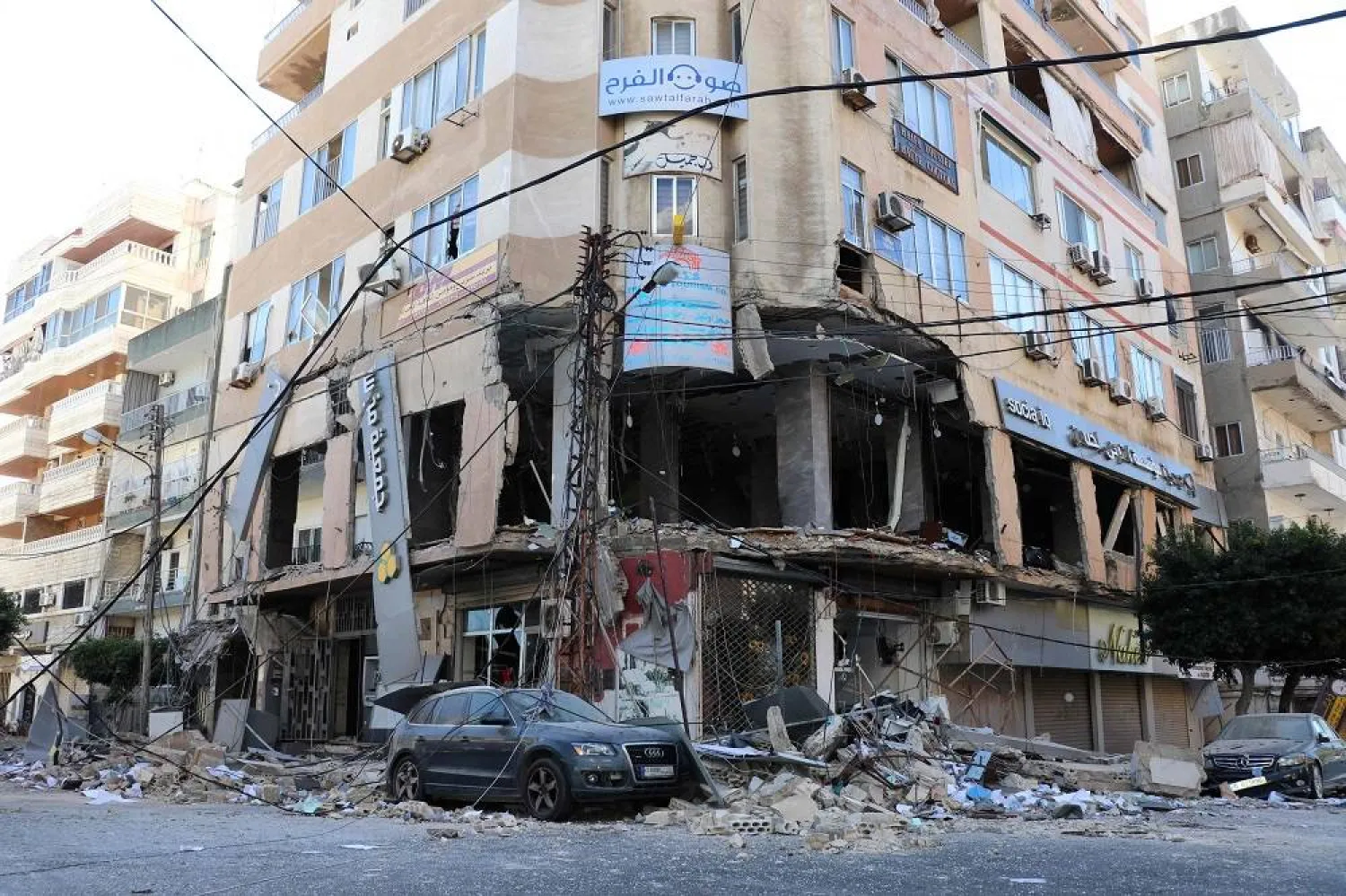
This picture shows a damaged building at the site of an overnight Israeli airstrike that targeted a branch of the Al-Qard al-Hassan finance group in the southern city of Tyre on October 21, 2024, amid the war between Israel and Hezbollah. (AFP)
TT

Hezbollah Weakened But Financially Resilient a Year After Israel War 

This picture shows a damaged building at the site of an overnight Israeli airstrike that targeted a branch of the Al-Qard al-Hassan finance group in the southern city of Tyre on October 21, 2024, amid the war between Israel and Hezbollah. (AFP)

One year after a devastating war with Israel dealt massive blows to Lebanon's Hezbollah, the Iran-backed party is still managing to pay its fighters and fund its social services.

The killing of its longtime leader Hassan Nasrallah in an Israeli strike on September 27 last year left the Shiite group reeling, yet it has maintained cohesion under his successor, Sheikh Naim Qassem.

As the group faces mounting pressure to disarm, the United States has also sought to cripple its finances.

US envoy Tom Barrack said Hezbollah has been receiving "$60 million a month" since a November ceasefire.

AFP spoke to several Hezbollah members and beneficiaries of its services, all of whom said the organization was meeting its financial commitments. They requested anonymity given the sensitivity of the subject.

Fighters still receive monthly cash salaries of $500 to $700 -- well above Lebanon's minimum wage of $312.

Families of Hezbollah "martyrs" continue to receive stipends covering rent and other essentials, while the group's vast network of schools, hospitals and charities makes it "one of the largest employers in Lebanon", according to researcher and Hezbollah expert Joseph Daher.

Hezbollah is "definitely under political and economic pressure", Daher said, though it is difficult to assess the depth of the impact.

A Hezbollah source said that since the ceasefire the party has provided about one billion dollars to 50,000 families affected by the latest war.

AFP could not independently verify the figures.

Unlike after the 2006 war, when Hezbollah spearheaded rebuilding in the South, current leader Qassem has insisted the state should fund post-war reconstruction, which has yet to begin.

Since the formation of a new Western-backed government this year, and Hezbollah's slip in political dominance, Beirut has tightened scrutiny of the group's financial dealings.

The December fall of longtime Syrian ally Bashar al-Assad also disrupted supply routes and cash flows from Iran.

Authorities have stepped up monitoring of money entering Lebanon, especially from Iran, and the central bank has banned all dealings with Al-Qard al-Hassan, a Hezbollah-linked financial institution.

Israel bombed the firm's branches during two months of all-out war last year that devastated Hezbollah strongholds across Lebanon's south, east and in Beirut's southern suburbs.

A client of the firm, which offers credit in exchange for gold deposits and has been a lifeline to members of Hezbollah's Shiite community, said "fear took over" about losing her gold collateral during the crackdown.

But she was able to recover it after repaying her loan.

Experts say Hezbollah relies on a web of companies and businessmen, as well as bundles of banknotes flowing in from abroad.

Lebanon suspended flights from Iran in February, cutting off one route.

A security source also reported tighter searches of passengers arriving from Iraq and other countries serving as conduits for Hezbollah.

The United States accuses Hezbollah of raising funds through global businesses, drug trafficking and even "blood diamonds" from Africa.

Western and Gulf states also say it profits from the captagon trade -- an accusation the group denies.

"The international community has realized that Hezbollah thrives in a weak, unstable, cash-based economy," Sami Zoughaib, a researcher at the Policy Initiative, a Beirut-based think tank, told AFP.

Cash has been king in Lebanon since the economic collapse began in 2019.

Daher said the group still receives income via companies registered in Iraq and Lebanon, and affiliated businessmen operating elsewhere.

In a report this year, Canada said Hezbollah was thought to be using businesses, crypto currencies, bank transfers and charitable funds to receive "outgoing Canadian funds".

According to Daher, the ouster of Assad in Syria has been "the biggest blow" to the group's finances so far.

Cash and weapons used to flow easily across the porous Lebanon-Syria border, while Hezbollah also made money from smuggling goods, he said.

Syria's new authorities, distrustful of Iran and sharply opposed to Hezbollah, have cracked down on such activities.



Key Details of Greenland’s Rich but Largely Untapped Mineral Resources

Houses covered by snow are seen on the coast of a sea inlet of Nuuk, Greenland, on Monday, Jan. 12, 2026. (AP)
TT

Key Details of Greenland’s Rich but Largely Untapped Mineral Resources

Houses covered by snow are seen on the coast of a sea inlet of Nuuk, Greenland, on Monday, Jan. 12, 2026. (AP)

The Danish and Greenlandic foreign ministers will meet US Vice President JD Vance and Secretary of State Marco Rubio on Wednesday after President Donald Trump recently
stepped up threats to take over Greenland.

The autonomous territory of Denmark could be useful for the ​United States because of its strategic location and rich mineral resources. A 2023 survey showed that 25 of 34 minerals deemed "critical raw materials" by the European Commission were found in Greenland.

The extraction of oil and natural gas is banned in Greenland for environmental reasons, while development of its mining sector has been snarled in red tape and opposition from indigenous people.

Below are details of Greenland's main mineral deposits, based on data from its Mineral Resources Authority:

RARE EARTHS
Three of Greenland's biggest deposits are located in the southern province of Gardar.

Companies ‌seeking to ‌develop rare-earth mines are Critical Metals Corp, which bought the ‌Tanbreez ⁠deposit, ​Energy Transition Minerals, ‌whose Kuannersuit project is stalled amid legal disputes, and Neo Performance Materials.

Rare-earth elements are key to permanent magnets used in electric vehicles (EV) and wind turbines.

GRAPHITE
Occurrences of graphite and graphite schist are reported from many localities on the island.
GreenRoc has applied for an exploitation license to develop the Amitsoq graphite project.
Natural graphite is mostly used in EV batteries and steelmaking.

COPPER
According to the Mineral Resources Authority, most copper deposits have drawn only limited exploration campaigns.

Especially interesting are the underexplored areas ⁠in the northeast and center-east of Greenland, it said.

London-listed 80 Mile is seeking to develop the Disko-Nuussuaq deposit, which has ‌copper, nickel, platinum and cobalt.

NICKEL
Traces of nickel accumulations are numerous, ‍according to the Mineral Resources Authority.

Major miner ‍Anglo American was granted an exploration license in western Greenland in 2019 and has ‍been looking for nickel deposits, among others.

ZINC
Zinc is mostly found in the north in a geologic formation that stretches more than 2,500 km (1,550 miles).

Companies have sought to develop the Citronen Fjord zinc and lead project, which had been billed as one of the world's largest undeveloped zinc resources.

GOLD
The most prospective ​areas for gold potential are situated around the Sermiligaarsuk fjord in the country's south.

Amaroq Minerals launched a gold mine last year in Mt Nalunaq in ⁠the Kujalleq Municipality.

DIAMONDS
While most small diamonds and the largest stones are found in the island's west, their presence in other regions may also be significant.

IRON ORE
Deposits are located at Isua in southern West Greenland, at Itilliarsuk in central West Greenland, and in North West Greenland along the Lauge Koch Kyst.

TITANIUM-VANADIUM
Known deposits of titanium and vanadium are in the southwest, the east and south.

Titanium is used for commercial, medical and industrial purposes, while vanadium is mainly used to produce specialty steel alloys. The most important industrial vanadium compound, vanadium pentoxide, is used as a catalyst for the production of sulfuric acid.

TUNGSTEN
Used for several industrial applications, tungsten is mostly found in the central-east and northeast of the country, with assessed deposits in the south and west.

URANIUM
In 2021, ‌the then-ruling left-wing Inuit Ataqatigiit party banned uranium mining, effectively halting development of the Kuannersuit rare-earths project, which has uranium as a byproduct.


The West Bank Football Field Slated for Demolition by Israel

Israeli army bulldozers pass buildings during a military operation in Nur Shams refugee camp, near the West Bank city of Tulkarem, 12 January 2026. (EPA)
TT

The West Bank Football Field Slated for Demolition by Israel

Israeli army bulldozers pass buildings during a military operation in Nur Shams refugee camp, near the West Bank city of Tulkarem, 12 January 2026. (EPA)

Israeli authorities have ordered the demolition of a football field in a crowded refugee camp in the occupied West Bank, eliminating one of the few ​spaces where Palestinian children are able to run and play.

"If the field gets demolished, this will destroy our dreams and our future. We cannot play any other place but this field, the camp does not have spaces," said Rital Sarhan, 13, who plays on a girls' soccer team in the Aida refugee camp near Bethlehem.

The Israeli military ‌issued a demolition ‌order for the field on ‌December ⁠31, ​saying ‌it was built illegally in an area that abuts the concrete barrier wall that Israel built in the West Bank.

"Along the security fence, a seizure order and a construction prohibition order are in effect; therefore, the construction in the area was carried out unlawfully," the Israeli military said in a statement.

Mohammad Abu ⁠Srour, an administrator at Aida Youth Center, which manages the field, said the ‌military gave them seven days to demolish ‍the field.

The Israeli military ‍often orders Palestinians to carry out demolitions themselves. If they ‍do not act, the military steps in to destroy the structure in question and then sends the Palestinians a bill for the costs.

According to Abu Srour, Israel's military told residents when delivering ​the demolition order that the football field represented a threat to the separation wall and to Israelis.

"I ⁠do not know how this is possible," he said.

Israeli demolitions have drawn widespread international criticism and coincide with heightened fears among Palestinians of an organized effort by Israel to formally annex the West Bank, the area seized by Israel in the 1967 Middle East war.

Israel accelerated demolitions in Palestinian refugee camps in early 2025, leading to the displacement of 32,000 residents of camps in the central and northern West Bank.

Human Rights Watch has called the demolitions a war crime. ‌Israel has said they are intended to disrupt militant activity.


In 'Big Trouble'? The Factors Determining Iran's Future

In this frame grab from video taken by an individual not employed by The Associated Press and obtained by the AP outside Iran shows people blocking an intersection during a protest in Tehran, Iran, Thursday Jan. 8, 2026. (UGC via AP)
TT

In 'Big Trouble'? The Factors Determining Iran's Future

In this frame grab from video taken by an individual not employed by The Associated Press and obtained by the AP outside Iran shows people blocking an intersection during a protest in Tehran, Iran, Thursday Jan. 8, 2026. (UGC via AP)

Over two weeks of protests mark the most serious challenge in years to Iran's theocratic leadership in their scale and nature but it is too early to predict the immediate demise of the Iranian republic, analysts say.

The demonstrations moved from protesting economic grievances to demanding a wholesale change from the clerical system that has ruled Iran since the 1979 revolution that ousted the shah.

The authorities have unleashed a crackdown that, according to rights groups, has left hundreds dead while the rule of supreme leader Ali Khamenei, now 86, remains intact.

"These protests arguably represent the most serious challenge to Iran in years, both in scale and in their increasingly explicit political demands," Nicole Grajewski, professor at the Sciences Po Centre for International Studies in Paris told AFP.

She said it was unclear if the protests would unseat the leadership, pointing to "the sheer depth and resilience of Iran's repressive apparatus".

The Iranian authorities have called their own counter rallies, with thousands attending on Monday.

Thomas Juneau, professor at the University of Ottawa, said: "At this point, I still don't assess that the fall of the regime is imminent. That said, I am less confident in this assessment than in the past."

These are the key factors seen by analysts as determining whether Iran’s leadership will hold on to power.

- Sustained protests -

A key factor is "simply the size of protests; they are growing, but have not reached the critical mass that would represent a point of no return," said Juneau.

The protest movement began with strikes at the Tehran bazaar on December 28 but erupted into a full-scale challenge with mass rallies in the capital and other cities from Thursday.

The last major protests were the 2022-2023 demonstrations sparked by the death in custody of Mahsa Amini who had been arrested for allegedly violating the dress code for women. In 2009, mass rallies took place after disputed elections.

But a multi-day internet shutdown imposed by Iranian authorities has hampered the ability to determine the magnitude of the current demonstrations, with fewer videos emerging.

Arash Azizi, a lecturer at Yale University, said "the protesters still suffer from not having durable organized networks that can withstand oppression".

He said one option would be to "organize strikes in a strategic sector" but this required leadership that was still lacking.

- Cohesion in the elite -

While the situation on the streets is of paramount importance, analysts say there is little chance of a change without cracks and defections in the security forces and leadership.

So far there has been no sign of this, with all the pillars of Iran from parliament to the president to the Revolutionary Guards (IRGC) lining up behind Khamenei's defiant line expressed in a speech on Friday.

"At present, there are no clear signs of military defections or high-level elite splits within the regime. Historically, those are critical indicators of whether a protest movement can translate into regime collapse," said Sciences Po's Grajewski.

Jason Brodsky, policy director at US-based group United Against Nuclear Iran, said the protests were "historic".

But he added: "It's going to take a few different ingredients for the regime to fall," including "defections in the security services and cracks in the Islamic republic's political elite".

Israeli or US military intervention

US President Donald Trump, who has threatened military retaliation over the crackdown, announced 25 percent tariffs on Monday against Iran's trading partners.

The White House said Trump was prioritizing a diplomatic response, and has not ruled out strikes, after having briefly joined Israel's 12-day war against Iran in June.

That war resulted in the killing of several top Iranian security officials, forced Khamenei to go into hiding and revealed Israel's deep intelligence penetration of Iran.

US strikes would upend the situation, analysts say.

The Iranian foreign ministry said on Monday it has channels of communication open with Washington despite the lack of diplomatic relations.

"A direct US military intervention would fundamentally alter the trajectory of the crisis," said Grajewski.

Juneau added: "The regime is more vulnerable than it has been, domestically and geopolitically, since the worst years of the Iran-Iraq war" that lasted from 1980-1988.

- Organized opposition -

The US-based son of the ousted shah, Reza Pahlavi, has taken a major role in calling for protests and pro-monarchy slogans have been common chants.

But with no real political opposition remaining inside Iran, the diaspora remains critically divided between political factions known for fighting each other as much as the Iranian republic.

"There needs to be a leadership coalition that truly represents a broad swathe of Iranians and not just one political faction," said Azizi.

- Khamenei's health -

Khamenei has now been in power since 1989 when he became supreme leader, a post for life, following the death of revolutionary founder Khomeini.

He survived the war with Israel and appeared in public on Friday to denounce the protests in typically defiant style.

But uncertainty has long reigned over who could succeed him, with options including his shadowy but powerful son Mojtaba or power gravitating to a committee rather than an individual.

Such a scenario between the status quo and a complete change could see "a more or less formal takeover by the Revolutionary Guards", said Juneau.