
Heightened Israeli Drone Activity over Lebanon Raises Fears of Escalation

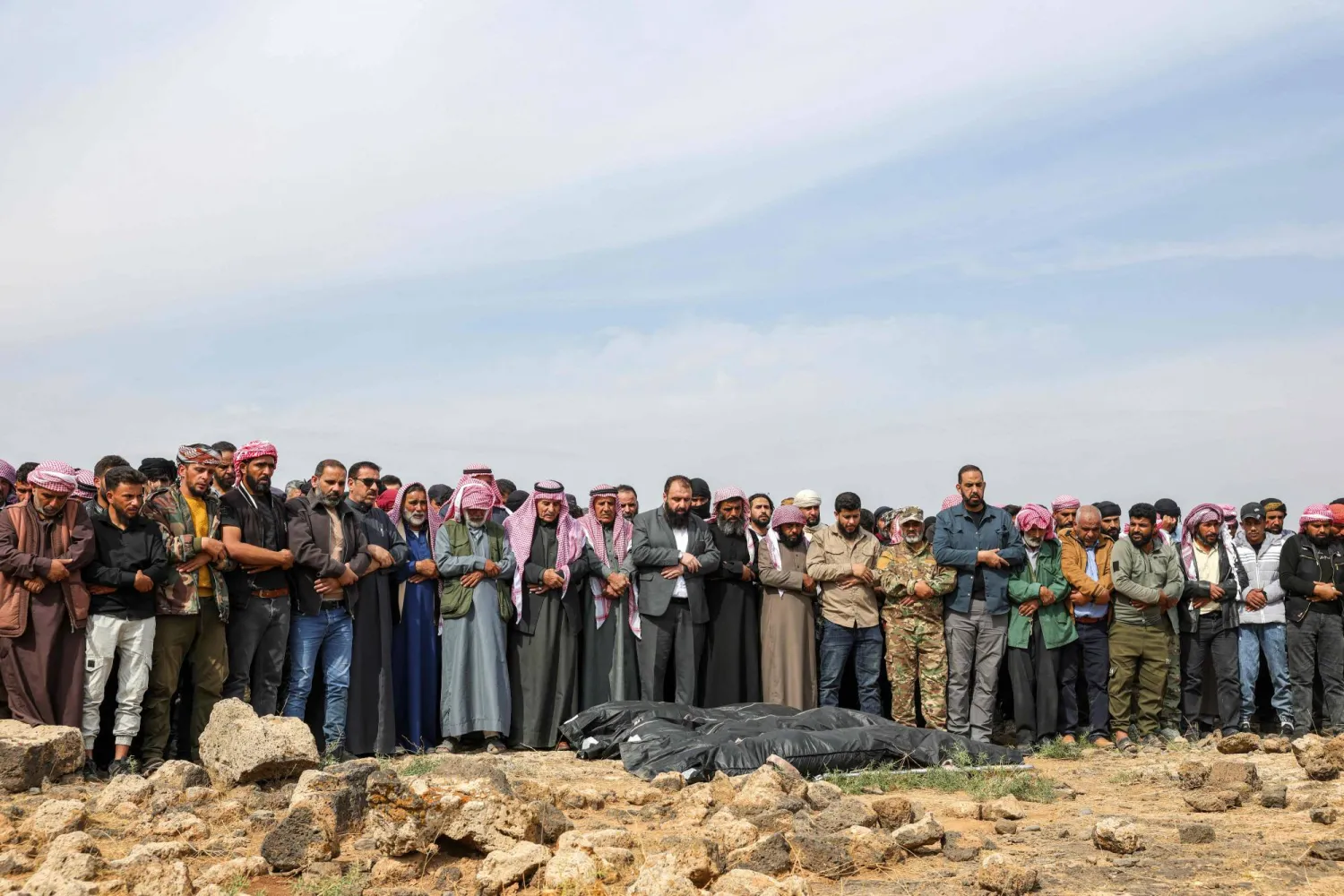
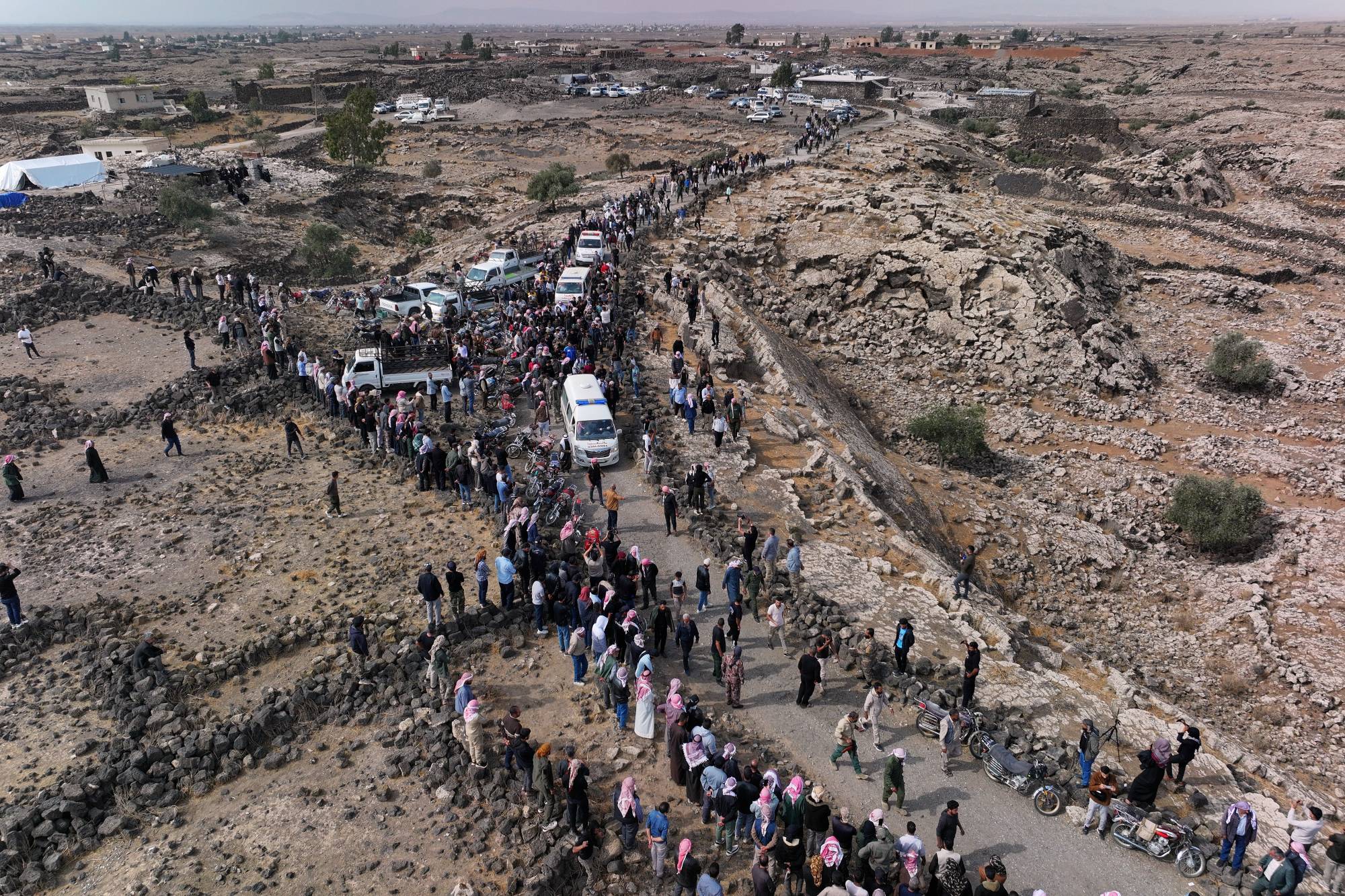
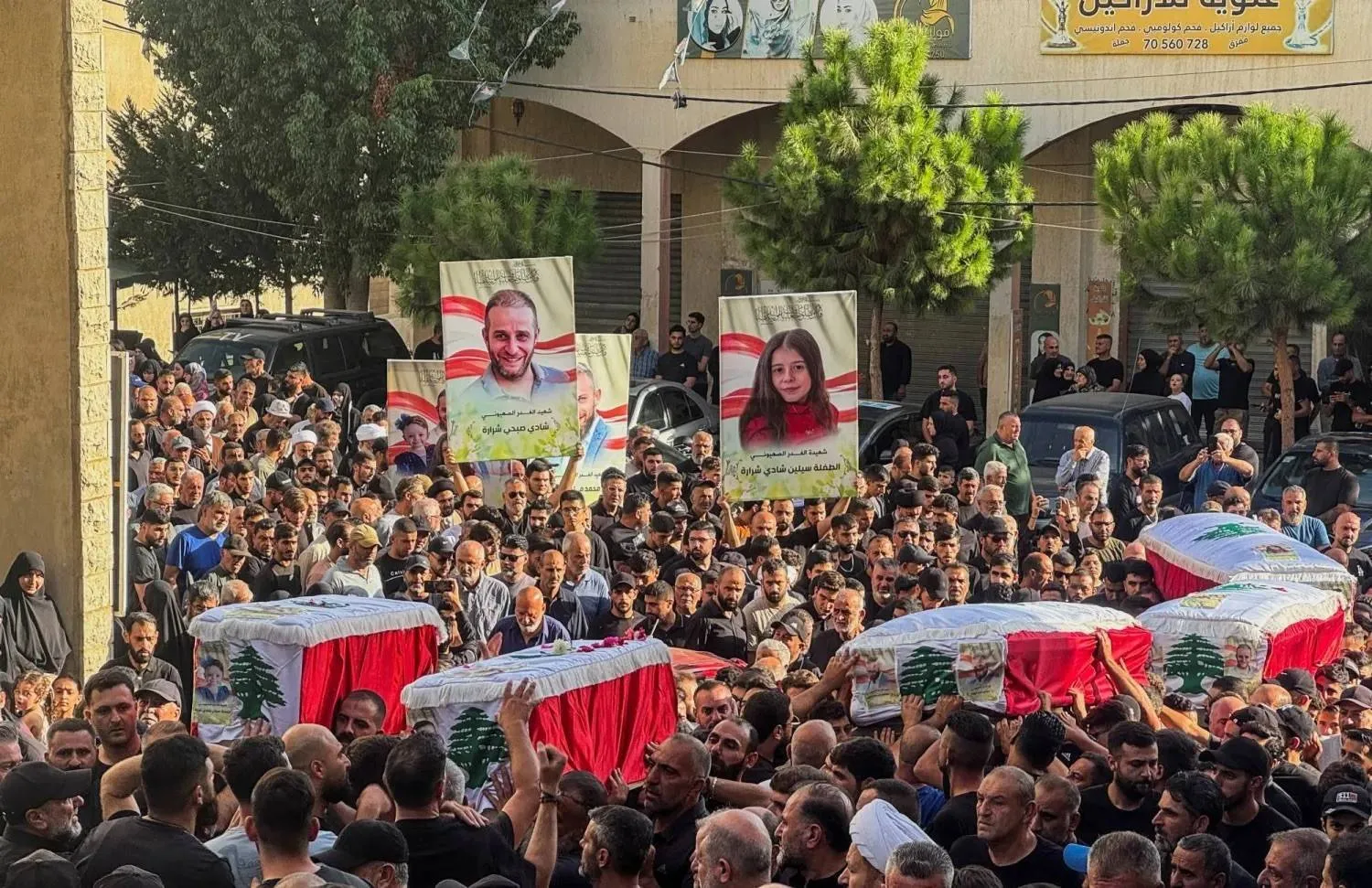
Mourners follow the coffins of five civilians killed in an Israeli strike on the border town of Bint Jbeil on Sunday (Reuters). 
TT

Heightened Israeli Drone Activity over Lebanon Raises Fears of Escalation

Mourners follow the coffins of five civilians killed in an Israeli strike on the border town of Bint Jbeil on Sunday (Reuters). 

The Israeli military intensified its unmanned aerial activity over Lebanon in recent days, with reconnaissance drones flying at low-altitude reportedly patrolling the skies above the Bekaa, the south, the southern suburbs of Beirut and the capital itself.

The near-continuous overflights, which pierced Lebanese airspace, prompted concerns that Israel was updating a fresh target bank for use in any future conflict.

Lebanon’s state-run National News Agency reported incursions above the majority of Lebanese regions on Wednesday, a pattern that experts said went beyond routine surveillance.

Analysts argued the drones served more than one purpose: they imposed psychological pressure on Lebanese communities by demonstrating aerial dominance, and they allowed Israeli forces to refresh and expand intelligence - capturing real-time imagery and data on sites, infrastructure and deployment centers similar to the practices observed during the last war.

The operational picture grew more complicated after UNIFIL spokeswoman Kandice Ardiel said an Israeli drone had crashed inside the UN force’s headquarters in Naqoura. She stressed the unmanned aircraft had not been armed but had been equipped with a camera. She described the incident as “a clear violation of Resolution 1701 and Lebanon’s sovereignty,” adding that the mission would issue an official protest.

Domestically, Hezbollah’s adversaries and allied politicians voiced alarm. Mohammad Khawaja, a member of the Development and Liberation bloc affiliated with the Amal movement, told Asharq Al-Awsat that the tempo of Israeli escalation in the south had “noticeably increased over the past ten days.”

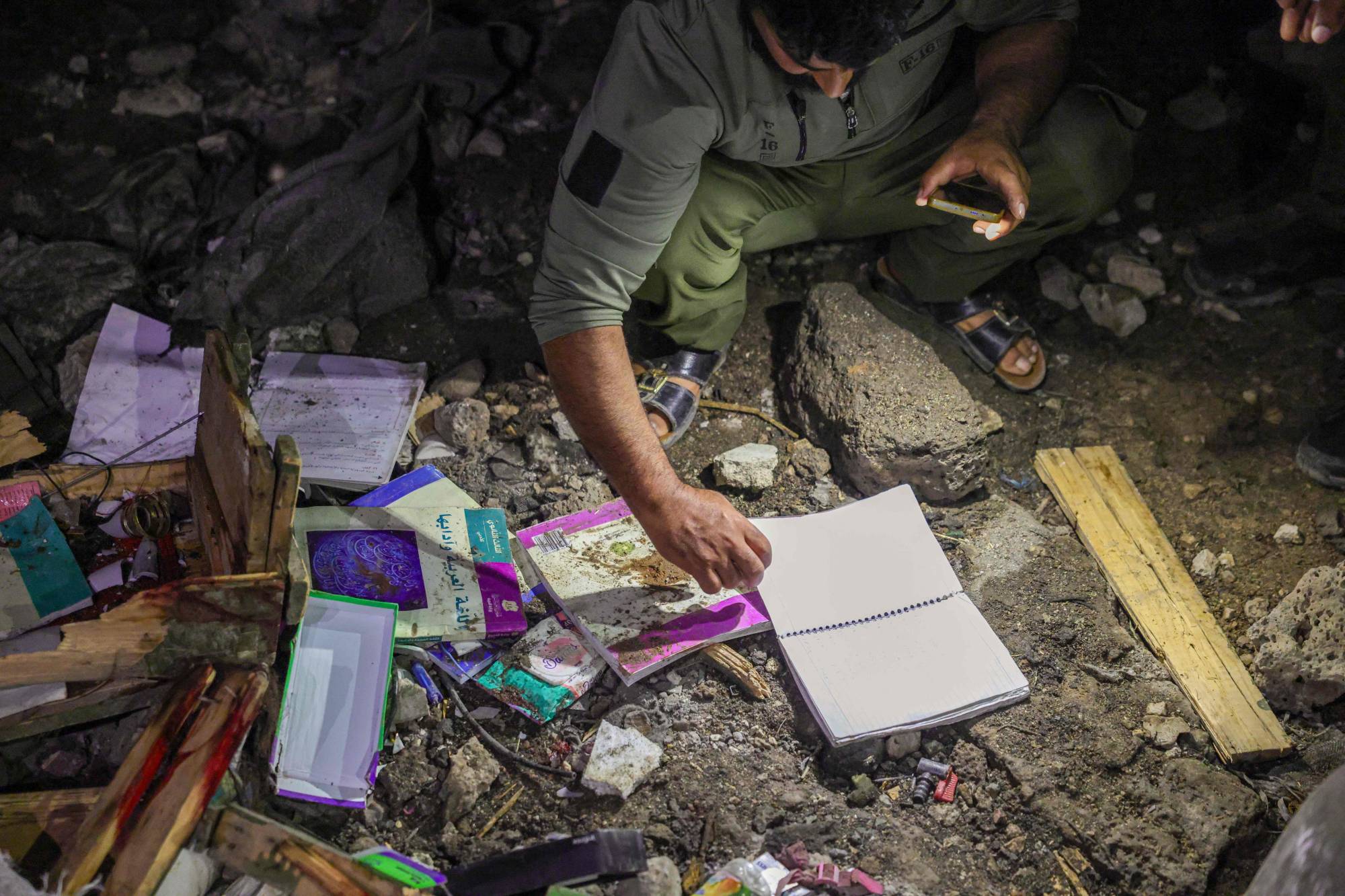
He pointed to a string of attacks on civilians, including strikes near Tebnine Hospital that left casualties and a recent massacre in Bint Jbeil that killed an entire family including children.

Khawaja framed these strikes as part of sustained Israeli pressure on Lebanon coinciding with the arrival of a recent US envoy, whose role, he said, had produced no tangible effect on the ground. He also criticized comments by US mediator Tom Barrack, who he said placed undue blame on the Lebanese state and army.

Retired military analyst Col. Khaled Hamadeh told Asharq Al-Awsat that Israel seeks to keep the option of war on the table by refreshing its list of potential targets and reminding Lebanon that confrontation could erupt at any moment.

“Israel’s approach today is geared toward perpetual conflict,” he said, arguing that Tel Aviv had failed to secure its objectives in Gaza and was now looking to translate that struggle into pressure on Lebanon.

Hamadeh said the Lebanese government had faltered in implementing a ceasefire agreement and in setting a timeline to collect weapons held by Hezbollah, a failure he said risked increasing pressure on Beirut.

He warned that the recent spike in drone operations and strikes made Lebanon “a likelier candidate” for a large-scale military campaign, raising the probability of a war resembling the destruction seen in Gaza — one intended to degrade civilian concentrations and Hezbollah’s societal network, and to exhaust the state so that it could not mount an effective response.



Israel Insists on Hamas Disarmament, Rejects Freeze Proposal

Palestinians walk through the rubble amid stormy weather in Gaza City Thursday, Dec. 11, 2025. (AP Photo/Jehad Alshrafi)
TT

Israel Insists on Hamas Disarmament, Rejects Freeze Proposal

Palestinians walk through the rubble amid stormy weather in Gaza City Thursday, Dec. 11, 2025. (AP Photo/Jehad Alshrafi)

Israel has held firm to demands that Hamas be disarmed as part of President Donald Trump’s ceasefire plan for Gaza, whose first phase began in October. An Israeli official said Tel Aviv has rejected a proposal from the group’s leadership to freeze the use of weapons under a long term truce.

Speaking to Agence France Presse on Thursday, the official said there will be no future for Hamas under the twenty-point plan and the group will be disarmed.

Gaza will be demilitarized, the official added.

The comments came a day after Khaled Meshaal, the head of Hamas’s political bureau abroad, relayed in an interview aired by Al Jazeera on Wednesday that the idea of completely giving up weapons is unacceptable to the resistance.

He said the group had floated the notion of freezing its weapons, adding that the resistance was offering proposals that could guarantee the absence of military escalation from Gaza against Israel.

Israeli Army Radio quoted an official in Tel Aviv on Thursday as saying Israel “remains committed to fully disarming Gaza,” adding that there is ongoing coordination with the United States on this issue.

The ceasefire agreement, which took effect on October 10, stipulates that Hamas and other armed factions in Gaza must be disarmed.

Openness in the Trump administration

A senior Hamas figure believes the Trump administration, which has repeatedly stressed disarmament, “has become more open to ideas being exchanged between Hamas and the mediators on one side and Washington on the other.”

The source told Asharq Al-Awsat that “several ideas were proposed by the movement and developed by the mediators, and other proposals are still being passed around by different parties to help accelerate the transition to the second phase.”

But Hamas’s perceptions seem at odds with recent public statements, most recently from US Ambassador to the United Nations Mike Waltz in his meeting with Israeli President Isaac Herzog on Wednesday. Waltz said Washington would not allow Hamas to rebuild itself.

Sources in the group said contacts with all parties were continuing and that the current talks show greater seriousness to reach understandings on this issue and others.

Hamas appears to be banking on American flexibility that could allow it to retain its weapons or place them in storage under a freeze, or even put them under the custody of an Arab or Islamic party.

One Hamas source said “the mediators are capable of creating broad convergence and understanding with the United States on the weapons issue and other important files such as the deployment of international forces and the governance of the Gaza Strip.”

Meshaal had explained his proposal for freezing, rather than dismantling, the group’s weapons by saying it wants a framework with guarantees that Israel will not return to war against Gaza.

He suggested that weapons can be safeguarded and neither used nor displayed.

Meshaal added that mediators could guarantee that Hamas and other resistance forces in Gaza would prevent any military escalation from the enclave.

A role for the Authority

Israel insists on moving to the second phase of the deal after Hamas hands over the body of the last Israeli hostage in its custody. Prime Minister Benjamin Netanyahu said days ago that the transition to the next phase was near, while noting the difficulties surrounding it such as disarming Hamas and Gaza “whether the easy way or the hard way.”

Amid the dispute between Hamas and Israel, the Palestinian Authority has underscored its position that it must assume full responsibilities in Gaza with exclusive authority over security and law.

President Mahmoud Abbas has held talks in recent days with several Arab, Islamic and European leaders, stressing the Authority’s readiness to take over and its commitment to its reform program, which he said would enable it to carry out its duties and prepare for comprehensive elections.

Hamas does not publicly comment on the Authority’s stance, but a senior source in the group told Asharq Al Awsat, “We have no objection to coordinating with the Palestinian Authority and for it to assume its responsibilities in Gaza, but this requires agreement on a comprehensive national program.”

The source added that “another problem is that Israel refuses to allow any role for the Authority in Gaza and we are working with all parties, with help from international pressure on Tel Aviv, so that the Palestinian Authority can eventually govern the strip.”


Trump Reportedly Planning to Appoint US General to Command ISF in Gaza

A Palestinian man rides his bicycle through the rubble amid stormy weather in Gaza City Thursday, Dec. 11, 2025. (AP Photo/Jehad Alshrafi)
TT

Trump Reportedly Planning to Appoint US General to Command ISF in Gaza

A Palestinian man rides his bicycle through the rubble amid stormy weather in Gaza City Thursday, Dec. 11, 2025. (AP Photo/Jehad Alshrafi)

President Donald Trump is planning to appoint an American two-star general to command the International Stabilization Force (ISF) in Gaza, according to two US officials and two Israeli officials.

Despite the claims, Axios quoted a White House official as saying there have been discussions around the composition of the ISF, the Board of Peace, and a technocratic Palestinian government, "but no definitive decisions have been made or communicated."

The October 10 ceasefire has enabled hundreds of thousands of Palestinians to return to Gaza City's ruins. Israel has pulled troops back from city positions, and aid flows have increased.

But violence has not completely halted. Palestinian health authorities say Israeli forces have killed 383 people in strikes in Gaza since the truce. Israel says three of its soldiers have been killed since the ceasefire began, and it has attacked scores of fighters.

On Thursday, medics said at least one Palestinian woman was killed, and some other people were wounded in Israeli tank shelling in Jabalia in the northern Gaza Strip. The Israeli military didn't offer immediate comment. Medics had earlier said two women were killed in the Jabalia incident.

The second phase of the ceasefire deal involves the Israeli army pulling farther back, the ISF deploying to Gaza, and a new governing structure coming into force, including the Trump-led Board of Peace.

The UN Security Council recently authorized both the ISF and the board.

Trump told reporters Wednesday that he's planning to announce the Gaza Board of Peace in early 2026.

According to Axios, two Israeli officials said US Ambassador Mike Waltz to the UN, who visited Israel this week, told Prime Minister Benjamin Netanyahu and other officials that the Trump administration is going to lead the ISF and appoint a two-star general as its commander.

"Waltz even said he knows the general personally and stressed he is a very serious guy," one Israeli official said.

The Israeli officials said Waltz stressed that having an American general in charge of the ISF should give Israel confidence it will operate according to appropriate standards.

Two US officials confirmed that the plan is to appoint a US general to lead the ISF.

The US has proposed that former UN Middle East envoy Nickolay Mladenov serve as Board of Peace representative on the ground in Gaza, working with a future Palestinian technocratic government, sources with knowledge said.


Desperate Gazans Pull Iron Bars from Rubble to Construct Tents and Scratch Out a Living

A Palestinian worker breaks concrete to extract steel bars from destroyed homes, using only simple hand tools amid a severe shortage of construction materials caused by long-standing restrictions on the entry of cement and iron, in Khan Younis, southern Gaza Strip, December 9, 2025. REUTERS/Haseeb Alwazeer
TT

Desperate Gazans Pull Iron Bars from Rubble to Construct Tents and Scratch Out a Living

A Palestinian worker breaks concrete to extract steel bars from destroyed homes, using only simple hand tools amid a severe shortage of construction materials caused by long-standing restrictions on the entry of cement and iron, in Khan Younis, southern Gaza Strip, December 9, 2025. REUTERS/Haseeb Alwazeer

As winter bites in Gaza, displaced Palestinians set out every day to homes destroyed by Israel. There they rip out iron rods from the walls and use them to prop up their flimsy tents or sell to scratch out a living in an enclave that will take years to recover from war.

The rods have become a hot item in Gaza, where they are twisted up in the wreckage left by an Israeli military campaign that spared few homes. Some residents spend days pounding away at thick cement to extract them, others do the back-breaking work for a week or more, Reuters.

With only rudimentary tools such as shovels, pickaxes and hammers, work proceeds at a snail's pace.

UN SAYS WAR GENERATED 61 MILLION TONS OF RUBBLE

Once the bars helped hold up cement walls in family homes, today they are destined for urgently-needed tents as temperatures at night fall. Heavy rainstorms have already submerged many Gazans' meagre belongings, adding to their misery.

Palestinian father-of-six Wael al-Jabra, 53, was putting together a makeshift tent, trying to hammer together two steel bars.

"I don’t have money to buy wood, of course. So, I had to extract this iron from the house. The house is made of five floors. We don’t have anything apart from God and this house that was sheltering us," he said.

In November, the UN Development Program said that the war in Gaza had generated 61 million tons of rubble, citing estimates based on satellite imagery.

Most of it can be cleared within seven years under the right conditions, it said.

A ROD CAN COST $15

A 10-meter metal rod costs displaced families $15 - a steep amount because many barely have cash.

The Palestinian group Hamas triggered the conflict after attacking Israel on Oct. 7, 2023, killing 1,200 people and taking 251 back to Gaza as hostages, according to Israeli calculations. Israel responded with a military campaign that killed over 70,000 people and laid waste to Gaza.

Carrying heavy buckets of rubble and pushing a wheelbarrow, Suleiman al-Arja, 19, described a typical day in the quest for iron rods.

"We pass by destroyed houses and agree with the house owner. He gives us a choice, whether to clean the house (clear the rubble) in exchange for iron or clean the house for money. We tell him that we want the iron and we start breaking the iron. As you can see, we spend a week, sometimes a week and a half," he said.

FOCUS IS ON DAILY STRUGGLE TO LIVE

US President Donald Trump promised to put together an international stabilization force and an economic development plan to rebuild and energize Gaza, which was impoverished even before the war. Palestinians in Gaza can't look so far ahead even though a ceasefire was reached in October. Every day is a struggle for Palestinians who have seen peace plans come and go over many decades.

Their minds are focused on finding ways to survive, every single day.

"We do this work to get our food and drink, to cover our living expenses and not need anyone, so we earn a living through halal (legitimate) means and effort. These are my hands," said Haitham Arbiea, 29.

Palestinians accuse Israel of depriving Gaza of the iron bars.

An Israeli official told Reuters that construction materials are considered dual use items - items for civilian but also potential military use - and will not be allowed into Gaza until the second phase of the US-led peace plan. The official cited concerns that the materials could be used for the building of tunnels, which have been used by Hamas.