
France Germany and the UK - known as the E3 - have rejected last-minute Iranian offers to give UN weapons inspectors limited access to one of its nuclear sites that were hit in the 12-day war with Israel last June.
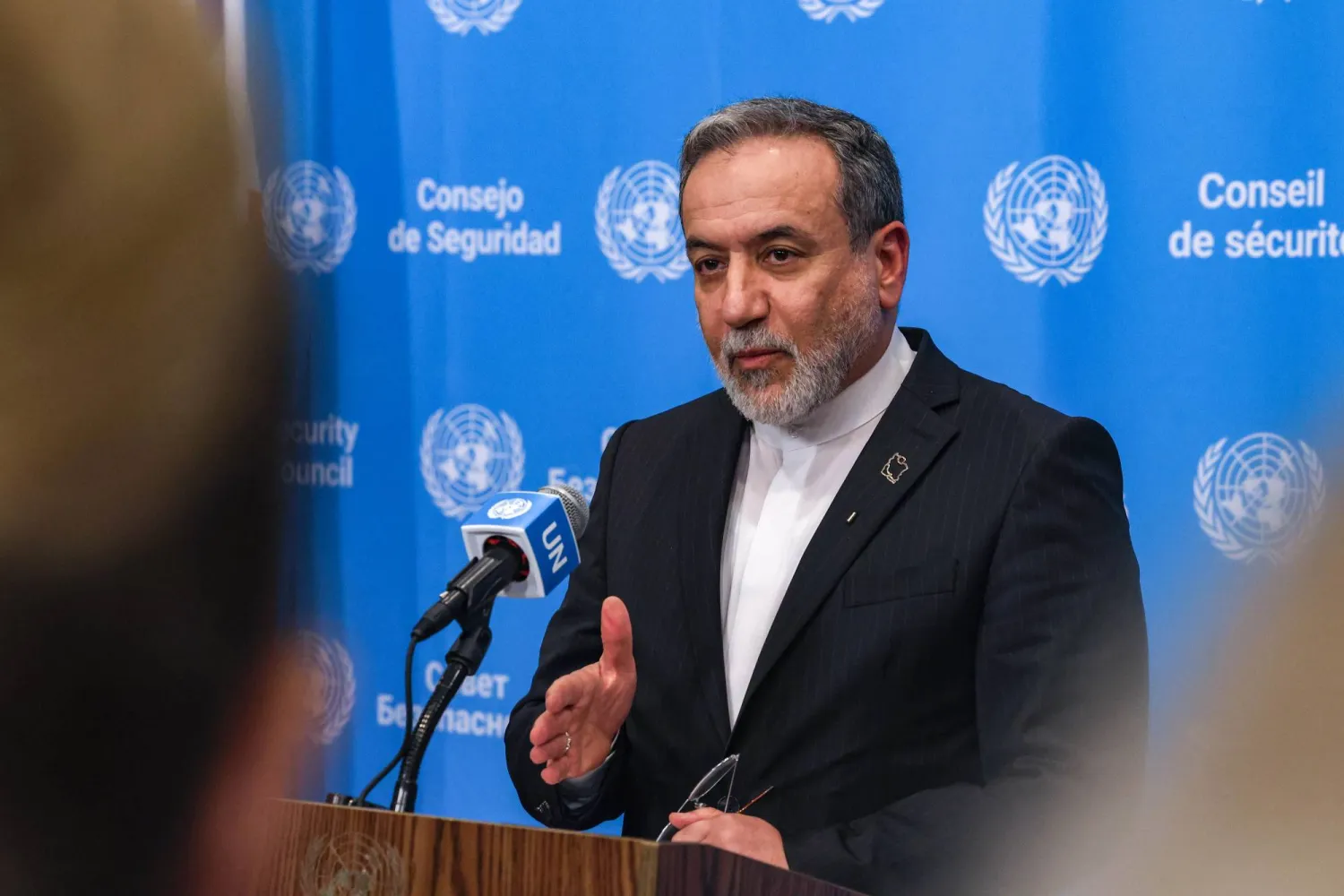
According to The Guardian newspaper, European diplomats said that Iran’s foreign minister, Abbas Araghchi, made a final offer to allow UN weapons inspectors from the International Atomic Energy Agency (IAEA) access to only one of its bombed nuclear sites, as opposed to all of them.
Araghchi also said Iran would return with a proposal on how to handle the 400kg of highly enriched uranium in its possession within 45 days, down from a previous offer of 90 days.
In return, Iran asked for the threat of the reimposition of all UN sanctions to be lifted permanently.
However, the European countries rejected the last-ditch effort, causing more tension ahead of a Friday vote in the UN Security Council to extend sanctions relief to Iran under a 2015 nuclear deal.
In an op-ed published by The Jakarta Post of Indonesia, Araghchi dismissed the recent move by Britain, France, and Germany, to trigger the “snapback” mechanism, saying it will inflict irreparable damage upon Europe’s international standing and credibility.
This mechanism, originally designed as a punitive measure for noncompliance with key obligations under the 2015 nuclear agreement, signed between Iran, the three European states, the United States, China and Russia, has now been misapplied, Araghchi wrote.
He noted that states that fail to uphold their own commitments are not entitled to benefit from an agreement they themselves have undermined.
According to the Iranian FM, the measure can disregard the sequence of events that compelled Iran to take lawful remedial steps under the nuclear agreement.
“It was the US that, in 2018, by unilaterally ceasing its participation in the Joint Comprehensive Plan of Action (JCPOA), violated United Nations Security Council Resolution 2231, not Iran,” he said, adding that this destructive act was subsequently compounded by the European Troika’s failure to honor their commitments under the JCPOA and their alignment with the US’ unlawful sanctions.
Araghchi then warned that, “If this brief window of opportunity to alter course is squandered, the consequences will be grave and far-reaching for both West Asia and the international syste and will undermine the integrity and credibility of international agreements and destabilize the foundations of collective security.”
He said Iran has consistently demonstrated its enduring commitment to resolving issues related to its peaceful nuclear activities through diplomacy and therefore, he called for a new and equitable agreement, which must fully respect Iran’s sovereignty and the rights of the Iranian people.
For his part, Ali Larijani, Secretary of Iran’s Supreme National Security Council, said Tehran has exhausted all possible diplomatic avenues to prevent the activation of the so-called snapback mechanism, but Western states responded with excessive demands and obstruction of the progress, according to ISNA.
In a televised interview, Larijani said the Europeans suggested broader negotiations that would include dialogue with the United States. “We agreed in order to remove any pretexts, yet they went on to create new ones,” he stated.
He added that Washington not only insisted on reviving nuclear talks but also on expanding them to cover Iran’s missile program.
Larijani revealed that Russia had proposed a six-month delay to allow for negotiations, which Iran accepted. However, the Europeans instead presented further conditions, including a demand for direct talks between Iran and the United States, he said.
Later in an interview with PBS, Larijani warned that Iran will end its participation in international weapons inspections if UN sanctions are reimposed.
“If snapback mechanisms are enforced, we will end our participation with the IAEA,” he said.
And while Larijani downplayed the practical impact of the snapback—noting that 95% of sanctions are already in place—he framed the European demands as an attempt to strip Iran of its sovereign rights.
Meanwhile, Iran’s Deputy Speaker Ali Nikzad told Iranian state TV that parliament will on Sunday debate a letter to the Supreme National Security Council by 71 lawmakers requesting a change to the Supreme Leader’s earlier fatwa, urging the state to build and retain atomic weapons as a form of deterrence.
“In the doctrine of the Islamic Republic, the production of an atomic bomb has never been raised and we pursue nuclear energy for its benefits in areas such as water transfer, power generation, agriculture and medicine,” Nikzad added.
On Friday Araqchi said that Tehran would scrap an agreement to let the UN watchdog inspect its nuclear sites if Western powers reinstated UN sanctions, according to Reuters.
But in a post on Telegram, Araqchi said a deal signed in Egypt this month “will remain valid as long as no hostile action is taken against Iran, including the reinstatement of United Nations Security Council resolutions that have been annulled.”