

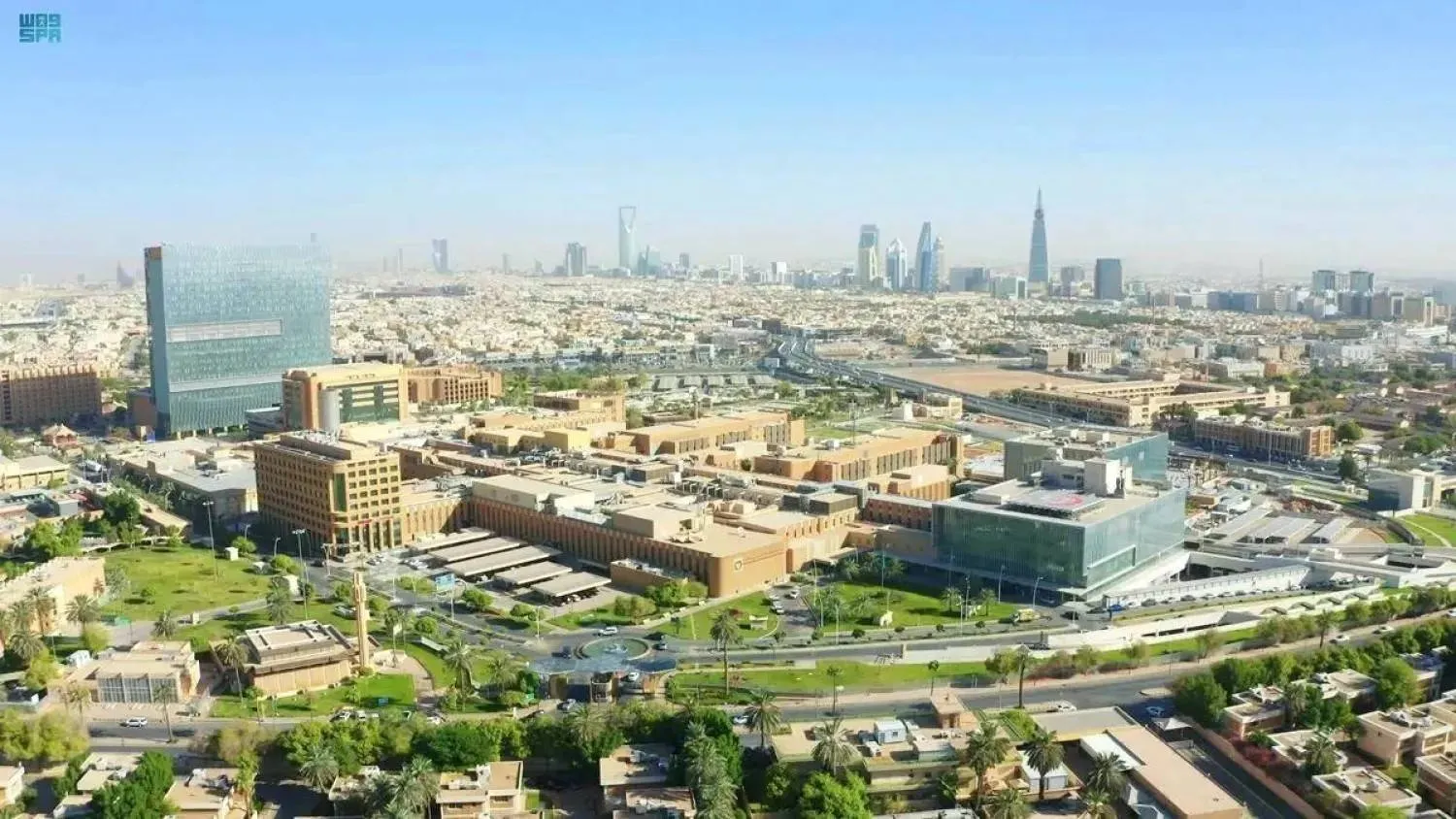

Saudi Rental Rules Enhance Fairness, Secure Riyadh Investment Market

Riyadh, Saudi Arabia (SPA)
TT

Saudi Rental Rules Enhance Fairness, Secure Riyadh Investment Market

Riyadh, Saudi Arabia (SPA)

Saudi Arabia has moved to cap residential and commercial rents in Riyadh for five years, a decision real estate experts say marks a turning point for the Kingdom’s housing market by enhancing transparency, easing financial strain on tenants, and reshaping investment patterns.

The cabinet approved the regulations on Thursday under a royal decree after the Royal Commission for Riyadh City drafted the measures. The rules, ordered by Crown Prince Mohammed bin Salman, bar landlords from raising rents in the capital until 2030, require all contracts to be documented on the government’s “Ejar” digital platform, and impose fines for non-compliance.

Officials said the step aims to rebalance a market strained by soaring demand and rapid development. Riyadh, home to mega-projects and one of the world’s fastest-growing populations, has seen rental and sales prices climb sharply in recent years. Apartments in the capital have jumped 82% in price since 2019 and villas 50%, according to consultancy Knight Frank. Some families now spend half their income on rent, far above the global average of 30%.

“This is a historic step that restores balance to the rental market,” said property analyst Saqr al-Zahrani. “It protects both tenants and landlords, gives families financial clarity, and shields small businesses from being forced out by inflated leases.”

Al-Zahrani said the freeze would help reduce inflationary pressures and encourage developers to focus on meeting real demand instead of relying on speculative price increases. It could also boost off-plan property sales by providing households with predictable financial commitments over the medium term.

For Khaled Al-Mobid, chief executive of Menassat real estate company, the new rules show regulators recognize the mounting pressures on the rental market.

“Riyadh is experiencing heavy demand from population growth and major development projects,” he said. “A framework that organizes the relationship between landlords and tenants and sets fair limits on rent increases sends a clear message of stability and transparency.”

He added the system protects tenants from “unjustified increases” while ensuring landlords secure fair returns, easing what he described as mounting “pressure on purchasing power” in recent years. The rules also safeguard small and medium businesses from being forced out of prime commercial districts, while giving mall owners and corporate tenants clearer long-term visibility.

The freeze is expected to reshape investment flows. Experts say the measures will limit speculation, push developers to improve quality, and encourage longer-term investment strategies. “This creates a safer environment for both local and international investors,” Al-Mobid said.

Abdullah al-Mousa, another real estate marketer, said the policy goes beyond tenant protection. “It is a qualitative shift that redraws the contours of the real estate market and ushers in a new era of fairness and transparency,” he said.

Families struggling with successive rent hikes are the immediate winners, while businesses will benefit from lower cost pressures that allow them to expand.

Mousa argued the changes could raise the maturity of the market by curbing arbitrary practices. “The decision pushes landlords and developers to compete on quality and services rather than on yearly price increases. That will enrich supply, raise standards, and support more sustainable growth.”

Central to the reforms is the “Ejar” system, which will become the cornerstone of contract documentation and renewals. Experts say the digital platform will serve as a strategic database, helping policymakers read market trends and balance supply and demand more precisely, while reinforcing investor confidence in the Kingdom.

Analysts expect the stability created by the five-year freeze to ripple through the broader financial system. “With more predictable cash flows from rent, banks can redesign financing products better suited to a clearer market,” Mousa said. “This opens new horizons for growth in the sector.”

For many Saudis, the immediate benefit will be relief from spiraling housing costs. “Before the decision, some residents in Riyadh were spending up to 50% of their income on rent,” said al-Zahrani. “Halting annual increases will give households space to save and invest, while giving companies and commercial tenants a more stable environment to make long-term decisions.”

Officials and analysts alike framed the move as part of the Vision 2030 reform agenda, aimed at raising quality of life and ensuring sustainable urban growth.

Mousa said the decision will push landlords and developers to improve offerings and focus on long-term stability rather than short-term profits. “It establishes a fairer market where both investors and tenants can plan ahead,” he added.

The success of the reforms is closely linked to the “Ejar” platform. Digital contract registration and automated renewals are more than procedural details; they form the foundation for regulating landlord-tenant relationships. The system could also become a strategic database for policymakers, improving market transparency and building confidence for domestic and international investors.

Over the medium term, analysts expect the benefits to extend beyond rent stability, influencing financing and investment patterns. More predictable rental income will allow banks to tailor financial products to a clearer market, opening new growth opportunities.

“The freeze is not just regulatory – it’s a declaration of a new phase built on stability, transparency, and balance,” Mousa said. “It positions Riyadh as a more competitive, attractive, and livable city, economically and socially, in line with Vision 2030 objectives.”



UN's FAO: World Food Prices Fall for 3rd Month in November

FILE PHOTO: Prices of food are displayed at the Borough Market in London, Britain May 22, 2024. REUTERS/Maja Smiejkowska/File Photo
TT

UN's FAO: World Food Prices Fall for 3rd Month in November

FILE PHOTO: Prices of food are displayed at the Borough Market in London, Britain May 22, 2024. REUTERS/Maja Smiejkowska/File Photo

World food commodity prices fell for a third consecutive month in November, with all major staple foods except cereals showing a decline, the United Nations' Food and Agriculture Organization said on Friday.

The FAO Food Price Index, which tracks a basket of globally traded food commodities, averaged 125.1 points in November, down from a revised 126.6 in October and the lowest since January, Reuters reported.

The November average was also 2.1% below the year-earlier level and 21.9% down from a peak in March 2022 following Russia's full-scale invasion of Ukraine, the FAO said.

The agency's sugar price reference fell 5.9% from October to its lowest since December 2020, pressured by ample global supply expectations, while the dairy price index dropped 3.1% in a fifth consecutive monthly decline, reflecting increased milk production and export supplies.

Vegetable oil prices fell 2.6% to a five-month low, as declines for most products including palm oil outweighed strength in soy oil.

Meat prices declined 0.8%, with pork and poultry leading the decrease, while beef quotations stabilized as the removal of US tariffs on beef imports tempered recent strength, the FAO said.

In contrast, the FAO's cereal price benchmark rose 1.8% month-on-month. Wheat prices increased due to potential demand from China and geopolitical tensions in the Black Sea region, while maize prices were supported by demand for Brazilian exports and reports of weather disruption to field work in South America.

In a separate cereal supply and demand report, the FAO raised its global cereal production forecast for 2025 to a record 3.003 billion metric tons, compared with 2.990 billion tons projected last month, mainly due to increased wheat output estimates.

Forecast world cereal stocks at the end of the 2025/26 season were also revised up to a record 925.5 million tons, reflecting expectations of expanded wheat stocks in China and India as well as higher coarse grain stocks in exporting countries, the FAO said.


World Bank Forecasts 4.3% Growth for Saudi Economy, Supported by Non-Oil Activities

The Saudi flag. Asharq Al-Awsat
TT

World Bank Forecasts 4.3% Growth for Saudi Economy, Supported by Non-Oil Activities

The Saudi flag. Asharq Al-Awsat

The World Bank affirmed on Thursday that Saudi Arabia's economy has gained significant momentum for 2026-2027, driven by robust non-oil sector expansion under Vision 2030.

In a report titled “The Gulf’s Digital Transformation: A Powerful Engine for Economic Diversification,” the World Bank said growth is expected to persist in the Kingdom with non-oil activities expanding by 4% on average.

The report lifted its forecast for Saudi Arabia’s real GDP growth to 3.8% in 2025 compared to a 3.2% last October.

The forecast represents a major upward revision affirming the resilience of the Saudi economy and its ability to absorb external volatility. It also indicates growing confidence in the effectiveness of ongoing structural reforms within Vision 2030.

On Tuesday, Saudi Arabia approved its state budget for 2026, projecting real GDP growth of 4.6% in 2026.

The report showed that in the Kingdom, economic momentum is strengthening across oil and non-oil sectors with non-oil activities expanding by 4% on average and oil activities expanding by 5.4%, bringing overall real growth to an average of 4.3%.

It said oil activities grew by 1.7% y/y in the first half of 2025, benefiting from the phase-out of OPEC+ voluntary production cuts starting in April 2025.

At the financial level, the fiscal deficit between 2025 and 2027 is projected to remain at an average of 3.8% of GDP.

Meanwhile, the current account balance slightly recovered, settling at 0.5% of GDP in the first quarter of 2025 against -2.6% in the second half of 2024.

The report said real GDP growth remained stable at 3.6% y/y in the first half of 2025, thanks to the stabilization of the oil sector and sustained non-oil growth.

Non-oil activities expanded by 4.8% over the period, in line with the performance of 2024 while non-oil growth was driven by the wholesale, retail trade, restaurants, and hotels sector (+7.5% y/y in the first half of 2025), consolidating the role of hospitality and tourism as engines of economic diversification.

The report also indicated that oil activities grew by 1.7% y/y in the first half of 2025, benefiting from the phase-out of OPEC+ voluntary production cuts starting in April 2025.

These trends are expected to persist in 2026-2027, with non-oil activities expanding by 4% on average and oil activities expanding by 5.4%, bringing overall real growth to an average of 4.3%.

Job Market and Inflation
The report said the labor market mirrors the stabilization of the real economy and is rapidly becoming more inclusive to women.

Overall unemployment decreased by 0.7 point between the first quarter of 2024 and the first quarter of 2025, with the female unemployment rate dropping from 11.8% to 8.1% over the same period.

Also, inflation remained low and stable in Saudi Arabia, settling at an average of 2.2% in the first half of 2025.

However, price increases have been concentrated in the housing and utilities sector as rental prices have become a key issue, largely because rental supply has failed to match demographic growth, especially in Riyadh.

While this reflects the government’s efforts to dynamize the Kingdom’s urban centers, the price increases prompted the government to freeze rental prices in Riyadh for the next five years, as anticipated increases in housing supply should help control rental prices.

Finally, the report said Saudi Arabia’s external position stabilized in the second half of 2024 and the first quarter of 2025.

Although net foreign direct investment has remained relatively stable, the World Bank has emphasized that recent changes in foreign ownership regulations in Saudi Arabia, coupled with continued structural reforms, are positive steps to attract greater flows of foreign direct investment (FDI).


Visa Relocates European Headquarters to London's Canary Wharf

FILE PHOTO: A drone view of London's Canary Wharf financial district, two days before the government presents its critical pre-election budget, in London, Britain March 3, 2024. REUTERS/Yann Tessier/File Photo
TT

Visa Relocates European Headquarters to London's Canary Wharf

FILE PHOTO: A drone view of London's Canary Wharf financial district, two days before the government presents its critical pre-election budget, in London, Britain March 3, 2024. REUTERS/Yann Tessier/File Photo

Visa is relocating its European headquarters to London's Canary Wharf financial district, the Canary Wharf Group said on Friday.

The firm is leasing 300,000 square feet on a 15-year term at One Canada Square, and is set to relocate from Paddington in the summer of 2028, the group added.

Canary Wharf Group, which runs the wider financial district and is co-owned by QIA and Canada's Brookfield, was hit hard by the pandemic-induced fall in office demand.

The area is now enjoying a rebound as more firms push staff to return to office, Reuters reported.

"Canary Wharf continues to attract a diverse range of global businesses. We are delighted to welcome Visa who have chosen the Wharf for their European headquarters as the best location to support their business growth," Shobi Khan, Canary Wharf Group CEO, said.

JPMorgan Chase last week unveiled a plan to build a tower in the Canary Wharf financial district that will contribute 9.9 billion pounds ($13.2 billion) over six years to the local economy - including the cost of construction - and create 7,800 jobs.

Qatar's sovereign wealth fund is revising plans for a revamp of its HSBC skyscraper in the east London district to retain more office space, Reuters reported in November.
