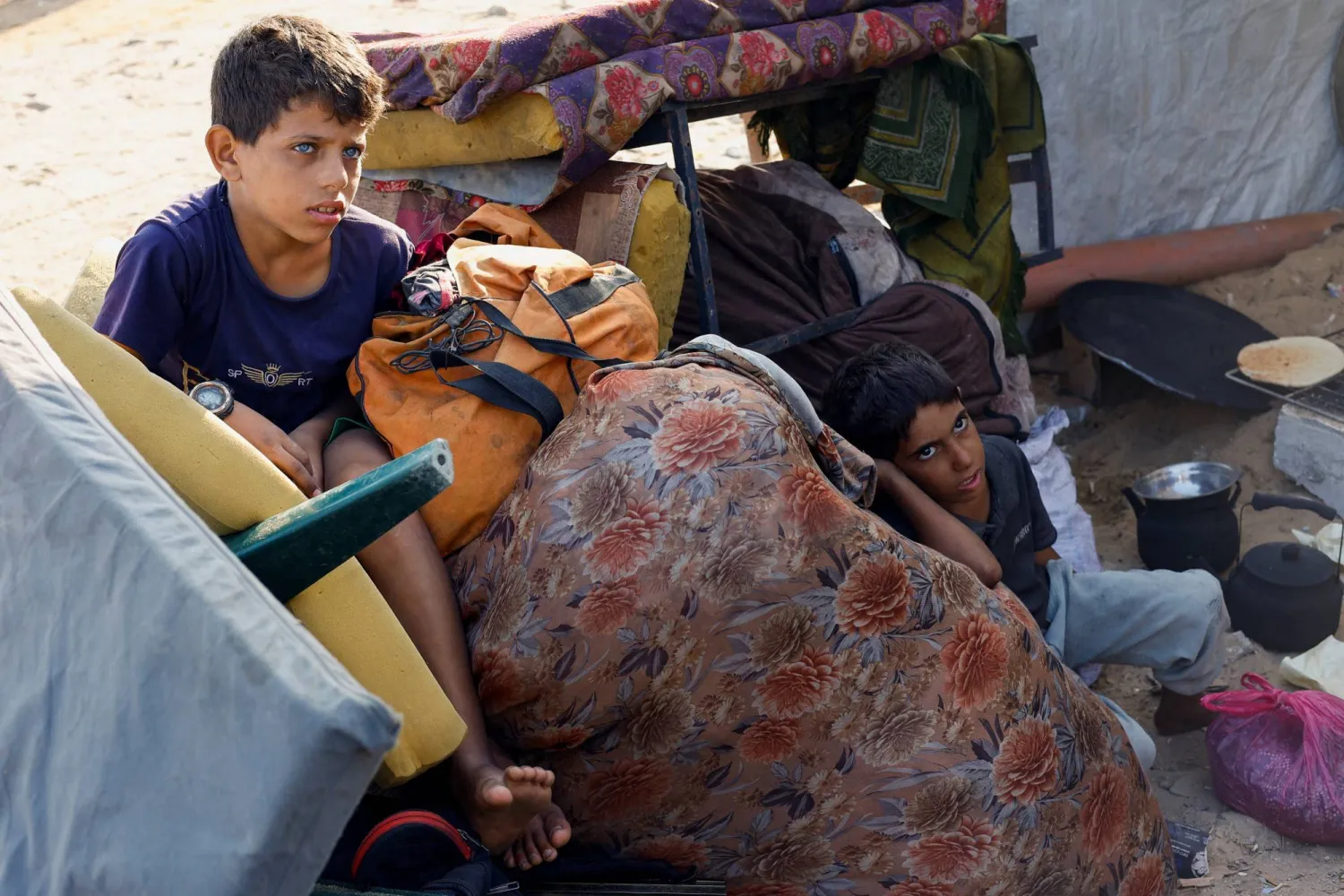

As the US administration and several Arab and Islamic states discuss the future of Gaza after the war, Israel has escalated strikes against families whose elders and tribal leaders rejected cooperation with Israeli attempts to form local governing bodies in certain areas. These discussions are taking place amid heightened tensions and ongoing military activity within the enclave.
The targeted strikes have focused on communities that resisted involvement in Israeli-backed efforts to establish local authorities. These governing bodies are modeled on armed groups previously established and supported by Israel in parts of Gaza.
In recent days and hours, Israeli airstrikes have intensified against well-known families and clans in Gaza City. It later emerged that their elders had turned down an offer from Israel’s domestic security service, Shin Bet, to participate in forming and managing local entities to oversee humanitarian aid and administer daily life in their communities.
Security and field sources in Gaza City told Asharq Al-Awsat that Shin Bet officers had approached leaders from the Bakr and Doghmosh families, asking them to join an Israeli plan to divide Gaza into local fiefdoms run by clans, families, or armed groups.
Under the scheme, these bodies would provide services to residents, oppose Hamas and other resistance factions, and supply Israel with intelligence, while also advancing Israel’s political objective of preventing a Palestinian government from ever taking charge in the strip. By doing so, Israel would consolidate its control and undercut prospects for a future Palestinian state.
According to the sources, after the families refused, Israeli forces launched a series of strikes on homes belonging to their members. Some houses were inhabited, others had been evacuated.
One of the deadliest attacks targeted the Doghmosh family in the Sabra neighborhood of southern Gaza City, where an Israeli airstrike killed 30 people in a single home. At least 20 more remain trapped under the rubble, beyond the reach of rescue teams.
At dawn on Saturday, a house belonging to the Bakr family south of al-Shati refugee camp was bombed, killing six members and wounding 11. Later the same day, another multi-story family residence was struck, injuring several more relatives. Israeli aircraft also hit an abandoned building near Gaza’s port.
A Bakr family elder told Asharq Al-Awsat that Israeli intelligence had contacted the family’s leaders and asked them to form an armed group to control the al-Shati camp after Israeli forces had cleared it of Hamas fighters. He said the family categorically rejected the idea.
The source, who requested anonymity for his safety, said the family immediately understood that they would face retaliation. A meeting was held at once, and members were urged to evacuate the area, especially women and children, and move southward.
The Bakr family is one of Gaza’s largest, known for its role in the fishing trade, and counts members affiliated with Fatah and Islamic Jihad among its ranks. Several have been killed in the current war and in previous conflicts. The family elder stressed that the refusal to cooperate with Israel was a principled national decision, not an expression of support for Hamas or any other faction.
Asharq Al-Awsat was unable to reach any of the Doghmosh family’s leaders for comment.
Israel has in recent weeks leaned on a strategy of fostering armed groups drawn from families and clans, or from individuals with criminal or security backgrounds, to exert local control. Such groups have appeared in areas east of Rafah, east of Khan Younis, parts of eastern Gaza City, and the north of the enclave.