


Iraqi Court Sentences Man to Life in Jail for Trafficking Fighters to Russian Army in Ukraine

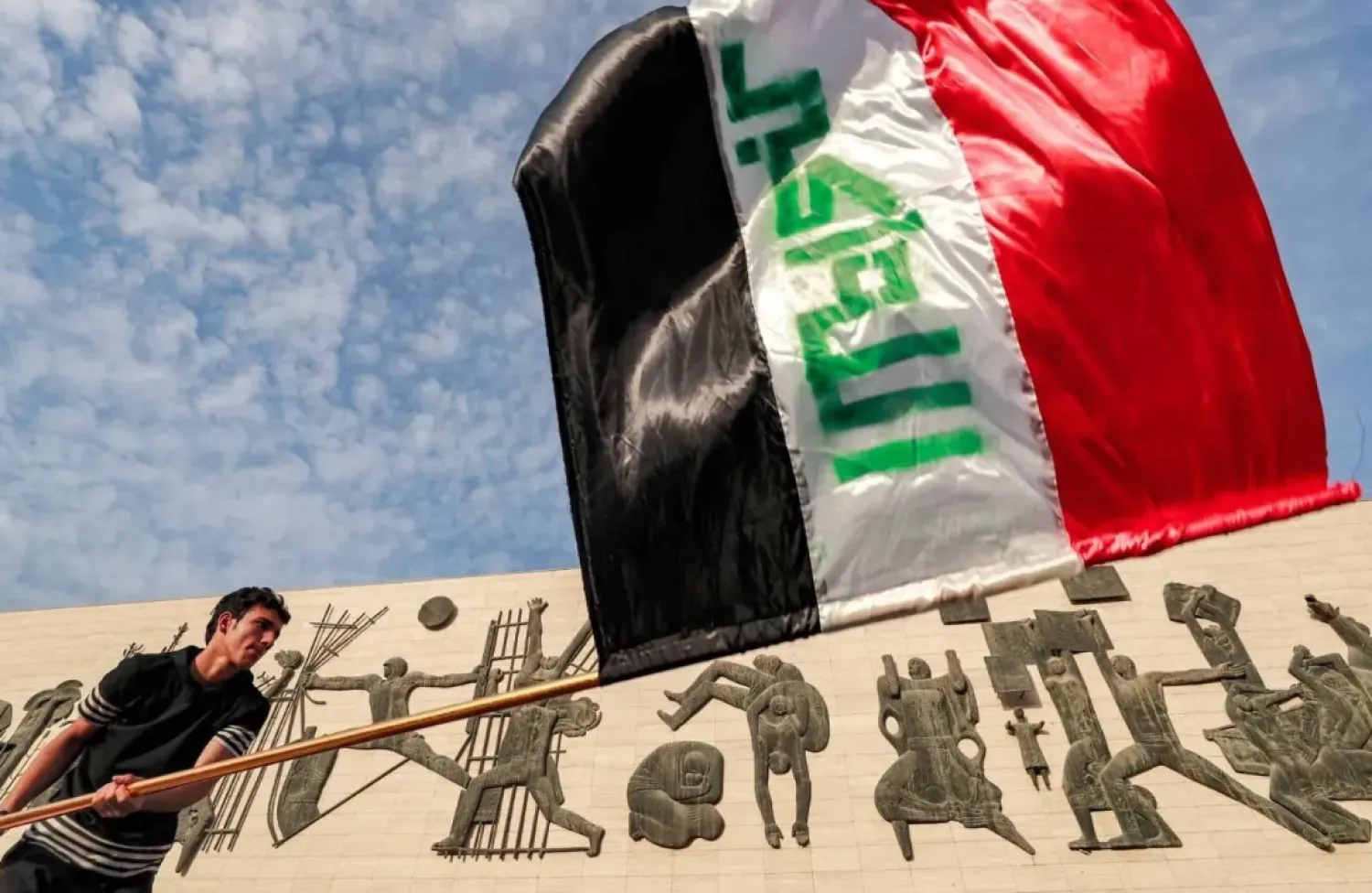
A man waves the Iraqi flag at Tahrir Square in Baghdad (AFP).
TT

Iraqi Court Sentences Man to Life in Jail for Trafficking Fighters to Russian Army in Ukraine

A man waves the Iraqi flag at Tahrir Square in Baghdad (AFP).

An Iraqi man has been sentenced to life in prison for human trafficking after he recruited Iraqis to fight for Russia against Ukraine, court officials said Monday.

The Najaf Criminal Court said in a statement that the convicted man had “formed groups and sent them to fight in foreign countries in exchange for financial compensation” and that the verdict was issued based on Iraq’s anti-human trafficking law.

Iraqi judicial official and a senior security official, who spoke on condition of anonymity because they were not authorized to comment, said the man, who they identified as Risan Falah Kamel, was convicted of recruiting fighters and sending them to fight on the Russian side, The AP news reported.

Foreign fighters have joined both sides in the war that began with Russia’s invasion in 2022.

Earlier this year, Ukrainian officials said that significant numbers of Chinese nationals were fighting for Russia’s invading army and that they had gathered detailed intelligence on more than 150 mercenaries Moscow allegedly recruited through social media. China denied the allegations.

American and South Korean officials also say that North Korea has sent thousands of troops and ammunition to help Russia on the battlefield.

Ukraine officials said early on in the war that over 20,000 people from 52 countries had come to Ukraine to help it defend itself against Russia’s aggression. Ever since, the numbers of foreign fighters in the ranks of the Ukrainian military have been classified.

Last year, Russia military captured a British national fighting with Ukrainian troops who had occupied part of Russia’s Kursk region.



Hamas Postpones Election of Political Bureau Chief Indefinitely

(From left) Nizar Awadallah, Khalil al-Hayya and Mohammad Ismail Darwish during a meeting with Iran’s Supreme Leader Ali Khamenei last February 2025. (Khamenei's website/AFP)
TT

Hamas Postpones Election of Political Bureau Chief Indefinitely

(From left) Nizar Awadallah, Khalil al-Hayya and Mohammad Ismail Darwish during a meeting with Iran’s Supreme Leader Ali Khamenei last February 2025. (Khamenei's website/AFP)

Senior sources within Hamas said the movement has decided to postpone the election of the head of its political bureau, which had been scheduled to take place within the first ten days of January.

The sources told Asharq Al-Awsat that the decision to delay the vote was taken “until further notice,” noting that no new date has been set, although elections “could be held at any moment.”

One source attributed the postponement to “security and political conditions,” as well as Hamas’ current preoccupation with negotiations aimed at moving to the second phase of the ceasefire, amid intensified mediation efforts involving regional brokers and the United States.

Other sources pointed to additional factors, including internal disagreements over organizational arrangements within the Gaza Strip, which have deepened in recent days and are now the subject of efforts to resolve them.

Hamas is facing what sources described as its most severe crisis since its founding in 1987. Israeli strikes launched after the Oct. 7, 2023 attack have targeted various levels and wings of the movement, triggering significant organizational and financial challenges.

Sources said the accelerating momentum surrounding a possible transition to the second phase of the ceasefire has become the main concern for Hamas’s leadership. While electing a new head of the political bureau is seen as a key step in reorganizing the movement’s internal affairs, the process may take longer than initially expected, they added.

Only days ago, sources had told Asharq Al-Awsat that the elections were expected to be held within the first ten days of the new year, with the aim of reinforcing internal stability and reassuring the outside world that the movement remains cohesive.

Those sources said at the time that electing a political bureau chief would not end the role of the current leadership council formed after the assassinations of Ismail Haniyeh and Yahya al-Sinwar. The council would instead continue as an advisory body overseeing Hamas’ internal and external affairs.

Asked whether internal divisions exist over who should lead Hamas, one source said only that “the electoral process is conducted according to established rules and regulations, and there are no disputes over the individual who will lead the movement.”

However, there have been suggestions that Khaled Meshaal, head of Hamas’s political bureau abroad, and Khalil al-Hayya, head of the political bureau in Gaza, are the top contenders for the post.

Some sources said there is strong support within Hamas’ external leadership and in the West Bank for Meshaal to assume the role, while a majority in Gaza favors al-Hayya.

The sources did not rule out the emergence of a third, currently unidentified figure. “Nothing can be predicted at this stage,” one source said. “What is happening should not be seen as rivalry driven by internal disputes over leadership, but rather as a healthy competitive process.”


Syrian Army on Alert after SDF Armed Groups Detected East of Aleppo

People walk down a street as a car drives by following a ceasefire which ended days of fighting between Syrian security forces and Kurdish fighters in the Kurdish-majority Sheikh Maqsoud neighborhood, of the northern city of Aleppo on January 11, 2026. (AFP)
TT

Syrian Army on Alert after SDF Armed Groups Detected East of Aleppo

People walk down a street as a car drives by following a ceasefire which ended days of fighting between Syrian security forces and Kurdish fighters in the Kurdish-majority Sheikh Maqsoud neighborhood, of the northern city of Aleppo on January 11, 2026. (AFP)

The Syrian army went on alert on Sunday after detecting armed groups aligned with the Syrian Democratic Forces (SDF) east of Aleppo city.

In statements to the SANA state news agency, the Operations Command said that the nature and objectives of these military reinforcements and troop concentrations brought by the SDF to eastern Aleppo have not yet been identified.

The Command added that Syrian army forces have been placed on full alert, deployment lines east of Aleppo have been reinforced, and all necessary measures have been taken to be ready for all possible scenarios.

First responders on Sunday entered a contested neighborhood in the northern city of Aleppo after days of deadly clashes between government forces and Kurdish-led forces. Syrian state media said the military was deployed in large numbers.

The clashes broke out Tuesday in the predominantly Kurdish neighborhoods of Sheikh Maqsoud, Achrafieh and Bani Zaid after the government and the SDF, the main Kurdish-led force in the country, failed to make progress on how to merge the SDF into the national army. Security forces captured Achrafieh and Bani Zaid.

The fighting between the two sides was the most intense since the fall of then-President Bashar Assad to opposition groups in December 2024. At least 23 people were killed in five days of clashes and more than 140,000 were displaced amid shelling and drone strikes.

The Kurdish fighters have now evacuated from the Sheikh Maqsoud neighborhood to northeastern Syria, which is under the control of the SDF.

However, they said in a statement they will continue to fight now that the wounded and civilians have been evacuated, in what they called a “partial ceasefire.”


Hadhramaut Governor to Asharq Al-Awsat: Saudi Stance Was Decisive, Situation Is Calm

Governor of Yemen's Hadhramaut governorate Salem al-Khanbashi. (Asharq Al-Awsat)
TT

Hadhramaut Governor to Asharq Al-Awsat: Saudi Stance Was Decisive, Situation Is Calm

Governor of Yemen's Hadhramaut governorate Salem al-Khanbashi. (Asharq Al-Awsat)

Governor of Yemen's Hadhramaut Salem al-Khanbashi stressed that the situation in the governorate was returning to normal in wake of the recent developments and withdrawal of the Southern Transitional Council (STC) forces.

In remarks to Asharq Al-Awsat from his office in Mukalla, he said: "The general situation is calm and stable. Work is underway to resume operations at various public administrations."

"Security measures have also been intensified, especially over the possession of weapons," he added.

He revealed that several suspects involved in looting and the possession of heavy weapons have been arrested.

"Life is gradually returning back to normal and the situation will improve," he stressed.

On Saudi Arabia's role, Khanbashi credited the Kingdom with helping move forward the issue of the STC withdrawal from Hadhramaut in record time.

Coordination with the Kingdom continues, he added.

He also noted that a meeting was held with senior Hadhramaut officials with leaders of the "Hadhramaut elite brigades" to discuss returning the forces to their former military positions.

Coordination with Saudi Arabia is at a "very high level", he revealed. Hadhramaut has received pledges from senior Saudi officials that major projects will be implemented in the governorate to develop infrastructure.

On restructuring the local authority, Khanbashi stressed: "Measures have been taken against officials who had openly expressed their support to the STC or who had taken contentious political positions."

Commenting on the conference Riyadh will be hosting on the southern issue, he said the Hadhramaut leadership has met with several members of the Hadhramaut National Council to discuss the issue.

The details of the talks and mechanism to choose representatives have not taken shape yet, he told Asharq Al-Awsat.

Expanded meetings with various political and social figures will be held in the governorate in the coming days with the aim of coming up with a unified vision that represents Hadhramaut at the conference, he added.

He noted the historic differences that exist between Hadhramaut and other southern governorates that should be taken into consideration and discussed.

On the issue of the Hadhramaut airports, he said the Riyan Airport is ready and expected to resume operations in the next two days.