


Iraqi Kurdistan without a Govt Nearly One Year Since Parliamentary Elections

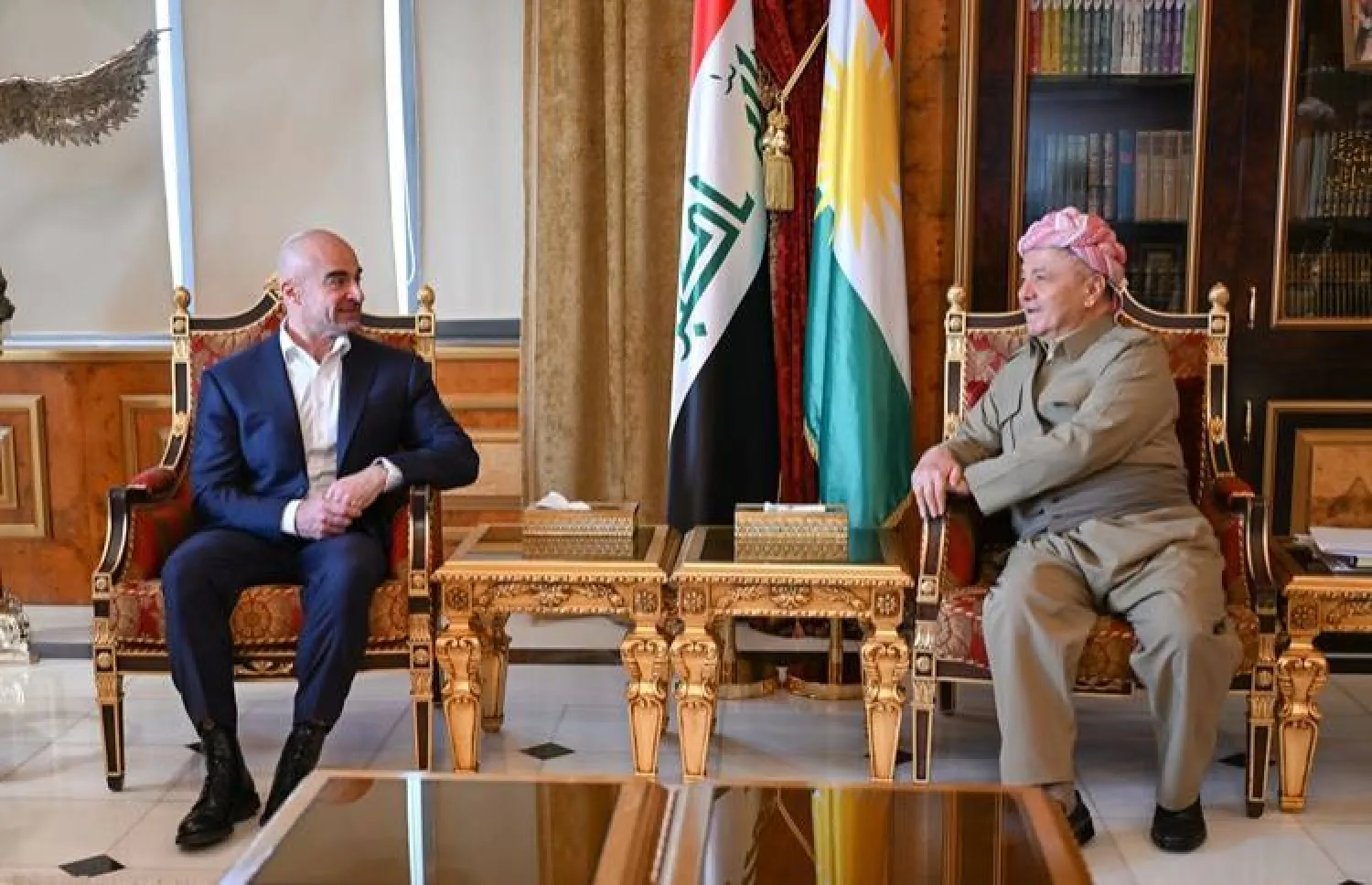
Kurdistan Democratic Party (KDP) leader Masoud Barzani and Patriotic Union of Kurdistan (PUK) leader Bafel Talabani meet. (Rudaw)
TT

Iraqi Kurdistan without a Govt Nearly One Year Since Parliamentary Elections

Kurdistan Democratic Party (KDP) leader Masoud Barzani and Patriotic Union of Kurdistan (PUK) leader Bafel Talabani meet. (Rudaw)

The Iraqi Kurdistan Region remains without a government nearly a year since parliamentary elections were held in the region. The influential parties have been unable to agree on a cabinet lineup, reflecting the extent of the political divisions and complications even as Iraq prepares to hold its own elections in November.

The Kurdish polls on October 20, 2024, led to the election of 100 lawmakers with the dominant Kurdistan Democratic Party (KDP), led by Masoud Barzani, winning 39 seats and its rival the Patriotic Union of Kurdistan (PUK), led by Bafel Talabani, winning 23.

The two parties, which enjoy a simple majority in parliament, could have easily formed a new government, but complicated disputes have hampered their efforts.

They have been holding intense talks in recent days to form a cabinet, but observers believe they won’t lead anywhere. Rather, the KDP and PUK will likely await the results of the general elections in Iraq and reach some form of deal with the federal authorities before forming a new government in Kurdistan.

The presidency of Kurdistan and position of its prime minister have often gone to the KDP, while the president of the federal republic has often gone to a figure from the PUK.

On Saturday, Barzani and Talabani held talks in an effort to overcome the political deadlock.

A senior source from the KDP told Kurdistan 24 that they have made progress in efforts to form a new government. He expected the Kurdish parliament to meet in the next two weeks, while sources from both parties said they will hold more talks ahead of agreeing on a lineup.

Should they succeed, it will be the Kurdistan Region’s tenth government after it separated from Baghdad in the 1990s.

Kurdish sources have tied the progress in government talks to Talabani’s visit to Washington last week.

They told Asharq Al-Awsat that the United States has been pressuring the KDP and PUK to form a new government.

Observers have said that the deadlock has been negatively impacting Kurdistan and drawing the ire of voters as elections draw near.

A report by the STOP Organization for Monitoring and Development, an NGO in Kurdistan, said this has been the longest government deadlock witnessed in the region.

The caretaker government has continued to issue decisions and sign strategic contracts since October 2022, which is when it started to operate in a caretaker capacity, it noted.

Moreover, it said Kurdish lawmakers have been earning a full salary, without performing their parliamentary duties, which is a waste of public funds.

Media aide to the KDP leader Kifah Mahmoud told Asharq Al-Awsat that the Kurdish parties have “delayed in forming a new government for several reasons,” which he mostly blamed on the PUK and the political situation in Iraq, as well as malign meddling by parties he did not name.

He noted that the delay has not impacted the overall performance of the caretaker government, adding that the cooperation between the KDP and PUK leaderships has given the cabinet additional support.

He did acknowledge that government formation efforts are in their final stages and that a lineup may be announced before the November elections.

Leading member of the PUK Soran Dawde stressed that the party is keen on the formation of a government as soon as possible.

Talabani’s frequent visits to the Kurdistan capital Erbil are evidence of his determination to end the impasse, he told Asharq Al-Awsat.

Furthermore, he dismissed accusations that the PUK was behind the delay, hoping that the intense meetings between Barzani and Talabani were a sign that a new government will be formed soon.

Meanwhile, political analyst Kadhim Yawer said the “high demands” by both parties are one of the reasons for the delay.

Each one wants more government seats and they are eyeing the seats allocated to the Kurdish parties in the federal government, which is creating complications and obstacles, he told Asharq Al-Awsat.

The federal government will be formed after the November elections.


EU Condemns Israel's West Bank Control Measures

The Israeli settlement of Har Homa, seen from the West Bank city of Bethlehem, Tuesday, Dec. 17, 2024. (AP)
TT

EU Condemns Israel's West Bank Control Measures

The Israeli settlement of Har Homa, seen from the West Bank city of Bethlehem, Tuesday, Dec. 17, 2024. (AP)

The European Union on Monday condemned new Israeli measures to tighten control of the West Bank and pave the way for more settlements in the occupied Palestinian territory, AFP reported.

"The European Union condemns recent decisions by Israel's security cabinet to expand Israeli control in the West Bank. This move is another step in the wrong direction," EU spokesman Anouar El Anouni told journalists.


Atrocities in Sudan's El-Fasher Were 'Preventable Human Rights Catastrophe'

Sudanese displaced people who left El Fasher after its fall, sit in the shade in Tawila at the Rwanda camp reception point on December 17, 2025. (Photo by AFP)
TT

Atrocities in Sudan's El-Fasher Were 'Preventable Human Rights Catastrophe'

Sudanese displaced people who left El Fasher after its fall, sit in the shade in Tawila at the Rwanda camp reception point on December 17, 2025. (Photo by AFP)

The atrocities unleashed on El-Fasher in Sudan's Darfur region last October were a "preventable human rights catastrophe", the United Nations said Monday, warning they now risked being repeated in the neighbouring Kordofan region.


"My office sounded the alarm about the risk of mass atrocities in the besieged city of El-Fasher for more than a year ... but our warnings were ignored," UN rights chief Volker Turk told the Human Rights Council in Geneva.


He added that he was now "extremely concerned that these violations and abuses may be repeated in the Kordofan region".


Arab League Condemns Israel's Decisions to Alter Legal, Administrative Status of West Bank

A general view shows the opening session of the meeting of Arab foreign ministers at the Arab League Headquarters (Reuters)
TT

Arab League Condemns Israel's Decisions to Alter Legal, Administrative Status of West Bank

A general view shows the opening session of the meeting of Arab foreign ministers at the Arab League Headquarters (Reuters)

The General Secretariat of the Arab League strongly condemned decisions by Israeli occupation authorities to impose fundamental changes on the legal and administrative status of the occupied Palestinian territories, particularly in the West Bank, describing them as a dangerous escalation and a flagrant violation of international law, international legitimacy resolutions, and signed agreements, SPA reported.

In a statement, the Arab League said the measures include facilitating the confiscation of private Palestinian property and transferring planning and licensing authorities in the city of Hebron and the area surrounding the Ibrahimi Mosque to occupation authorities.

It warned of the serious repercussions of these actions on the rights of the Palestinian people and on Islamic and Christian holy sites.

The statement reaffirmed the Arab League’s firm support for the legitimate rights of the Palestinian people, foremost among them the establishment of their independent state on the June 4, 1967 borders, with East Jerusalem as its capital.
