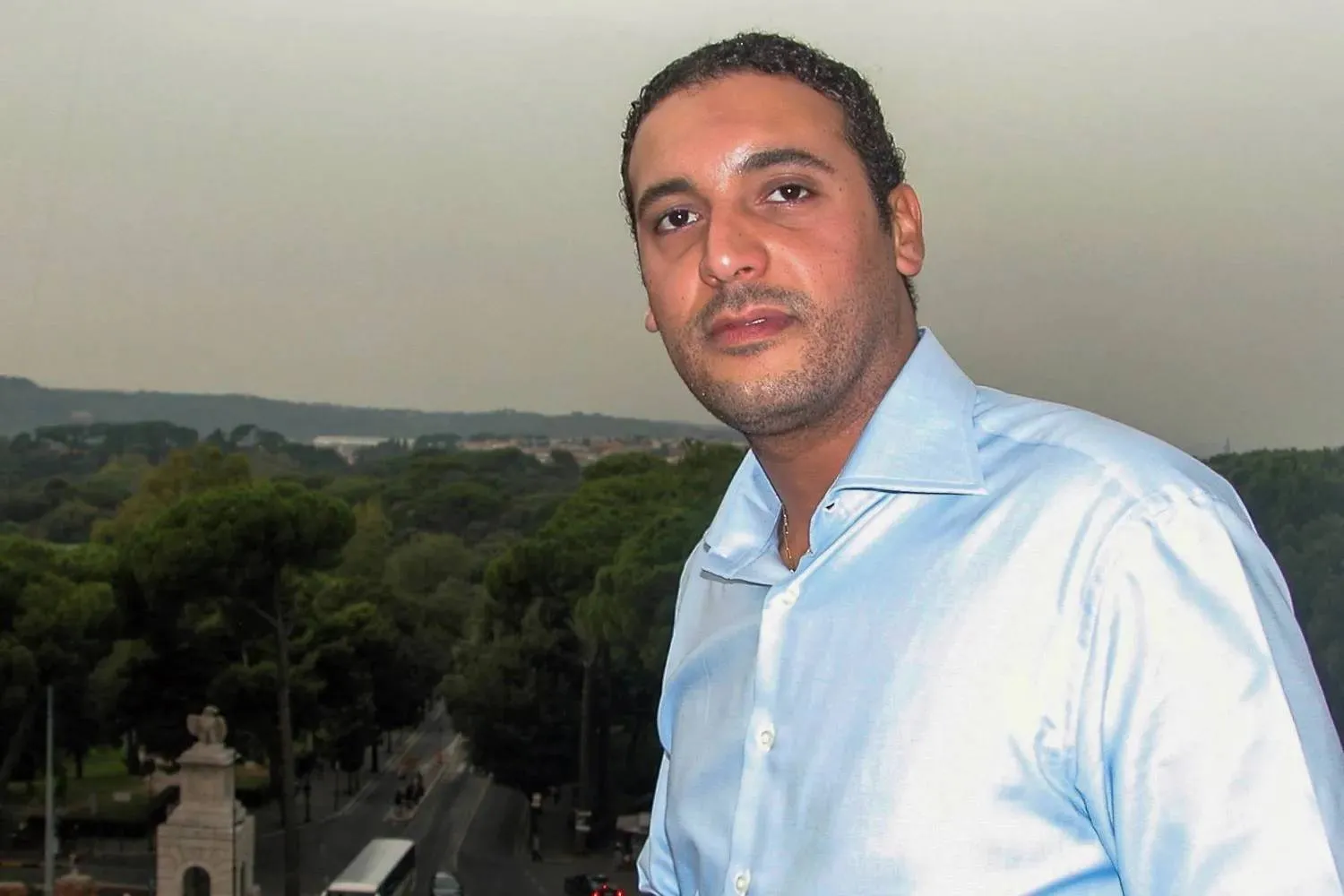

Ten years after his arrest in Beirut, Hannibal Gaddafi remains in detention as Lebanon struggles to resolve his case. Judge Hasan al-Shami, head of the official committee investigating the 1978 disappearance of Imam Musa al-Sadr and his two companions, said the issue “requires a legal and judicial solution” rather than political bargaining.
Speaking to Asharq al-Awsat, al-Shami stressed that “only the judiciary decides” Gaddafi’s fate, noting that lead investigator Judge Zaher Hamadeh “rejects any political settlement.” He dismissed suggestions of a deal, swap, or compromise.
Gaddafi was arrested in December 2015 on the basis of an Interpol notice. Initially questioned as a witness in the Sadr case, he has since faced charges of withholding information related to the abduction. His lawyers filed a request for release in August, but the courts have not yet ruled.
Al-Shami denied claims of political persecution or mistreatment, saying Gaddafi receives family visits, enjoys phone and internet access, and has even conducted media interviews from detention. “He is not treated unfairly,” al-Shami said. “The judiciary is respected, and Judge Hamadeh is among the best in his independence and integrity.”
Lebanese investigators say Gaddafi provided important testimony in 2015, running 50 pages. He admitted knowing who ordered al-Sadr’s kidnapping but refused to identify the individual unless guaranteed safe passage out of Lebanon. While not accused of direct involvement - he was only two years old at the time - he is charged with concealing information and obstructing justice.
Al-Shami argued that the case has been prolonged by Libya’s lack of cooperation. Lebanese authorities have repeatedly sent judicial notices concerning 13 former regime figures, including intelligence chief Abdullah al-Senussi, but never received responses. Libyan delegations, he added, have promised to deliver investigative files but consistently failed to do so.
Investigators believe al-Sadr was initially detained near Tripoli, then transferred through several secret prisons, but say further progress has been blocked by Libya’s refusal to share records. “They fear exposing the weakness of their own investigations,” al-Shami said.
He also accused members of the Gaddafi family and Lebanese intermediaries of attempting to exploit the case for financial or political gain. “We have rejected such deals for decades,” he insisted.
Al-Shami concluded that the path forward must remain judicial: “Any political bargain is unacceptable. Hannibal Gaddafi holds critical information. The solution lies in him revealing what he knows.”