

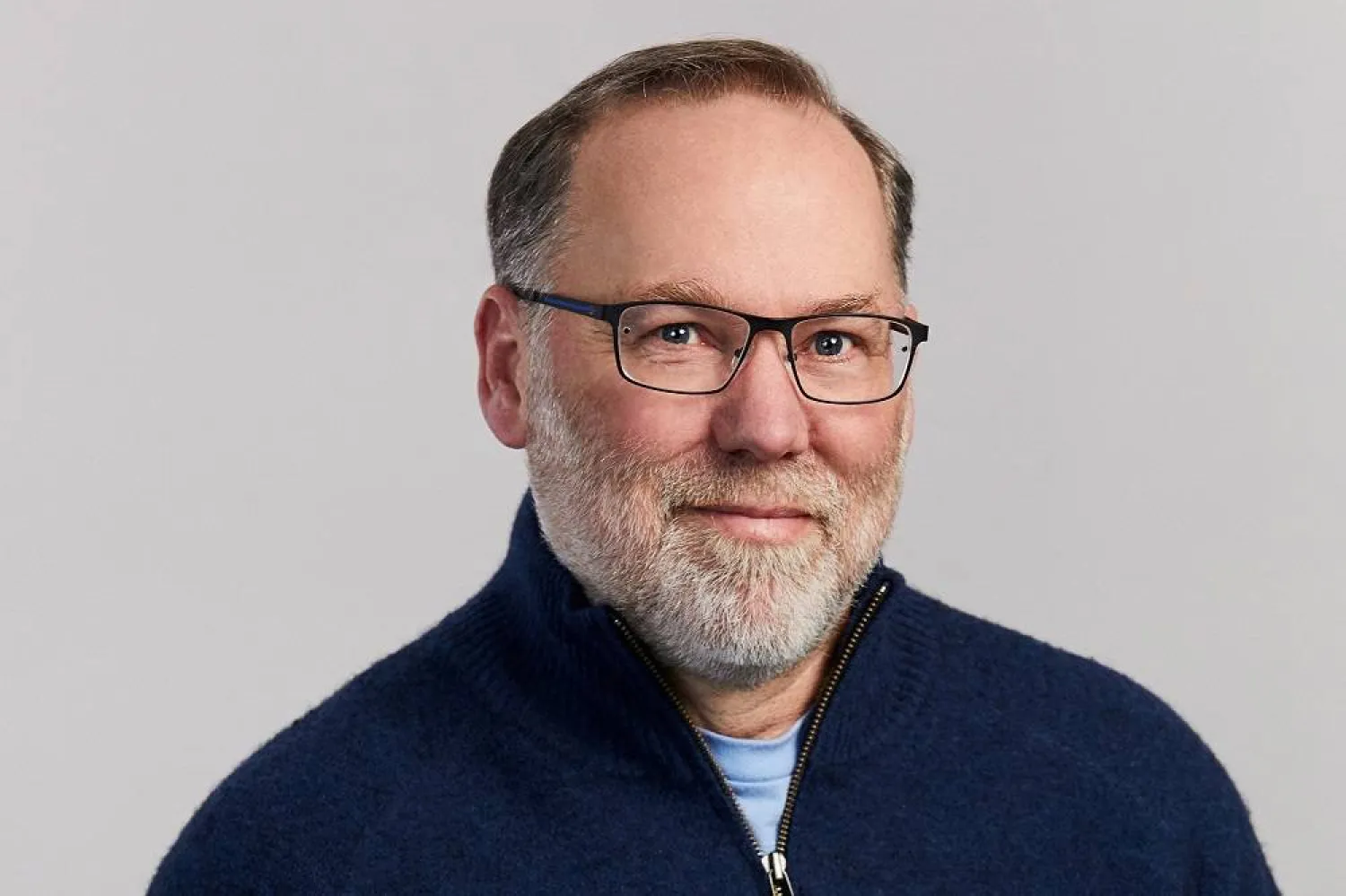

Unreachable Nobel Winner Hiking ‘Off the Grid’ 

Fred Ramsdell of Sonoma Biotherapeutics, who won the 2025 Nobel Prize in Physiology or Medicine, poses in an undated photograph. (Sonoma Biotherapeutics/Handout via Reuters)
TT

Unreachable Nobel Winner Hiking ‘Off the Grid’ 

Fred Ramsdell of Sonoma Biotherapeutics, who won the 2025 Nobel Prize in Physiology or Medicine, poses in an undated photograph. (Sonoma Biotherapeutics/Handout via Reuters)

One of this year's Nobel winners is a leading medical researcher who also offers a shining example of work-life balance -- so much so that he might not know he won.

Fred Ramsdell was among those honored Monday with a 2025 Nobel Prize in Medicine, but he's currently "living his best life" on an "off the grid" hiking foray, a spokesperson from his San Francisco-based lab, Sonoma Biotherapeutics, told AFP.

Ramsdell shared the prestigious prize with Mary Brunkow of Seattle, Washington and Shimon Sakaguchi of Osaka University in Japan for their discoveries related to the functioning of the immune system.

But the laureate's digital detox means the Nobel committee has been unable to reach him and break the news.

Jeffrey Bluestone, a friend of Ramsdell's and co-founder of the lab, said the researcher deserves credit but he can't reach him, either.

"I have been trying to get a hold of him myself. I think he may be backpacking in the backcountry in Idaho," Bluestone told AFP.

The Nobel committee also hit a roadblock trying to reach Brunkow -- both researchers are based on the US West Coast, which is nine hours behind Stockholm -- but eventually got ahold of her.

"I asked them to, if they have a chance, call me back," said Thomas Perlmann, secretary-general of the Nobel committee, at the press conference announcing the winners.

The three won the prize for research that identified the immune system's "security guards", called regulatory T-cells.

Their work concerns "peripheral immune tolerance" that prevents the immune system from harming the body, and has led to a new field of research and the development of potential medical treatments now being evaluated in clinical trials.

Sakaguchi, 74, made the first key find in 1995, discovering a previously unknown class of immune cells that protect the body from autoimmune diseases.

Brunkow, born in 1961 and now a senior project manager at the Institute for Systems Biology in Seattle, and Ramsdell, a 64-year-old senior advisor at Sonoma Biotherapeutics, made the other key discovery in 2001.



Saudi Embassy in Egypt Celebrates Flag Day, Honoring National Pride and Identity

This gesture reflects pride in the Saudi flag - SPA
TT

Saudi Embassy in Egypt Celebrates Flag Day, Honoring National Pride and Identity

This gesture reflects pride in the Saudi flag - SPA

The Saudi Embassy in Egypt was proudly adorned with the Flag Day in celebration of this national occasion, which is observed annually on March 11.

This gesture reflects pride in the Saudi flag, a symbol of unity and sovereignty that embodies the values of monotheism, justice, and strength upon which the Saudi state was established, SPA reported.

Decorating the embassy building with the Flag Day demonstrates the commitment of the Kingdom's diplomatic missions abroad to emphasize the significance of this national event and its historical and patriotic importance.

It reaffirms the enduring meanings the Saudi flag holds for the Kingdom's history, identity, and standing in the world.


Red Sea Labs Selects 12 Projects for New Edition of Feature Films Program

The Red Sea Film Foundation logo
TT

Red Sea Labs Selects 12 Projects for New Edition of Feature Films Program

The Red Sea Film Foundation logo

The Red Sea Film Foundation has selected 12 film projects for the new edition of its Feature Films Program, formerly known as the Lodge, under its educational arm, Red Sea Labs. The cohort includes three Saudi projects and nine international projects.

The foundation said in a statement that this transition from “Lodge” to “Feature Films Program” marks more than a rebrand; it signals a strategic new chapter for the Labs, aligning the program more clearly with its core mission of advancing high-quality feature filmmaking and strengthening connections with key global institutions.

The Feature Films Program continues to support emerging filmmakers from Saudi Arabia, the Arab world, Africa, and Asia, building on the experience of previous editions while reinforcing its professional structure and specialized focus.

Selected teams will take part in a comprehensive development journey that includes tailored mentorship, script consultations, production guidance, and industry orientation, led by regional and international experts, said the statement.

The program will conclude with project presentations at the Red Sea International Film Festival, where participants will have the opportunity to present their projects to producers, sales agents, distributors, and supporting institutions, contributing to the further development and advancement of their films.

The statement also said that further announcements and key milestones will be revealed throughout the year, reflecting the foundation’s broader vision for Red Sea Labs, and signaling continued growth in the opportunities offered to filmmakers across the region and beyond.

“We have rebuilt the Feature Films Program from the ground up with a clear focus: time for the craft, precision in the process, and a real roadmap to the industry, an inspiring, intensive journey designed around the filmmaker, the film, and the path to the global stage,” said Director of the Red Sea Labs Ryan Ashore.


Dresden City Center Cleared to Defuse Unexploded WWII Bomb

 11 March 2026, Saxony, Dresden: A police officer cordoned off Grosse Meissner Strasse at an evacuation of the city center, during an operation to defuse a World War II bomb at the former Carola Bridge. (dpa)
11 March 2026, Saxony, Dresden: A police officer cordoned off Grosse Meissner Strasse at an evacuation of the city center, during an operation to defuse a World War II bomb at the former Carola Bridge. (dpa)
TT

Dresden City Center Cleared to Defuse Unexploded WWII Bomb

 11 March 2026, Saxony, Dresden: A police officer cordoned off Grosse Meissner Strasse at an evacuation of the city center, during an operation to defuse a World War II bomb at the former Carola Bridge. (dpa)
11 March 2026, Saxony, Dresden: A police officer cordoned off Grosse Meissner Strasse at an evacuation of the city center, during an operation to defuse a World War II bomb at the former Carola Bridge. (dpa)

Officials in Dresden evacuated 18,000 people Wednesday after the discovery of an unexploded World War II bomb, the largest such operation yet in the eastern German city, emergency services said.

A bomb squad was set to try to defuse the 250-kilogramme (550-pound) British bomb which was found during work in the city center to rebuild an Elbe river bridge that collapsed in 2024.

The exclusion zone had been fully established by 9:00 am (0800 GMT), said police in the Saxony state capital.

More than 400 police along with other emergency services were deployed, backed up by a helicopter and a drone, to check that homes, shops, schools, care homes and offices were empty inside a one-kilometer radius of the device.

The bomb was discovered on Tuesday during clearance and construction work following the partial collapse of the Carola Bridge in September 2024.

The evacuation affected major historic sites including the city's Zwinger Palace and the Frauenkirche church, as well as residential buildings, hotels and government offices.

Because the bomb's detonator is damaged, a water jet cutter has to be used which will "naturally delay" the operation, police spokesman Marko Laske told public broadcaster MDR.

If that doesn't work, bomb squad experts will have to consider detonating the bomb on site, he added.

Dresden was heavily bombed by the Allies on February 13 and 14, 1945, killing up to 25,000 people and destroying large parts of the old town known for its Baroque architecture.

World War II bombs were previously found and defused at the site in January and August 2025, with thousands of people affected each time.