


Election Calls Heap Pressure on Macron to End Political Crisis 

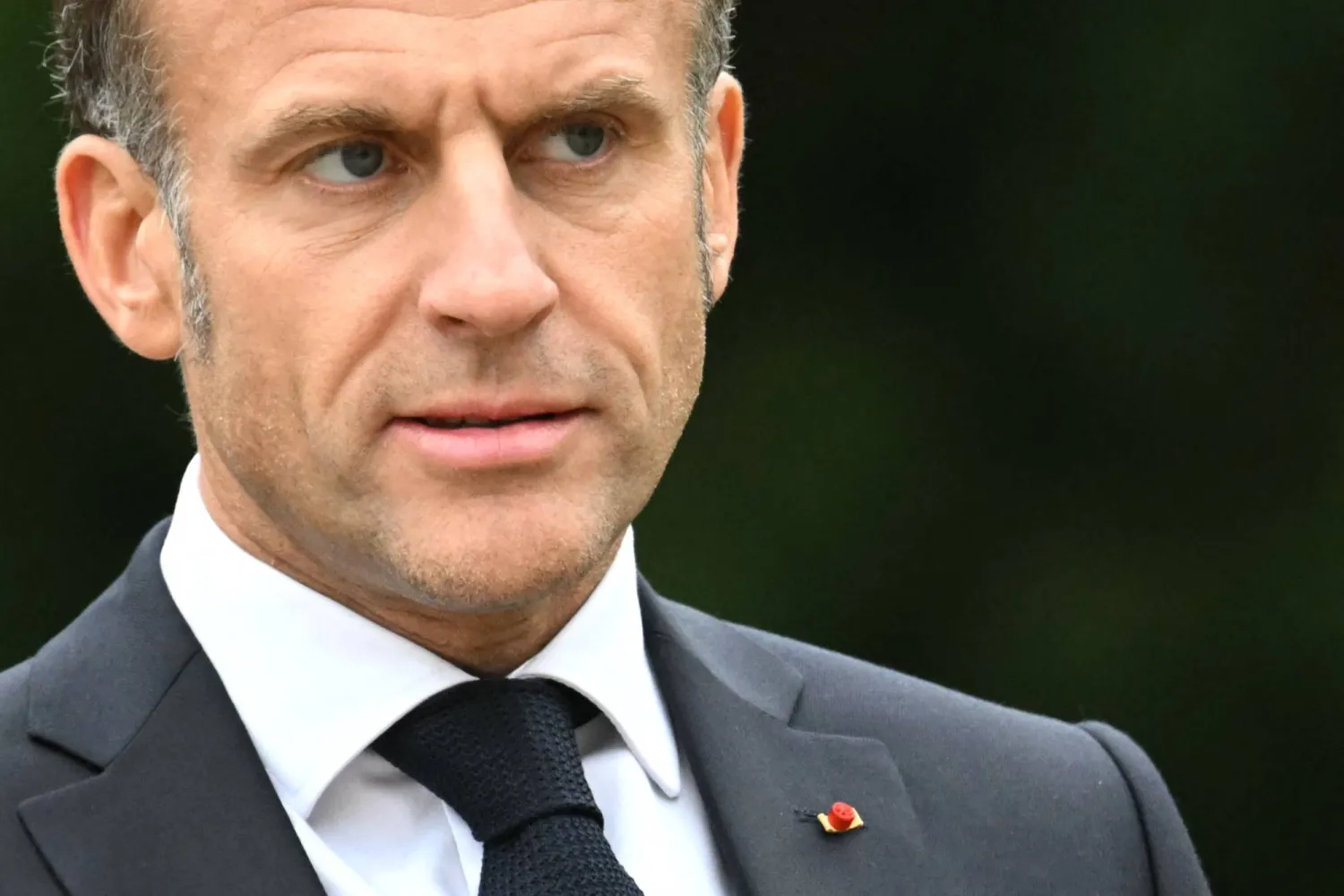
French President Emmanuel Macron looks on as he speaks with Luxembourg Prime Minister at the Senningen Castle in Luxembourg on October 3, 2025. (AFP)
TT

Election Calls Heap Pressure on Macron to End Political Crisis 

French President Emmanuel Macron looks on as he speaks with Luxembourg Prime Minister at the Senningen Castle in Luxembourg on October 3, 2025. (AFP)

France's President Emmanuel Macron faced deepening pressure on Tuesday to hold a snap parliamentary election or even resign to end political chaos in the euro zone's second biggest economy that has forced the resignation of five prime ministers in less than two years.

The 47-year-old president, who was seen this week wandering alone beside the river Seine deep in thought, has repeatedly said he will see out his second term, which ends in 2027.

But resignation calls, long confined to the fringes, have entered the mainstream during one of the worst political crises since the 1958 creation of the Fifth Republic, France's current system of government.

On Tuesday, as Macron's outgoing Prime Minister Sebastien Lecornu held last-ditch talks to form a new government, his first premier in 2017, Edouard Philippe, said it was time for a new president to break the deadlock.

"He must now address this dereliction of the state, take a decision commensurate with his function and, in my view, that's guaranteeing the continuity of our institutions by leaving in an orderly manner," he told RTL radio.

ALLIES ROUND ON MACRON

Philippe, whom polls show to be the best-placed candidate to lead the political center in a succession battle, was the second of Macron's former prime ministers to distance themselves from him in as many days.

Gabriel Attal, another erstwhile Macron loyalist, was blunt in his criticism. He was prime minister for a few months last year before Macron called a snap vote that delivered a hung parliament with three ideologically opposed blocs.

"Like many French people, I no longer understand the president's decisions," he said on the TF1 news channel, after Macron asked Lecornu, who had just tendered his resignation, to go back to opponents for last-gasp talks.

Lecornu, whose 14-hour-old administration was the shortest in modern French history, was given two days to find consensus.

He was set to hold talks on Tuesday with leaders of Macron's centrist alliance and conservatives - the so-called "common platform" - to see if they can agree on a new cabinet.

However, he will also need the Socialists on board to have the numbers needed to form a majority in the National Assembly - not least to pass a budget for next year.

'IT'S A MESS'

Lecornu's resignation was precipitated by the furious criticism over the composition of his government, announced on Sunday evening. Foes and allies alike said it represented continuity and not change.

Bruno Retailleau, head of the conservative Republicans party, said he did not want to see his party absorbed into a broad Macron-led alliance, but did not close the door on a return to government.

Far-right leader Marine Le Pen, whose National Rally party tops opinion polls, wants an early parliamentary election.

Markets have taken fright, with investors keeping a close eye on France's ability to cut a yawning budget deficit. French stocks fell 1.4% on Monday and the risk premium on French government bonds yields rose to a nine-month high on the crisis.

"It's a mess. It makes you sad," said Brigitte Gries, a 70-year-old pensioner in Paris.

"We're becoming a bit of a laughing stock around the world right now," taxi driver Soufiane Mansour said in the southern city of Montpellier. "We're a bit of a clown around the world and in Europe, unfortunately."



Putin in Contact with Israel, Iran Leaders to Help 'De-escalate', Says Kremlin

Russian President Vladimir Putin takes part in a ceremony to receive letters of credence from newly appointed foreign ambassadors at the Grand Kremlin Palace in Moscow on January 15, 2026. (Photo by Ramil Sitdikov / POOL / AFP)
TT

Putin in Contact with Israel, Iran Leaders to Help 'De-escalate', Says Kremlin

Russian President Vladimir Putin takes part in a ceremony to receive letters of credence from newly appointed foreign ambassadors at the Grand Kremlin Palace in Moscow on January 15, 2026. (Photo by Ramil Sitdikov / POOL / AFP)

Russian President Vladimir Putin on Friday held phone calls with the leaders of Israel and Iran, the Kremlin said, offering mediation amid large-scale protests in Iran that have raised fears of a military confrontation in the region. 

Independent monitors say Iranian security forces have killed thousands in a forceful response to nationwide anti-government protests -- a crackdown that prompted threats of military action by the United States, Israel's key ally. 

Iran and Israel fought a brief war in June that saw unprecedented Israeli attacks on Iranian military and nuclear facilities. The United States had briefly joined those strikes, hitting three major Iranian nuclear sites. 

On Friday, Russia announced Putin was in contact with both Israeli Prime Minister Benjamin Netanyahu and Iranian President Masoud Pezeshkian in a bid to cool tensions between the two rivals. 

"The situation in the region is highly tense, and the president continues his efforts to facilitate de-escalation," Kremlin spokesman Dmitry Peskov said. 

Moscow is a close ally of Iran. It has also strived for good relations with Israel, though those ties became strained amid Russian criticsm of Israel's actions in Gaza since October 7, 2023. 

In a call with Israel's Netanyahu on Friday, the Kremlin said Russia had expressed its "readiness to continue its mediation efforts." 

It did not clarify what current efforts were being undertaken or comment on the protests in Iran. 

Moscow had previously offered mediation during the June war. 

Peskov said that Moscow would announce "the results of our telephone conversation with the Iranian President very soon." 

Netanyahu said Sunday that he hoped Iran would soon be freed from what he described as the "yoke of tyranny", amid the protests. 

However, the rallies appear to have diminished over the last few days in the face of repression and a week-long internet blackout. 

Iran has repeatedly accused the United States and Israel of inciting the unrest and trying to undermine the Islamic republic's national unity. 


Trump Accepts Nobel Medal from Venezuelan Opposition Leader Machado

(COMBO) This combination of pictures created on January 14, 2026 shows US President Donald Trump at the White House in Washington, DC, on March 26, 2025 and Nobel peace laureate Maria Corina Machado in Oslo, Norway, on December 11, 2025. On January 15 US President Donald Trump is scheduled to meet with Venezuelan opposition leader Maria Corina Machado, whose pro-democracy movement he has sidelined since toppling her country's leader, and whose Nobel Peace Prize he openly envies.
TT

Trump Accepts Nobel Medal from Venezuelan Opposition Leader Machado

(COMBO) This combination of pictures created on January 14, 2026 shows US President Donald Trump at the White House in Washington, DC, on March 26, 2025 and Nobel peace laureate Maria Corina Machado in Oslo, Norway, on December 11, 2025. On January 15 US President Donald Trump is scheduled to meet with Venezuelan opposition leader Maria Corina Machado, whose pro-democracy movement he has sidelined since toppling her country's leader, and whose Nobel Peace Prize he openly envies.

Venezuelan opposition leader Maria Corina Machado gave her Nobel Peace Prize medal to US President Donald Trump on Thursday during a White House meeting, in a bid to influence his efforts to shape her country's political future.

A White House official confirmed that Trump intends to keep the medal, Reuters reported.

In a social media post on Thursday evening, Trump wrote: "Maria presented me with her Nobel Peace Prize for the work I have done. Such a wonderful gesture of mutual respect. Thank you Maria!"

Machado, who described the meeting as "excellent," said the gift was in recognition of what she called his commitment to the freedom of the Venezuelan people.

The White House later posted a photo of Trump and Machado with the president holding up a large, gold-colored frame displaying the medal. Accompanying text read, "To President Donald J. Trump In Gratitude for Your Extraordinary Leadership in Promoting Peace through Strength," and labeled ‌the gesture as a "Personal ‌Symbol of Gratitude on behalf of the Venezuelan People."

Machado's attempt to sway Trump ‌came ⁠after he dismissed ‌the idea of installing her as Venezuela's leader to replace the deposed Nicolas Maduro.

Trump openly campaigned for the prize before Machado was awarded it last month and complained bitterly when he was snubbed.

Though Machado gave Trump the gold medal that honorees receive with the prize, the honor remains hers; the Norwegian Nobel Institute has said the prize cannot be transferred, shared or revoked.

Asked on Wednesday if he wanted Machado to give him the prize, Trump told Reuters: "No, I didn't say that. She won the Nobel Peace Prize."

The Republican president has long expressed interest in winning the prize and has at times linked it to diplomatic achievements.

The lunch meeting, which appeared to last slightly over ⁠an hour, marked the first time the two have met in person.

Machado then met with more than a dozen senators, both Republican and Democratic, on Capitol Hill, ‌where she has generally found more enthusiastic allies.

During the visit, White House press ‍secretary Karoline Leavitt said Trump had looked forward to meeting ‍Machado, but stood by his "realistic" assessment that she did not currently have the support needed to lead the country in the ‍short term.

Machado, who fled the South American nation in a daring seaborne escape in December, is competing for Trump's ear with members of Venezuela's government and seeking to ensure she has a role in governing the nation going forward. After the United States captured Maduro in a snatch-and-grab operation this month, opposition figures, members of Venezuela's diaspora and politicians throughout the US and Latin America expressed hope for Venezuela to begin a process of democratization.

HOPES OF A MOVE TO DEMOCRACY

Democratic Senator Chris Murphy, one of the senators who met with Machado, said the opposition leader had told senators that repression in Venezuela was no different now ⁠than under Maduro.

Venezuela's interim President Delcy Rodriguez is a "smooth operator" who was growing more entrenched by the day thanks to Trump's support, he said.

"I hope elections happen, but I'm skeptical," said Murphy, of Connecticut.

Trump has said he is focused on securing US access to the country's oil and economically rebuilding Venezuela. Trump has on several occasions praised Rodriguez, Maduro's second-in-command, who became Venezuela's leader upon his capture. In an interview with Reuters on Wednesday, Trump said, "She's been very good to deal with."

Machado was banned from running in Venezuela's 2024 presidential election by a top court stacked with Maduro allies.

Outside observers widely believe Edmundo Gonzalez, an opposition figure backed by Machado, won by a substantial margin, but Maduro claimed victory and retained power. While the current government has freed dozens of political prisoners in recent days, outside groups and advocates have said the scale of the releases has been exaggerated by Caracas.

In an annual address to lawmakers, Rodriguez called for diplomacy with the United States and said should she need to travel to Washington, she would do so "walking on ‌her feet, not dragged there."

She also said she would propose reforms to her country's oil industry aimed at increasing access for foreign investors.


Ukraine Seeks Energy Imports Surge Due to Russian Strikes

TOPSHOT - Cars drive along the Independence Square as a big screen on a building displays a temperature of -19 degrees Celsius in Kyiv on January 15, 2026, amid the Russian invasion of Ukraine. (Photo by Sergei GAPON / AFP)
TT

Ukraine Seeks Energy Imports Surge Due to Russian Strikes

TOPSHOT - Cars drive along the Independence Square as a big screen on a building displays a temperature of -19 degrees Celsius in Kyiv on January 15, 2026, amid the Russian invasion of Ukraine. (Photo by Sergei GAPON / AFP)

Ukraine's new energy minister on Friday ordered state companies to ratchet up imports from abroad, pointing to the struggles plaguing the grid after a systematic bombing campaign by Russia.

Engineers and rescue crews have been braving sub-zero temperatures to restore operations at power plants and substations battered over recent days by Russian drones and missiles, said AFP.

"State companies, primarily Ukrainian Railways and Naftogaz, must urgently ensure the procurement of imported electric energy during the 2025-26 heating season amounting to at least 50 percent of total consumption," Energy Minister Denys Shmygal said in a statement.

The minister did not give data on how much electricity Ukraine currently generates or imports, information that authorities have withheld due to war-time sensitivities.

Russian drone and missile attacks have recently plunged entire cities into darkness and left millions with sporadic or no heating at all, as temperatures dip to -20C in some areas.

Over recent days, AFP journalists in Kyiv have seen traffic lights powered down, shops and restaurants closed, and residents warming up and charging phones in tents set up by the state.

President Volodymyr Zelensky announced late on Thursday that 400,000 people had been left without electricity after Russian aerial attacks on Kharkiv, the country's second-largest city.

Also late on Thursday, Prime Minister Yulia Svyrydenko announced that strict curfew rules put in place at the beginning of Russia's invasion in February 2022 would be eased to allow Ukrainians to access emergency hubs providing heating and electricity.

The Kremlin has said the attacks are only targeting military facilities, and in previous years blamed civilians' suffering on Kyiv's refusal to accept Russian peace demands.