
Thousands of Palestinians Return to What Remains of Their Homes as Gaza Ceasefire Takes Effect

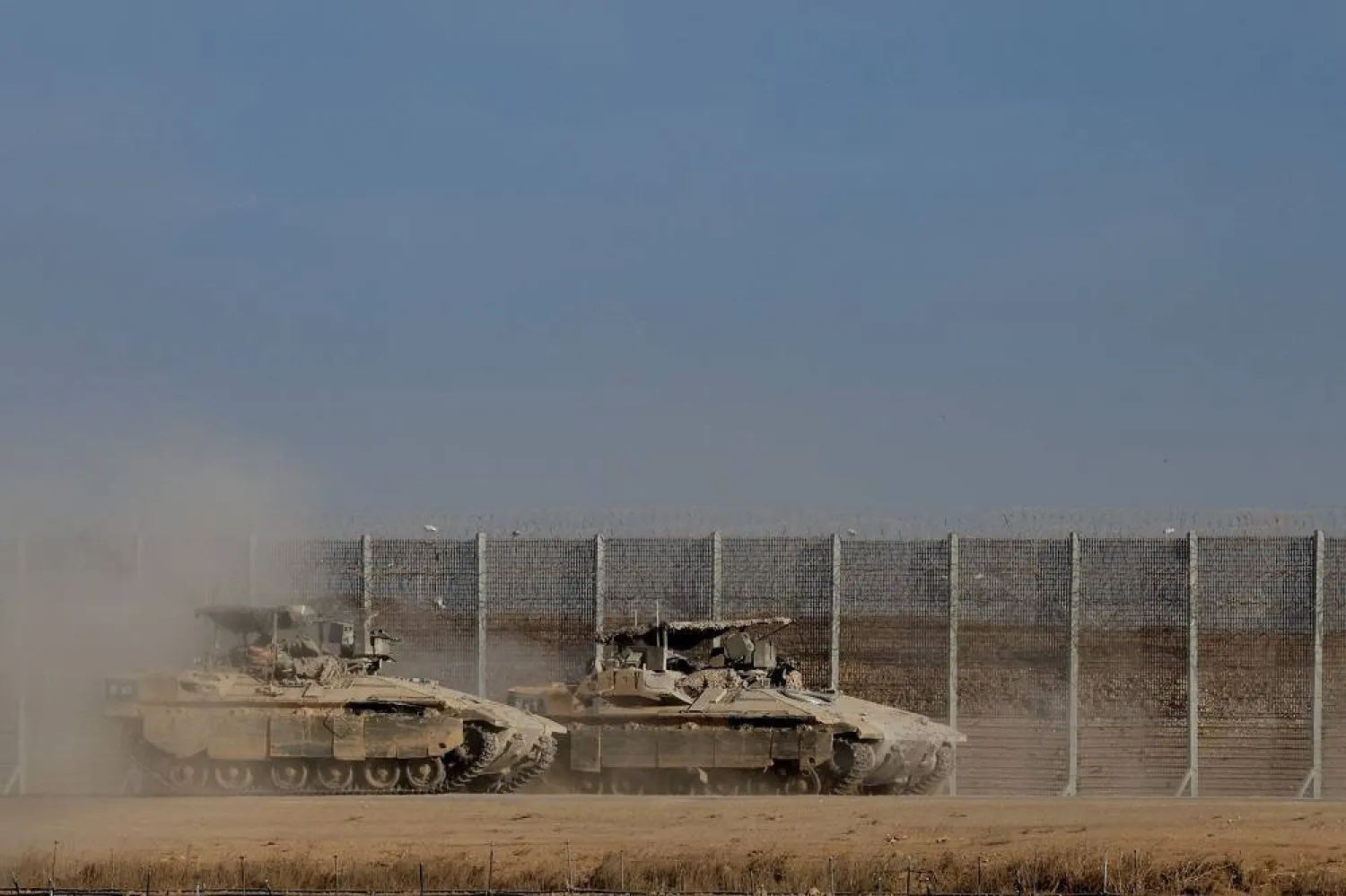
Israeli armored personnel carrier (APC) vehicles maneuver, after Israel's government ratified a ceasefire with Hamas in Gaza, on Israeli side of the Israel-Gaza border, in Israel, October 10, 2025. (Reuters)
TT

Thousands of Palestinians Return to What Remains of Their Homes as Gaza Ceasefire Takes Effect

Israeli armored personnel carrier (APC) vehicles maneuver, after Israel's government ratified a ceasefire with Hamas in Gaza, on Israeli side of the Israel-Gaza border, in Israel, October 10, 2025. (Reuters)

Tens of thousands of Palestinians headed back to the heavily destroyed northern Gaza Strip on Friday as a US-brokered ceasefire came into effect. The deal has raised hopes for ending the Israel-Hamas war, with all the remaining hostages taken set to be released within days. 

Questions remain over who will govern Gaza as Israeli troops gradually pull back and whether Hamas will disarm, as called for in US President Donald Trump's ceasefire plan. Prime Minister Benjamin Netanyahu, who unilaterally ended a ceasefire in March, hinted that Israel might renew its offensive if Hamas does not give up its weapons. 

The latest truce nevertheless marks a key step toward ending a ruinous two-year war that was triggered by Hamas' 2023 attack on Israel. The fighting has killed tens of thousands of Palestinians and displaced around 90% of the Gaza population of some 2 million, often multiple times. Many of them will find fields of rubble where their homes once stood. 

The military confirmed the start of the ceasefire Friday, and the remaining 48 hostages, around 20 of them believed to be alive, are to be released by Monday. Palestinians said heavy shelling in parts of Gaza earlier on Friday had mostly stopped after the military's announcement. 

Netanyahu said in a televised statement Friday that the next stages would see Hamas disarm and Gaza demilitarized. 

“If this is achieved the easy way — so be it. If not — it will be achieved the hard way,” Netanyahu said. He added that Hamas agreed to the deal “only when it felt that the sword was on its neck — and it is still on its neck.” 

The Israeli military has said it will continue to operate defensively from the roughly 50% of Gaza it still controls after pulling back to agreed-upon lines. 

People on the move  

A steady stream of people, the vast majority on foot, crammed onto a coastal road in the central Gaza Strip, heading north to see what might remain of their homes. It was a repeat of emotional scenes from an earlier ceasefire in January. Others headed to other parts of the Palestinian territory in the south. 

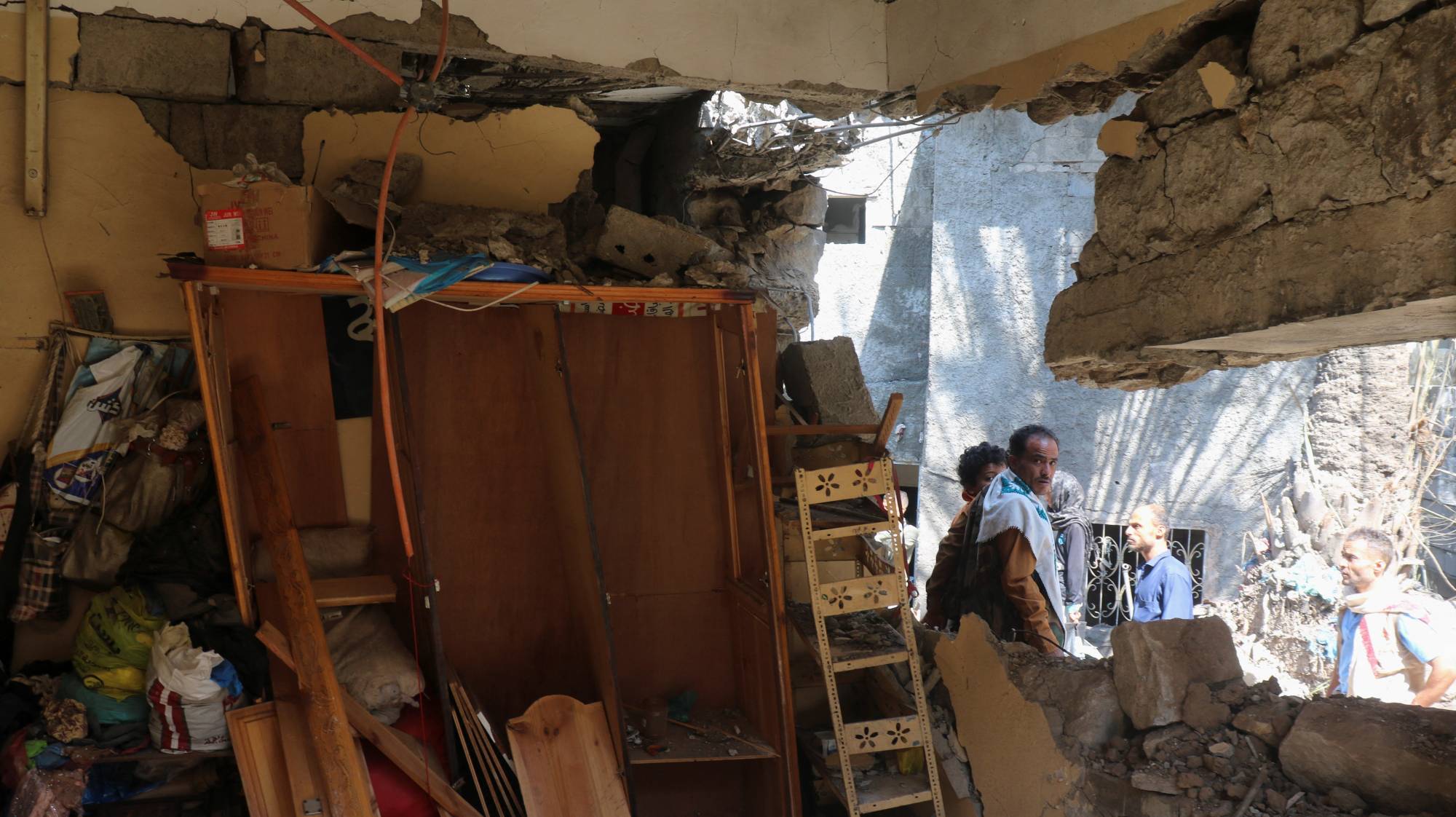
The destruction they find this time will be even greater, after Israel waged a new offensive in Gaza City, in the north, in recent weeks. The military bombed high-rises and blew up homes in what it said was an attempt to destroy Hamas' remaining military infrastructure. 

Palestinians have expressed relief that the war may end, tempered with concern about the future and lingering pain from the staggering death and destruction. 

“There wasn’t much joy, but the ceasefire somewhat eased the pain of death and bloodshed, and the pain of our loved ones and brothers who suffered in this war,” said Jamal Mesbah, who was displaced from the north and plans to return. 

In Gaza's southern city of Khan Younis, hundreds of Palestinians returning to their homes found wrecked buildings, rubble and destruction after Israeli troops withdrew. 

“There was nothing left. Just a few clothes, pieces of wood and pots,” said Fatma Radwan, who was displaced from Khan Younis. People were still trying to retrieve bodies from under the rubble, she added. 

Many buildings were flattened, and none was undamaged, as people went back to search for their belongings. “We came to a place that is unidentifiable. An unidentifiable town. Destruction is everywhere,” said Hani Omran, who was also displaced from Khan Younis. 

The war began when Hamas-led fighters stormed into Israel on Oct. 7, 2023, killing some 1,200 people and taking 251 hostage. 

In Israel’s ensuing offensive, more than 67,000 Palestinians have been killed in Gaza and nearly 170,000 wounded, according to Gaza’s Health Ministry, which doesn’t differentiate between civilians and combatants but says around half the deaths were women and children. The ministry is part of the Hamas-run government, and the United Nations and many independent experts consider its figures to be the most reliable estimate of wartime casualties. 

The war has also triggered other conflicts in the region, sparked worldwide protests and led to allegations of genocide that Israel denies. 

How the agreement is expected to unfold  

Israel is set to release around 2,000 Palestinian prisoners in exchange for the remaining hostages. A list Israel published Friday did not include high-profile prisoner Marwan Barghouti, the most popular Palestinian leader and a potentially unifying figure. Israel views him and other high-profile prisoners as terrorists and has refused to release them in past exchanges. 

Khalil al-Hayya, a senior Hamas official and lead negotiator, said Thursday evening that all women and children held in Israeli jails will be freed. 

The hostage and prisoner releases are expected to begin Monday, two Egyptian officials briefed on the talks and a Hamas official said, though another official said they could occur as early as Sunday night. The officials spoke on condition of anonymity because they were not authorized to be publicly named speaking about the negotiations. 

A relative of one of the Israeli hostages believed to have died in captivity says the family is hoping that his body will be returned for burial. 

“It’s a measured sense of hope in all hostage families,’’ said Stephen Brisley, whose sister, Lianne Sharabi, and her two teenage daughters were killed in the Oct. 7 attack. 

Lianne’s husband, Eli Sharabi, was eventually released, but his brother, Yossi, is believed to have died in an airstrike in January 2024. The family hopes to give him a dignified burial. 

"We hold our hope lightly because we’ve had our hopes dashed before," Brisley told The Associated Press from his home in South Wales. "It still feels like a long way between the announcement of the deal and actually getting Yossi’s body back to bury him.’’ 

As part of the deal, five border crossings are expected to reopen, including the Rafah crossing between Gaza and Egypt, Egyptian and Hamas officials said. That will allow aid to flow into the territory, parts of which are experiencing famine. 

The Trump plan calls for Israel to maintain an open-ended military presence inside Gaza, along its border with Israel. An international force, comprised largely of troops from Arab and Muslim countries, would be responsible for security inside Gaza. 

To help support and monitor the ceasefire deal, US officials said they would send about 200 troops to Israel as part of a broader, international team. The officials spoke on condition of anonymity to discuss details not authorized for release. 

The US would also lead a massive internationally funded reconstruction effort. 

The plan envisions an eventual role for the Palestinian Authority — something Netanyahu has long opposed. But it requires the authority, which administers parts of the West Bank, to undergo a sweeping reform program that could take years. 

The Trump plan is even more vague about a future Palestinian state, which Netanyahu firmly rejects. 


Abbas Calls on Hamas to Disarm, Israel to Withdraw from Gaza

Palestinian President Mahmoud Abbas. (dpa)
TT

Abbas Calls on Hamas to Disarm, Israel to Withdraw from Gaza

Palestinian President Mahmoud Abbas. (dpa)

Palestinian President Mahmoud Abbas said on Saturday that the second phase of US President Donald Trump’s ceasefire plan in Gaza demands Israel’s withdrawal from the enclave and for Hamas and other armed groups to turn over their weapons to his Palestinian Authority.

Speaking during a telephone call with German Chancellor Friedrich Merz, Abbas added that his priority now lies in implementing Trump’s plan to end the war, stop the bloodshed and ease the suffering of the Palestinian people in Gaza and prevent their displacement.

The implementation of the second phase will pave the way for the deployment of Palestinian police and the international stabilization force in Gaza and the launch of the reconstruction phase in an organized and effective manner, he explained.

Parallel steps must be carried out in the occupied West Bank to put an end to Israeli measures that are undermining the two-state solution, Abbas continued.

He demanded an end to Israeli settler violence against the Palestinian people, an end to settlement expansion and annexation policies, and an end to Israeli policies that are harming the Palestinian economy and government’s ability to meet its commitments to the people.

Abbas reiterated his condemnation of Hamas’ October 7, 2023 attack, saying the movement “must end its rule in Gaza and hand over its weapons.”

He renewed Palestine’s commitment to recognize Israel and the two-state solution, “so that an independent Palestinian state can coexist side by side by Israel in peace and security.”

Abbas and Merz held their call hours before the German leader arrived in Israel on an official visit.


Sudanese Paramilitary Drone Attack Kills 50, Including 33 Children in Kordofan

FILE - Sudanese soldiers from the Rapid Support Forces unit patrol during a rally for Dagalo, in Garawee town, north of Sudan, Saturday, June 15, 2019. (AP Photo)
TT

Sudanese Paramilitary Drone Attack Kills 50, Including 33 Children in Kordofan

FILE - Sudanese soldiers from the Rapid Support Forces unit patrol during a rally for Dagalo, in Garawee town, north of Sudan, Saturday, June 15, 2019. (AP Photo)

A drone attack by the Sudanese paramilitary forces hit a kindergarten in south-central Sudan, killing 50 people, including 33 children, a doctors’ group said.

Paramedics on the scene in the town of Kalogi in South Kordofan state were targeted in “a second unexpected attack," Sudan Doctors’ Network said in a statement late Friday.

Emergency Lawyers, a rights group tracking violence against civilians in Sudan reported in a statement Saturday the second strike on paramedics treating survivors in Kalogi and said “a third civilian site near the previous two” was also attacked, reported The Associated Press.

The group condemned the attack, blaming the paramilitary group, the Rapid Support Forces, or RSF, for the strikes, calling them “a flagrant violation of international humanitarian law, including the protection of civilians, especially children, and vital civilian infrastructure.”

The death toll is expected to be higher, but communication blackouts in the area have made it difficult to report casualties.

Thursday's attack is the latest in the fighting between the RSF, and the Sudanese military, who have been at war for over two years. It is now concentrating in the oil-rich Kordofan states.

“Killing children in their school is a horrific violation of children’s rights,” said UNICEF Representative for Sudan Sheldon Yett in a statement Friday.

“Children should never pay the price of conflict,” said Yett.

He said UNICEF urges all parties “to stop these attacks immediately and allow safe, unhindered access for humanitarian assistance to reach those in desperate need.”

Hundreds of civilians were killed throughout the Kordofan states in the last few weeks as intensified fighting shifted from Darfur after the RSF took over the besieged city of el-Fasher.

Sudanese military aerial strikes on Sunday killed at least 48 people, mostly civilians, in Kauda, South Kordofan.

UN Human Rights Chief Volker Türk warned that Kordofan could face new atrocities like those in el-Fasher.

Separately, the RSF condemned in a statement Friday a drone strike on the Chad-Sudan border, accusing the Sudanese military of being behind it and posted a video showing billowing black smoke. This couldn't be independently verified and it is unclear whether there were casualties in this strike. There was no immediate comment from the Sudanese military.

RSF’s violent takeover of el-Fasher was marked with executions of civilians, rapes and sexual assaults, and other atrocities. Thousands escaped and thousands more are feared killed or trapped in the city.

The RSF and the Sudanese military have been fighting for power over Sudan since 2023. More than 40,000 people were killed in the war, according to the World Health Organization, and 12 million displaced. However, aid groups say the true death toll could be way higher.


Türkiye FM Says SDF Showing No Intent to Honor Deal to Integrate into Syrian State

Turkish Foreign Minister Hakan Fidan speaks during an interview with Reuters at the 23rd edition of the annual Doha Forum, in Doha, Qatar, December 6, 2025. REUTERS/Ibraheem Abu Mustafa
TT

Türkiye FM Says SDF Showing No Intent to Honor Deal to Integrate into Syrian State

Turkish Foreign Minister Hakan Fidan speaks during an interview with Reuters at the 23rd edition of the annual Doha Forum, in Doha, Qatar, December 6, 2025. REUTERS/Ibraheem Abu Mustafa

Türkiye's foreign minister said the Kurdish-led Syrian Democratic Forces (SDF) are signaling "no intention" of honoring their deal to integrate into Syrian state structures and are instead trying to circumvent it.

Hakan Fidan said in an interview with Reuters on the sidelines of the Doha Forum that Ankara was not giving the Syrian government a "blank cheque" to “oppress” minorities, adding that everyone in Syria "must feel safe and free".

The minister also said Israel’s "destabilization policies" in Syria were the main obstacle to efforts to rebuild unity in the country.