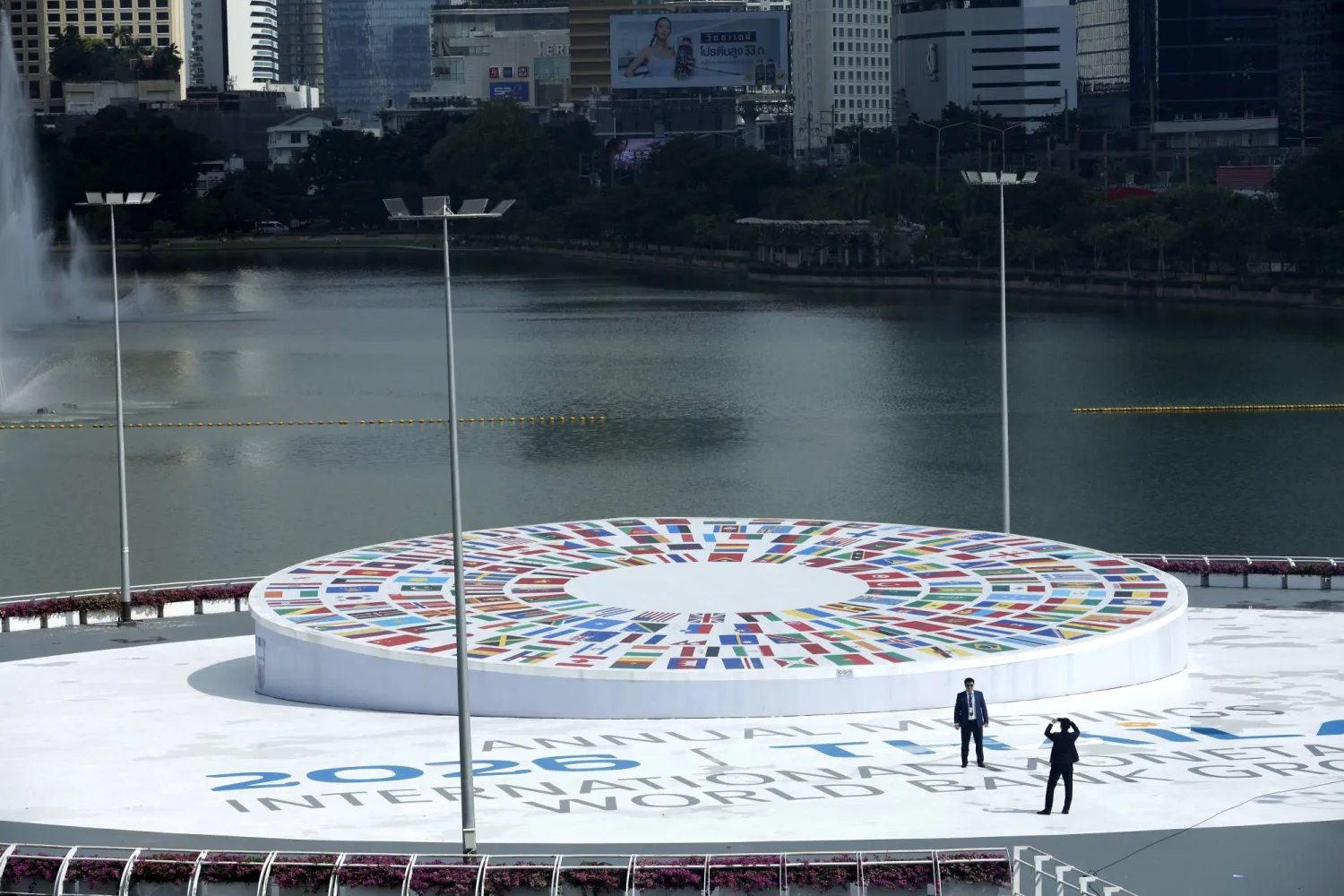

In a dramatic reversal from the tense atmosphere that gripped their gatherings two years ago, the International Monetary Fund (IMF) and the World Bank are holding their annual meetings in Washington this week under a mood of cautious optimism. The meetings coincide with the announcement of a peace agreement in Gaza, a development that eases geopolitical tensions that have long weighed on the global economy.
This moment marks a stark contrast to the 2023 meetings in Marrakesh, overshadowed by the Gaza war, which had heightened the strain on global policymakers. Yet despite the more encouraging political backdrop, financial experts remain wary.
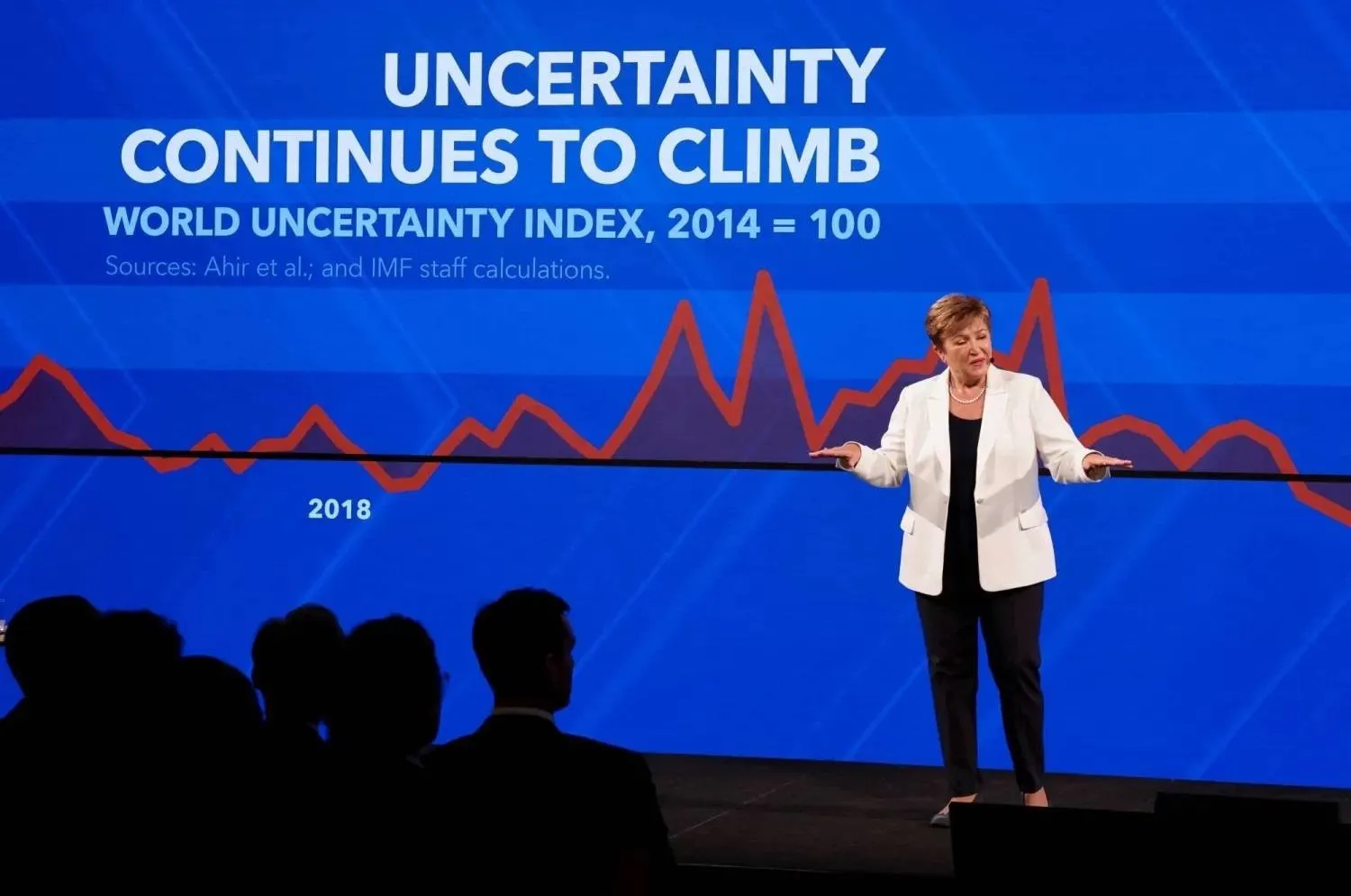
IMF Managing Director Kristalina Georgieva struck a notably somber tone in remarks delivered days before the meetings, warning investors: “Brace yourselves - uncertainty is the new normal, and it is here to stay.” She cautioned that global stock markets could face sharp corrections if the current investor frenzy around artificial intelligence (AI) stocks fades, evoking fears of a “tech bubble” reminiscent of the dot-com crash a quarter century ago.
The comparison is sobering. In 2000, the dot-com bubble — fueled by speculation in internet-based companies — burst after years of frenzied investment and unrealistic optimism about the potential of the digital economy. The crash erased trillions of dollars in market value and sent major economies into recession. Then, as now, investors were convinced they were witnessing the dawn of a “new economy” that would upend traditional business models and deliver boundless profits.
Georgieva warned that today’s easy financial conditions “mask rather than fix underlying weaknesses” and could reverse suddenly, triggering another market collapse. Such a shock, she said, would compound the growing list of global risks -from persistent trade tensions to unsustainable debt- that finance ministers and central bankers are expected to tackle this week in Washington.
Her warning came shortly after the Bank of England cautioned that the risk of a “sharp market correction” had risen, noting that valuations of AI-focused technology companies now rival those seen at the height of the 2000 bubble. With technology shares accounting for an ever-larger share of benchmark indices, the Bank said markets are “particularly vulnerable to volatility if expectations about AI’s impact turn less optimistic.”
The IMF and the Bank of England are not alone in their concerns. Prominent figures including OpenAI’s Sam Altman, JPMorgan Chase CEO Jamie Dimon, and US Federal Reserve Chair Jerome Powell have all sounded alarms about the pace and scale of AI-driven market speculation.
Georgieva’s concerns extend beyond the tech sector. She noted the unprecedented surge in global demand for gold, whose price has exceeded $4,000 an ounce for the first time in history, which she said was a clear reflection of investor unease in the face of mounting uncertainty. Meanwhile, geopolitical tensions between the United States and China continue to rattle markets. Her comments came as US President Donald Trump renewed his threats to impose 100 percent tariffs on Chinese imports, in retaliation for Beijing’s ban on rare earth metal exports, a move that triggered sharp market sell-offs.
As the meetings unfold, global finance ministers, central bankers, and senior officials face a daunting agenda. Key discussion points include market instability, asset price bubbles, and the possibility of a stock market downturn. Broader debates will address global growth prospects, the sustainability of public debt, the independence of monetary policy, and the structural challenges shaping the world economy.
In its most recent forecast, published in July, the IMF projected global GDP growth of 3 percent for 2025, a slight slowdown from 3.3 percent in 2024. Updated projections are expected during this week’s meetings.
The IMF warns that, despite signs of resilience, the world economy remains fragile. Rising trade barriers, persistent geopolitical tensions, and growing uncertainty continue to cloud the outlook. Financial markets, buoyed by inflated valuations, face the risk of sudden corrections that could tighten financial conditions and drag down growth. The resurgence of protectionism - particularly through US tariff measures - threatens global trade and productivity, while China’s efforts to redirect exports toward other markets present new challenges for developing economies.
Another pressing concern is the rise of nonbank financial intermediation, or “shadow banking.” Its rapid growth and interconnectedness have introduced new risks that require stronger regulatory oversight, a topic emphasized during an IMF conference in June 2025.
Debt remains at the core of the global financial debate. The IMF reports that global debt has surpassed 235 percent of world GDP, with public borrowing rising sharply amid persistent fiscal deficits. The Fund has urged emerging and developing economies to rebuild fiscal credibility, restructure unsustainable debt when necessary, and restore fiscal buffers to sustain essential spending.
There is also growing momentum for reform of the Bretton Woods institutions themselves. The BRICS bloc has called for an end to Western dominance over IMF and World Bank leadership, while the United States advocates a streamlining of their mandates to meet modern challenges more effectively.
Syria, meanwhile, will take a rare place at the center of discussions. The IMF is hosting a special session titled “Rebuilding Syria: A Journey Toward Stability and Prosperity,” featuring Syrian Finance Minister Mohammad Barniyeh. The session, moderated by Jihad Azour, Director of the IMF’s Middle East and Central Asia Department, will focus on postwar economic reforms, international donor coordination, and the IMF’s role in providing technical assistance and capacity-building support.