

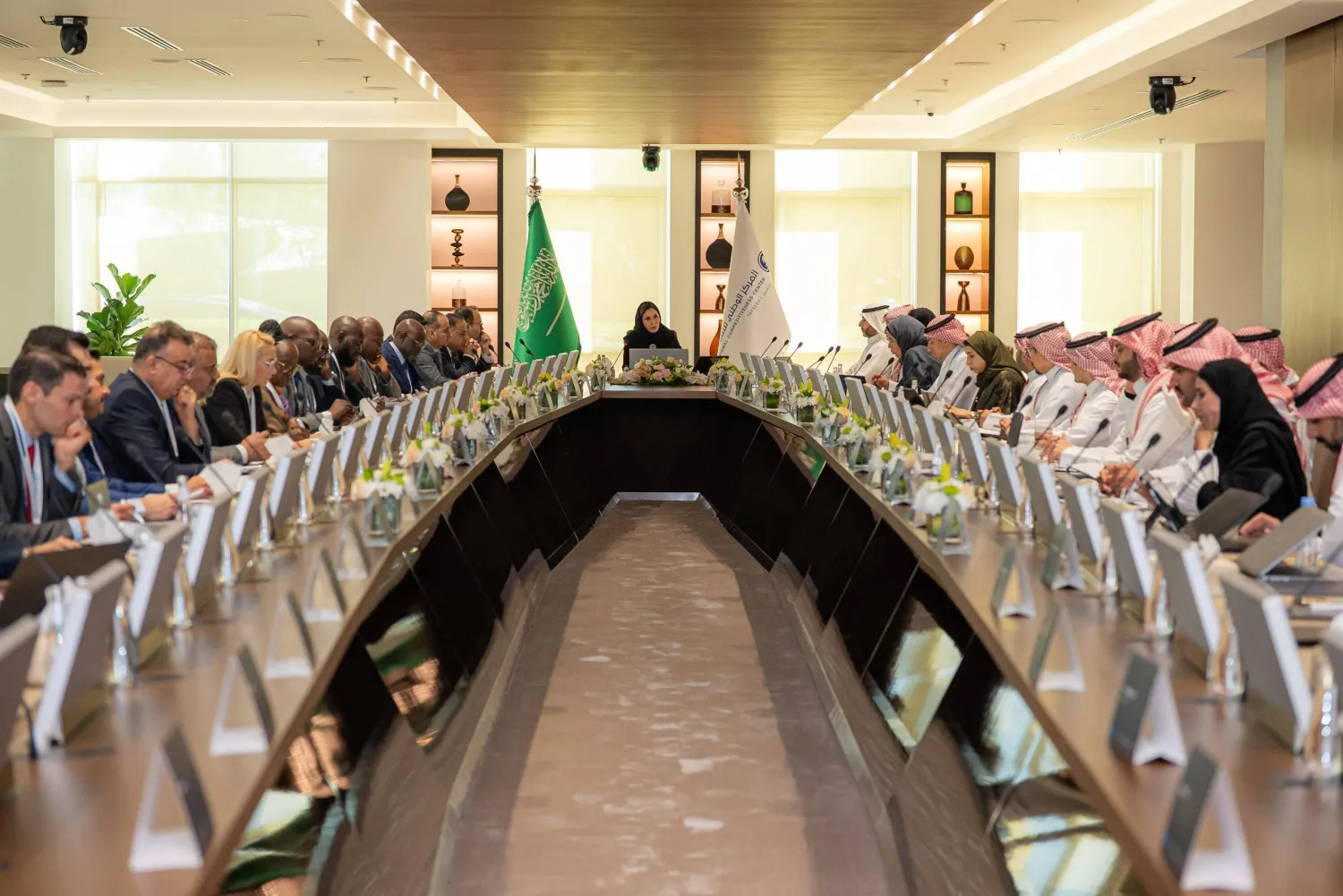

Saudi Arabia Exports Business Reform Expertise Through ‘Knowledge Center’

Workshops kicked off on Tuesday for a three-day program with participation from four countries — Zambia, The Gambia, Jordan, and Iraq — to study Saudi Arabia’s experience in business registration and licensing (Asharq Al-Awsat)
TT

Saudi Arabia Exports Business Reform Expertise Through ‘Knowledge Center’

Workshops kicked off on Tuesday for a three-day program with participation from four countries — Zambia, The Gambia, Jordan, and Iraq — to study Saudi Arabia’s experience in business registration and licensing (Asharq Al-Awsat)

Saudi Arabia is sharing its experience in business environment reforms with the world through the knowledge center established in partnership with the World Bank Group, which aims to promote peer learning among countries on best practices in this field.

The knowledge center serves as a dynamic international platform enabling countries to draw on the World Bank Group’s vast expertise alongside Saudi Arabia’s rich practical experience. It focuses on enhancing competitiveness and diversifying economic activity.

Workshops kicked off on Tuesday for a three-day program with participation from four countries — Zambia, The Gambia, Jordan, and Iraq — to study Saudi Arabia’s experience in business registration and licensing.

The Kingdom has been a pioneer in streamlining and accelerating company registration through the Saudi Business Center, which serves as an advanced model for integrating government services.

The Saudi Business Center facilitates procedures for starting, operating, and closing economic activities while providing all related services in line with international best practices.

It was established by a 2019 Cabinet decision and operates under the Council of Economic and Development Affairs.

Economic Reforms

Vice Minister of Commerce and CEO of the National Competitiveness Center Dr. Iman Al-Mutairi said Vision 2030 has driven an unprecedented transformation in the Saudi economy.

She noted that the Kingdom’s partnership with the World Bank Group led to the creation of the Knowledge Center initiative to strengthen international cooperation, accelerate sustainable development in beneficiary countries, and help them achieve their growth objectives.

Dr. Al-Mutairi added that Saudi Arabia has implemented more than 900 economic reforms since 2016 in collaboration with 65 government entities, and issued or updated about 1,200 regulations and bylaws.

These efforts, she said, have positioned the Saudi business environment among the world’s most attractive destinations for investors and entrepreneurs.

She stressed that the Saudi Business Center stands as a leading global model and a source of inspiration for countries seeking to establish unified entities that serve the private sector efficiently and effectively.

Knowledge Exchange

Program Manager of the World Bank Group–Saudi Arabia Knowledge Hub in Riyadh Ali Abu Kumail told Asharq Al-Awsat that the center, launched this year in Saudi Arabia, “aims to facilitate knowledge transfer among countries in economic development and build shared learning.”

He explained that the initiative seeks both to “highlight the capabilities Saudi Arabia has developed in recent years and share them with other nations,” and to “benefit from those countries’ development experiences.”

Abu Kumail described the event as “the first of its kind among regions,” bringing together Zambia, The Gambia, Jordan, and Iraq to explore Saudi Arabia’s “business registration and licensing experience.”

He noted that the Kingdom has made significant strides in recent years by simplifying and expediting registration procedures.

Workshops

Abu Kumail said the workshops aim to “enable participating countries to gain firsthand insight into Saudi Arabia’s registration and licensing mechanisms” through the Saudi Business Center, which represents an advanced model of government service integration.

He added that the center’s establishment coincides with the 50th anniversary of the World Bank’s partnership with Saudi Arabia. The program, he said, has a three-and-a-half-year plan featuring annual activities with countries from Africa and the Middle East to exchange expertise and produce research reports and indicators to help nations enhance their business environments.

According to Abu Kumail, cooperation areas under the knowledge center will focus on competitiveness and economic diversification, including issues such as competition, innovation, and industrial and economic development — all in line with Vision 2030. The initiative, he said, also offers other countries the opportunity to learn from Saudi Arabia’s reform experience.

Jordanian Experience

Jordan’s Companies General Controller Dr. Wael Armouti said the workshop provided a valuable opportunity to learn from “Saudi Arabia’s advanced experience in business registration and licensing,” describing it as “one of the most developed in the region.”

He added that Jordan also shared its own experience, noting that company registration there can now be completed “in less than a working day,” with limited liability companies established “in as little as one hour.”

Licensing procedures for small and medium enterprises, he said, have also been simplified and are handled by municipalities and local authorities, ensuring that all processes are now “on the right track to facilitate business startups.”

The launch of the first knowledge center workshop marks a practical step toward deepening knowledge exchange among nations and underscores Saudi Arabia’s leadership in building competitive and investor-friendly business environments.

The center’s future activities are expected to generate joint research projects and international reports that support sustainable economic development and accelerate business environment reforms across the Middle East and Africa.



Saudi Arabia Signs Mineral Cooperation Deals with Chile, Canada, Brazil

The MoUs were signed on the sidelines of the Ministerial Roundtable of ministers concerned with mining affairs, held as part of the fifth annual Future Minerals Forum (FMF) in Riyadh. (SPA)
TT

Saudi Arabia Signs Mineral Cooperation Deals with Chile, Canada, Brazil

The MoUs were signed on the sidelines of the Ministerial Roundtable of ministers concerned with mining affairs, held as part of the fifth annual Future Minerals Forum (FMF) in Riyadh. (SPA)

Saudi Arabia, represented by the Ministry of Industry and Mineral Resources, signed on Tuesday three international memoranda of understanding (MoUs) on mineral resources cooperation with the Chile, Canada, and Brazil.

The MoUs were signed on the sidelines of the Ministerial Roundtable of ministers concerned with mining affairs, held as part of the fifth annual Future Minerals Forum (FMF), hosted by Riyadh from January 13 to 15.

The deals reflect the Kingdom’s efforts to expand its international partnerships and strengthen technical and investment cooperation in the mining and minerals sector in a manner that serves mutual interests and supports the sustainable development of mineral resources.

The signing ceremony included MoUs on cooperation in the mineral resources field with the Chilean Ministry of Mining, the Canadian Department of Natural Resources, and the Brazilian Ministry of Mines and Energy.

The Ministerial Roundtable recorded the largest level of international representation of its kind globally, with participation from more than 100 countries, including all G20 members in addition to the European Union, as well as 59 multilateral organizations, industry associations, and non-governmental organizations.

The attendance reflects the standing the ministerial meeting has attained as a leading international platform for aligning perspectives, building partnerships, and developing practical solutions to global challenges in the mining and minerals sector.


Iran's Partners in Crisis after Trump Announces New Tariffs

The Iranian flag and 3D printed oil barrels miniature are seen in this illustration taken June 23, 2025. (Reuters)
TT

Iran's Partners in Crisis after Trump Announces New Tariffs

The Iranian flag and 3D printed oil barrels miniature are seen in this illustration taken June 23, 2025. (Reuters)

US President Donald Trump on Monday said any country that does business with Iran will face a tariff rate of 25% on any trade with the US as Washington weighs a response to the situation in Iran which is seeing its biggest anti-government protests in years.

Iran, a member of the OPEC oil producing group, exported products to 147 trading partners in 2022, according to World Bank's most recent data.

China and the United Arab Emirates are Iran’s largest trading partners, putting them at the top of the list of countries at risk of being hit by Trump’s 25% tariff threat, according to Bloomberg.

Countries like India, Brazil, Iraq, Türkiye and Russia are also major trade partners of Iran.

Fuel is Iran's biggest export item by value, while major imports include intermediate goods, vegetables, machinery and equipment.

China

China is the primary buyer of Iranian oil, which remains under international sanctions over Tehran's nuclear program.

In 2024, the trade turnover between the two countries amounted to $17.8 billion.

In 2025, China bought more than 80% of Iran's shipped oil, according to data from Kpler, an analytics firm.

Iranian oil has a limited pool of buyers because of US sanctions that seek to cut off funding to Tehran's nuclear program.

Also, Iran has a record amount of oil on the water, ​equivalent to about 50 days of output, with China having bought ‌less because of sanctions and Tehran seeking to protect its supplies from the risk of US strikes, data from Kpler and Vortexa shows.

Iranian oil imported by China is typically labelled by traders as originating from other countries, such as Malaysia, a major transshipment hub, and Indonesia.

Chinese customs data has not shown any oil shipped from Iran since July 2022.

UAE

While China is Iran's premier trade partner, the UAE is the second largest. Trade between Iran and the UAE has reached $16.11 billion, making it a vital center in Iran’s regional trade and putting the Emirates at the top of the list of countries at risk of being targeted by Trump’s tariffs.

Iraq

Iraq, Iran’s historical partner and geographically closest, ranks fourth globally with a trade volume reaching $12.3 billion, representing 9.9% of Iran’s total foreign trade activity.

In recent years, Iraq has relied on Iran to supply about 40% of its needs for gas and electricity, at a time when Iraqi infrastructure lacks the capacity to process natural gas for domestic use.

Iraq is already subject to US tariffs of 35% under Trump’s decision to impose reciprocal tariffs with many countries last August.

Currently, gas exports from Iran have been suspended or severely curtailed due to a combination of extreme domestic heating demand and broader economic pressures.

India

India's total bilateral trade with Iran stood at $1.34 billion for the first 10 months of 2025, according to India's commerce ministry. Major Indian exports to Iran include basmati rice, fruits, vegetables, drugs and other pharmaceutical products.

The US president already imposed levies as high as 50% on Indian goods tied to their purchase of Russian oil. The two sides have been working for months to finalize a deal that would provide long-sought tariff relief to New Delhi.

Türkiye

Turkish exports to Iran were $2.3 billion in full-year 2025, while imports were $2.2 billion over 11 months of the year, according to sector and official data sources.

Germany

Iran's exports to Germany stood at around 217 million euros in the first eleven months of 2025, an increase of 1.7%, according to data from the state-owned international economic promotion agency Germany Trade & Invest. German exports to Iran fell by a quarter to 871 million euros over the period.

South Korea

South Korea's exports to Iran between January and November 2025 were marginal at $129 million, while imports stood at $1.6 million during the same period, according to data from the Korea International Trade Association.

Japan

Japan imported modest amounts of fruit, vegetables and textiles from Iran and shipped some machinery and vehicle engines there, according to the latest trade data from Japan that goes through November 2025.


Alkhorayef to Asharq Al-Awsat: Saudi Efforts Drive Mining Investment

Saudi Minister of Industry and Mineral Resources Bandar Alkhorayef speaks at a press conference in response to a question from Asharq Al-Awsat. (Asharq Al-Awsat)
TT

Alkhorayef to Asharq Al-Awsat: Saudi Efforts Drive Mining Investment

Saudi Minister of Industry and Mineral Resources Bandar Alkhorayef speaks at a press conference in response to a question from Asharq Al-Awsat. (Asharq Al-Awsat)

Saudi Minister of Industry and Mineral Resources Bandar Alkhorayef said on Tuesday the Kingdom is intensifying its efforts, through the Future Minerals Forum and by reshaping long-standing negative perceptions of the sector, to encourage investors worldwide to reassess the value of mining investments, particularly in Africa.

Speaking to Asharq Al-Awsat on the sidelines of the Riyadh forum, held under the patronage of Custodian of the Two Holy Mosques King Salman bin Abdulaziz, Alkhorayef said that one of the biggest challenges facing the mining sector was the flow of investment.

This issue had been raised since the launch of the Future Minerals Forum and the roundtable initiative, he added.

The World Bank's participation in the Future Minerals Forum signaled the importance of finding solutions capable of supporting investment in the sector, he stressed.

Alkhorayef revealed that there were other initiatives aimed at supporting sectors complementary to mining, particularly logistics services, through government partnerships and support provided by international organizations, alongside banks and development funds.

The international ministerial meeting of ministers responsible for mining affairs was held on Tuesday as part of the Future Minerals Forum.

It is regarded as the world’s largest and most prominent government platform for discussing the future of the mining and minerals sector, with participation from over 100 countries, more than 70 international and non-governmental organizations, as well as business federations and leading global industry executives.

The meeting is following up on progress in the three ministerial initiatives, identifying upcoming work milestones, and cooperating on capacity building with international partners and skills development.

It will also launch the Future Minerals Framework as a scientific pathway to align visions and boost cooperation worldwide.