




Egypt and India are stepping up efforts to deepen their “strategic partnership” as Cairo seeks to expand economic, political, and security cooperation with New Delhi.
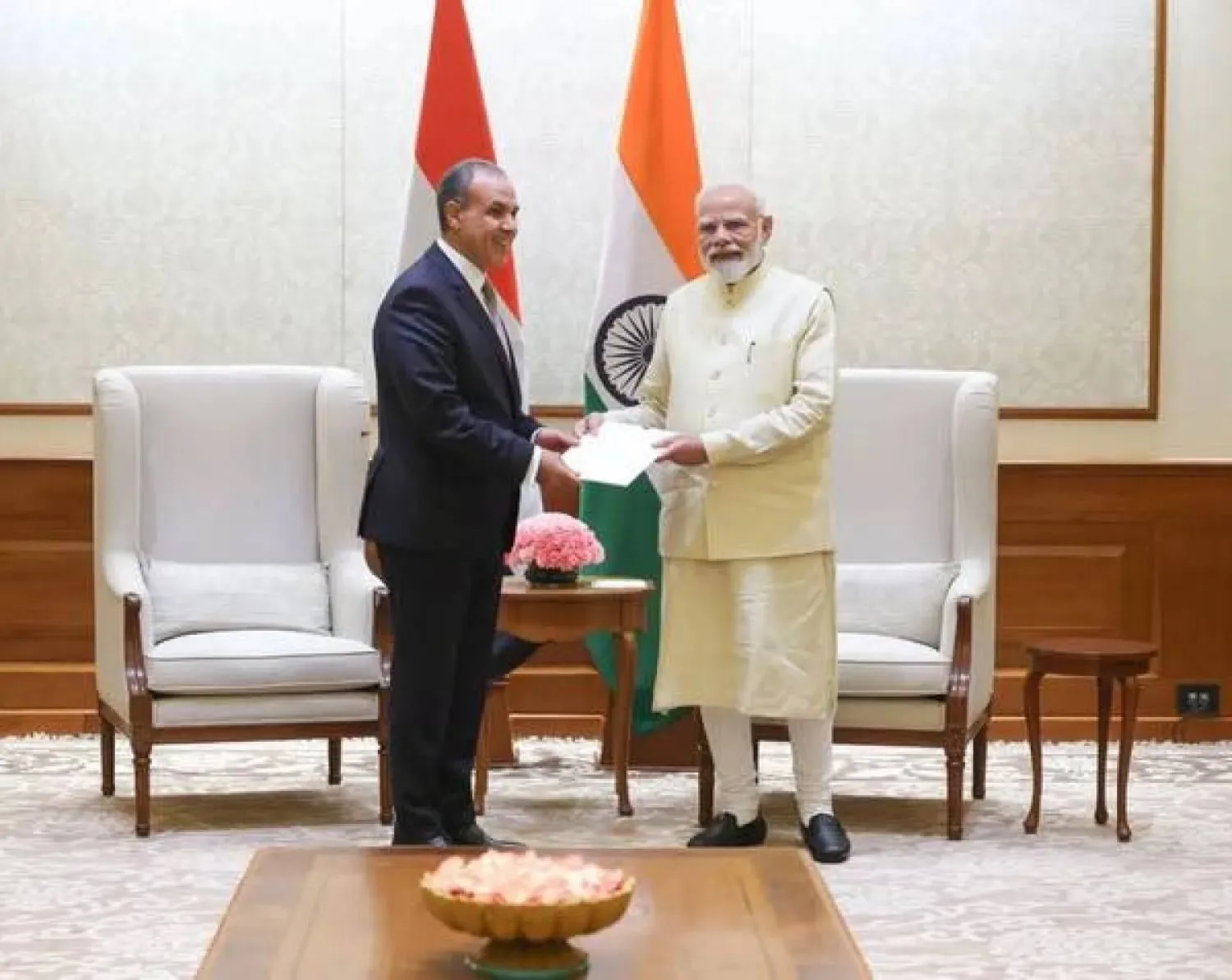
On Friday, Egyptian Foreign Minister Badr Abdelatty delivered a written message from President Abdel Fattah al-Sisi to Indian Prime Minister Narendra Modi, outlining ways to advance bilateral relations and strengthen the strategic partnership between the two countries.
Abdelatty also co-chaired the first round of the Strategic Dialogue in New Delhi with Indian External Affairs Minister Subrahmanyam Jaishankar.
During the meeting with Modi, the minister expressed Egypt’s appreciation for the rapid development of bilateral ties, reflected in high-level visits and the elevation of relations to the level of a strategic partnership. He also highlighted Egypt’s readiness to host the eighth session of the Egyptian-Indian Joint Committee in the first half of 2026 to further expand cooperation in various fields.
Abdelatty underscored Egypt’s interest in increasing cooperation in economy, trade, and investment, to raise the trade volume between the two countries to $12 billion over the next five years. The talks also focused on enhancing international trade connectivity, leveraging Egypt’s advanced infrastructure linking the Red Sea and the Mediterranean, and the strategic importance of the Suez Canal.
Modi, for his part, praised the strong friendship between India and Egypt and commended Cairo’s efforts to support peace and stability in the Middle East. He welcomed the outcomes of the Sharm El-Sheikh Peace Summit, which produced an agreement to halt the war in Gaza.
According to Foreign Ministry spokesperson Tamim Khallaf, the first round of the Strategic Dialogue reflects the rapid progress in bilateral relations since the elevation of ties during Modi’s June 2023 visit to Cairo. Both sides reaffirmed their commitment to implementing memoranda of understanding and joint initiatives to advance mutual interests.
The talks reviewed opportunities to boost economic, trade, investment, and technology cooperation, strengthen defense partnerships through joint training and defense industries, and expand counterterrorism and intelligence-sharing collaboration. They also exchanged views on regional and international issues.
Abdelatty highlighted Egypt’s economic reforms since 2016, including a flexible exchange rate policy that improved economic performance and credit ratings, making the country more attractive to investors. He invited Indian companies to invest in the Suez Canal Economic Zone, offering major incentives and tax exemptions.
Abdelatty and Jaishankar also agreed that the current multilateral system faces a crisis of credibility and effectiveness, pointing to the UN Security Council’s failure to address conflicts such as in Gaza and Sudan. They called for urgent reform to restore the system’s role in maintaining global peace and security.


