EU Agrees to Gradually End Russian Gas Imports by January 1, 2028

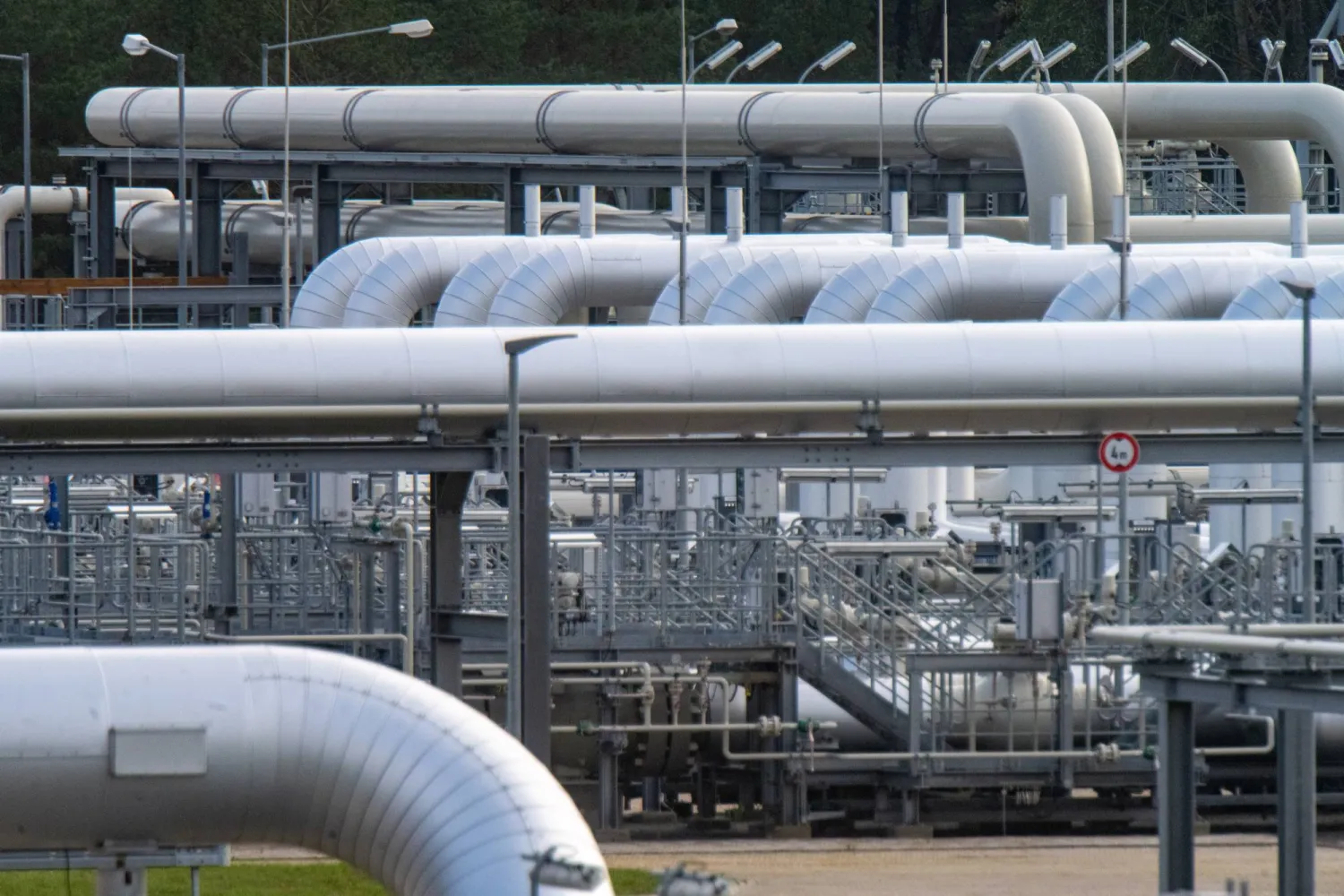
FILED - 28 September 2022, Mecklenburg-Western Pomerania, Lubmin: Pipe systems and shut-off devices in the gas receiving station of the former Nord Stream 2 Baltic Sea pipeline and the transfer station of the Eugal gas pipeline (European Gas Pipeline Link, in the foreground). Photo: Stefan Sauer/dpa
TT

EU Agrees to Gradually End Russian Gas Imports by January 1, 2028

FILED - 28 September 2022, Mecklenburg-Western Pomerania, Lubmin: Pipe systems and shut-off devices in the gas receiving station of the former Nord Stream 2 Baltic Sea pipeline and the transfer station of the Eugal gas pipeline (European Gas Pipeline Link, in the foreground). Photo: Stefan Sauer/dpa

The European Union 's energy ministers on Monday backed the bloc's proposals to phase out Russian oil and gas imports by January 2028, the Council of the European Union said on Monday.

In a meeting in Luxembourg, EU energy ministers approved the plans, which would also phase out Russian gas imports under new contracts from January 2026, then existing short-term contracts from June 2026, and long-term contracts in January 2028.

The EU wants to phase out Russian oil and gas imports in a bid to deprive the Kremlin of revenues to fund its war in Ukraine.


Iran's Partners in Crisis after Trump Announces New Tariffs

The Iranian flag and 3D printed oil barrels miniature are seen in this illustration taken June 23, 2025. (Reuters)
TT

Iran's Partners in Crisis after Trump Announces New Tariffs

The Iranian flag and 3D printed oil barrels miniature are seen in this illustration taken June 23, 2025. (Reuters)

US President Donald Trump on Monday said any country that does business with Iran will face a tariff rate of 25% on any trade with the US as Washington weighs a response to the situation in Iran which is seeing its biggest anti-government protests in years.

Iran, a member of the OPEC oil producing group, exported products to 147 trading partners in 2022, according to World Bank's most recent data.

China and the United Arab Emirates are Iran’s largest trading partners, putting them at the top of the list of countries at risk of being hit by Trump’s 25% tariff threat, according to Bloomberg.

Countries like India, Brazil, Iraq, Türkiye and Russia are also major trade partners of Iran.

Fuel is Iran's biggest export item by value, while major imports include intermediate goods, vegetables, machinery and equipment.

China

China is the primary buyer of Iranian oil, which remains under international sanctions over Tehran's nuclear program.

In 2024, the trade turnover between the two countries amounted to $17.8 billion.

In 2025, China bought more than 80% of Iran's shipped oil, according to data from Kpler, an analytics firm.

Iranian oil has a limited pool of buyers because of US sanctions that seek to cut off funding to Tehran's nuclear program.

Also, Iran has a record amount of oil on the water, ​equivalent to about 50 days of output, with China having bought ‌less because of sanctions and Tehran seeking to protect its supplies from the risk of US strikes, data from Kpler and Vortexa shows.

Iranian oil imported by China is typically labelled by traders as originating from other countries, such as Malaysia, a major transshipment hub, and Indonesia.

Chinese customs data has not shown any oil shipped from Iran since July 2022.

UAE

While China is Iran's premier trade partner, the UAE is the second largest. Trade between Iran and the UAE has reached $16.11 billion, making it a vital center in Iran’s regional trade and putting the Emirates at the top of the list of countries at risk of being targeted by Trump’s tariffs.

Iraq

Iraq, Iran’s historical partner and geographically closest, ranks fourth globally with a trade volume reaching $12.3 billion, representing 9.9% of Iran’s total foreign trade activity.

In recent years, Iraq has relied on Iran to supply about 40% of its needs for gas and electricity, at a time when Iraqi infrastructure lacks the capacity to process natural gas for domestic use.

Iraq is already subject to US tariffs of 35% under Trump’s decision to impose reciprocal tariffs with many countries last August.

Currently, gas exports from Iran have been suspended or severely curtailed due to a combination of extreme domestic heating demand and broader economic pressures.

India

India's total bilateral trade with Iran stood at $1.34 billion for the first 10 months of 2025, according to India's commerce ministry. Major Indian exports to Iran include basmati rice, fruits, vegetables, drugs and other pharmaceutical products.

The US president already imposed levies as high as 50% on Indian goods tied to their purchase of Russian oil. The two sides have been working for months to finalize a deal that would provide long-sought tariff relief to New Delhi.

Türkiye

Turkish exports to Iran were $2.3 billion in full-year 2025, while imports were $2.2 billion over 11 months of the year, according to sector and official data sources.

Germany

Iran's exports to Germany stood at around 217 million euros in the first eleven months of 2025, an increase of 1.7%, according to data from the state-owned international economic promotion agency Germany Trade & Invest. German exports to Iran fell by a quarter to 871 million euros over the period.

South Korea

South Korea's exports to Iran between January and November 2025 were marginal at $129 million, while imports stood at $1.6 million during the same period, according to data from the Korea International Trade Association.

Japan

Japan imported modest amounts of fruit, vegetables and textiles from Iran and shipped some machinery and vehicle engines there, according to the latest trade data from Japan that goes through November 2025.


Alkhorayef to Asharq Al-Awsat: Saudi Efforts Drive Mining Investment

Saudi Minister of Industry and Mineral Resources Bandar Alkhorayef speaks at a press conference in response to a question from Asharq Al-Awsat. (Asharq Al-Awsat)
TT

Alkhorayef to Asharq Al-Awsat: Saudi Efforts Drive Mining Investment

Saudi Minister of Industry and Mineral Resources Bandar Alkhorayef speaks at a press conference in response to a question from Asharq Al-Awsat. (Asharq Al-Awsat)

Saudi Minister of Industry and Mineral Resources Bandar Alkhorayef said on Tuesday the Kingdom is intensifying its efforts, through the Future Minerals Forum and by reshaping long-standing negative perceptions of the sector, to encourage investors worldwide to reassess the value of mining investments, particularly in Africa.

Speaking to Asharq Al-Awsat on the sidelines of the Riyadh forum, held under the patronage of Custodian of the Two Holy Mosques King Salman bin Abdulaziz, Alkhorayef said that one of the biggest challenges facing the mining sector was the flow of investment.

This issue had been raised since the launch of the Future Minerals Forum and the roundtable initiative, he added.

The World Bank's participation in the Future Minerals Forum signaled the importance of finding solutions capable of supporting investment in the sector, he stressed.

Alkhorayef revealed that there were other initiatives aimed at supporting sectors complementary to mining, particularly logistics services, through government partnerships and support provided by international organizations, alongside banks and development funds.

The international ministerial meeting of ministers responsible for mining affairs was held on Tuesday as part of the Future Minerals Forum.

It is regarded as the world’s largest and most prominent government platform for discussing the future of the mining and minerals sector, with participation from over 100 countries, more than 70 international and non-governmental organizations, as well as business federations and leading global industry executives.

The meeting is following up on progress in the three ministerial initiatives, identifying upcoming work milestones, and cooperating on capacity building with international partners and skills development.

It will also launch the Future Minerals Framework as a scientific pathway to align visions and boost cooperation worldwide.


Saudi Arabia Urges Collective Action to Boost Mineral Supplies, Future Jobs

Representatives from 100 governments and 70 international organizations gathered on Tuesday to develop a roadmap for securing the flow of critical minerals the world needs to achieve its digital and green transitions. (Saudi Minister of Industry and Mineral Resources Bandar Alkhorayef on X)
TT

Saudi Arabia Urges Collective Action to Boost Mineral Supplies, Future Jobs

Representatives from 100 governments and 70 international organizations gathered on Tuesday to develop a roadmap for securing the flow of critical minerals the world needs to achieve its digital and green transitions. (Saudi Minister of Industry and Mineral Resources Bandar Alkhorayef on X)

Under the patronage of Custodian of the Two Holy Mosques King Salman bin Abdulaziz, Riyadh has emerged as the “global capital of mining” by hosting the fifth ministerial roundtable of the Future Minerals Forum 2026.

The meeting was not merely a forum for discussion, but a platform to launch a new phase of international cooperation under the theme “Minerals: Meeting the Challenges of a New Era of Development.”

Representatives from 100 governments and 70 international organizations gathered on Tuesday to develop a roadmap for securing the flow of critical minerals the world needs to achieve its digital and green transitions.

The gathering marked a significant shift in collective action, reviewing progress since the launch of three initiatives in 2023 and urging governments to join the Future Minerals Framework.

The framework is not simply an agreement but a vital mechanism to strengthen partnerships between supplier and consumer countries, and to build an investment ecosystem capable of attracting public and private financing.

This momentum culminated in an announcement by Saudi Minister of Industry and Mineral Resources Bandar Alkhorayef of the appointment of a permanent ministerial steering committee of 17 founding member states, selected to ensure geographic balance and representation of both supplier and consumer countries.

The committee will provide strategic guidance, oversee implementation of initiatives, and ensure the continuity of dialogue between major producing and consuming powers.

Ministerial guidance

Alkhorayef stated that achieving countries’ economic, industrial, and energy ambitions depends on the availability of secure and resilient mineral supplies, stressing that such supplies cannot be guaranteed without substantial investments and the adoption of innovative technologies, which require significant financing.

He said mineral resources are at the core of technologies driving electrification and digitalization, and form the foundation of industrial development and future jobs in both producing and consuming countries, making them a key driver of global growth.

Alkhorayef noted that joint work over the past five years had delivered progress beyond expectations, adding that details of these achievements were documented in a booklet provided to participants.

He cited cooperation with the World Bank to address the financing gap in mineral exploration and the elevation of infrastructure financing on the global agenda.

He said efforts also included leading a new dialogue focused on transparency and supply chain traceability, developing standards that reflect current realities, and establishing a network of centers of excellence to build capabilities in talent, sustainability, and technological empowerment.

These initiatives, he said, embody the roundtable’s goal of finding common ground on difficult issues, aligning supplier and consumer countries, and bringing governments, industry, and multilateral organizations under one roof.

The minister praised the participation of a large number of ministers and representatives, whether attending for the first time or regular participants, saying the turnout reflected the importance of joint international action.

He recalled that the first Future Minerals ministerial roundtable, hosted in 2022, brought together 32 countries and focused on what was then known as the “greater region,” encompassing Africa, West, and Central Asia.

Today, senior representatives from over 100 countries and 70 international organizations are participating.

Global development
The expanded participation came in response to requests from countries in other regions, such as Latin America, reflecting the global importance of the dialogue and participants’ ability to shape solutions, Alkhorayef added.

He pointed to growing interest from consuming countries in engaging in the discussion, noting that the table today brings together representation from all G20 countries alongside producers and consumers, underscoring that the right dialogue is taking place with the right parties at the right time and place.

This presence reflects a shared responsibility to shape a new era of global development, prosperity, and stability through the use of minerals, he remarked, emphasizing that minerals are the cornerstone of global development.

At the same time, the minister acknowledged challenges including slow project development, fragmented global policies, infrastructure gaps, financing constraints, and a lack of trust in the sector.

None of these challenges can be addressed individually, he explained, adding that genuine, well-designed cooperation among the countries gathered can make a difference.

Alkhorayef urged participants to use their shared time wisely, adopt a long-term mindset, and engage in frank, practical discussions that lead to a vital action agenda for the planet’s future, emphasizing that collective action is the foundation for securing the mineral supplies the world needs.

Supply chains

Saudi Vice Minister of Industry and Mineral Resources for Mining Affairs Khalid Al-Mudaifer reviewed progress made in 2025 across the three ministerial roundtable initiatives: developing an international framework to scale up infrastructure financing and align enabling government policies, building capabilities in emerging supply regions through a network of centers of excellence, and enhancing transparency of mineral supply chains through traceability.

He stated that the world requires more than $5 trillion to meet its energy needs by 2035, encompassing both electricity and infrastructure, noting that this capital requirement applies to over 20 mining companies amid significant financing challenges.

Al-Mudaifer spoke about developing the Global Mining Framework announced by Saudi Arabia last year to maximize value creation in supplier countries, stressing the importance of cooperation at the meeting to confront this major challenge and agree on key enablers to seize opportunities.

He outlined policies that support supply chain development, value creation for the sector, enabling infrastructure, responsible mining practices, skills development for a qualified workforce, the technology needed to make operations safer and more productive, and easier access to reliable geological data to attract investors and accelerate exploration.

Future minerals framework

He presented for discussion a draft of the Future Minerals Framework, which outlines principles and objectives and initiates a process to enhance cooperation between supplier and consumer countries to develop mineral supplies.

The framework aims to boost cooperation between producing and consuming countries by creating an inclusive, multi-stakeholder space that brings together decision-makers to discuss complex challenges and identify solutions to secure the minerals needed for development.

It seeks to attract investment to develop mineral value chains and infrastructure in the “super region” spanning Africa, West and Central Asia, and other supply regions, maximize regional mineral value chains, and drive local value creation through infrastructure financing and cross-border partnerships.

It aims to establish an attractive investment ecosystem for public and private financing, promote responsible supply through transparency and traceability, integrate sustainability priorities across all stages of mineral value chains, build capacities and policy frameworks, and empower emerging supplier countries to maximize the benefits of their mineral wealth.

The framework is based on voluntary participation, consensus-based decision-making, transparency, accountability, and fair benefit sharing, as well as adherence to international responsible sourcing frameworks and cooperation with industry, multilateral partners, and civil society.

The framework represents the culmination of work carried out by the Future Minerals Forum since 2023, with initiatives reaching a level of maturity that requires active state participation in implementation through an agreed structure and mechanism overseen by the steering committee.

It also allows for the integration of new initiatives adopted by the ministerial roundtable.

The World Bank Group presented a new minerals strategy focused on supporting countries in strengthening mineral development and value chains, from extraction and processing to regional manufacturing, to create greater local value and jobs.

The strategy is built on three pillars: policies, governance and institutions, core infrastructure, and private sector mobilization and innovation.

Participants welcomed the strategy and stressed the importance of the forum’s partnerships with multilateral organizations, including the World Bank Group, in developing innovative mechanisms to finance infrastructure that supports the resilience of global supply chains.

Voluntary standard

The voluntary standard will complement existing standards and draw on the forum’s sustainability framework, which is built on four priorities identified by countries: development, cooperation, capacity building, and performance.

The development of the voluntary standard is expected to take approximately two years, enabling countries to design legal, policy, and regulatory frameworks that enhance supply chain transparency and boost investor confidence.

The work will be coordinated through a sustainability center being established at Mohammed VI Polytechnic University in Morocco.

The sustainability center is one of the outcomes of the forum’s initiative to create a network of centers of excellence for capacity building in supply regions.

Participants praised the achievement and underscored its role in delivering tangible benefits to enhance mineral supply transparency, pledging to encourage national standards bodies in their countries to take part in the process.