



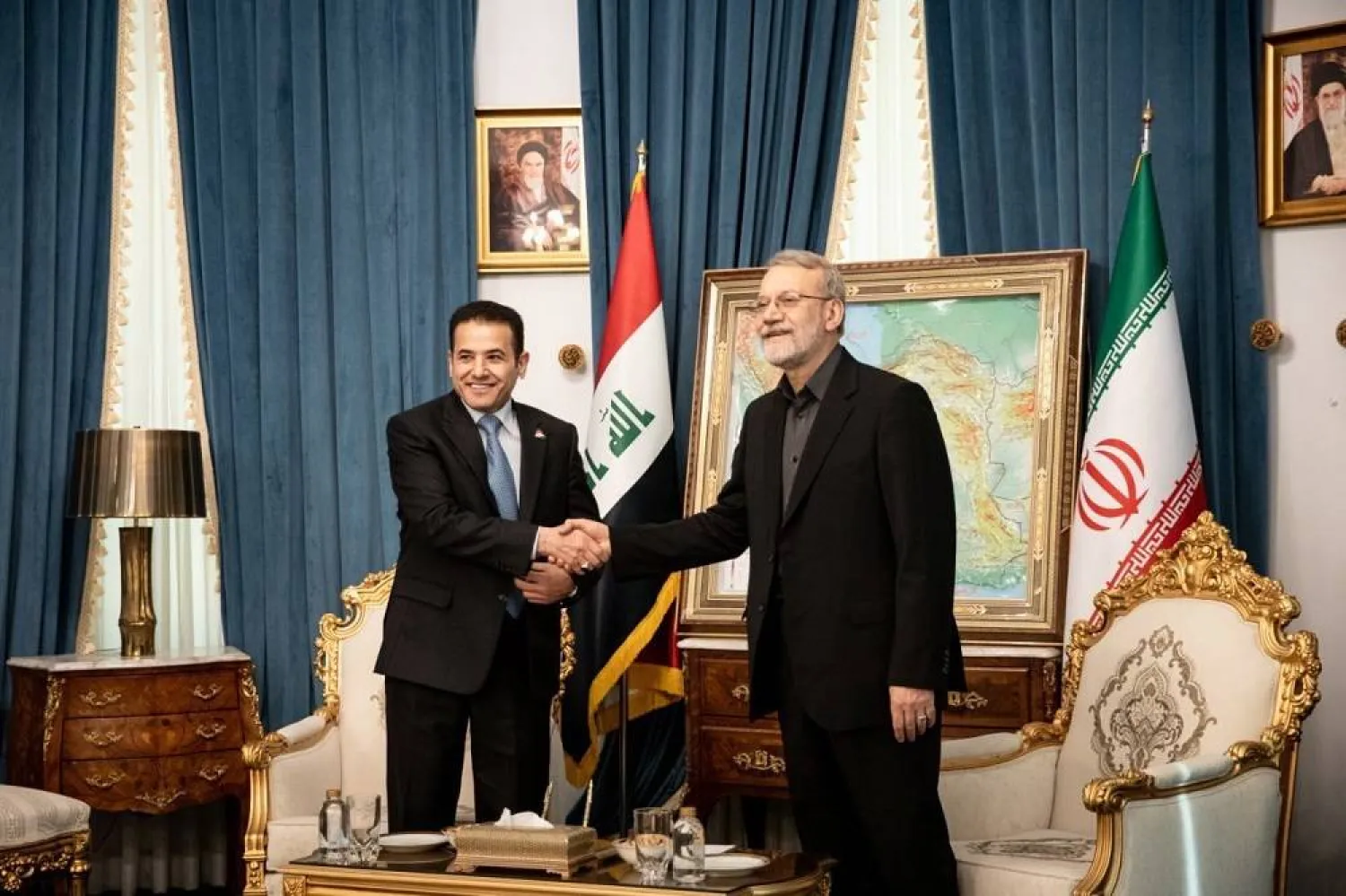

Iran’s Supreme National Security Council (SNSC) Secretary Ali Larijani said on Monday that the United States and Israel used Iraqi territory to attack Iran during the 12-day war last June.
Larijani received in Tehran on Monday Iraqi National Security Adviser Qasim al-Araji, who said Baghdad rejects “any use of Iraqi airspace to launch attacks against its neighbor.”
In a joint press conference, Larijani described the high-level talks with Araji as “very positive,” focusing primarily on expanding economic cooperation between the two neighbors.
“For our economic relations to be sustainable, however, security issues must also be seriously addressed and resolved,” he added.
He expressed gratitude for the Iraqi government’s stances during the 12-day June war, but he regrated that Washington and Tel Aviv had “exploited Iraqi territory” to attack Iran.
Larijani stressed the importance of Iraq’s role in the region, saying it was “very significant, and we must work to prevent any exploitation by foreigners aimed at harming Iran and Iraq,” reported state television.
Araji's visit to Tehran comes weeks before parliamentary elections in Iraq in November.
The SNSC is Iran's top policymaking body, responsible for setting the country's defense and security policies, and operates under the authority of the Supreme Leader. It is also responsible for managing the Iraqi file in Iran.
Larijani had overseen the file when he served as the SNSC secretary-general between 2005 and 2006. He was reappointed to the post in August and his first foreign visits took him to Baghdad and then Beirut.
Larijani accused the US of interfering in Iraq's internal affairs, saying: “Let me offer a clear example; the United States does not want Iraq to be master of its decision. And we see this behavior as a model for the way Washington deals with other countries in the region.”
For his part, Araji said Baghdad is fully committed to the security agreement signed with Tehran.
In March 2023, Iraq and Iran signed a border security agreement, a move Iraqi officials said was aimed primarily at securing the frontier with Iraq's Kurdish region, where Tehran says armed Kurdish dissidents pose a threat to its security.


