


Saudi Arabia's KSrelief to Asharq Al-Awsat: Over 900 Aid Trucks Sent to Gaza  

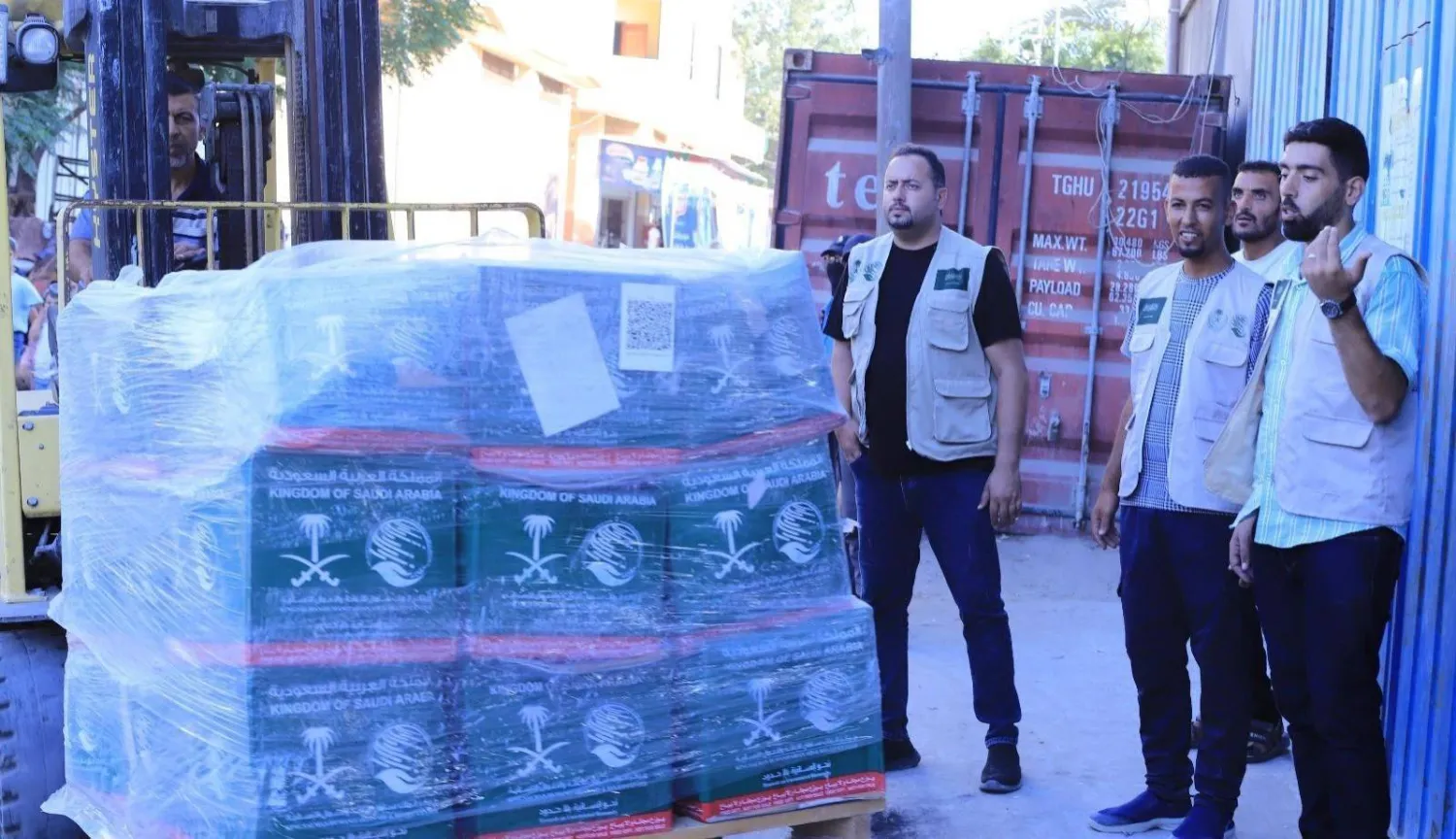
The Saudi Center for Culture and Heritage is responsible for distributing aid to the most vulnerable families in the Gaza Strip. (SPA)
TT

Saudi Arabia's KSrelief to Asharq Al-Awsat: Over 900 Aid Trucks Sent to Gaza  

The Saudi Center for Culture and Heritage is responsible for distributing aid to the most vulnerable families in the Gaza Strip. (SPA)

Saudi Arabia’s King Salman Humanitarian Aid and Relief Center (KSrelief) confirmed that the delivery of humanitarian assistance to the Gaza Strip is taking place under an ongoing emergency response plan, using the border crossings currently available.

Fahad Al-Osaimi, Director of Emergency Relief at KSrelief, told Asharq Al-Awsat that the center has successfully delivered more than 900 aid trucks to Gaza since the war began in October 2023.

He explained that the aid is currently being channeled through the Rafah border crossing from Egypt, in coordination with Egyptian Red Crescent. The assistance first arrives at El-Arish, where it is received and then transported to Rafah. From there, it proceeds to the Kerem Shalom crossing before entering the Palestinian enclave.

Inside Gaza, the aid is handed over to KSrelief’s local partner, the Saudi Center for Culture and Heritage, which is responsible for distributing it to those affected.

The distribution follows “strict procedures” and is carried out in coordination with active humanitarian organizations on the ground, stressed Al-Osaimi.

Israeli authorities “have not yet resumed allowing” aid deliveries through the Jordanian border crossing, he stated.

903 trucks and 11 planes

Al-Osaimi revealed that as of Tuesday, Saudi Arabia has sent a total of 903 trucks loaded with humanitarian aid since the beginning of the war.

Since early September, when aid deliveries through Egypt were approved, 11 relief flights have arrived at El-Arish, carrying additional supplies.

KSrelief is working to increase and intensify the number of aid flights in the coming weeks, he added.

“The center is also stepping up efforts to deliver more aid through a maritime relief bridge currently being coordinated with the Egyptian authorities,” he said.

Expanded assistance after ceasefire

Following the ceasefire in Gaza on October 10 and the reopening of border crossings with Egypt, KSrelief managed to deliver 86 pallets of aid through relief convoys. These included 20 pallets of infant formula and 66 pallets of food baskets.

Al-Osaimi stressed that coordination is ongoing between KSrelief, the Saudi Ministry of Foreign Affairs, and allied countries to facilitate the entry of aid into Gaza.

He underscored the Kingdom’s commitment to continue providing assistance in priority humanitarian sectors, in cooperation with local implementing partners and active relief organizations.

According to KSrelief, Saudi Arabia has sent 69 relief aircraft and eight aid ships to Gaza since the outbreak of the war. The shipments have included medical supplies, food, shelter equipment, 20 ambulances, more than 39,000 ready-to-eat meals, 10 water tankers, 30 power generators, and 62 units of logistical support equipment. The total weight of aid delivered by air and sea has reached 7,641.188 tons.



GCC Secretary-General Welcomes Omani Initiative on Strait of Hormuz, Condemns Iranian Threats

Secretary-General of the Gulf Cooperation Council (GCC) Jasem Albudaiwi. SPA
TT

GCC Secretary-General Welcomes Omani Initiative on Strait of Hormuz, Condemns Iranian Threats

Secretary-General of the Gulf Cooperation Council (GCC) Jasem Albudaiwi. SPA

Secretary-General of the Gulf Cooperation Council (GCC), Jasem Albudaiwi, welcomed Oman's announcement, made in coordination with the International Maritime Organization (IMO), to establish a temporary maritime corridor for vessels to facilitate the evacuation of more than 11,000 stranded seafarers in the Strait of Hormuz.

The initiative enhances freedom of navigation in the Strait in accordance with international law and the Law of the Sea.

The secretary-general praised this initiative, which embodies the wise approach pursued by the Sultanate of Oman in supporting regional security and stability, enhancing maritime safety and security, and consolidating the principles of international law, thereby contributing to ensuring the smooth flow of regional and international trade.

Albudaiwi expressed the GCC's rejection and condemnation of the claims issued by Iran and its threats to freedom of navigation in the Strait of Hormuz following the announcement.

He affirmed that the Omani step contributes to evacuating stranded seafarers and bolstering supply chains for both regional and global economies and reflects the GCC countries' support for all regional and international efforts aimed at enhancing maritime security, consolidating security and stability, and de-escalating tensions in the region.


Saudi Foreign Minister Discusses Regional Developments with Jordanian Counterpart

Saudi Minister of Foreign Affairs Prince Faisal bin Farhan bin Abdullah
TT

Saudi Foreign Minister Discusses Regional Developments with Jordanian Counterpart

Saudi Minister of Foreign Affairs Prince Faisal bin Farhan bin Abdullah

Saudi Minister of Foreign Affairs Prince Faisal bin Farhan bin Abdullah received a phone call on Friday from Deputy Prime Minister and Minister of Foreign Affairs and Expatriates of Jordan Ayman Safadi, the Saudi Press Agency reported.

During the call, the two officials discussed the latest regional developments and ongoing bilateral coordination and consultation on related matters.


Saudi Arabia Reaffirms Support for Sudan's Unity, Political Solution to End Crisis

The Kingdom of Saudi Arabia reaffirmed that supporting stability in Sudan, securing a ceasefire, and preserving the country's territorial integrity and state institutions remain its top priorities.(SPA)
TT

Saudi Arabia Reaffirms Support for Sudan's Unity, Political Solution to End Crisis

The Kingdom of Saudi Arabia reaffirmed that supporting stability in Sudan, securing a ceasefire, and preserving the country's territorial integrity and state institutions remain its top priorities.(SPA)

The Kingdom of Saudi Arabia reaffirmed that supporting stability in Sudan, securing a ceasefire, and preserving the country's territorial integrity and state institutions remain its top priorities. It emphasized that resolving the crisis ultimately requires a Sudanese-led political solution, the Saudi Press Agency said on Saturday.

The remarks were made by Saudi Arabia's Permanent Representative to the United Nations Ambassador Dr. Abdulaziz Alwasil, during a UN Security Council session on Sudan.

Alwasil said that the continued conflict, deteriorating security situation, and failure to implement the commitments made under the Jeddah Platform and the relevant UN Security Council resolutions have contributed to worsening the humanitarian crisis in Sudan.

He stressed Saudi Arabia's commitment to ending the conflict, bringing the Sudanese parties closer together, and resuming political dialogue based on the Jeddah Declaration.

The Saudi permanent representative to the United Nations also condemned the targeting of humanitarian aid convoys and the crimes committed in the city of El-Fasher, expressing the Kingdom's concern over the human and humanitarian losses resulting from the continued conflict.

He reiterated the Kingdom's rejection of any measures that undermine Sudan's unity or its institutions, welcomed regional and international efforts aimed at reaching a permanent ceasefire, and affirmed Saudi Arabia's continued humanitarian assistance to the Sudanese people.