
The United States has renewed pressure on Iraq to curb the power of armed groups, urging the government to disarm Iranian-backed militias.
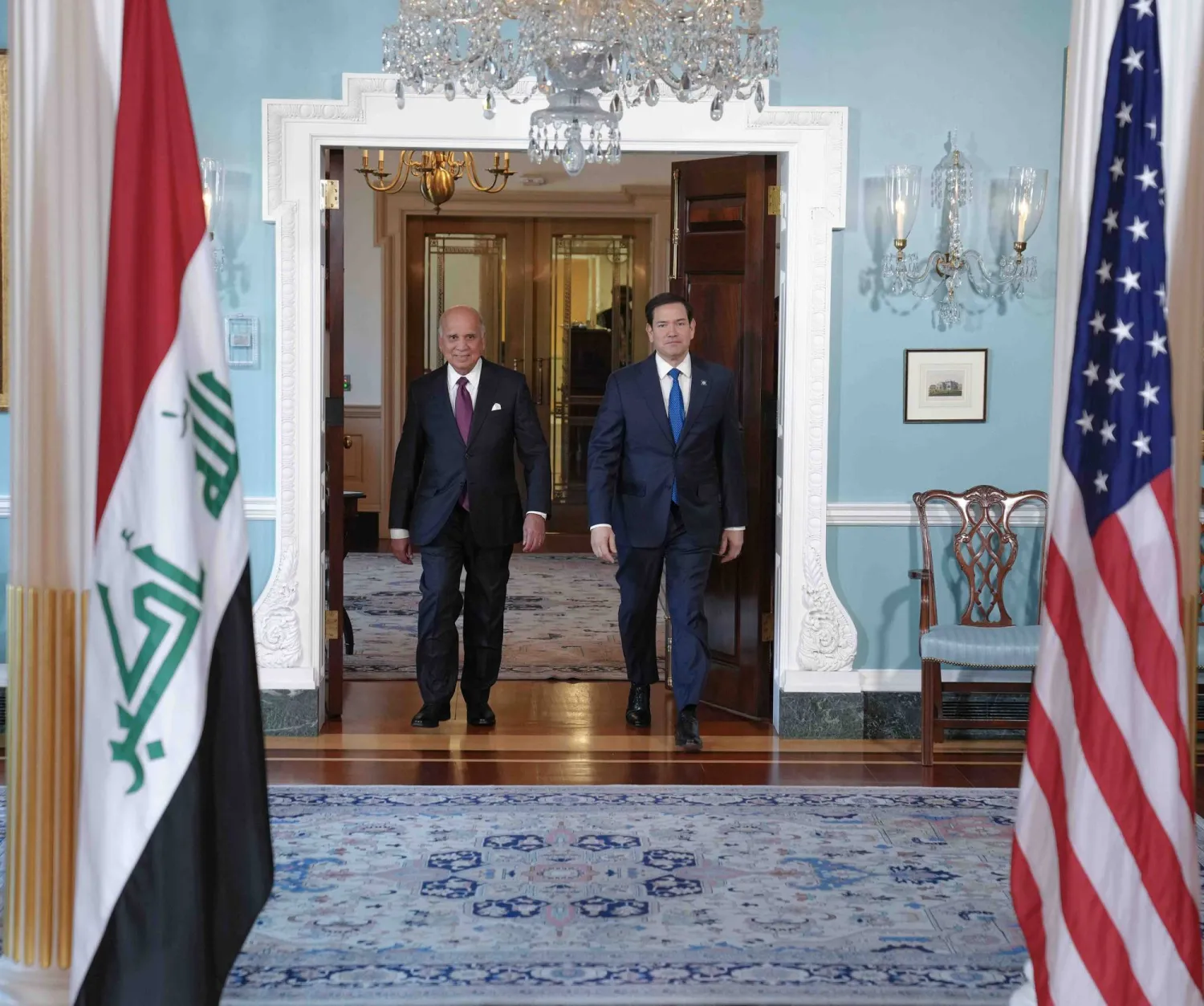
The appeal came during a phone call between Marco Rubio, US Secretary of State, and Mohammed Shia Al Sudani, Prime Minister of Iraq, amid growing tensions over the role of these factions in the country’s security landscape.
The call came shortly after Sudani set out a stark choice for the factions: either integrate into the state’s security apparatus or transition to political activity. In the call, Sudani reportedly urged Washington to avoid unilateral measures outside of established channels of consultation and coordination.
According to a late Tuesday statement from the Prime Minister’s Office, Sudani expressed his government’s commitment to sustaining “the momentum of bilateral cooperation” and moving forward with existing agreements, particularly in expanding economic ties, improving the investment environment, and encouraging US companies to operate in Iraq.
He also reiterated the government’s commitment to holding elections on schedule and supporting democratic institutions to maintain political stability and achieve sustainable development.
Sudani stressed that the “friendly relationship” between Baghdad and Washington is built on constructive dialogue and multiple communication channels, “which reinforce shared interests and mutual trust,” and called for avoiding unilateral decisions outside the framework of joint coordination.
In its statement, Washington said Rubio urged Sudani to accelerate the disarmament of Iranian-backed armed groups inside Iraq.
Rubio also discussed efforts to advance American commercial deals in Iraq but warned that Iran-backed militias in Iraq threaten the lives and livelihoods of both Americans and Iraqis and siphon Iraqi resources for Tehran’s benefit. He reaffirmed Washington’s commitment to working closely with Iraq “to strengthen shared interests.”
This divergence is not new. In February 2025, a previous call between Rubio and Sudani was summarized by Baghdad in broad diplomatic terms, while Washington openly referenced discussions on curbing “Iranian malign influence” in Iraq.
The renewed US pressure comes amid political debate in Iraq over President Donald Trump’s decision to appoint Mark Savaya as special envoy to Iraq. Hussein Allawi, adviser to the prime minister, told Asharq Al-Awsat the appointment reflects “a high level of American interest in Iraq as an ally and strategic partner.”
He said Sudani is keen to activate the Strategic Framework Agreement and broaden relations beyond security and defense to include economic, political, cultural, energy, education, technology, and health cooperation, along with university scholarships and banking partnerships. “This reflects a shift toward a higher strategic level in bilateral relations,” Allawi said.